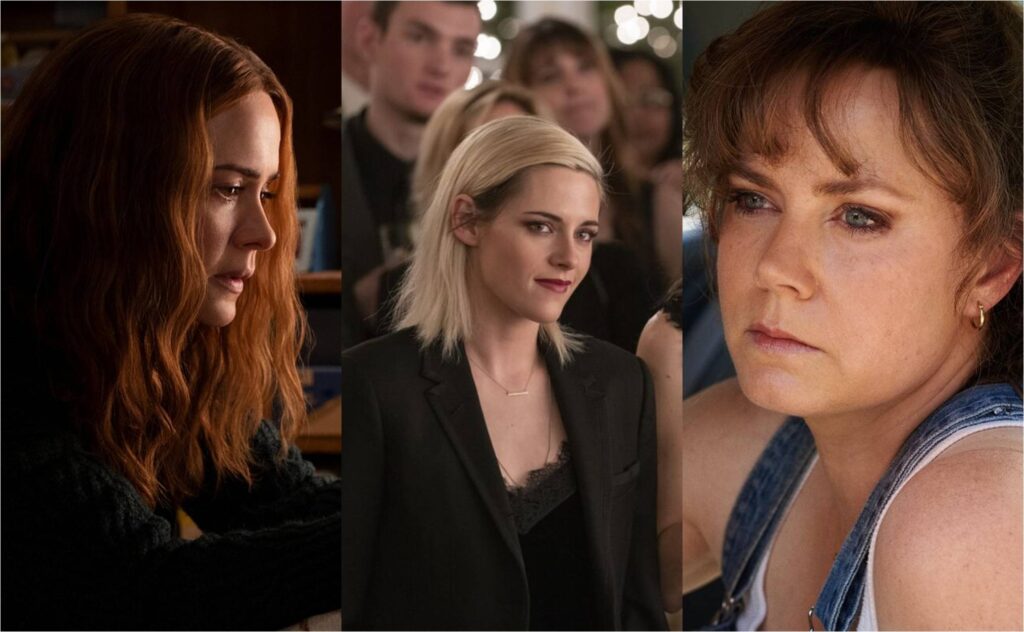
The Assistant: Working for the Man, and the Whole Rotten System

Julia Garner in "The Assistant")

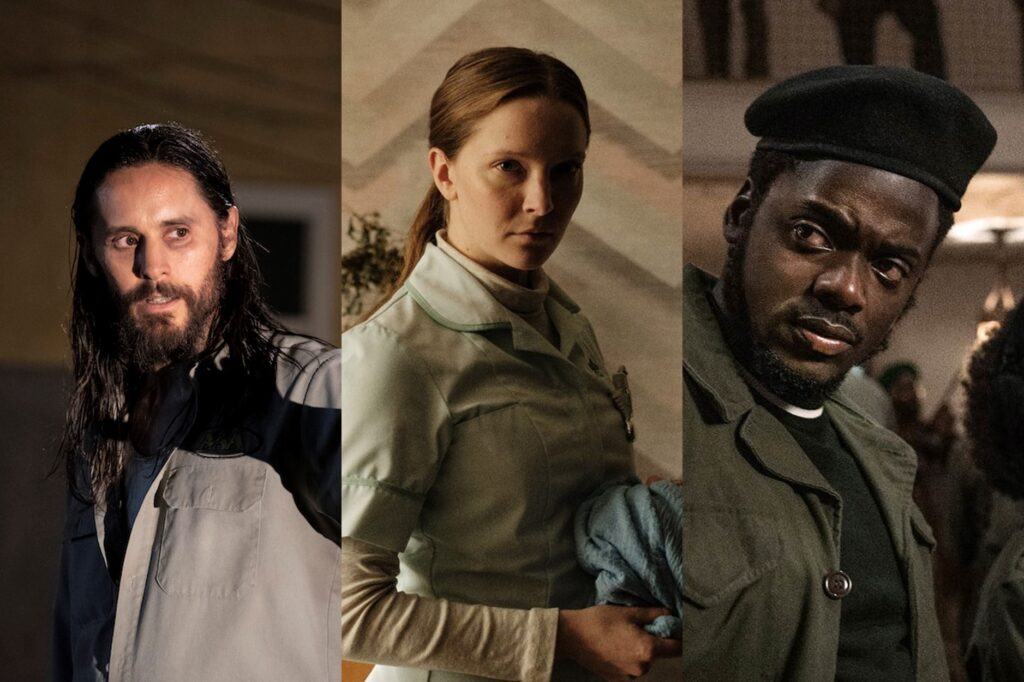
Pronouns work overtime in The Assistant. Characters are constantly discussing the whims and whereabouts of their imperious boss, but they never refer to him by name. “He’s in a meeting.” “I don’t have him right now.” “He wants you on the flight to LA.” They may as well be talking about God. You might know him better as Harvey Weinstein.

But let’s not get too cute. The genius of this sobering movie, which was written and directed by Kitty Green, is that despite its painstaking detail, it isn’t about any particular person. It is instead a searing indictment of an entire ecosystem, a culture of domination, silence, and complicity. Rather than narrow its scope to the exploits and exploitations of a specific individual, The Assistant seeks to shine a harsh light on a prejudiced and predatory industry. The paradox of the film—the contradiction that Green deploys so thrillingly and, at times, frustratingly—is that, while its ambitions are undeniably dramatic, it unfolds with an absolute minimum of actual drama. Read More

Birds of Prey: Harley’s Angels

Margot Robbie and friends in "Birds of Prey"

She just wants breakfast. In an era where noble superheroes and dastardly villains are constantly preoccupied with saving the world or burning it down, all that initially matters to Harley Quinn—the brilliant but unstable psychiatrist, and the former squeeze of a certain lunatic called The Joker—is that she be able to chow down on a bacon-egg-and-cheese sandwich in peace. Naturally, Birds of Prey, the hectic and uneven and largely diverting new addition to the dreary DC Extended Universe, strews plenty of obstacles in her path, continuously delaying her date with culinary bliss. But while Harley’s mania for locally sourced McMuffins (“Maybe it’s the Armenian arm hair,” she muses) is just one of countless random flourishes in the film, it’s also symbolic of the movie’s playful tone and plucky spirit. If you want tedious footage of solemn warriors grappling with the crushing existential weight of their powers, go watch Endgame. Birds of Prey is all about fun.

The DCEU has tried this before, most recently with Shazam!, a lightweight yarn whose cheerful silliness functioned as a welcome corrective to the relentless turgidity of leaden adventures like Batman v Superman. Shazam! was pleasant enough, and it featured a wonderfully limber comic performance from Zachary Levi, but it was also decidedly unmemorable, with flat humor and tiresome fight scenes. Birds of Prey, which was directed by Cathy Yan from a screenplay by Christina Hodson (Bumblebee), is a significant improvement on both fronts. It channels its flamboyant irreverence in ways that periodically resemble actual wit. It also happens to be a surprisingly good action movie. Read More

1917: Hold the Line. Hold the Shot.

George MacKay and Dean-Charles Chapman in Sam Mendes' "1917"

Two years ago, after 13 nominations without a victory, Roger Deakins—one of the greatest cinematographers who’s ever lived—won his first Oscar, for his magnificent work on Blade Runner 2049. I mention this not because I care about the Academy Awards (I don’t… except when I do), but because 1917, Sam Mendes’ bold and brawny and periodically breathtaking new film, seems to have been engineered specifically to secure Deakins an Oscar. Its technical premise—it purports to capture its grueling events in a single take—is not wholly novel; a recent example includes Birdman (which won Emmanuel Lubezki the second of his three straight trophies), while the conceit stretches back to Hitchcock and beyond. But in marrying the single-shot concept (or gimmick, depending on your disposition) to the epic gravity of the war picture, 1917 practically screams to be recognized for its grandeur. Some movies envelop you with the invisible pull of their craft; this one pulverizes you with the sheer force of its technique.

The single-take maneuver, though undeniably impressive, is not without its hazards. The risk of wielding the camera with such fluid dynamism is that it will distract viewers. It’s a danger of distancing; the more conscious you are of the stylistic prowess on display, the farther away from the screen you tend to feel, which in turn prevents you from melting into the immaculately constructed environments. But while my brain never quite stopped registering the presence of Deakins’ camera in 1917, that subconscious awareness did little to sabotage my appreciation of his work. There’s an elegance to his lensing, a grace that somehow magnetizes you, forcing you to grapple with the lovely brutality of his images. That distinctly cinematic paradox—the tension between horror and wonder, between ghastliness and gorgeousness, between death and life—is what animates 1917, and what makes it such a fascinating sit. Like most war movies, it traffics heavily in blood, viscera, terror, and despair. And it depicts this ugliness with what can only be called beauty. Read More

Uncut Gems: Doubling Down, on Distress and Excess

Adam Sandler in the Safdie Brothers' "Uncut Gems"

Of course Uncut Gems opens with an extreme close-up of a colonoscopy. After all, this nasty, edgy, oddly exhilarating movie is the work of Josh and Benny Safdie, those sibling purveyors of stomach-churning New York City sleaze. Their prior film, Good Time, steeped itself in grimy brutality, featuring all manner of crimes, deaths, and maulings. Their new picture, as its initial footage of a man’s digestive tract suggests, in no way eases up on the throttle; it’s another portrait of a desperate man, and it’s uncompromising in its vulgarity and intensity. Yet there’s something strange about Uncut Gems, something shiny buried within its crusty shell of unfiltered savagery and heedless aggression. It is—and I can’t believe I’m writing this, given that the Safdies’ filmmaking ethos seems to involve making the viewing experience as nauseating as possible—fun to watch.

Whether it’s pleasant to look at is another matter. With each new feature—before Good Time, they made the low-budget addiction drama Heaven Knows What, starring mostly non-professional actors—the Safdies grow increasingly accomplished in refining their distinctive style. It is not an aesthetic I particularly care for. The camera is wobbly, the music (again by Daniel Lopatin, aka Oneohtrix Point Never) is invasive, and the lighting is, well, not very light; many scenes play out in dim interiors, with unflattering illumination that makes the actors look wan. Occasionally, they subvert their grungy approach in productive ways, such as when a musician activates a black light at a nightclub, suddenly brightening the screen with bolts of neon. The veteran cinematographer, Darius Khondji, has worked with David Fincher, Bong Joon-ho, and Michael Haneke, and he helps modulate the Safdies’ signature freneticism with a measure of discipline. Still, for the most part, this movie looks gritty, sickly, and ugly. Read More

Little Women: Sisters, Suitors, and Other Nightmares

Emma Watson, Florence Pugh, Saoirse Ronan, and Eliza Scanlen, in Greta Gerwig's "Little Women"

I keep thinking about the ink smudges. Greta Gerwig’s new adaptation of Little Women is a film of boundless beauty, full of ravishing sights and sounds: bright hoop dresses, handsome estates and gardens, Alexandre Desplat’s piano, Timothée Chalamet’s cheekbones, Saoirse Ronan’s eyes. But amid all of this delicate loveliness is a writer who cannot seem to scrub the stubborn streaks of pencil lead from her hands. The primary hero of Louisa May Alcott’s novel, Jo March is the perfect embodiment of Gerwig’s creative spirit—not just because she’s a talented and intelligent artist, but because her work seems to bleed with feeling. Little Women, Gerwig’s second feature following the lightning bolt that was Lady Bird, is a surpassingly elegant movie. It’s also stained with life.

Jo (Ronan), an amateur playwright and aspiring novelist, is one of four mostly grown sisters; the others (in descending order of age) are Meg (Emma Watson), Beth (Eliza Scanlen), and Amy (Florence Pugh). You probably already knew this, seeing as Alcott’s book is beloved, and has previously been transferred to the silver screen four times, with Jo being played by personalities as varied as Katharine Hepburn and Winona Ryder. And so, the question that initially hovers over this incarnation of Little Women—the same skeptical inquiry that lurks beneath any new adaptation of a repeatedly staged classic—is why it needed to be made, why it stands out. Several decades having passed since I’ve read the book or watched any of its prior re-imaginings, I am perhaps not the ideal critic to answer this question. But I have seen this one, and I can say with some confidence that you should herald its arrival not with cynicism but with gratitude. The reason to see Gerwig’s movie isn’t that it rejuvenates old tropes or interrogates long-held assumptions or introduces a literary landmark to a new generation, even if it may very well do all of those things. The reason to see it is that it’s wonderful. Read More