Hulu’s “Normal People” Is the Show of the Year

Daisy Edgar-Jones and Paul Mescal in "Normal People"

The title practically demands deconstruction. Are the characters in Normal People… normal? The simple, unsatisfying, entirely accurate answer is that, well, they are and they aren’t. The more complex response requires delving into the thematic contradictions that are inherent in most great works of art. The players at the center of this stupendous new series, which is based on a novel by Sally Rooney, are familiar, relatable, and ordinary. They are also unique, complicated, and fascinating.

The brilliance of Normal People, which Rooney has adapted to television with the help of co-writer Alice Birch and showrunner Ed Guiney, is how it captures the universal qualities of its experiences—love and loss, elation and confusion, falling down and growing up—without sacrificing an ounce of its characters’ individuality. The story that it tells is resolutely intimate, never resorting to false contrivances or cheap melodrama. Yet as it progresses, the series accumulates a certain grandeur, an invisible sweep that magnifies the intensity of its images and emotions. On paper (I haven’t read the novel), Normal People’s boy-meets-girl premise may sound prosaic. But on the screen, with beauty and force, it turns that prose into poetry. Read More

Bad Education: Cleaning Up the District, Cleaning Out the Cash Drawer

Hugh Jackman and friends in Cory Finley's "Bad Education"

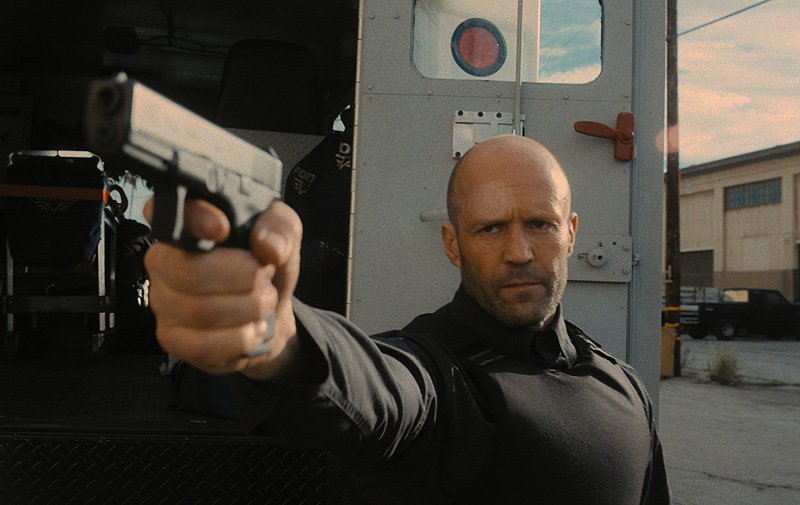
The lessons imparted in Bad Education aren’t typically taught in the classroom, but they’re nonetheless worth taking to heart. They include: Don’t give your corporate credit card to your no-account kids. Don’t schedule work trips to Las Vegas. And if you’re going to embezzle money from the school district that you run, do not—do not—encourage the student reporter writing a puff piece on your newest fancy expenditure to “dig deeper”.

The last of these nuggets of wisdom forms the linchpin of Bad Education, the spry and perceptive new movie from Cory Finley that’s currently streaming on HBO. An immensely promising young talent (he just turned 30), Finley’s debut feature was Thoroughbreds, an electrifying thriller about two teenage sociopaths who plot the murder of a loathsome stepfather. At first glance, his follow-up looks to be a dramatic departure; there are no off-screen stabbings, no portentous firearms, no dosed-up cocktails. But the two films do share a preoccupation with the falsehood of appearances: how conniving people construct polished exteriors in order to manipulate others. Finley’s characters tend to be sneakily more—and morally less—than what they seem. Read More

Onward: Dwindling Magic, But What of Imagination?

Tom Holland and Chris Pratt voice brothers in Pixar's "Onward"

The world is gripped by existential despair, so what’s better to capture our collective terror than a Pixar movie? The wizardly corporation owns a patent on brightly colored, child-friendly entertainments that nevertheless speak to adults’ bone-deep fears. Of course, Onward, the newest adventure from the preeminent purveyor of computer-generated animation, isn’t about the coronavirus, no matter how tempted we might be to perceive everything through the lens of that horrifying pandemic. But it is about people—and a world—crippled with fear and self-doubt, struggling to adapt to unforeseen circumstances. That it’s also a playful children’s movie with a happy ending comes as something of a relief, even if it also currently feels like wishful thinking.

But enough about impending global catastrophe. Besides, there’s a more obvious metaphor to be found in Onward. At one point, its two brothers, Ian (voiced by Tom Holland) and Barley (Chris Pratt), squabble over navigation, disputing how best to reach their destination. Ian, the more pragmatic of the pair, insists on taking the freeway, a straight shot to their goal. Barley, a fantasist with either grand ideas or delusions of grandeur, instead suggests that they follow the Path of Peril, a twisting road fraught with danger and uncertainty. The freeway is of course the logical choice, but in Barley’s view, it is the eccentricity of the Path of Peril—its literal and figurative curves—that makes traveling it worthwhile. Read More

Emma: Matchmaker, Matchmaker, Show Me a Catch

Anya Taylor-Joy in "Emma"

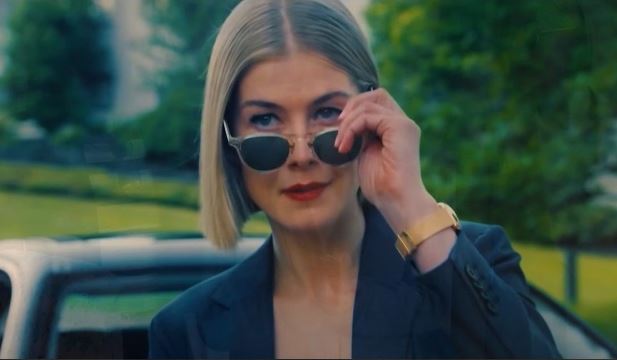
Jane Austen’s Emma is a comedy of manners, which of course means that nobody in it is actually polite. It may unfurl in high society—the kind where estates have proper names, like Donwell Abbey and Hartfield —but its veneer of decorum is a mere smokescreen, camouflaging base instincts of lust, greed, and jealousy. Its language is unfailingly civil, with a premium placed on honorifics—Mr. Elton! Miss Smith!—but its characters wield words like weapons, brandished with lethal force and sheathed with calculated fury. It’s a frolicsome tale of romance and friendship; it is also blood sport.

This duality can be bracing, but for most viewers it is no longer surprising, given how frequently Austen’s novels have been transmuted to the screen. Her works provide a certain comfort, a warm and familiar blend of sophisticated wordplay, comic misunderstandings, and graceful resolution. This new adaptation of Emma, which has been directed by Autumn de Wilde from a screenplay by Eleanor Catton, respects its author deeply and faithfully. Unlike Clueless, which boldly transplanted Austen’s narrative and themes to the frivolous exploits of mid-’90s teenagers, this Emma is frank and straightforward. You might think that such a rigorous approach would result in the diminution of risk, in an absence of artistic identity or imagination. To be sure, the movie is predictable. It is also magical. Read More

The Invisible Man: Touch Me, Not So Easy to Leave Me

Elisabeth Moss in "The Invisible Man"

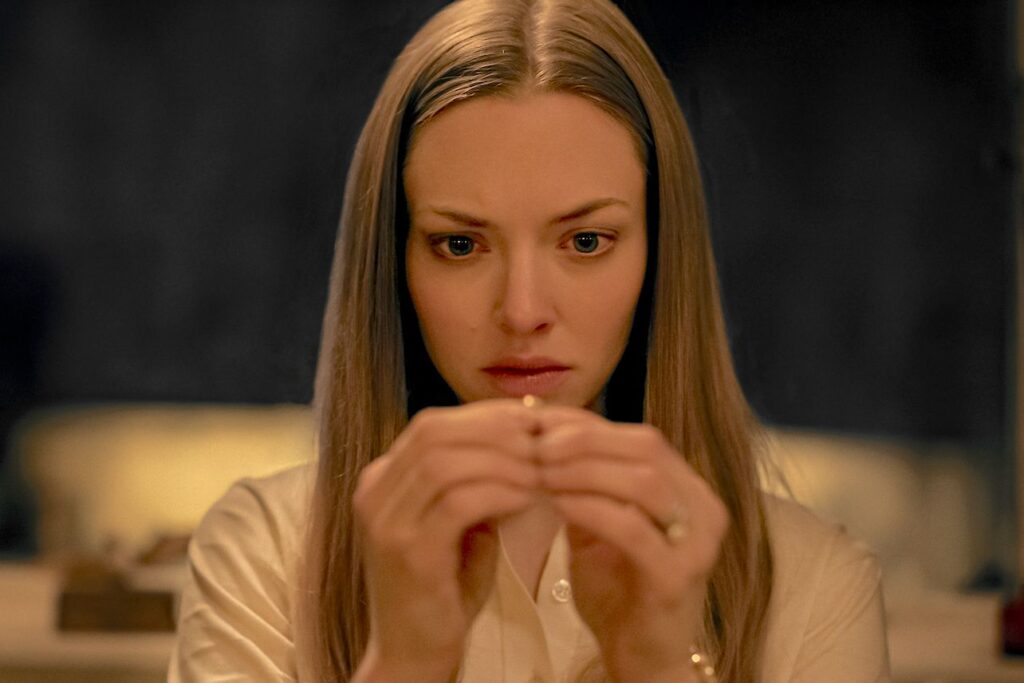
There’s virtually no dialogue in the first five minutes of The Invisible Man, but that doesn’t stop the director Leigh Whannell from telling you everything you need to know. We open in the dead of night, on a woman lying awake in bed, her partner’s arm slung across her waist like a fleshy chain. Her eyes wide with anxiety, she silently extricates herself from his grasp, then tiptoes through their opulent beachside home, packing a bag and disabling the alarm. She also deactivates the house’s many security cameras, except for one: the feed from the bedroom, which she routes to her phone and keeps glancing at in panic, worried that her jailer might have risen. As she quietly maneuvers toward the exit and her freedom, the tension mounts, with various obstacles—a dog’s dish, a car’s sensor, a looming enclosure—conspiring to impede her escape.

It’s the first of many gripping sequences in the movie, an expertly orchestrated medley of image, sound, and music. Yet beyond highlighting Whannell’s considerable craft, the opening is meaningful for the way it telegraphs the film’s metaphorical intentions. The Invisible Man is, quite simply, a picture about domestic abuse. It examines how powerful men feel entitled to possess beautiful women, resulting in violence that’s both physical and emotional. And it contemplates how such subjugation corrodes victims’ health and self-worth, how it can be toxic and dehumanizing. Also, there’s an invisible man. Read More