Tron: Ares review: Jet with the Program
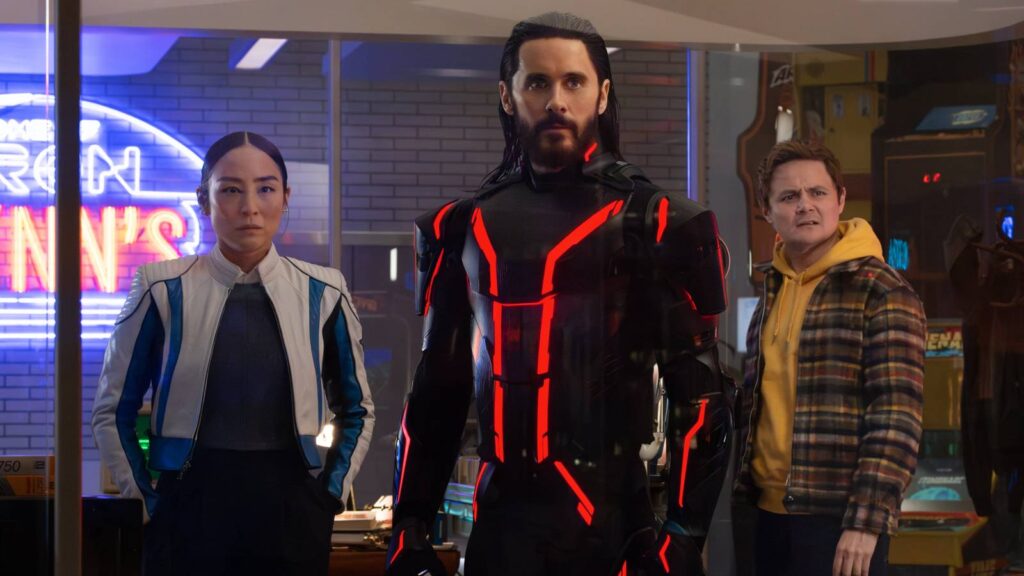
Greta Lee, Jared Leto, and Arturo Castro in Tron: Ares

There has never been a good Tron movie. But Ares, the third installment in this baffling techno-obsessed franchise, is probably the least bad of the bunch. It retains the series’ sleek, color-coded aesthetic while also taking steps to minimize its mythological inanity. Calling it smart would be a stretch, but it reflects enough considered thought to qualify as sensible debugging.

Not that the storytelling in Ares is especially persuasive, or even interesting. In an accidental flirtation with topicality, its screenplay (by Jesse Wigutow) contemplates the rewards and costs of artificial intelligence. Corporate warfare has broken out over the search for “the permanence code,” an electronic MacGuffin that will allow digitized creations to attain lasting physical form. On one side of this commercial conflict is Eve (Greta Lee), an environmentally conscious entrepreneur who longs to continue the work of her deceased sister, envisioning the code as a vehicle for medical and scientific breakthroughs. On the other is Dillinger (Evan Peters), an industrial scion who dreams of commodifying and militarizing the technology; when we first meet him, he’s demoing its capabilities to a brigade of generals who salivate at the notion of a powerful and indefatigable soldier who executes all commands without question. Eve, in contrast, wants to make an orange grove whose trees always bear fruit. You earn no points for guessing which character is the movie’s chief villain. Read More
The Zombieland and Maleficent Sequels Both Fail, But for Different Reasons

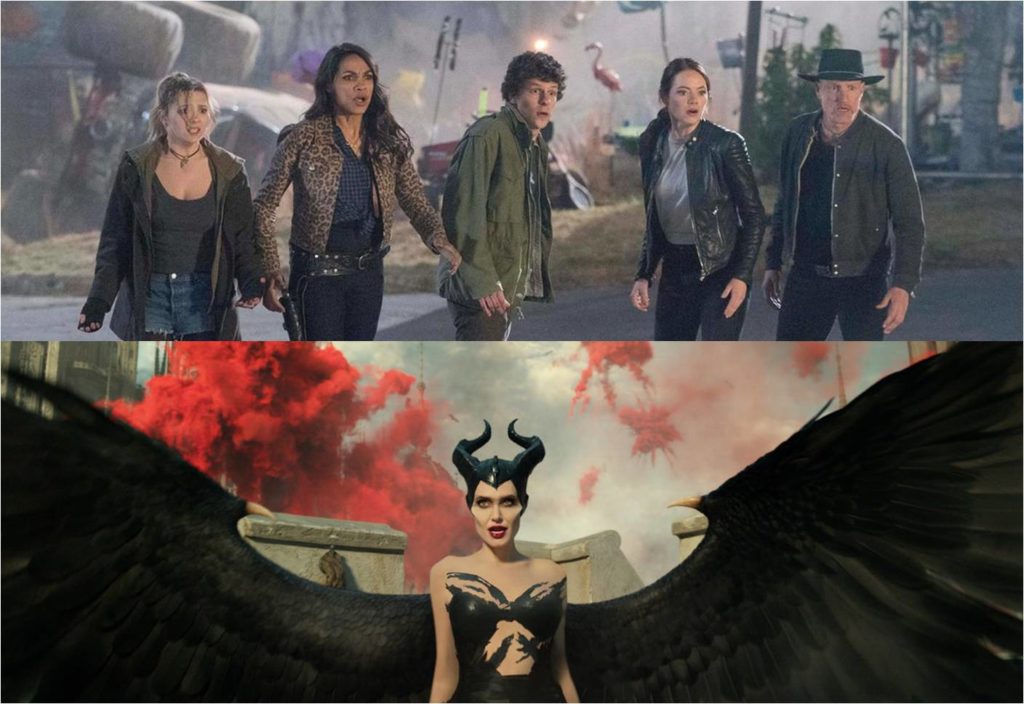
The cast of "Zombieland: Double Tap", all clearly terrified of Angelina Jolie.

Asked to describe Claude Rains’ self-regarding police captain in Casablanca, Humphrey Bogart replies, “He’s just like any other man, only more so.” Aside from accurately summing up one half of cinema’s most beautiful friendship, that quip encapsulates what might be called The Law of the Hollywood Sequel. The motion picture industry is big business, so it’s only logical that when a movie makes money, you make another one. And because follow-ups are typically driven more by fan enthusiasm than by creative compulsion, you make the sequel just like the original, only more so: more action, more jokes, more special effects, more stars, more blood.

Last weekend saw the release of two decidedly different sequels which, if not exactly long-awaited, are certainly far-removed from their respective progenitors. Maleficent: Mistress of Evil arrives five years after Robert Stromberg’s surprise smash, which found Angelina Jolie donning pointy black horns and vivid green contact lenses for a reimagining of Disney’s Sleeping Beauty. Five years is an eon by Hollywood standards, but it’s half the interval between Zombieland: Double Tap and its predecessor, whose comic take on the apocalypse won moviegoers’ hearts and wallets a full decade ago. These unusually long gaps might suggest that both sequels are motivated by art rather than commerce—that their creators returned to their universes after significant time away because they’d actually developed exciting new stories rather than because greedy studios recognized an opportunity to cash years-old checks. Read More