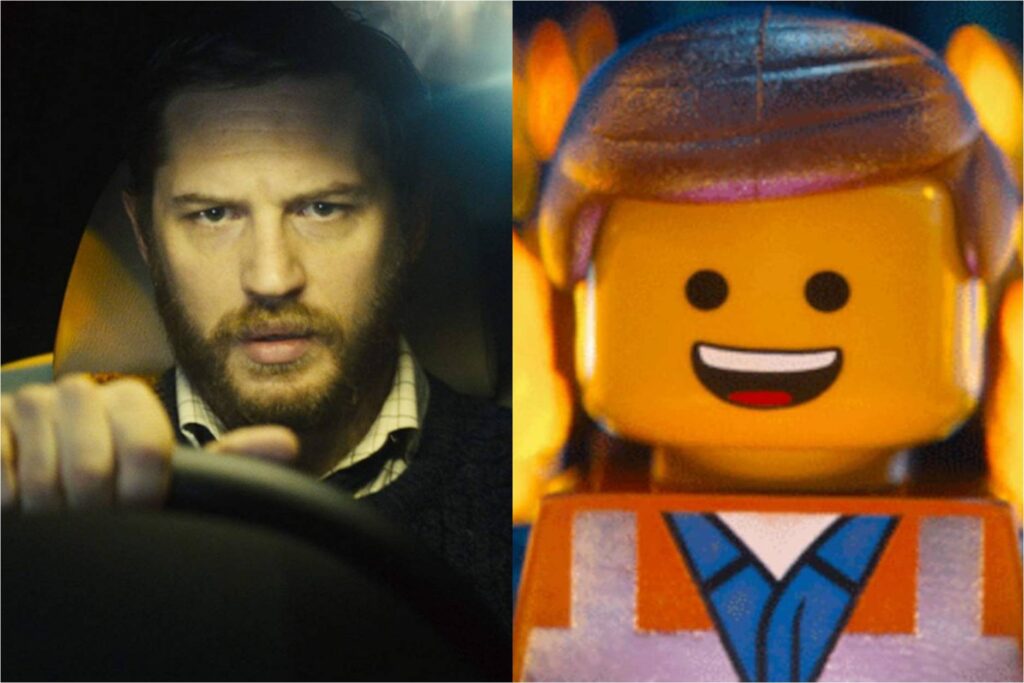
The Best Movies of 2014, Nos. 10 & 9: Locke; The LEGO Movie
After having analyzed 95 different 2014 releases over the past month and change, we arrive at last at the top 10. We’ll be splitting these into five separate posts of two movies each, with the top two titles dropping on Friday.
10. Locke (directed by Steven Knight, 91% Rotten Tomatoes, 81 Metacritic).
He just can’t stop talking about the traffic. Ivan Locke is cruising down the motorway in his BMW late at night while chatting nonstop via his Bluetooth, and he has a lot on his mind. He’s hurtling at high speeds toward a hospital so he can be present for the birth of his third child, but the woman he’s meeting isn’t his wife, it’s his mistress, Bethan (Olivia Colman). He’s abandoning his lucrative position as lead architect on a high-profile project that’s about to break ground, and he needs to constantly provide instructions to his panicky associate. And he has to call his wife, Katrina (Ruth Wilson), to inform her that he won’t be home for dinner because nine months ago, he and a coworker split a bottle of wine and fell into bed. This is a man whose life is disintegrating as his Beamer flies past one mile marker to the next. Yet whenever he finds himself speaking with Bethan, he acts less like an expectant father than a news reporter. She tells him she loves him; he responds, “I should be there in an hour—the traffic is very good.”
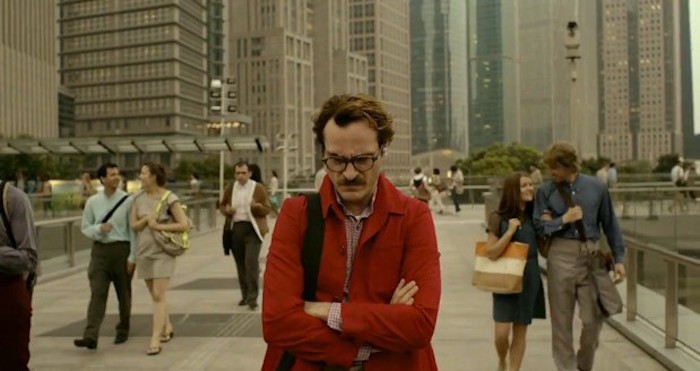 Can a computer have a soul? Can a movie? Her, Spike Jonze’s breathtaking, devastating film about a lonely man and his sentient operating system, spends a good deal of time pondering the first question and, in the process, answers the second. But let’s not bury the lede here: This is a movie about a man who falls in love with a machine. No matter the miracles science has provided in the new millennium, this is a tough sell. Yet the unique genius of Her—beyond its remarkable and vast imagination—is that it acknowledges the absurdity of its premise while simultaneously committing to it with the utmost sincerity. The result is a film that’s often uproariously funny, playfully mocking its gorgeous self-made universe with wit and good humor. But Her also, through a combination of sublime technique and heartfelt storytelling (Jonze also wrote the script), offers acute insight into the dynamics of modern relationships: what it means to be alone, to be loved, to be depressed, to be happy. It’s a movie about machines that affirms our very humanity. And it makes resoundingly clear that even if computers may not have souls, some movies surely do.
 “I’d like to think that there’s more to a person than just one thing,” Aimee Finicky says early in The Spectacular Now. I’d like to think she’s right. There is certainly more than just one thing to The Spectacular Now, James Ponsoldt’s swooning, touching third feature. Like Aimee, it refuses to be pigeonholed. This is partly because, in strict genre terms, it has no strict genre; instead, it melds elements of various tropes, making it not only a winning coming-of-age story, but also an earnest teen romance, a wistful family drama, and even a sobering study of addiction. But far more important than the multiplicity of the film’s form is the raw power of its content. The Spectacular Now is not one thing, because it is many things: spry and funny, sad and heartfelt, honest and scary, rueful and rewarding. It’s a movie that would make Aimee Finicky proud.
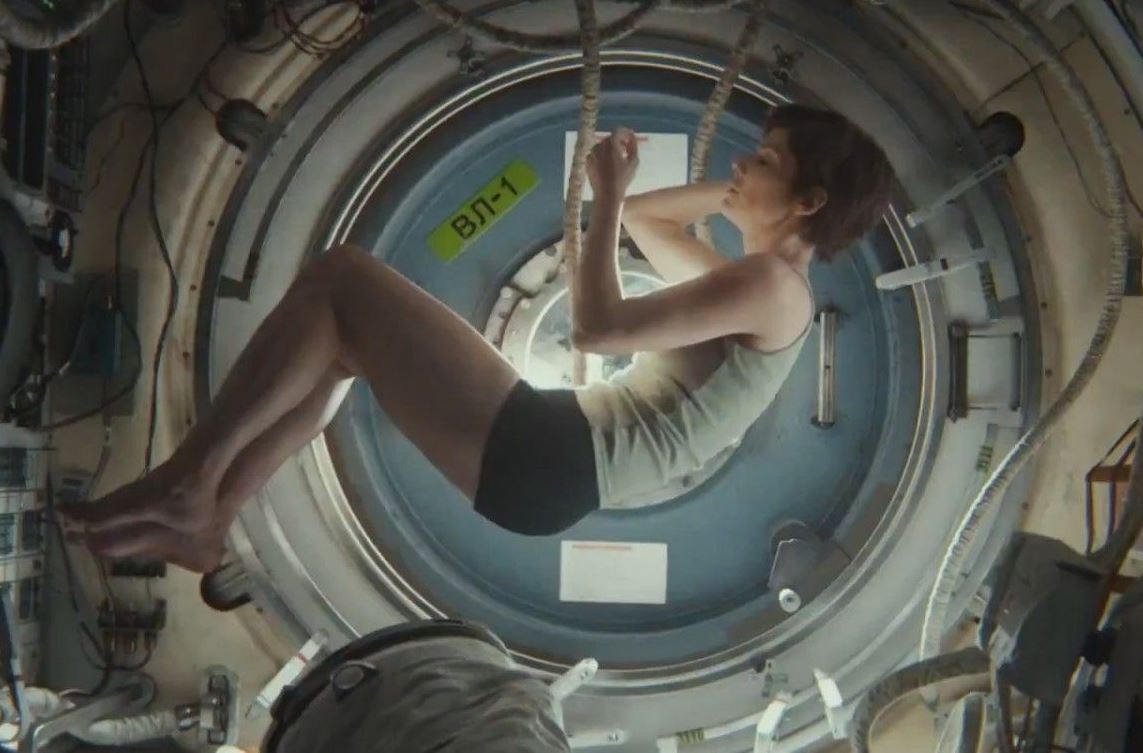 “Life in space is impossible,” the opening crawl announces in Gravity. And so it is. Beyond the confines of our atmosphere, there is—as the crawl also succinctly informs us—no oxygen, no sound, no air pressure. Astronauts who brave the pitiless environment of space must take meticulous precautions just to survive; one mistake means death. It is for this reason that space is an ideal setting for a horror movie (such as one that sports perhaps

