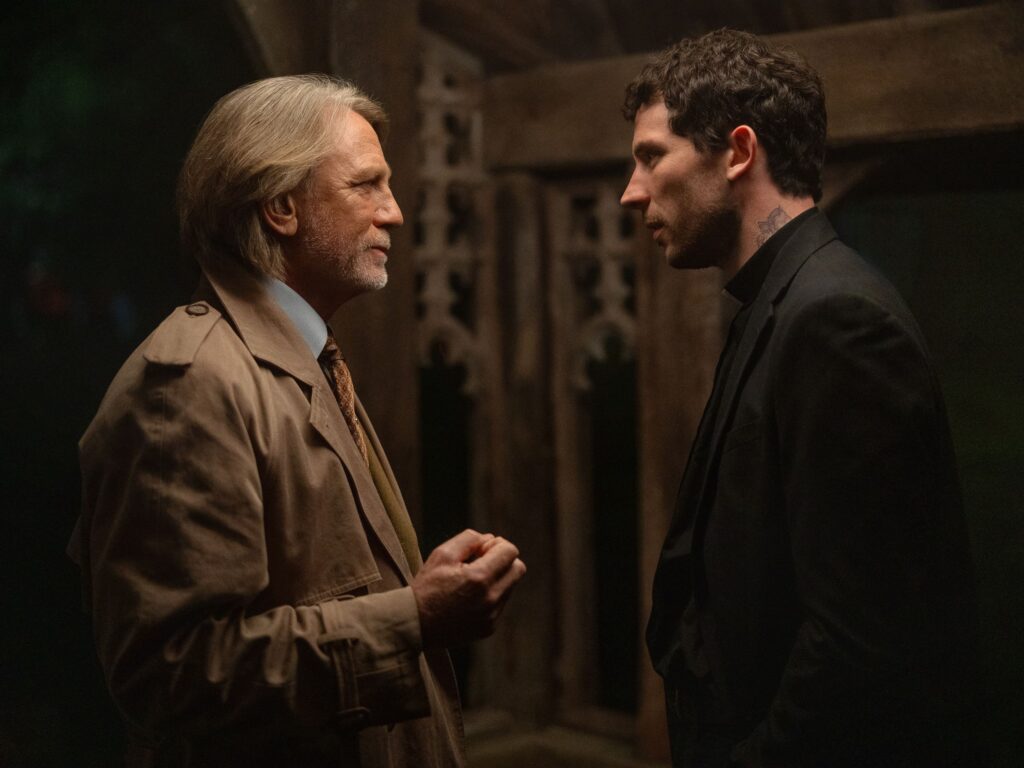
Eddington: Sicking and Screaming

Joaquin Phoenix in Eddington

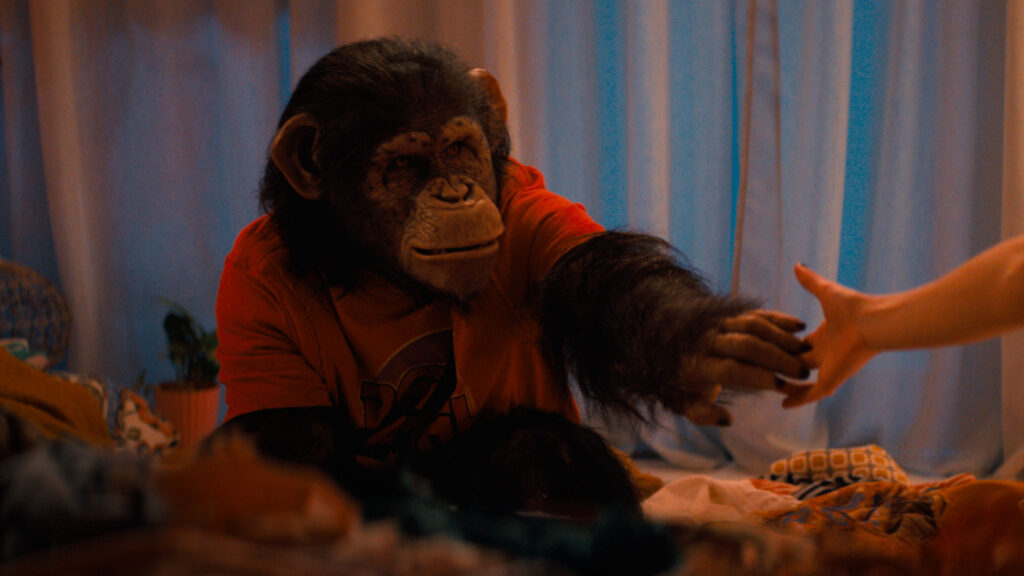
Some films yearn to transport you to days bygone, preying on your nostalgia for the glories of the past. Then there’s Eddington, the latest freak-out from Ari Aster and the exact opposite of a whimsical memory-lane venture, instead regarding its chosen era with suspicion and exasperation. Set in May 2020 at the outset of the COVID-19 pandemic, it’s an unholy time machine of a movie—the kind that will have you clawing at the walls, breaking your fingernails as you search for a way out.

Aster made his bones with Hereditary, a skin-crawling nightmare that refused to let you ever look at your parents or telephone poles the same way again. Eddington has no curses or demons or decapitations, but thematically speaking, it’s even scarier than his debut, seeing as it grapples with society’s collective cluelessness in response to an encroaching plague. Sure, supernatural forces are disturbing and all, but they’ve got nothing on human stupidity. Read More

Superman: Planet of the Capes

Rachel Brosnahan and David Corenswet in Superman

In some ways, Krypto is a bad dog. He doesn’t obey commands. He’s easily distracted, especially by flying squirrels. His affection borders on violence. “It’s more of a foster situation,” his caretaker says, quick to disclaim ownership of this mutant mutt with white fur, a red cape, and asymmetrical ears. Just because Krypto proves crucial in saving the world doesn’t make him any less embarrassing in public.

The spirit of Krypto—playful, excitable, anarchic—is one of the two lodestars guiding writer-director James Gunn in his reboot of Superman, the first feature he’s made for DC Studios since becoming co-chair of the company three years ago. The other animating principle on display is an invisible sense of duty—an obligation to reshape the Man of Steel into a wholesome and commercially pleasing figure. Gunn rose to prominence with his Guardians of the Galaxy pictures, which leavened the grandiose planet-saving of the Marvel Cinematic Universe with impishness and swagger. His challenge here is to retain those films’ sparky vivacity while still delivering a quality-controlled product with mass appeal—to merge comic with comic-book. Read More

Jurassic World Rebirth: Yawn of the Dinosaurs

Jonathan Bailey and Scarlett Johansson in Jurassic World Rebirth

Do people still like dinosaurs? The box office data would seem to say so, but the deflated characters of the new Jurassic World movie aren’t so sure. “Nobody cares about these animals anymore,” bemoans Dr. Henry Loomis (Jonathan Bailey), the curator of a prehistoric museum with flagging attendance. Shortly before, we learn that a brachiosaur has escaped from confinement in New York City, yet while the sight of a mighty beast roaming the Big Apple’s sidewalks might have once provoked astonishment or panic, now it results in a simple traffic jam. The return of ancient “terrible lizards” to contemporary civilization is no longer cause for wonder or terror. It’s just an annoyance.

The chief innovation (or regression) of this latest episode in the Jurassic World franchise—which is subtitled Rebirth, and which has been directed by Gareth Edwards from a script by David Koepp—is that it’s aware of its own potential obsolescence. Now that hulking computer-generated monsters are pro forma in mainstream cinema, a new Jurassic flick has little hope of conjuring the sense of majesty that accompanied Steven Spielberg’s 1993 classic. So despite some cheeky references to that picture—the shot of a car’s mirror with its famous “Objects are closer than they appear” warning; a faded banner proclaiming “When dinosaurs ruled the earth”—Rebirth doesn’t attempt to match its conceptual grandeur or vast ambition. It’s a blockbuster about huge creatures that keeps things relatively small. Read More

F1: Rogue Fun, a Car Wars Story

Brad Pitt and Damson Idris in F1

Pay attention to the tennis balls. As a middle-of-the-road racing picture, F1 supplies the expected zoom-zoom accoutrements: checkered flags, roaring engines, heavy tires frantically drilled into mighty chassis. But the most symbolically meaningful piece of sports paraphernalia on display is the set of yellow-green spheres that the film’s hero routinely bounces against a wall in order to test his reaction time. His facility may be equipped with a fancy electronic dummy that measures responses down to the millisecond, but he has no need for such new-age flourishes. He’s old-school.

So, in some ways, is F1, even if its presentation is also robustly contemporary. As a piece of storytelling, the movie is painfully obvious and familiar—a clumsy grab-bag of buddy comedy, underdog melodrama, and other hoary templates. But despite its thinness and its predictability, F1 isn’t without its durable pleasures. It has been muscularly directed by Joseph Kosinski, and it affords the satisfaction of watching talented actors execute their assignments with warmth and precision. Read More

28 Years Later: The Secret Life of Zombies

Aaron Taylor-Johnson and Alfie Williams in 28 Years Later

If you thought Danny Boyle’s zombies were fast, wait until you see his editing. Back in 2003, Boyle’s 28 Days Later infused the cinematic undead with new and decidedly speedier life; unlike the plodding and implacable flesh-eaters immortalized in George A. Romero’s Night of the Living Dead and its progeny, these creatures were frenzied and enraged, rushing after our human characters with haste as well as determination. Not all of the monsters in 28 Years Later, Boyle’s return to the franchise, are so athletic—a new species of beast called slow-lows lumber through the vacant countryside like sickly golems—but the pace of his filmmaking mirrors the deranged vigor of his most rapid marauders. One of the scariest things about zombies is that they never tire—they are always craving their next meal—and when it comes to pure energy, Boyle similarly exhibits no signs of slowing down.

Whether his skill matches his verve is another matter. For much of its first half, 28 Years Later adopts a style that proves less exhilarating than simply exhausting. The camera (often an iPhone) whipsaws through the scenery, attempting to mimic the characters’ rising heart rates and sowing chaos in the process. When arrows pierce the brains of rampaging zombies, Boyle invariably reshows the tearing of viscera from a different angle, like we’re watching a marksman’s overzealous highlight reel. Most curious is the hyperactive editing, which repeatedly splices the main action with bygone footage of antiquated warfare, like goose-stepping German troops or medieval British archers from Laurence Olivier’s adaptation of Henry V. It’s a historical seminar crossed with a Jason Bourne movie. Read More