The Handmaiden: Don’t Trust Anyone, the Help Least of All

Kim Tae-ri is a servant with a secret in Park Chan-wook's amazing "The Handmaiden"

Murder, deception, hot sex, cold death, severed fingers, poison cigarettes, vials of deadly blue liquid, monsters lurking in the basement—The Handmaiden, the exquisite and electrifying thriller from Park Chan-wook, has it all. A fire-breathing romance wrapped inside a stately period noir, it is simultaneously gorgeous and grotesque, a rampaging id colliding with a meditative superego. That may sound contradictory, but The Handmaiden doesn’t need to choose between beauty and excess. Over the course of this serpentine, deliriously entertaining film, excess becomes beauty.

Nothing about this frenetic, fastidious movie is traditional or predictable, except perhaps that it feels like the logical next step of Park’s career. Deemed a provocateur ever since he crashed onto the cult scene with Oldboy, Park has taunted and delighted audiences with his singular combination of immaculate craft and utter debauchery. For me, Oldboy strayed a bit too far toward the latter (I’ve yet to see the other two films in his “vengeance” trilogy, Sympathy for Mr. Vengeance and Lady Vengeance), but he smartly tweaked his formula with Thirst, a warped love story that used vampirism to explore the insatiable need for human connection. Then came the terrific Stoker, a cold-blooded tale of Gothic horror that Park set in the sweltering heat of the American South. Now he returns to his native South Korea, but while The Handmaiden finds Park going back home, it demonstrates that his virtuosic command of cinematic language is more vibrant than ever. Read More

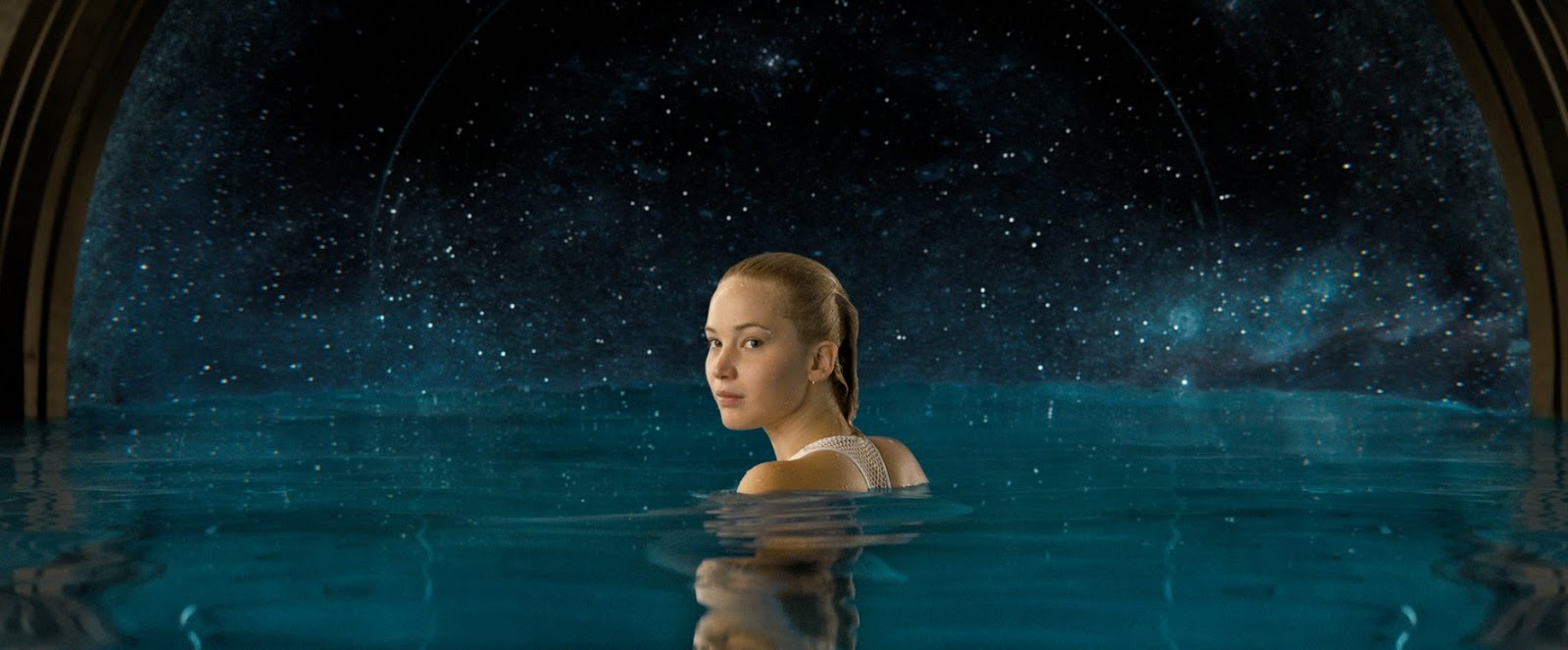
Arrival: They Come in Peace, But What About Us?

Amy Adams is a troubled linguist in Denis Villeneuve's mesmerizing "Arrival"

Arrival is a movie that asks a lot of weighty, philosophical questions—What does it mean to be human? How do our memories inform our sense of self? Are we alone in the universe? Are we alone with one another?—so let’s begin with a question typically asked of movies: What is it about? The answer, naturally, is a matter of perspective. From a literal standpoint, Arrival is an example of “hard” science-fiction, a piece of popular art that contemplates, with scrupulous discipline and serious pragmatism, what might actually happen if aliens suddenly appeared on Earth. That description is accurate, but it both over- and undersells the merits of this complex, thought-provoking film. On a deeper level, Arrival is a meditation on human connection, or lack thereof: the ties that bind us, the prejudices that plague us, our twin capacities for hope and fear. It isn’t about aliens. It’s about people.

That’s a lofty goal, and the challenge for Arrival, which has been directed by Denis Villeneuve from a screenplay by Eric Heisserer (based on a short story by Ted Chiang), is to fully explore its intellectual inquiries while simultaneously supplying frissons of drama and suspense. It’s a delicate balance that the film doesn’t always strike perfectly—it’s a little slow, and the integrity of the storytelling is occasionally compromised by a few one-dimensional minor characters. On the whole, though, Arrival is a consistently fascinating and sporadically transcendent achievement, the rare movie that demands being grappled with and argued about. Read More

Doctor Strange: Do No Harm. Save the World.

Benedict Cumberbatch is a sorcerer in Marvel's "Doctor Strange"

Doctor Strange opens with a dizzying, disorienting sequence of eye-popping incredulity. Somewhere in a South Asian monastery, a man in a robe rips a few pages out of a heavy, important-looking book, then flees from a hooded figure. While running, the man waves his hands and opens a portal to a different continent, and the action suddenly shifts to a brightly lit European metropolis. There, rather than engaging in hand-to-hand fighting, the combatants somehow will objects into motion, and their very surroundings—the buildings, the pavement, the sky itself—seem to twist and contort around them. When I watched this scene, I had absolutely no idea what was happening; now, having seen the entire film, my understanding is only marginally improved. Yet while I was (and remain) clueless, I was nevertheless riveted by the sheer vigor of the filmmaking, the visual dynamism and formal audacity. The ability to induce this sensation—a feeling of awestruck confusion and slack-jawed wonder—is the greatest achievement of Doctor Strange. It may not make a lick of sense—the more it attempts to clarify itself, the more tedious it becomes—but damn is it cool.

Eventually, anyway. Setting aside its discombobulating prologue, the opening act of Doctor Strange functions as a reliably formulaic superhero origin story. Its protagonist, Stephen Strange, is a supercilious New York neurosurgeon, the kind of only-in-the-movies doctor who routinely performs impossible procedures with unmatched skill and unflappable calm. He is as callous as he is capable, and while he may be a medical genius, he’s something of a social misfit; it’s almost as if Sherlock Holmes has swapped out his pipe and deerstalker cap for a surgical mask and gloves. That impression, of course, is hardly coincidental: Strange is played by Benedict Cumberbatch, the immensely talented English actor who first wriggled his way into most viewers’ hearts as the titular detective on the BBC’s Sherlock. Here, he’s just as smart but even more disdainful. When he pauses during a particularly perilous operation to tell a subordinate to stifle his wristwatch (because its ticking second-hand is interfering with his concentration), you can taste the haughty intelligence dripping off him. Read More

Moonlight: From Boy to Man, with Submerged Desires in Tow

Alex Hibbert and Mahershala Ali in Barry Jenkins' "Moonlight"

A tender, piercing, achingly sad story of loneliness, Moonlight sneaks up on you. In empirical terms, it’s fairly modest: It is short, it was made on a limited budget, and it stars no high-profile actors. But as it progresses, this brittle, forceful film surreptitiously accumulates a startling amount of raw power. It doesn’t quite knock you out—it is too nuanced and compassionate to wield its intensity as a sledgehammer—but it still has the capacity to paralyze you.

Written and directed by Barry Jenkins from a story by Tarell Alvin McCraney, Moonlight chronicles the life of Chiron (pronounced shy-ROAN), a young, gay black man growing up in Miami’s impoverished Liberty Square. It unfolds as a series of cinematic chrysalides, considering Chiron at three different stages of growth. In the first, he is a scrawny nine-year-old derogatively dubbed Little (Alex Hibbert), suffering the abuses of local bullies and living in squalor with his crack-addicted mother, Paula (a heart-breaking Naomie Harris). In the second, he is a sullen teenager (Ashton Sanders), more self-assured but still subjected to the same violent rituals of prejudice and persecution. I will leave the details of the final phase of his metamorphosis to the viewer, except to say that Chiron grows into a puissant adult who now goes by the name of Black (Trevante Rhodes). Read More

Hacksaw Ridge: In the Shadow of Death, Bearing Witness, But Not Arms

Andrew Garfield is a pacifist at war in Mel Gibson’s "Hacksaw Ridge"

Early in Hacksaw Ridge, a jittery blood donor attempts to impress a pretty nurse with a spectacularly cheesy pickup line. Yesterday, when she jabbed a needle into his arm, was the first time they’d met; today, he insists that he needs a transfusion because ever since he saw her, his heart’s been beating so fast that he’s nearly out of blood. “That’s pretty corny,” she responds, but when he asks if that makes it bad, she blushes and continues, “I didn’t say that.” Hacksaw Ridge, the fifth movie directed by Mel Gibson, is also pretty corny—OK, it’s very corny. It is also sappy, grandiose, and preachy. Does that make it bad? Not by a long shot.

That aforementioned blood donor is Desmond Doss, played as an adult with sly, aw-shucks charm by Andrew Garfield. We first meet him as a boy (portrayed by Darcy Bryce) in Virginia’s Blue Ridge Mountains, where he roughhouses with his brother before inadvertently knocking him unconscious. Fearing for his sibling’s life, the young sinner slumps into an adjoining room, where he gazes at a crude illustration of a murder, ornamented with the text of one of the Commandments: “Thou shalt not kill.” This blunt, didactic sequence quickly establishes two things: one, Doss will grow up to be a deeply religious pacifist, and two, Gibson has no use for subtlety. Read More