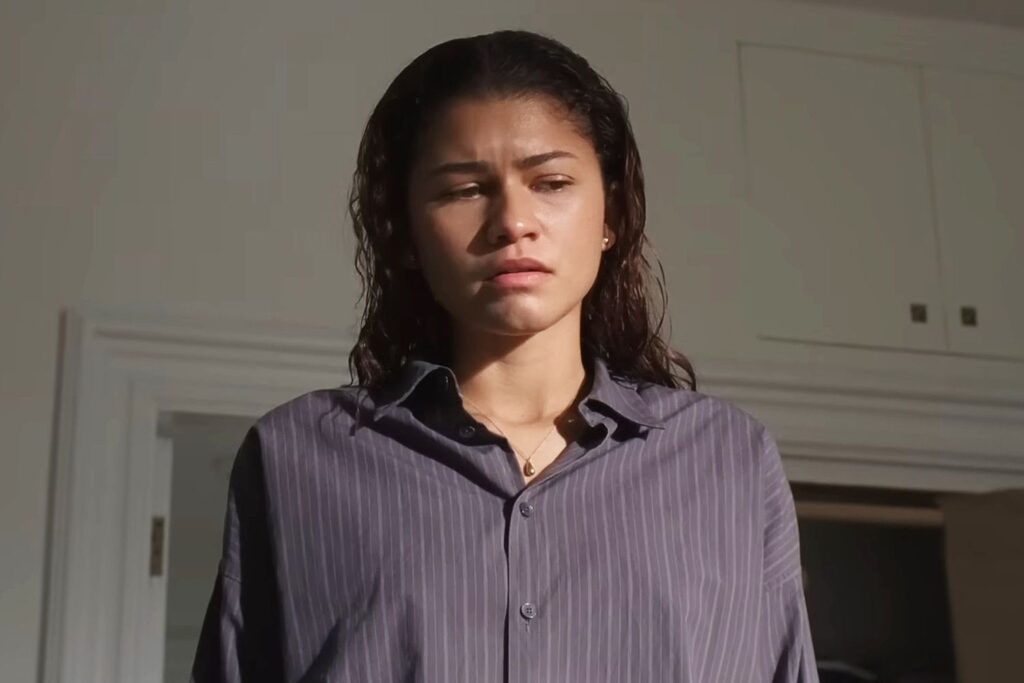
The Drama is so called on account of its in-universe angst and chaos, but out in the real world its title acquired a meta meaning. In the days leading up to the film’s release, it became the center of a swirling social-media discussion—not about its quality or its themes, but about how to discuss it at all. Were critics allowed to mention its twist? Was “twist” even the right word for a narrative turn that occurs during its first reel? How do you write about a movie when you can’t write about what the movie is about? Is Film Twitter now a police state—a spoiler police?
That all of this dialogue was taking place before The Drama even opened would seem to do its viewers few favors. But the latest iteration of this discourse, spurred in part by A24’s unusually oblique trailer, reignited a familiar firestorm about spoiler culture, a topic that inspires no shortage of vitriol. So let me make my position plain: Readers have no business dictating the work of film critics, who should have absolute freedom to say whatever the hell they want in their reviews. For the most part, spoilerphobes are whiny, entitled, and misguided. Also, they kind of have a point.
If it sounds like I’m advocating for both sides, that’s because in this instance, I play for both teams. As an amateur critic, I take seriously my task in scrutinizing the films I review, and I chafe at the notion that I’m duty-bound to safeguard readers from material that bears on my analysis. As a paying consumer who never sees movies until they open to general audiences, I try to walk into the theater as cold as possible—a goal that can be complicated, given the internet’s tendency to exhaustively litigate pictures well in advance of their premiere (especially for limited or festival releases). These two compulsions—the project of illumination and the desire for darkness—would seem to be incompatible.
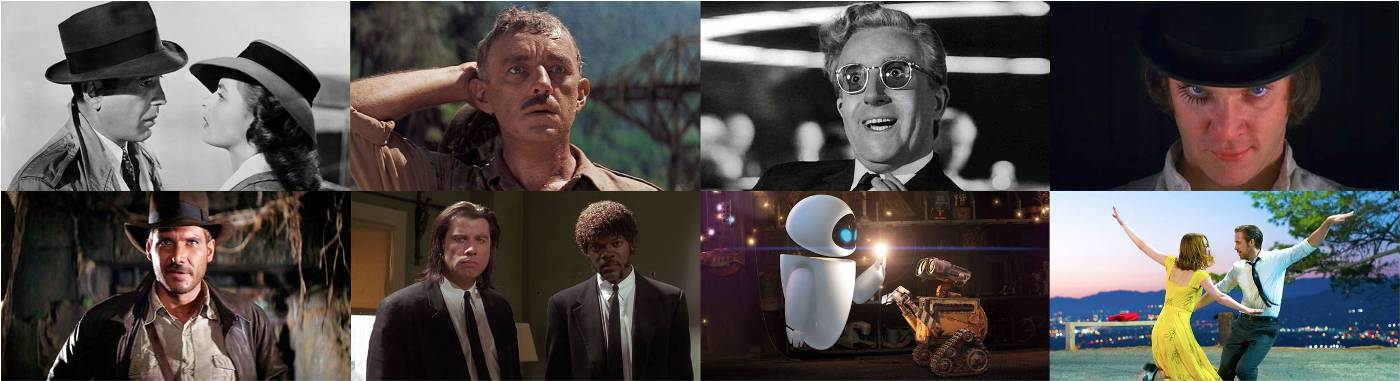
Except they’re not. If you’re a person who prefers not to learn any information about a film you plan on seeing—that is, if you’re a sicko like me—then you’ll be pleased to discover a perfectly plausible solution to this apparent quandary: Before going to the movie, don’t read any reviews. You’d be amazed how easy it is not to click on articles whose entire function is to wrestle with a picture’s style and themes, and which inevitably describe its plot. If you’re comfortable encountering such details before entering the theater (or, sigh, opening the streaming app), then by all means, read away. But if you want to shield yourself from such data, well, this isn’t A Clockwork Orange; nobody is stapling your eyelids open and beaming the words into your brain. (Frankly, I encourage you to click on your favorite writers’ pieces even if you don’t immediately read them, just to boost them economically, but that’s a separate issue.)
A common response to this logic is that people need to read reviews in order to inform themselves about whether to see a movie, and that they shouldn’t be subjected to crucial plot elements in the process. To begin with, telling people whether or not to watch a movie is decidedly not the point of film criticism. But beyond that, this argument strains credibility in the age of the internet. If you’re wondering how well a picture has been received, there are plenty of ways for enterprising readers to gather such data without parsing full-length reviews. (I would never advise anyone to visit the scourge that is Rotten Tomatoes, but Letterboxd and other apps offer easy access to star ratings, both individual and consensus.) And if you demand data about genre and tone so that you know what you’re getting into, Wikipedia and similar sites provide high-level summaries without divulging any precious revelations.
It might sound odd that I’m suggesting that people not read movie reviews, given how much of my life I’ve spent writing them. (Again, whether you plan to read or not, click away! Scroll down and check out the grade at the bottom!) But my policy stems from respect for the sanctity of those reviews in the first place. Appraisals of cinema may not be scripture, but the process is nonetheless a sacred task, one that energizes the medium and vitalizes the conversation surrounding it. And when spoilerphobes (or studios) exert influence over how critics write, it risks impairing the integrity of criticism as its own art form.
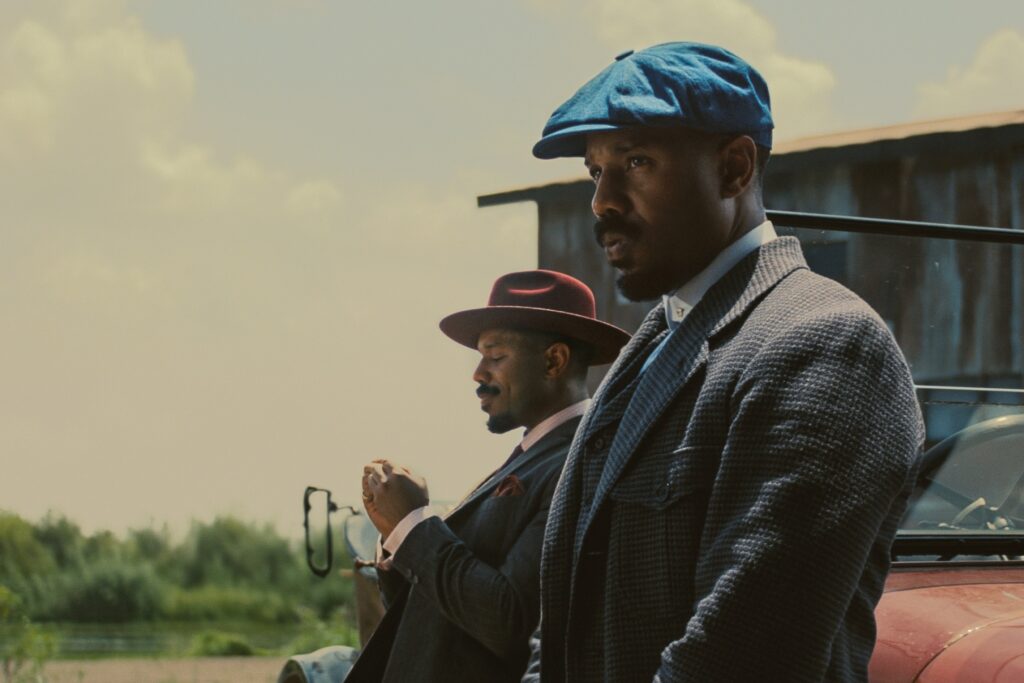
To be clear, movie reviews aren’t plot summaries; a good piece tends to be more concerned with craft, imagery, and message than with story. But a film’s plot is invariably its skeleton, and it’s often quite difficult to write about a picture without describing some of its early narrative developments. The Drama is just one such example; other recent instances include Send Help, Bugonia, and Weapons. To properly engage with these movies, you need to at least touch on their structure, and critics shouldn’t feel compelled to hamstring their analyses in order to protect readers’ imagined sensitivities.
Does this mean polite society is powerless to impose any guardrails on what people can write in their reviews? Basically, yes. I’m not suggesting that critics should be routinely disclosing third-act twists—although I’ve recently been reading some old New York Times reviews from the 1930s, and let’s just say they operated under a different standard when it came to discussing climaxes—but the rule of “buyer beware” remains in place pretty much throughout. Except…
Social media feels like it’s been with us forever, even if it remains in its infancy relative to other forms of writing. Among its many other consequences, it has supercharged the ancient ritual of “letter to the editor”; correspondence between writer and reader, once confined to a handful of unidirectional snippets, can now take place virtually in real time with countless participants. As a result, some critics who engage on such platforms tend to say, well, stuff about movies that haven’t yet been released. Sometimes lots of stuff.
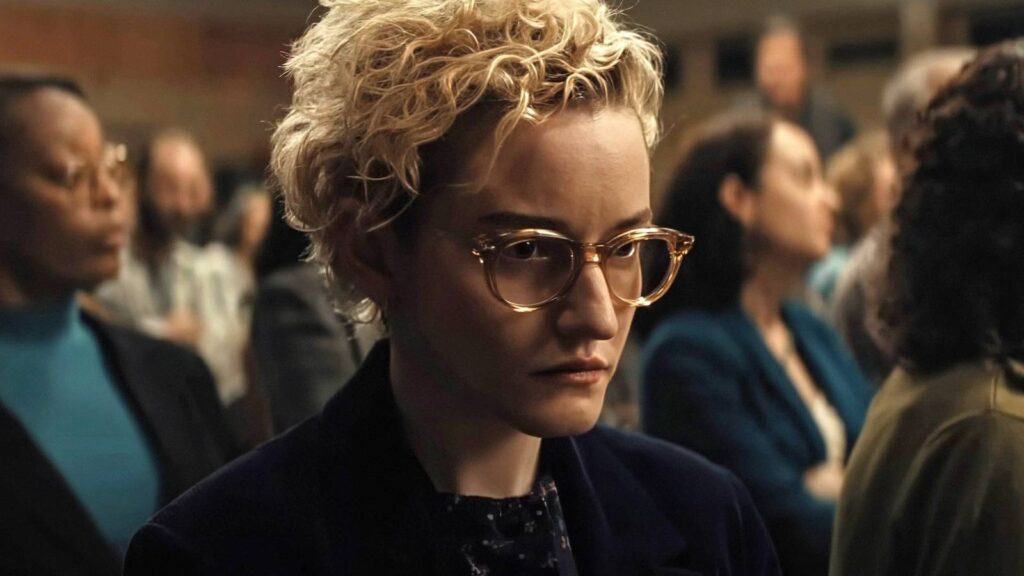
And this is where I’m compelled to switch positions and advocate for the spoilerphobes. The key is the difference between active and passive reading. When I click on a review, I’m choosing to consume the words therein, and I bear responsibility for whatever I learn. But when I’m scrolling through my feed on Twitter or Bluesky, I’m not seeking out details on an upcoming movie. No, I’m like Tom Noonan in Heat; information just comes to me, flying through the air.
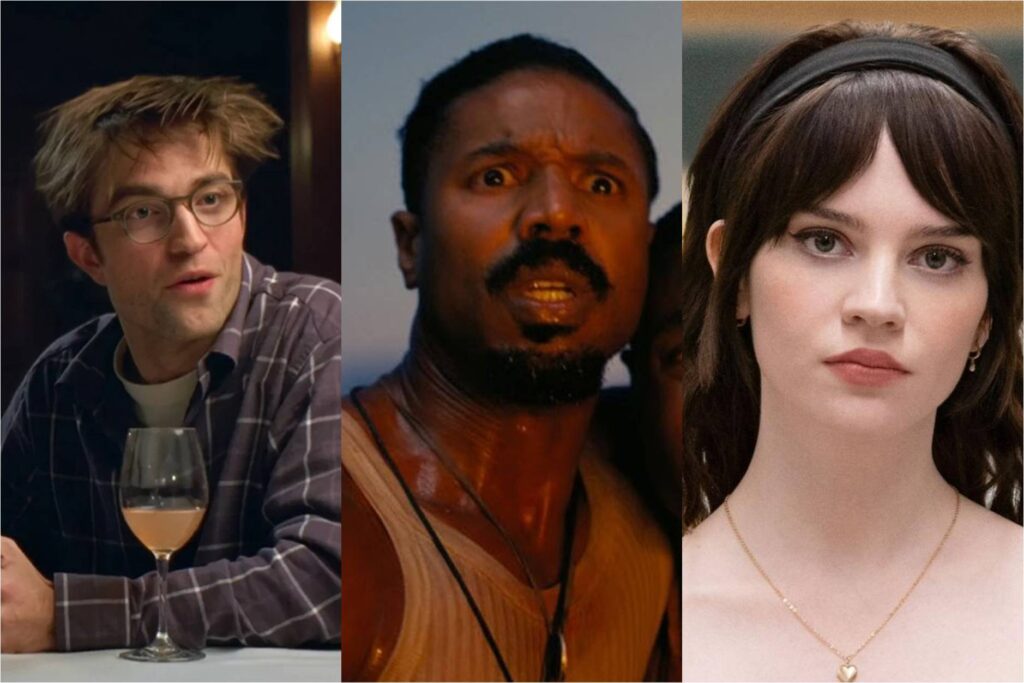
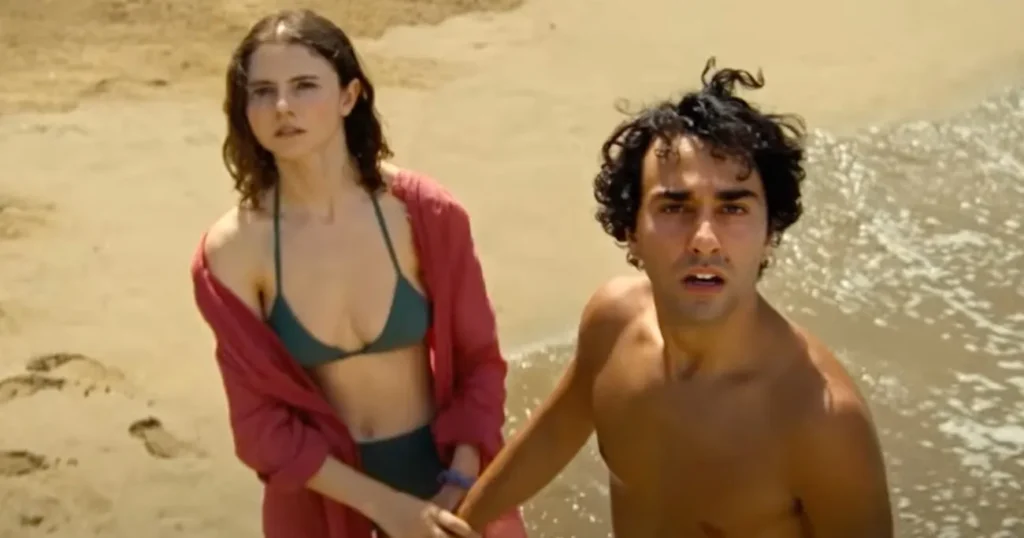
And I don’t want that. I don’t want to know that the villains in Sinners are actually [redacted], or that Sophie Thatcher’s character in Companion is a [redacted], or that Palm Springs takes place in a [redacted], or that the cast of Thor: Ragnarok includes [redacted], or that Old is about a beach that makes you [redacted]. But I knew all of that stuff, simply by virtue of browsing a simple website, without affirmatively searching for anything.
I’m not blind to the first-world nature of this complaint. I also recognize that if I were truly committed to solving this problem, I could just abandon social media altogether. But I don’t like that idea—partly because these apps have other uses (though Twitter less so these days), but mostly because, if you carefully curate your experience, social media can remain a thriving place for cinematic discourse, and I want to participate in those conversations. I just don’t want to encounter spoilers in the process.
Part of the problem, I suspect, lies in the primary vector for movie spoilers: trailers. Most critics reasonably assume that people have already seen a film’s preview (which typically reveals significant information), so they don’t think they’re letting slip anything extra. But I don’t watch trailers; in fact, I take great pains not to watch trailers. Regardless, social media strikes me as the one venue where, unlike in reviews, critics do have a duty to avoid mentioning salient details, especially before a movie has yet been released. I recognize that writers need to promote their work, but there are ways to do so without divulging key plot points in individual posts. (This goes double for headlines; websites can still goose clicks without giving away vital intel.)
So, while acknowledging the plaintive character of my position—and while maintaining that most spoilerphobes are troglodytic halfwits who have no interest in fostering genuine conversation—I’m asking critics to, in the words of Diane Court, be a little decent and refrain from disclosing too much data on social media, where it can prey upon innocents in the wild. Maybe someday, the industry will accept my proposal of preventing everyone else from seeing a movie until I personally have the opportunity, at which point we can all discuss those crazy twists together. Until then, save the juicy stuff for your writing rather than your posting.
And that prose is what really matters anyway. Social media misfortunes aside, spoiler culture is pernicious in how it seeks to poison film criticism—the noble, invaluable ritual of people collaboratively writing and reading about cinema. It may be a dying vocation, but critics should be liberated, not constrained, in how they approach their craft. If you interfere with how people compose their reviews, well, that’s when the movies really get spoiled.

Jeremy Beck is the editor-in-chief of MovieManifesto. He watches more movies and television than he probably should.