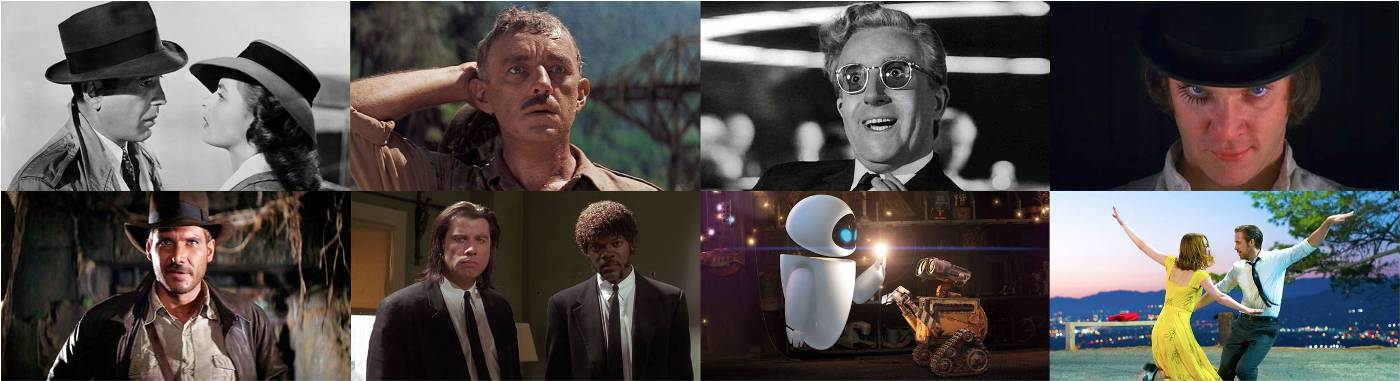
The tagline for David Lowery’s Mother Mary reads, “This is not a ghost story.” For certain cinephiles, this seems less like an ominous pronouncement than a bizarre statement of the obvious. Of course this isn’t A Ghost Story; that was Lowery’s 2017 experimental drama, which found Casey Affleck standing under a sheet and Rooney Mara stuffing pie in her face. It was challenging and slow, but it rewarded patience, with a remarkable third act that posed provocative questions about love, marriage, societal evolution, and the whole damn human condition.
Mother Mary is similarly ambitious and not nearly as good. But it has its moments, with impressive individual scenes and striking images. It wields its beauty in service of a thin and listless narrative, but taglines and titles aside, “story” has never been Lowery’s department.
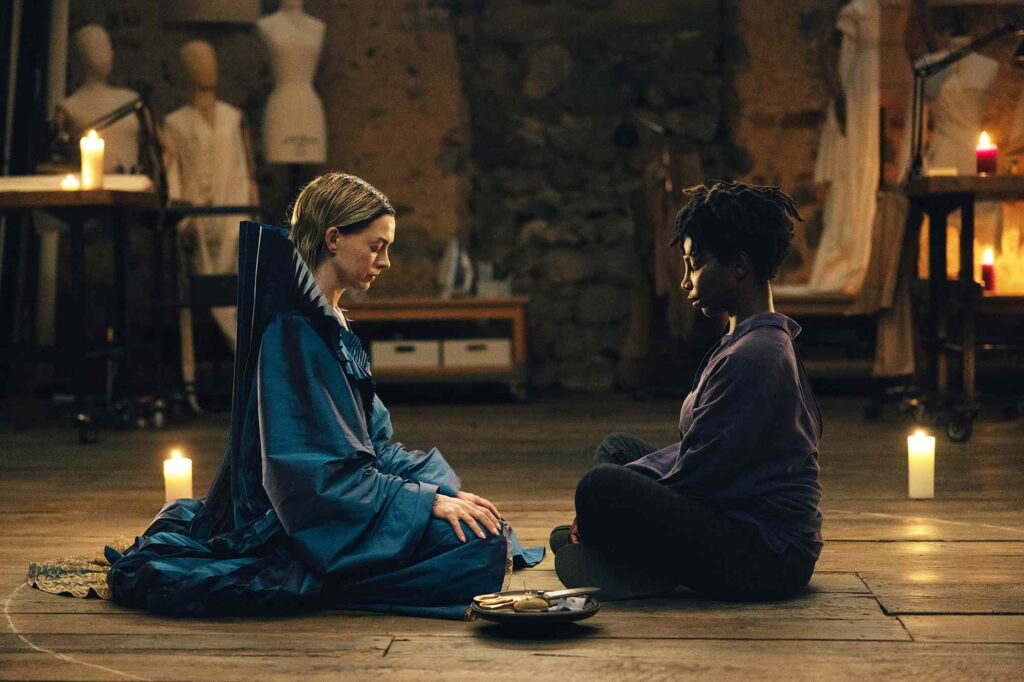
He’s especially allergic to backstory, preferring to place you into his characters’ headspace without any tiresome exposition. Mother Mary opens with a romping performance from its titular persona (Anne Hathaway), a beloved pop star who is plagued by unspecified demons. Not long after, surrounded by staffers and hangers-on (the films of Sofia Coppola come to mind), she impulsively rips off her headgear and dashes into the street, as though she’s escaping an opulent prison. She runs toward the estate of Sam Anselm (Michaela Coel), a fashion designer whose orotund voiceover—“You are a carcinogen, a tumor whose malignancy has defined the ebb and flow of all I’ve done”—signals the pair’s fraught history.
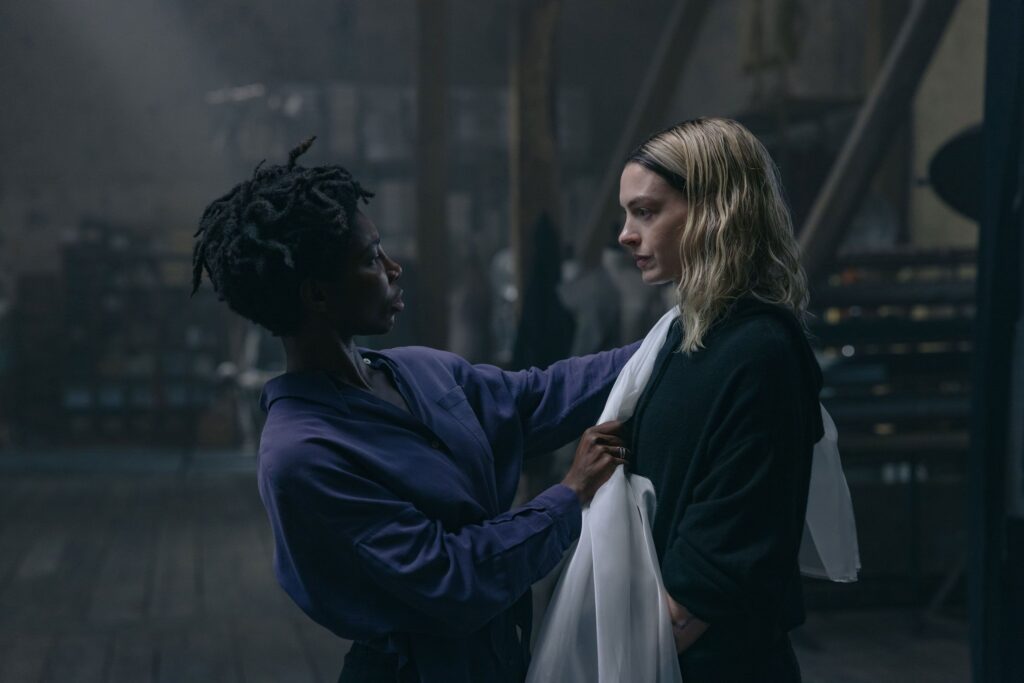
The first act of Mother Mary, which takes place mostly in Sam’s adjacent facility that resembles an unusually spacious barn, is a clenched, verbose two-hander. Mary has a show coming up in three days, and she wants Sam to make her a new dress. (“No red,” she warns, with a resolve that arouses suspicion.) Sam is skeptical. Also, she’s angry. Just why should she help this entitled diva who plainly hurt her long ago, and whose music she stopped listening to out of spite? She seethes, Mary pleads, and the two of them dance around one another, metaphorically and sometimes literally, recalling old times and poking at scabbed wounds.
The attack-and-defend nature of Sam and Mary’s verbal dueling inverts the dynamic of The Christophers, which came out just the week before, and which also found Coel engaging in charged repartee. There she was more reactive, parrying Ian McKellen’s pompous self-regard with intelligence and restraint. Here her character is on the offensive, intentionally antagonizing Mary, even as her hostility begins to bleed into curiosity and maybe seduction.
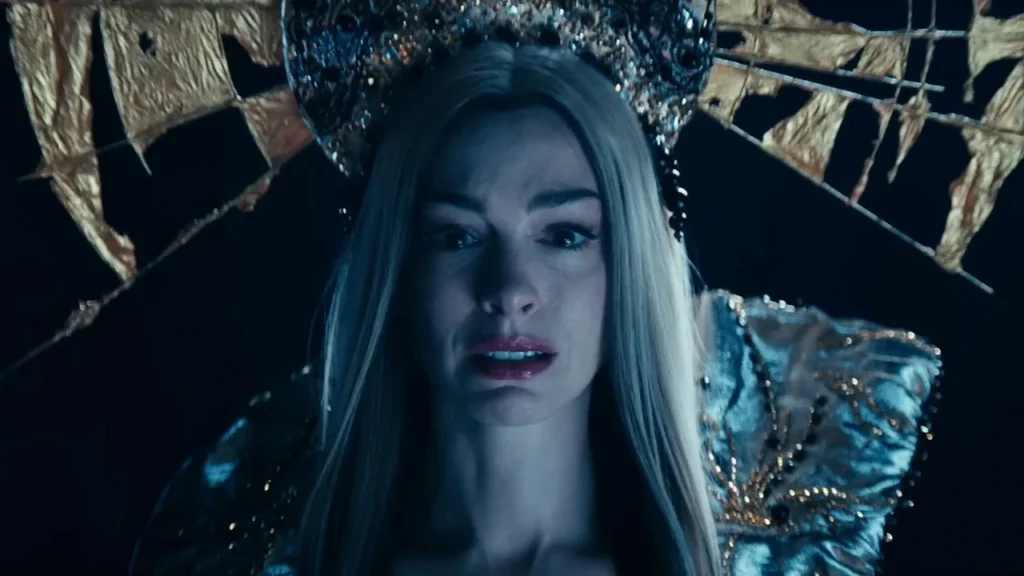
Both actors have screen presence, and there’s pleasure in watching them circle each other. At first, Lowery reins in his showboating instincts, which brings more punch to the arresting sequence when Mary performs a rendition of her newest single without music—a kinetic display that takes the vigorous joy of Magic Mike and replaces it with cold, impassive silence. Yet though Lowery conjures an atmosphere of unease, there’s little weight behind his ostensibly sharp wordplay. It’s immediately apparent that he has no interest in detailing Sam and Mary’s past, and that’s fine, but the dialogue isn’t sufficiently enveloping to make you feel the characters’ heated emotions. It’s a pantomime of anguish.
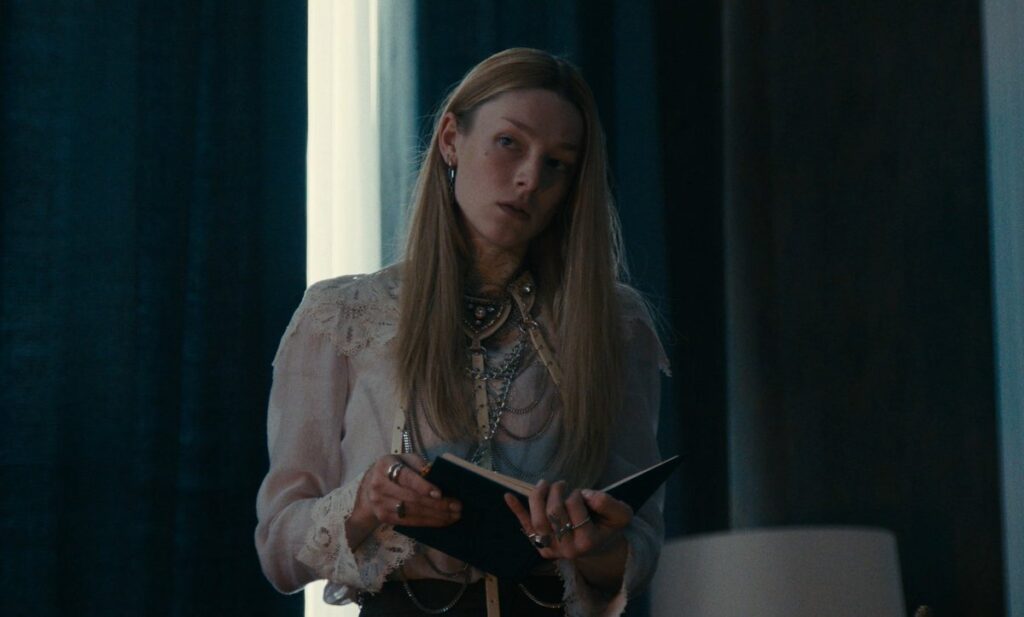
Rather than confine the entirety of Mother Mary to this format of supposed intimacy, Lowery eventually expands his scope, launching into multiple flashbacks and showing glimpses of Mary’s prior concerts. It’s here where the movie, despite its professed abnegation of all things ghostly, acquires a supernatural tint—first by chronicling Sam’s battles with an unruly piece of fabric, then by turning to Mary’s hushed séance with a devoted medium (FKA Twigs).
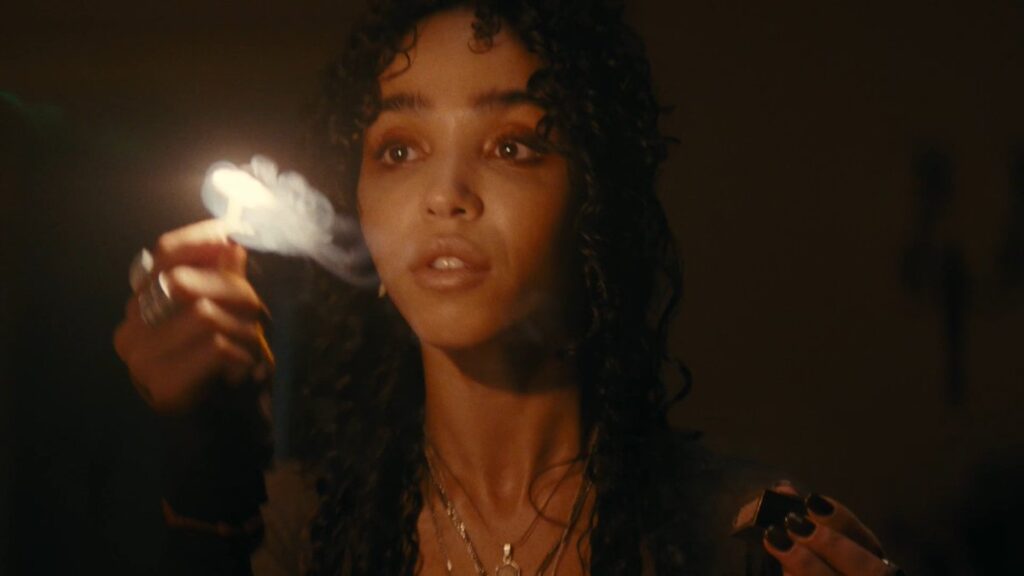
In terms of plot, none of this material is remotely credible (it isn’t meant to be) or especially interesting (more of a problem). Still, the picture’s shift from talky to baroque affords Lowery the latitude to indulge in the aggressive stylization that is his greatest filmmaking strength. (I’m still not certain whether I liked The Green Knight, but it sure was pretty.) Visually speaking, Mother Mary is insistently gorgeous (the cinematographers are Andrew Droz Palermo and Rina Yang), with inventive use of space, sound, and color. I am hard-pressed to dislike any movie where the chief antagonist assumes the form of an ethereal, floating red dress.
Thematically, Mother Mary is presumably trying to say something about pop stardom—the perils of global fame? the vulgarities of parasocial relationships?—but Lowery’s writing is too willfully enigmatic to articulate anything as basic as an idea. The music itself, with a score by Daniel Hart and songs from Jack Antonoff and Charli XCX, is solid without being memorable; in turn, Hathaway’s singing and striding credibly approximate a generic cultural phenomenon but lack individuality. Again, this vacuity is probably the point, but it doesn’t help bridge the distance between the screen and the viewer.
As it happens, Charli’s involvement links Mother Mary with Wuthering Heights, another opulent 2026 production that prioritized style over substance. The crucial difference is that, whereas Emerald Fennell’s literary adaptation was proudly unsubtle, splashing its feelings all over the walls, Lowery’s original creation is cagey, withholding its messages rather than shouting them. Early on, Sam presses Mary on what she desires in a dress, offering a handful of suggestions (profundity, authenticity) before landing on one that meets her approval: clarity. It’s a meta joke; despite Lowery having finally sloughed off the accusations of imitation Terrence Malick, the last thing this movie could be called is clear.
It is watchable, though, both for its committed performances and its otherworldly aura. To paraphrase that tagline once more: This is not a good story. But it is a work of ambition and craft, and its heedlessness lends it value as a curio—an intriguing B-side to distract you until the next top 40 hit comes along.
Grade: B-

Jeremy Beck is the editor-in-chief of MovieManifesto. He watches more movies and television than he probably should.