In Indiana Jones and the Temple of Doom, Kate Capshaw describes archaeologists as “funny little men searching for their mommies.” “Mummies,” Harrison Ford corrects her. What’s the difference? Even the scariest monsters have parents, and Lee Cronin’s The Mummy—more on that vexing title in a bit—is a horror movie about the agonies of child-rearing. We all want our kids to grow up safe and smart and responsible, but life tends to present challenges: disease, academic hardship, financial and spiritual ruin. Every family has its demons. Some are more demonic than others.
To describe The Mummy as a metaphor of tortured parenthood is to give it more credit than it deserves, and more depth than it courts. This ain’t Hereditary. It is instead a maximalist, blunt-force nightmare whose primary goal is to provoke terror through relentless, assaultive chaos. Keep your silly quips and your classical adventurism for Brendan Fraser. This supernatural being is out for blood.
Such lack of pretension is oddly refreshing. What grates about The Mummy is that its nuts-and-bolts execution is too obvious, too hackneyed, to be exciting or scary. Cronin isn’t incompetent; he knows how to wield gore for wincing impact, and he likes showing off with the camera. (I treasure the split diopter technique, but the number of dual-focused frames on display here verges on obscene.) But he only knows one speed, and after awhile, his unyielding velocity—an off-key medley of shrieking, gnashing, and growling—feels like he’s running in place.
The Mummy begins with one of those ostensibly spooky cold opens that really just highlights its impending shrillness. An Egyptian family of four cavorts in a car before arriving home and discovering a bloodied bird, whose limp body regrettably evokes a scene from Dumb and Dumber. Soon mom and dad are descending into a basement lair, straining with all their might to open an ominous-looking sarcophagus. They worriedly peer inside and initially hiss a sigh of relief but then LOOK OUT! something moved, and someone’s dead.
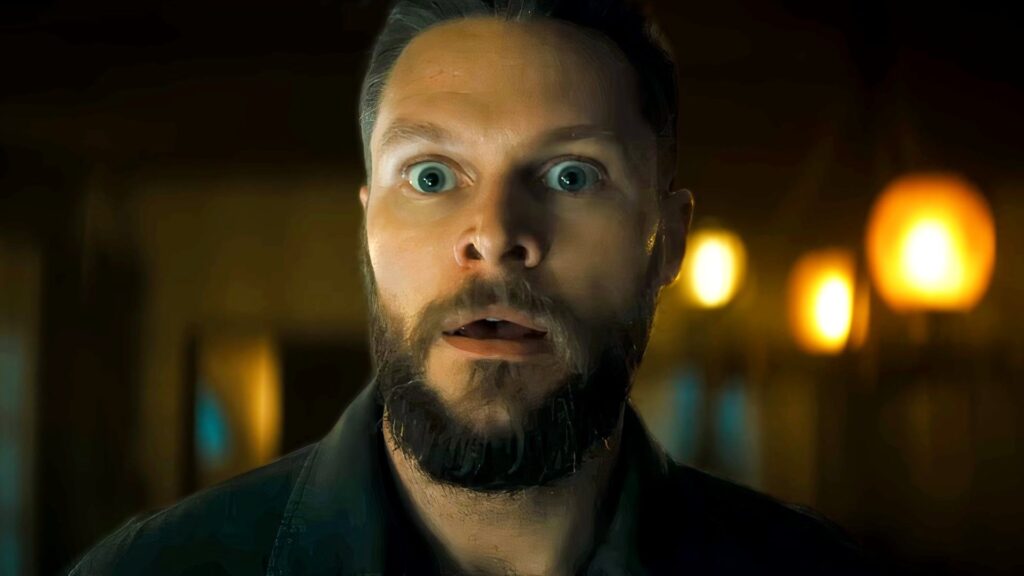
Cronin’s screenplay soon shifts to a different nuclear unit, one headed by Charlie (Jack Reynor) and Larissa (Laia Costa), but in atmospheric terms, The Mummy spends most of its time repeating variations on that stale opening scene. There are lots of close-ups of frightened characters (Reynor’s eyes are perpetually wide), accompanied by swells in Stephen McKeon’s noisy score, followed by bursts of movement and violence. It’s dynamic but not especially gripping, prioritizing sudden shocks over sustained dread.

Cronin… wait, just who the hell is Lee Cronin, anyway? He’s only directed two prior features: The Hole in the Ground, which I haven’t seen, and Evil Dead Rise, a competently made, ultimately forgettable addition to Sam Raimi’s classic canon. He obviously lacks the pedigree to warrant slapping his name on the marquee, a gesture typically reserved for true icons like Alfred Hitchcock or Francis Ford Coppola (or, er, Tyler Perry). But it’s the second half of the film’s title that proves even more puzzling, because despite its African iconography and skittering insects, this is barely a mummy movie at all. It really should’ve been called “Lee Cronin’s The Exorcist.”
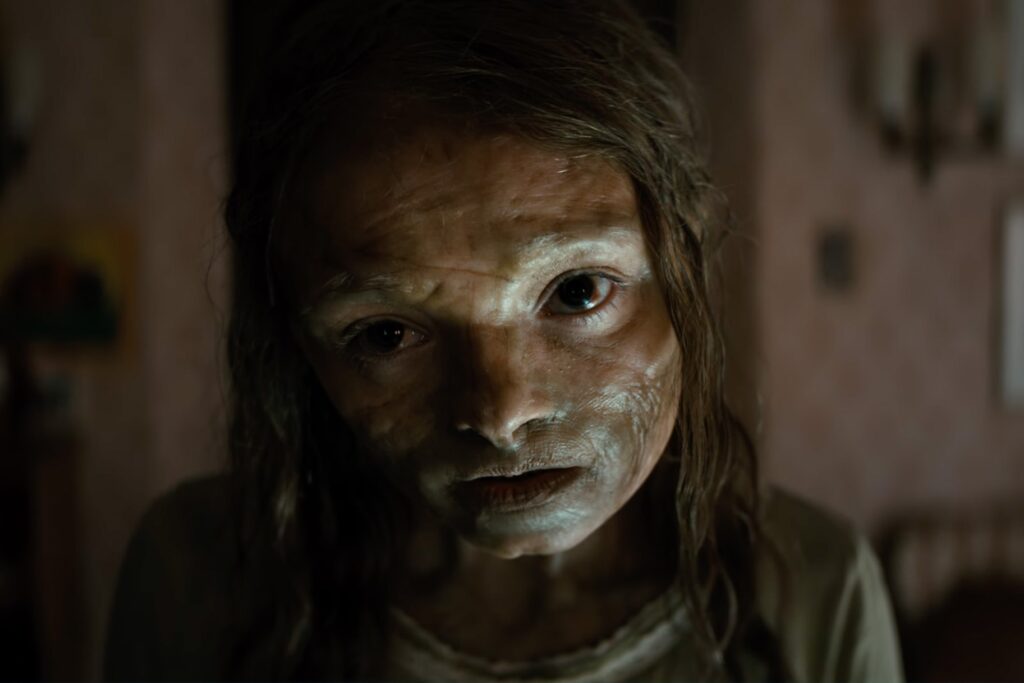
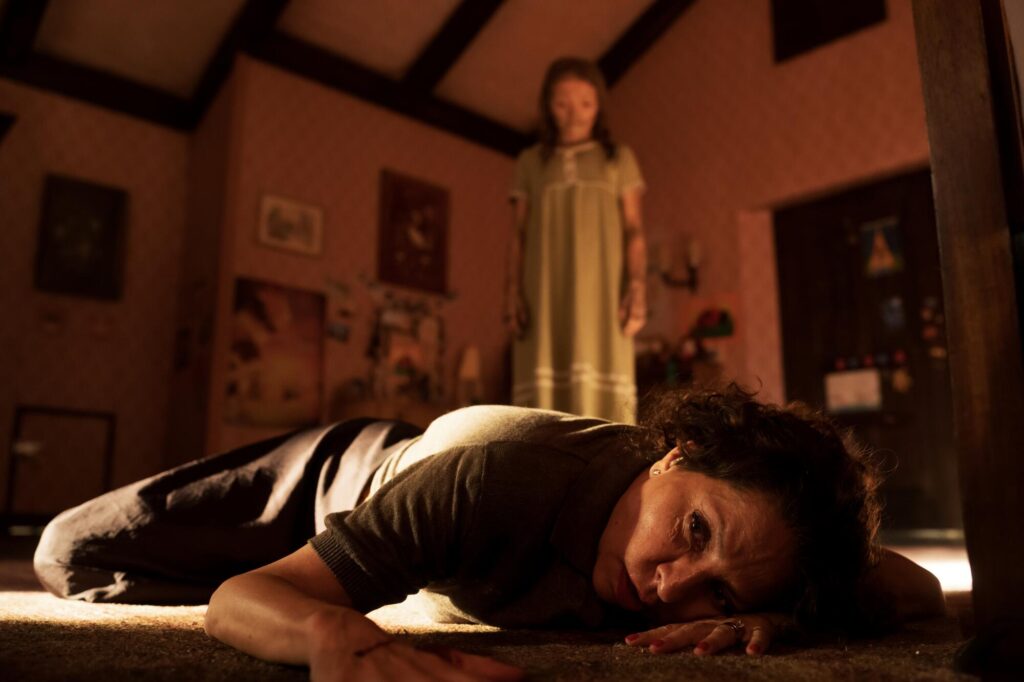
That’s right, The Mummy is a possessed-kid picture. It centers on Charlie and Larissa’s long-lost teenage daughter, Katie (Natalie Grace), who went missing years ago but has now reemerged, albeit not as the precocious cherub they remember. This Katie has distended skin, droopy eyes, and dirty talons for nails. She doesn’t talk so much as emit guttural barks. She’s got something buried deep inside her, and it’s not just the usual childish resentment.
As generic as much of The Mummy is, it manages to exploit Katie’s creepiness in ways both suspenseful and playful. The movie’s best sequence—the one moment when it inspires a hush of reverent fear—arrives when Larissa resolves to cut her catatonic daughter’s toenails, with agonizing results. Katie also starts manipulating her younger siblings, and Cronin enjoys warping cute children into avatars of evil; maybe it’s a cheap trick, but there’s still a frisson of nervous laughter when Katie’s adorable sister (Billie Roy) calmly calls her elementary school teacher a “rat-faced cunt.”
She keeps muttering that phrase to herself in the ensuing scene, which is indicative of Cronin’s disdain for restraint. His strenuous mayhem, in particular his fondness for ravaging his characters’ bodies, occasionally approximates good filmmaking, even if he can’t hope to match Raimi’s inimitable seriocomic flair. A funeral sequence features a fun gag with false teeth, while a late set piece where a scorpion enters a victim’s mouth and exits through their neck is squirmingly arresting. There’s even a clever bit involving Morse code. But the constant havoc is ultimately enervating, and the longer the movie rages on, the more inert it feels.
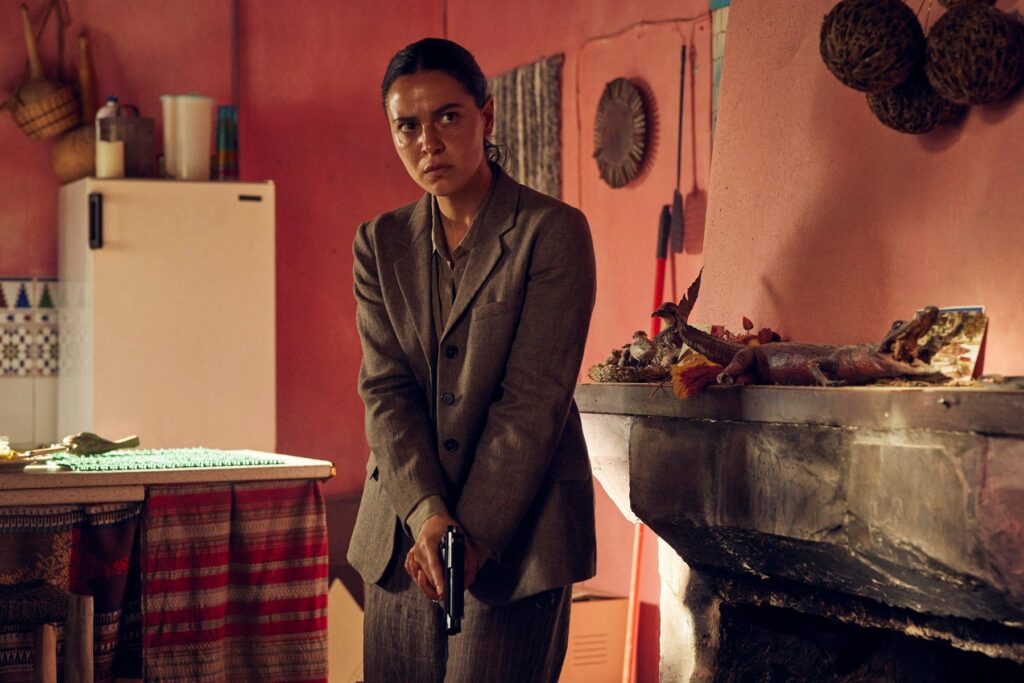
That deflating sensation compounds whenever The Mummy turns to matters of plot. Cronin scarcely cares about story or structure, but it’s still irritating how he stacks the film with horror clichés: the learned professor deciphering runic inscriptions, the obsessed detective (Ramy’s May Calamawy) poring over old newspaper clippings, the freighted appearance of a dusty VCR tape. The only thing more prevalent than blood is formula.
This familiarity doesn’t invalidate The Mummy’s grisly pleasures, to the extent they’re pleasurable in the first place. But it does underline the movie’s overall lack of invention or ingenuity. In myth, a mummy is a creature of implacable determination, but it’s also brainless, lurching forward without any new ideas of its own. Maybe it’s an accurate title after all.
Grade: C+

Jeremy Beck is the editor-in-chief of MovieManifesto. He watches more movies and television than he probably should.