Logan: For Ailing Hero, a Road Trip and a Reckoning

Hugh Jackman returns one last time as the Wolverine in "Logan"

The most valid criticism of Marvel movies is that they’re all the same. That’s an exaggeration, certainly, but there’s an undeniable whiff of formula that pervades the MCU, a familiarity that sometimes slips into complacency. The oversized casts, the pithy banter, the FX-laden fight scenes, the mundane aesthetic, the cameos and the fan service and the post-credits stingers—all of these combine to form a brand that, while powerful and successful, threatens innovation and disdains originality. (My favorite MCU entry, Guardians of the Galaxy, is delightful in part because it is only tenuously connected to its eponymous universe.) Some of the individual titles are good, others are bad, but few even try to be great.

Logan, the seventh movie to feature Hugh Jackman as the Wolverine (ninth if you count his single-scene appearances in X-Men: First Class and X-Men: Apocalypse), is not a great movie. Its villains are bland, its action sequences are mediocre, and its pacing is occasionally sluggish. These are flaws that would cripple most comic-book movies. But Logan, which was directed by James Mangold from a script he wrote with Scott Frank and Michael Green, is not most comic-book movies. A welcome outlier in a cinematic landscape of alarming uniformity, it is decidedly unlike its peers: bold, thoughtful, and surprisingly powerful. Above all, it is distinctive. Read More
Get Out: The Stepford Jives

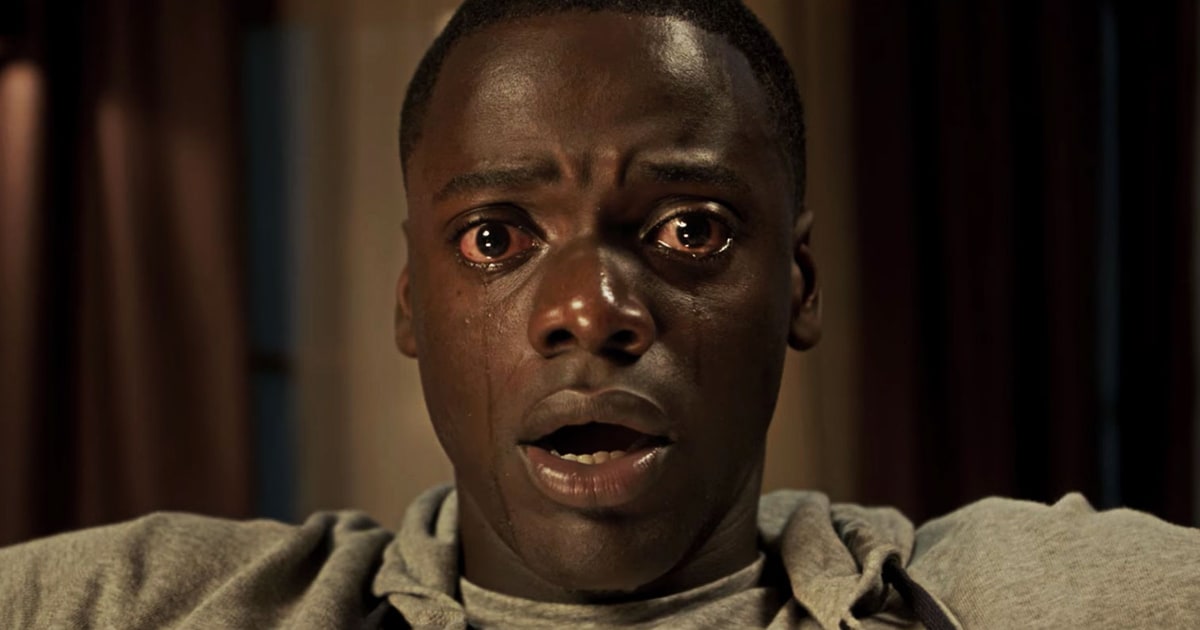
Daniel Kaluuya in Jordan Peele's horror movie "Get Out"

The hero of Get Out suffers. Over the course of the movie, he is assaulted, humiliated, choked, tied up, shot at, and regularly deprived of his physical and personal liberty. It’s a crucible of pain. But nothing is more terrifying, more indignifying, than when he’s forced to hobnob at a fancy garden party with a bunch of rich white people.

OK, I’m exaggerating. But Get Out, the first feature by comedian Jordan Peele, is more than just another fright flick. It’s a film that examines, with insight, empathy, and anger, the challenge of being a black man in white America. Peele is not exclusively interested in making you jump out of your seat (though he proves plenty good at that). He also wants to clamp you to your chair and make you grapple with the current state of race relations in this country, to wrestle with his characters’ prejudices and maybe even your own. Read More

John Wick: Chapter 2: Back in Black, But Check Out the Color

Keanu Reeves returns in "John Wick: Chapter 2"

Midway through John Wick: Chapter 2, the title character and a deadly foe engage in a ferocious, no-holds-barred brawl, complete with pistols, knives, and fists o’ fury. This type of fight is entirely familiar to action fans, but what happens next isn’t; after the combatants crash through the plate-glass window of a hotel, their vicious duel to the death is interrupted by the establishment’s proprietor. “Gentlemen!” he sternly admonishes them, raising his voice just a hair. “Need I remind you that business will not be conducted on Continental grounds?” The men, shrinking in stature from lethal death-dealers to sullen schoolboys being tsk-tsked by their principal, dolefully nod in assent, then agree to buy one another a drink.

This is the glorious insanity of the John Wick franchise. It takes the standard elements of your typical actioner—the gunfights, the car chases, the vendettas, the retired hero yanked back down to the underworld against his will—and situates them within an extravagantly tricked-out universe, a world with its own peculiar codes, currencies, and dialects. In the realm of John Wick, when the villain decides to put a bounty on his nemesis, he doesn’t scream or snarl or deliver a sneering speech. No, he takes out his phone, calls “Accounts Payable”, and places an order with a receptionist, one of a fleet of prim bureaucrats who may as well be fielding customer-service requests. “Murder Incorporated” was a snappy moniker; in John Wick, contract killing requires a literal contract. Read More

Split: His Minds Have Something Sinister in Mind

James McAvoy as, er, a lot of people in M. Night Shyamalan's "Split"

To call Split a comeback for M. Night Shyamalan is both accurate and somewhat troubling. The cinematic Icarus of the early twenty-first century, Shyamalan’s rapid ascent and subsequent plunge was difficult to watch. But his transgressions were sins of commission rather than omission—even when he was failing, he was always trying. Yet his most recent film, the found-footage flick The Visit, heralded a director who had diluted his ambition with pinches of modesty and self-awareness. That trend continues with Split, a lean and spiky movie that feels as though it could have arrived in the ’90s, before its creator let those “the next Spielberg” claims go to his head. This raises the question: Should we really be applauding filmmakers for abandoning their fearless attempts at the new and instead returning to the cozy confines of the familiar?

If it results in movies as taut and entertaining as this one, then yes. Split may be a pure, unvarnished genre exercise, but it’s a damn good one, a superlative example of twitchy suspense and tightly controlled craft. During his period of failure—which, in this critic’s view, spans from Lady in the Water to After Earth but definitely does NOT include The Village—Shyamalan tried all sorts of new things; they didn’t work. Split does many things—it frightens, delights, stumbles, and amazes—but most simply, it works. Read More

Silence: Keeping the Faith, But Losing His Way

Andrew Garfield and Yôsuke Kubozuka in Martin Scorsese's "Silence"

There are passion projects, and then there’s Silence, an enormous undertaking that the 74-year-old Martin Scorsese has been trying to make for more than a third of his life. Instantly announcing itself as a Very Important Film—it opens on a black screen to the chirping of crickets and croaking of frogs before the noise suddenly cuts out, rendering the title card eponymous—it is markedly different from the director’s most popular works. There are no avaricious gangsters, no amoral sinners, no Rolling Stones songs, no De Niros or DiCaprios. Independently, this stylistic departure is by no means problematic; filmmakers should hardly be expected to pigeonhole themselves within particular genres or methods. But Silence’s dissimilarities to the rest of Scorsese’s oeuvre go beyond topic or setting—other features that typically attend one of his productions are also absent. There is, for example, no joy, no humor, no entertainment, no energy. When viewed from a long distance, Silence reasonably resembles a hugely ambitious, sporadically staggering work of art. Only when you get up close and try to engage with it do you realize it’s the worst movie Scorsese has made in several decades.

Of course, that doesn’t mean all that much—even Scorsese’s relatively minor works (Hugo, Bringing Out the Dead) tend to thrum with vigor and excitement. But Silence, which chronicles the persecution of Christians in seventeenth-century Japan, is different. Scorsese has long grappled with the weighty themes and thorny contradictions of Catholicism, most notably in The Last Temptation of Christ, his gripping telling of the Crucifixion that concluded with an operatic and highly controversial detour. Yet where Last Temptation was robustly entertaining as well as intellectually fascinating, Silence betrays no interest in narrative momentum. The result is a cruel irony: Here is a film that was unquestionably a monumental labor to create, yet it exhibits no discernible effort to actually connect with its audience. It’s a violation of the very selflessness that Silence preaches; Scorsese has made this movie for nobody but himself. Read More