The Best Movies of 2013, #7: American Hustle
 As wonderful as it is to watch, American Hustle was assuredly a difficult film to make. It has a labyrinthine plot, replete with double crosses, false identities, fake accents, and cons nested inside other cons. Its structure is ungainly, with cascading flashbacks, multiple voiceovers, and repeated shifts in point of view. And its based-in-truth narrative, about the FBI’s ABSCAM sting in the 1970s, is laden with insider minutiae, ranging from the mechanics of organized crime to the breadth of political corruption to the egotism of law enforcement. You would think, given the need to balance all of these plates spinning on screen, that American Hustle would require a workmanlike and disciplined director, someone capable of streamlining the screenplay’s disparate elements and synthesizing its busy plot. Instead, it got David O. Russell.
As a filmmaker, Russell possesses many qualities, but discipline is not one of them. Yet American Hustle, which pops off the screen like a brightly colored carnival ride, proves that chaos can be a virtue rather than a vice, and that a movie can transcend its surface limitations through sheer force of personality. It is messy, frenetic, and occasionally just absurd. But it is also consistently delightful, and it seems so happy just to exist, with a glimmer of genuine emotion mingling with its self-evident joy. It’s a movie made by a guy who loves movies, and it shows. Read More
 Before Sunrise was never supposed to start a franchise. A touching, wondrous glimpse of two people meeting and immediately falling in love, Richard Linklater’s 1995 romance worked perfectly well as a standalone story of a single night, even if the tantalizing ambiguity of its ending—in which nascent lovers Jesse (Ethan Hawke) and Celine (Julie Delpy) agreed to meet again in Vienna in six months’ time—left viewers speculating as to what happened next. But to our surprise, Linklater resumed their story in 2004 with Before Sunset, which reunited Jesse and Celine for a few fateful hours in Paris. As it turned out, logistical issues prevented the lovers from reconnecting in Vienna, but even after nine years, their chemistry still crackled, and Before Sunset concluded with the winsome suggestion that they might in fact live happily ever after. Did they? To answer that question, Linklater and his two leads (who, for this film and the last, are also his writing partners) have returned with Before Midnight, which shatters our fairytale expectations with stark realism and painful honesty. Jesse and Celine may yet find bliss, but as this movie makes ruthlessly clear, it won’t be easy.
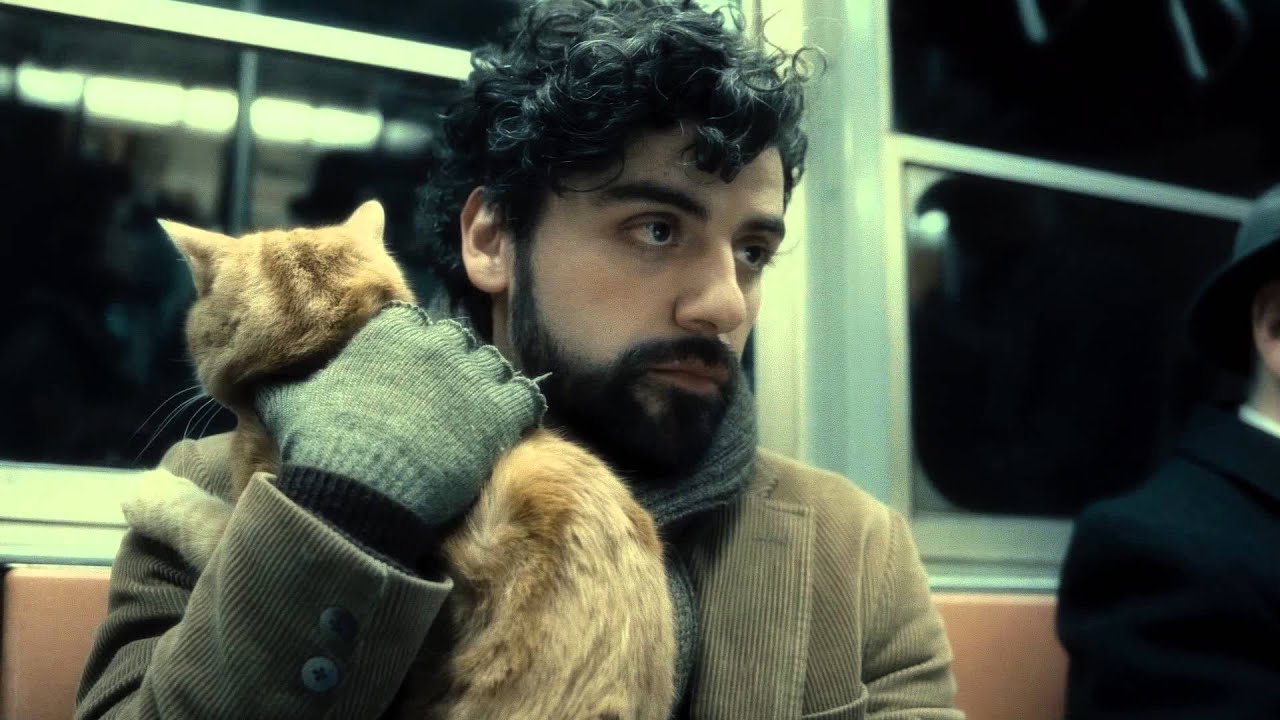 Not much happens in Inside Llewyn Davis, the sixteenth—and arguably most soulful—feature from the inimitable Joel and Ethan Coen. Its narrative is elliptical, to the point that it ends literally where it began. It chronicles a week in the life of a New York folk singer (Oscar Isaac, extraordinary) who shuffles from one indignity to the next; he crashes at various houses (“Got a couch?”), scrounges for any gig he can find, and huddles to keep warm, lacking a winter coat to protect him from the city’s bitter chill. It systematically deconstructs its title character, establishing his talent and promise before methodically breaking him down through a series of humbling, escalating defeats. Not much happens, and yet for Llewyn, so much does.
 [Note: The Manifesto has reviewed 89 different 2013 releases up to this point. Some were