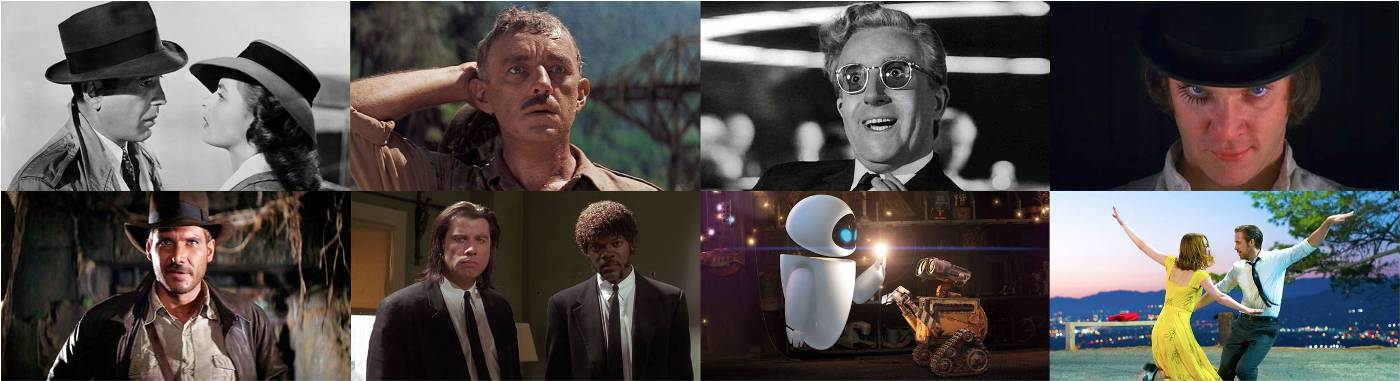
Oscar Nomination Prediction Results
I suppose it’s only fitting that, shortly after a knuckleballer won a Cy Young Award, the Oscars delivered one of the most vicious curveballs they’ve ever thrown. For the most part, my predictions were reliably mediocre; I hit on 50 of 69 picks in all, good for 72% and matching exactly my success rate from 2011. But if the Manifesto is becoming strangely predictable (let’s hope not), the same certainly cannot be said of the Academy, at least not when it comes to one key category.
But we’ll get to that. Overall, though, AMPAS provided us with yet another array of respectable, slightly uninspired nominations. As tends to be the case, the movies about which I’m maximally passionate achieved minimal success; in fact, my (tentative) favorite trio of the year combined to receive precisely zero mentions. But as always, there are plenty of laudable pictures and performances to be found in the list below, as well as a smattering of off-kilter surprises to keep us on our toes and remind us that the Oscars are the product not of mathematical science but of the whims of a free-thinking and spirited collective. And as long as the Academy continues to pay annual, careful attention to the cinematic landscape, so shall I.
On to the results. Incorrect picks are in red.
BEST PICTURE
Argo
Life of Pi
Lincoln
Les Misérables
Silver Linings Playbook
Zero Dark Thirty
The Master Amour
Moonrise Kingdom Beasts of the Southern Wild
Django Unchained
Takeaways: As it turns out, my most prescient statement in my predictions – indicative of both the Academy’s leanings and, paradoxically, my own failings as a prognosticator – was the following: “I’ll hardly be surprised if any of Amour, Beasts of the Southern Wild, or Django Unchained makes the list (possibly at the expense of The Master or Moonrise Kingdom).” So, yes, I half-expected one of those films to crack the lineup. What I certainly did not expect was for all of them to show up. But for the second consecutive year in the Academy’s fancy new ballot system – which requires nominees to receive at least 5% of the first-place votes cast – nine different movies made the grade, illustrating that there’s plenty of passion to go around.
Snubbed: Looper. It never had a chance at the Oscars, but that doesn’t diminish the power and vitality of the year’s most compelling, exhilarating film.
Current favorite: Lincoln, I suppose, although if you examine the rest of the slate, Life of Pi and Silver Linings Playbook look awfully frisky. Of course, I went into this morning’s announcement fully prepared to write something about how there was no clear frontrunner for the first time in years and that instead Lincoln, Argo, Zero Dark Thirty, and Les Misérables would engage in an exhausting battle over the next month and a half. But then …
BEST DIRECTOR
Michael Haneke – Amour
Steven Spielberg – Lincoln
Ben Affleck – Argo Ang Lee – Life of Pi
Kathryn Bigelow – Zero Dark Thirty David O. Russell – Silver Linings Playbook
Tom Hooper – Les Misérables Benh Zeitlin – Beasts of the Southern Wild
Takeaways: There’s a hilarious minor scene in The Great Escape when the three Americans in the prison camp convert a bushel of potatoes into a jug of moonshine; after they’re finished, each of them then tastes it and simply remarks – in escalating degrees of amazement – “Wow”. Well, that’s how I felt when staring at this year’s Oscar nominations for Best Director. I mean, WOW.
If you’re nonplussed by my astonishment, permit me a brief statistical digression. The Directors’ Guild of America has been nominating five filmmakers every year since 1970. For the past forty-two years, at least three of those five directors have also been cited by the Academy. Thus, since the DGA switched to a five-man lineup, this marks the first year ever that only two guild nominees find themselves in the running for the Oscar. What’s even more baffling is that all three who received the cold shoulder (Affleck, Bigelow, and Hooper) made movies that earned a Best Picture nomination. Yet they’re ousted in favor of a different trio of helmers (Haneke, Russell, and Zeitlin) whose films are also in the running for the top prize. Read More