Resident Evil review: The Boy Who Cried Wolfenstein
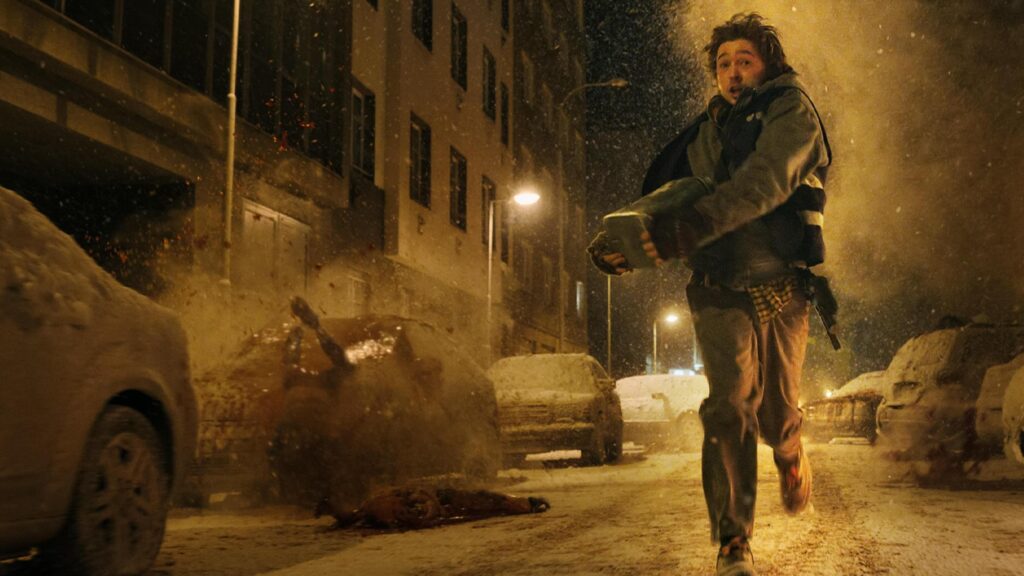
Austin Abrams in Resident Evil

Video games are designed to be played. Movies are meant to be watched. This distinction has thwarted many filmmakers who have attempted to translate the button-mashing activity of the console to the seat-reclining passivity of the multiplex. So when I say that Resident Evil, Zach Cregger’s new adaptation of the 30-year-old Capcom franchise, is probably the best video game-inspired picture I’ve ever seen, I’m not bestowing an especially high compliment (nor am I working with a significant sample size). As with many members of its subgenre, it’s deficient on (har har) multiple levels: organizationally repetitive, emotionally thin, and thematically vacant. But it does thread a delicate needle, paying tribute to the aesthetics of its source medium while also operating like a bona fide movie.

This is a matter of both structure and style. The plot of Resident Evil, which Cregger wrote with Shay Hatten (John Wick: Chapter 4), functions as a straightforward mission narrative. On a dark and snowy night, Bryan—a slow-witted courier played with dim-bulb charm by Austin Abrams—is tasked with delivering a precious medical artifact to the fictional metropolis of Raccoon City. His seemingly simple quest quickly escalates into a series of fraught, life-or-death predicaments as he arms himself with various weapons and is menaced by supernatural foes. These challenges, which broadly present an increasing degree of difficulty and culminate in a final confrontation (though the identity of the big boss may surprise you), tend to be logistical: climb a ladder, unlock a door, scale a building. You can practically see the life meter in the top corner of the screen. Read More
Weapons: From Soup to Guts

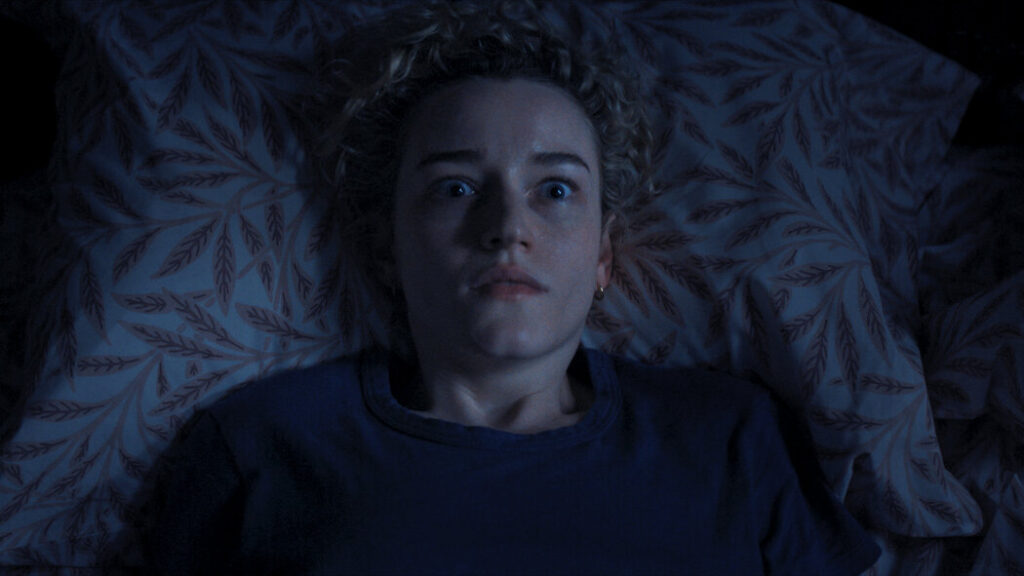
Julia Garner in Weapons

The title is plural for a reason. The characters in Weapons brandish any number of destructive instruments—not just guns and knives, but also needles, scissors, forks, teeth, locks of hair, and more. You’ll never look at your vegetable peeler the same way again.

Yet the most potent tool on display here—maybe second-most, given how the use of that peeler has seared itself in my brain—is writer-director Zach Cregger’s craftsmanship. Weapons is a bold and bloody movie, full of ghoulish turns and ghastly violence. It is also a work of consummate skill—a deftly constructed tapestry that weaves imagination, precision, and patience. It’s a beautiful nightmare. Read More

Barbarian: Scare-bnb

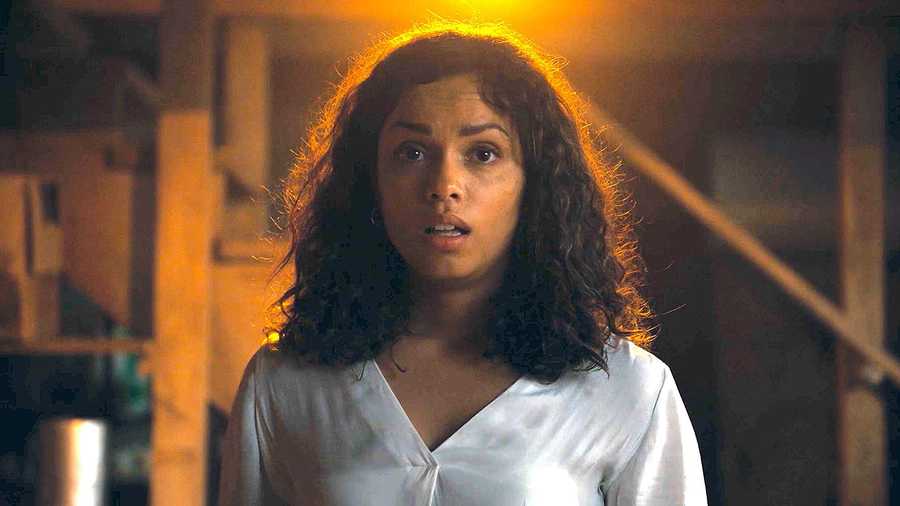
Georgina Campbell in Barbarian

He’s a really nice guy. That’s what you need to understand, and what serves as the human foundation for the hellish nightmare that follows. When Tess (Georgina Campbell), an attractive young documentarian interviewing for a job in Detroit, arrives at her Airbnb in the dead of night only to find it already occupied by a well-built man named Keith, you might think that she should dive back into her SUV and burn rubber. She contemplates that very course of action herself; she isn’t stupid, and the last thing she wants to do is star in a horror movie. But Keith is—and I can’t stress this enough—a really nice guy, and so Tess swallows hard and crosses the threshold from the porch into the house, and the terrible events that follow are set in relentless motion.

Written and directed by Zach Cregger, Barbarian is one of those twisty pictures where virtually any plot detail arguably qualifies as a spoiler. But the title alone, which appears on screen in a creepy elongated typeface as cockroaches skitter across its letters, at the least confirms that it isn’t a romantic comedy. That might be news to Tess and Keith, whose flung-together-by-circumstance pairing—turns out the incompetent property-management company double-booked the rental—could qualify, in a different cinematic universe, as a meet-cute. In addition to possessing broad shoulders and a square jaw, Keith is uncommonly courteous and perceptive. He offers Tess the lone bedroom without hesitation, throwing in a self-deprecating crack about his square upbringing. When she doesn’t drink the tea he makes for her, he recognizes her suspicions and volunteers to open a bottle of wine in front of her, negating the possibility that he’s doing anything indecent. He’s even familiar with the little-seen jazz documentary that Tess finds formative. He’s Prince fucking Charming. Read More