The title is plural for a reason. The characters in Weapons brandish any number of destructive instruments—not just guns and knives, but also needles, scissors, forks, teeth, locks of hair, and more. You’ll never look at your vegetable peeler the same way again.
Yet the most potent tool on display here—maybe second-most, given how the use of that peeler has seared itself in my brain—is writer-director Zach Cregger’s craftsmanship. Weapons is a bold and bloody movie, full of ghoulish turns and ghastly violence. It is also a work of consummate skill—a deftly constructed tapestry that weaves imagination, precision, and patience. It’s a beautiful nightmare.
This isn’t unprecedented. Setting aside semantic debates over “elevated horror,” the past decade has seen the emergence of a cluster of gifted artists—Ari Aster, Robert Eggers, Jordan Peele, Osgood Perkins, Coralie Fargeat—who combine disturbing visions with supple technique. Cregger’s prior feature, Barbarian, was more memorable for its twisty screenplay and canny editing than its familiar set pieces, but it nonetheless announced him as a filmmaker with a strong eye and an uncompromising sensibility. Weapons represents not so much a great leap forward as a provocative confirmation: This dude means business.
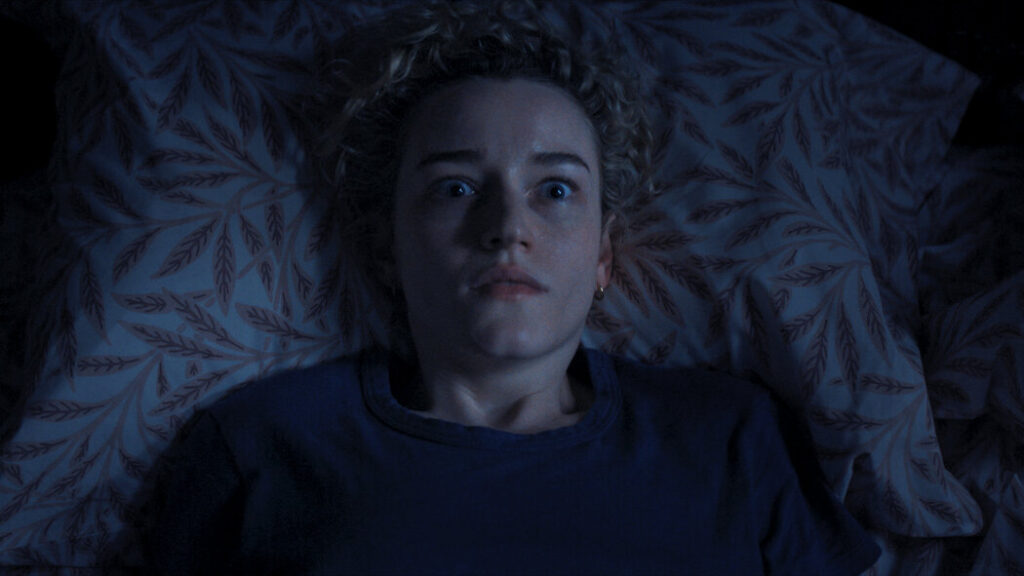
What he doesn’t mean to do is waste your time. Weapons is longer than Barbarian, but it unfolds with the same brisk, sleek efficiency. Set in a fictional Pennsylvania hamlet that may as well be called Anywheresville, USA, the film opens with a creepy-kid narrator (Scarlett Sher) succinctly laying out its chilling premise: that one night, at exactly 2:17 a.m., 17 children all woke up, sprinted out of their cozy homes, and vanished into the dark. Even more bizarre than their sudden flight—door-cam footage shows them all moving in robotic fashion, their arms stretched out sideways like airplane wings—is their shared academic setting: The missing kiddos were all third-grade students in the same classroom. Their teacher was the once-cheerful, now-miserable Justine (Julia Garner), whose roster of pupils has been reduced to one—a wary, wide-eyed boy named Alex (Cary Christopher) who was inexplicably spared from this mass desertion. (The next-morning shot of Justine first entering her classroom—the camera seeming to find it empty only to then snake around her body to reveal Alex sitting alone at his desk—is one of many achievements from Cregger and his cinematographer, Larkin Seiple, who also shot Everything Everywhere All at Once.)
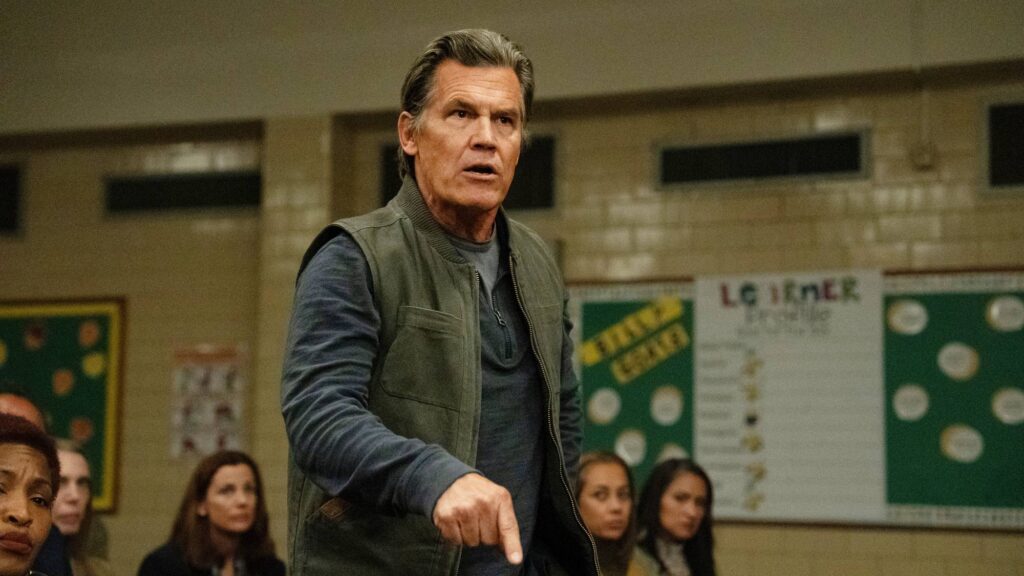
We first properly meet Justine at an evening assembly, where she’s yelled at by a throng of angry parents, and where her pleas for reconciliation and solidarity (“The truth is that I want an answer just as bad as all of you”) predictably fall on deaf ears and loud mouths. Garner’s innate vulnerability places us on Justine’s side, even if the crowd’s venomous questions—what, exactly, happened? why was only her class affected? who is to blame?—echo our own curiosity. The remainder of the movie unfolds as a kind of investigative procedural, as Justine and others attempt to piece together clues and rediscover some semblance of order amid the chaos.
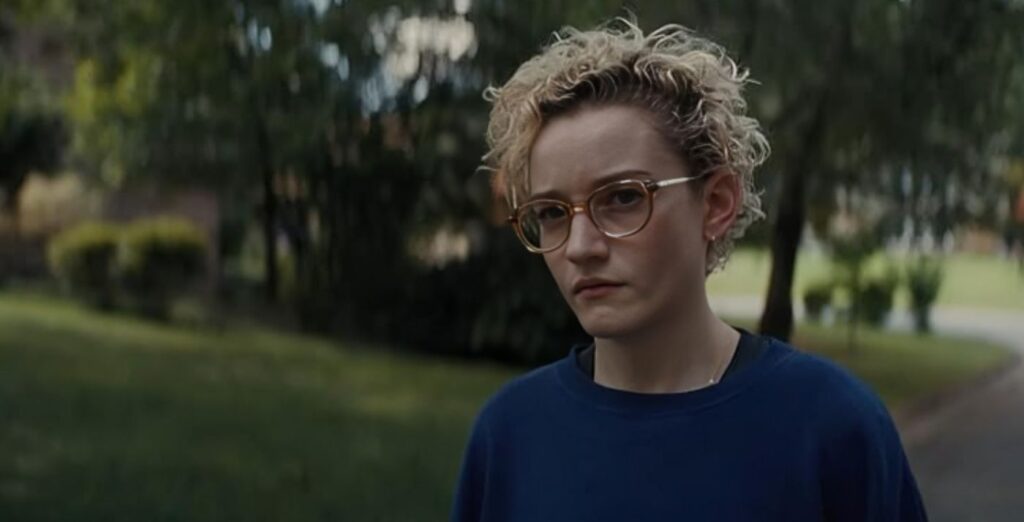
This means that Weapons works best in its opening passages, when its immersive plot remains largely shrouded in a haze of mystery. The tension of uncertainty is invariably more suspenseful than the clarity of resolution, and these initial scenes of Justine doing some amateur sleuthing—tailing suspects, peering through windows—are gripping in their potential for surprise. Cregger may have loaded the film’s second half with kinetic and cathartic set pieces, but in terms of pure, white-knuckle anxiety, he can’t top the bravura early sequence that finds Justine sleeping in her car—oblivious to a threat that first appears in a black-as-night doorway and then, thanks to some deviously purposeful framing, glides terrifyingly out of view.
Justine is far from the only soul in jeopardy. Cregger has structured Weapons in the style of Pulp Fiction (or, more accurately, Go), shifting back and forth in time and assigning chapters to specific characters, all of whose destinies are linked. And so: A bereaved father, Archer (Josh Brolin), lashes out at Justine before mounting his own unlicensed operation, charting lines on blueprints and scrutinizing grainy videos; he is also plagued by a dream that produces the movie’s most haunting image, a giant hallucinatory assault rifle floating in the sky. Later—by which I really mean earlier—a mustachioed cop (Alden Ehrenreich) falls off the wagon and sleeps with Justine before engaging in some official malfeasance with a local addict (Austin Abrams). That tweaker soon finds himself in Alex’s house, where he makes an eye-opening discovery in the basement that’s jarring for how simply it’s conveyed. Meanwhile, Justine’s principal (Benedict Wong) unwisely invites an unknown guest into his home, at which point his commitment to maintaining civility is replaced by an obsession of a more savage sort.
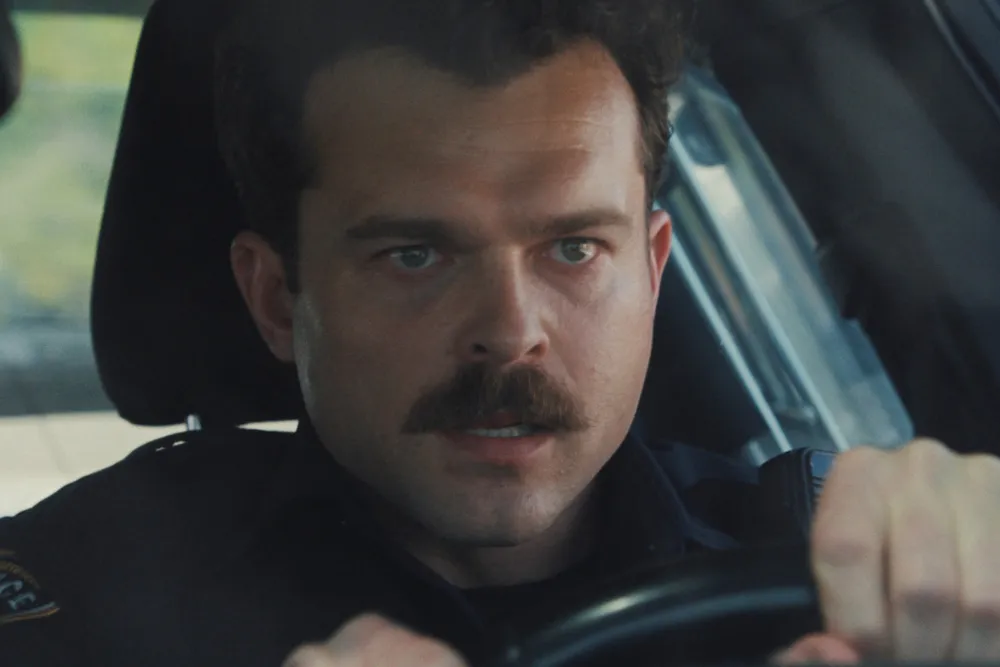
The “everything is connected” subgenre is long past its heyday, but the interlocking narrative of Weapons isn’t some writerly gimmick. It also helps inoculate the movie against the inevitable sense of dissipation. Inevitably, horror pictures become less disturbing and more conventional once their secrets are exposed. Weapons isn’t immune to this phenomenon; its final act, however well-made, is more engaging than exhilarating. (Never have I been more convinced while watching a movie that someone, at some point, would get hit by a car.) But Cregger’s intricate screenplay, combined with Joe Murphy’s sharp editing, yield the satisfaction of seeing the film’s disparate pieces click into place, culminating in a finale that’s both intense and, somehow, darkly funny.
What is no laughing matter, beyond Cregger’s formal rigor, is Gladys. She is Alex’s aunt, and she’s played by Amy Madigan with enormous glasses, a loopy red wig, and a demented smile that invades both Justine and Archer’s dreams. (Cregger’s handful of jump scares are less cheap than typical, in part because he establishes his characters’ reveries in advance rather than yanking out the rug.) As with everything else on screen, Gladys’ true intentions are enigmatic, but her chipper bearing is instantly untrustworthy, and Madigan’s unnerving performance helps turn this sunny mid-Atlantic town into a field of screams.

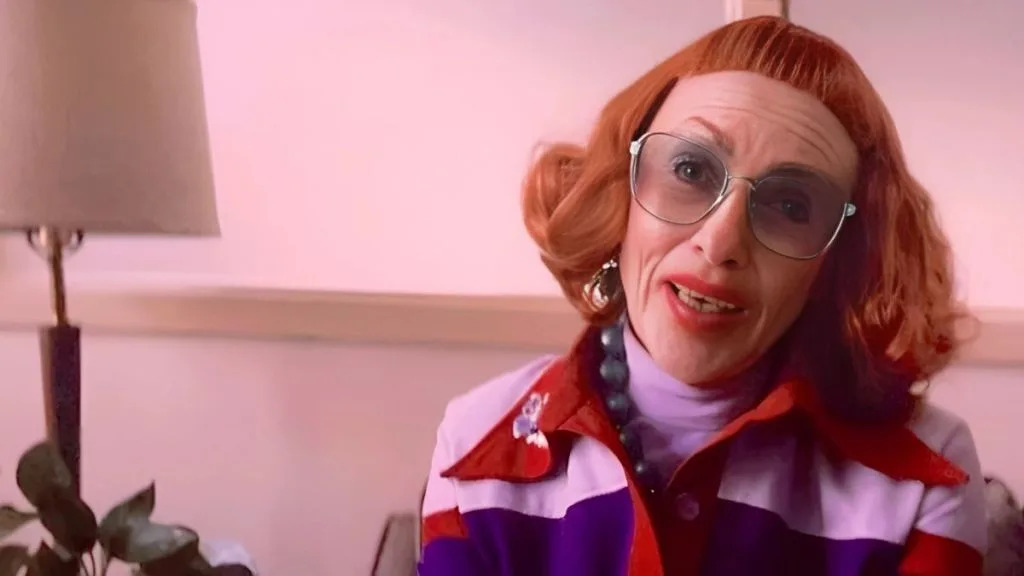
Gladys’ arrival also serves to complicate the movie’s themes, which are open to interpretation. Is Weapons about the fragility of the social contract? The paralyzing nature of clenched masculinity? The universal fear of death, and the desperate measures people will take to evade it in the age of cloud-based consciousness? Or is it just a classic Pied Piper analogue with a distinctly modern kick?
This is all up to you. What you have no control over—what you surrender as soon as that spooky opening narration kicks in—is your sense of distance, of safety. Weapons is a deceptively elegant movie, with crafty plotting and fluid camerawork, but its technique operates as a cruel tractor beam, pulling you inside its eerie labyrinth. You will enjoy getting lost, but—like those 17 children—you are bound to disappear.
Grade: A-

Jeremy Beck is the editor-in-chief of MovieManifesto. He watches more movies and television than he probably should.