The movies are thriving. It’s the movie business that’s in trouble.
Just ask Warner Bros. The two wolves of art and finance have long battled for cinema’s soul, but rarely has a major studio had a better year critically and commercially than WB in 2025. It cranked out three huge hits—Sinners, F1, and Weapons—that also happened to be well-regarded original productions. Two of those landed Best Picture nominations, and Sinners is essentially the Oscars’ co-favorite alongside One Battle After Another—another Warner property. The company also did well on the IP front, delivering a smash-hit videogame adaptation that wasn’t entirely soulless (A Minecraft Movie), a solid superhero flick (Superman), and a diverting sequel to an enduring horror franchise (Final Destination Bloodlines). (There was also another lucrative Conjuring film in the mix, which, whatever.) So what happened next? David Zaslav, the corporation’s president/hatchet man, responded to such prosperity just as you’d expect: He put the studio up for sale.
The fight to acquire Warner Bros. and its stockpile of assets seems designed to evoke the tagline to Alien vs. Predator. In one corner is Netflix, the streaming “disruptor” that views theatrical exhibition as an existential threat to its preferred conception of movie-watching: hitting “Play” on whatever title your algorithm recommends so you can have some background noise while you’re doing the dishes. In the other is Paramount, the legacy studio owned by a right-wing billionaire whose primary focus seems to be reshaping his TV network such that it never says anything that might hurt the feelings of the notoriously fickle Trump administration. Neither scenario promises a vibrant outlook for American moviegoing, much less the possibility of a theatrical slate as rich and varied as the one Warner Bros. put out last year.

Is this cause for despair? Not today! If cinema’s future seems as perilous as ever, its present remains thrillingly, defiantly vital. Warner Bros. may have won the year, but its bumper crop also mirrored the broader harvest; on the whole, 2025 provided a bountiful and versatile banquet, with rewarding movies that differed in genre, style, and language, but which ably fulfilled the medium’s potential to inform and entertain.
Forecasters have been prophesying the death of film for as long as it’s existed. The current concerns of these doomsayers are worth noting, and we could indeed be on the brink of seismic change. But for now, the state of cinema is best summarized by a famous quotation from one of this year’s most polished adaptations: It’s alive.
Here are MovieManifesto’s best movies of 2025:
Honorable mention: Companion, Mission: Impossible—The Final Reckoning, Roofman, The Secret Agent, Souleymane’s Story, The Testament of Ann Lee, Train Dreams, Universal Language.
20. Mickey 17. Bong Joon-ho’s long-awaited follow-up to Parasite is far less perfect, with woozy subplots and didactic themes. It is also a work of estimable ambition, and its patchiness finds room for thorny ideas and playful humor. The perpetually underrated Robert Pattinson has never been better. (Full review here; streaming on HBO Max and Prime.)
19. Lurker. A scathing, incisive depiction of how we live now—glued to our phones, obsessed with celebrity and cultural cachet—Alex Russell’s thriller is also a finely wrought suspense piece, with a third act that’s as unpredictable as it is unsettling. You’ve never heard of Théodore Pellerin before, and you’ll never forget him after this. (Capsule here; streaming on MUBI.)
18. Relay. David MacKenzie takes the familiar pleasures of the conspiracy picture—the bugged phones, the dead drops, the cat-and-mouse surveillance—and twists them in a fascinating way, with the main characters communicating via the titular messaging service. It’s a tweak that juices the movie’s verisimilitude, pulling you inside its haunted, paranoid world; once you’re there, Riz Ahmed’s brittle compassion won’t let you go. (Longer review here; streaming on Netflix.)
17. Black Bag. Speaking of durable pleasures, Steven Soderbergh luxuriates in the comfort of the spy picture, orchestrating tense verbal dances—freighted dinner parties, lie-detector interrogations—that double as riveting action sequences. He also, improbably, composes a paean to the majesty of marriage, though it’s easy when your central couple is embodied with such casual glamour by Michael Fassbender and Cate Blanchett. (Full review here; streaming on Prime.)
16. No Other Choice. Park Chan-wook’s neo-noir is equal parts bleak and boisterous, chronicling the ugliness of the present labor crisis—the barbarism of capitalism, the grim encroachment of AI—with his customary flair. The themes are heavy but the execution is light-footed, with tragicomic set pieces that recall the heyday of the Coen Brothers. (Longer review here; available to rent.)
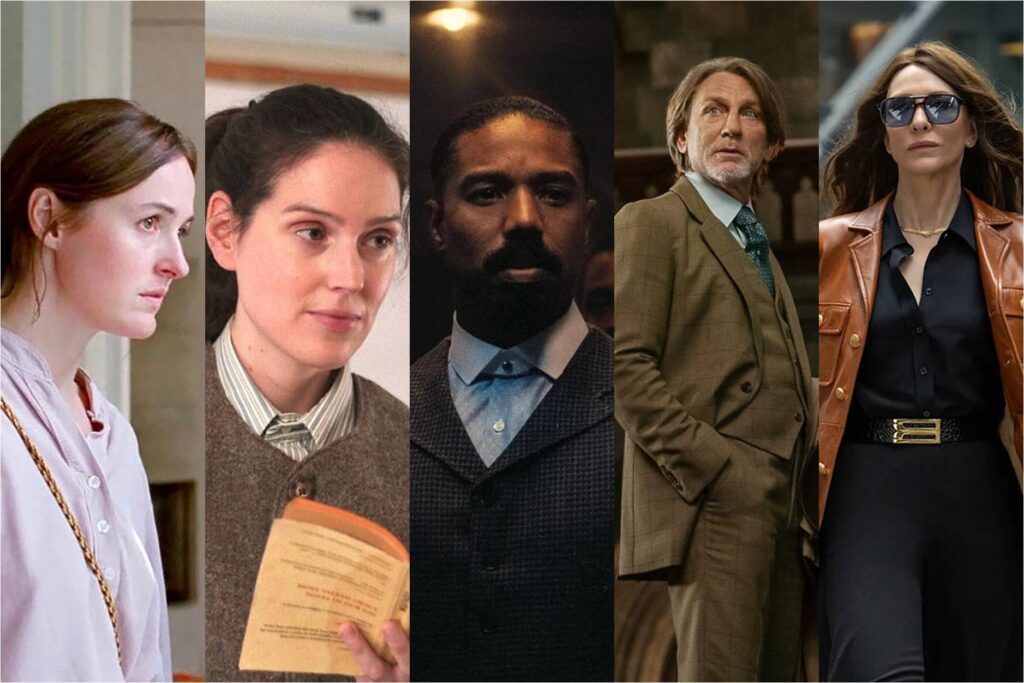
15. 100 Nights of Hero. Arguably the best movie of the year that hardly anyone noticed (though #3 below might like a word), Julia Jackman’s heady romantic fantasy has plenty to say—about gender roles, about literature, about matrimony and sexuality. It is also deeply satisfying on its own terms, with an immersive aesthetic, strong performances, and one of the hottest seduction scenes in ages. (Longer review here; available to rent.)
14. Blue Moon. Richard Linklater has always interrogated his own nostalgia, and his other 2025 feature, Nouvelle Vague, was an enjoyable evocation of the dawn of French New Wave. But his best movies tend to star Ethan Hawke, and here he reunites with his muse (their first collaboration since Boyhood) for a lovely, elegiac portrait of an artist as a middle-aged man. The dialogue sings with the wit of Lorenz Hart’s best lyrics, while Hawke’s spiky tenderness is its own exquisite music. (Feature here; streaming on Netflix.)
13. Left-Handed Girl. Fucking Netflix. Less than a year after dominating the Oscars with Anora, Sean Baker co-wrote the screenplay for this poignant coming-of-age drama about a Taiwanese family making its way in the world. Warmly directed by Shih-Ching Tsou, it carries the empathy of Baker’s American works while providing in its own gratifying geographic specificity… and unless you were deeply plugged in to certain sects of film culture, you probably had no idea it existed. (Capsule here; streaming on Netflix, sigh.)
12. Marty Supreme. In the billowing wake of Uncut Gems, Benny Safdie mellowed a bit with The Smashing Machine; his brother Josh, not so much. But while Marty Supreme is yet another relentless assault, both narratively and sensorially, it is also a thoroughly enjoyable romp, anchored by an obnoxiously great performance from Timothée Chalamet. He sucks up all of the oxygen and leaves you gasping for breath. (Full review here; available to rent.)
11. Wake Up Dead Man. How does Rian Johnson keep doing this? That’s the real mystery of Wake Up Dead Man: how the artist’s third consecutive murder mystery with Daniel Craig shows no signs of repetition or calcification. The ensemble cast is predictably terrific, most notably Josh O’Connor—with this joining The Mastermind and The History of Sound, he had one hell of a year—but it’s the surprisingly nuanced exploration of religion that lends the movie its hypnotic soul. (Full review here; streaming on Netflix.)
10. Hamnet. Yes, the ending is a piledriver—a masterfully orchestrated sequence that drives a stake through the hardest of hearts. But as overpowering as the climax is, it shouldn’t overshadow the beauty and dexterity that Chloé Zhao brings to the broader picture—a keening romance that is also, yes, a powerful meditation on love and grief. Though this be sadness, there is method in it. (Capsule here; available to rent.)
9. Weapons. Let’s go! (Also, let’s mimic Go.) Zach Cregger’s horror flick is stickily enigmatic, with a choose-your-own-adventure grab bag of metaphors and themes. It is also superior entertainment—silkily crafted, skillfully told, with multiple jaw-dropping set pieces and a riotous climax that demands to be seen with a crowd. Do you know where your children are? With luck, they’re watching this—and staying away from vegetable peelers. (Full review here; streaming on HBO Max.)
8. It Was Just an Accident. The logline here—former concentration-camp prisoner encounters old captor and plots revenge—suggests a black-as-night thriller, and to be sure, Jafar Panahi’s drama is serious stuff. It is also warm, thoughtful, and even funny, as its potboiler plot dovetails with a clear-eyed look at everyday life in contemporary Iran. Inhumanity has rarely felt so humane. (Capsule here; available to rent.)
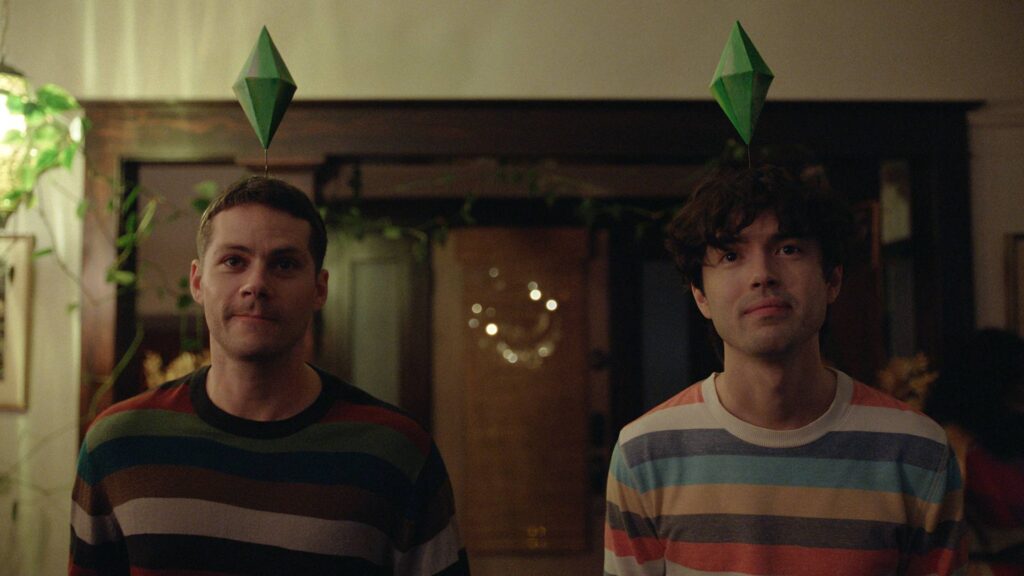
7. Twinless. If James Sweeney’s debut feature, Straight Up, was an unusually snappy romantic comedy, his follow-up is something else entirely—cagey, suspenseful, blending genres with startling confidence. Dylan O’Brien showcases the depth of his talent as a bereaved brother (and that’s not all!), while Sweeney confirms his gifts as both a punctilious craftsman and an inventive storyteller. There’s no doppelganger for a movie as fearlessly inventive as this. (Longer review here; streaming on Hulu.)
6. Sinners. Ryan Coogler isn’t messing around. His first original picture since Fruitvale Station, Sinners is crammed with provocative ideas, touching on the persistence of white supremacy, the power of Black community, the menace of cultural appropriation, and more. It is also a humdinger of a movie, with lively music, lissome craft, and an untamable creative imagination. Michael B. Jordan’s star power leads the way, while a mid-film sequence set in a juke joint seems to envision new cinematic possibilities altogether. (Full review here; streaming on HBO Max and Prime.)
5. The Phoenician Scheme. Oh great, another Wes Anderson film. Another meticulously crafted, brightly stylized jewel box of a movie. Another fiendishly innovative, thematically trenchant story of loss and belonging. Another iridescent caper loaded with sparkling dialogue, canny plotting, witty images, and excellent actors. Sigh, just another one of those. (Full review here; streaming on Prime.)
4. Sorry, Baby. As with It Was Just an Accident, this enchanting movie—which at first dances around and then forcefully confronts a traumatic sexual assault—sounds like it should be horribly depressing. But in her first feature as writer and director, the actress Eva Victor (from Billions!) refuses to brutalize her audience, instead bathing viewers in the characters’ warmth, intelligence, and quiet longing. Victor’s lead performance is remarkably astute for its refusal to sentimentalize her heroine, while her storytelling develops its own distinctive and engaging rhythms. The last thing she needs to do is apologize. (Capsule here; streaming on HBO Max.)
3. On Swift Horses. The year’s most underappreciated film (I’m sure of it this time) is also one of its most emotionally explosive. Daniel Minahan’s style is crisp and restrained, lending even greater force to the characters’ desire and volatility. As impressive as he is in Frankenstein, Jacob Elordi’s hulking charisma is put to better use here, while Daisy Edgar-Jones’ face is its own weather system—a roiling storm cloud of fear, anger, and yearning. There’s a reason longshots pay out big. (Capsule here; streaming on Netflix.)
2. Sentimental Value. Movies about movies are inherently appealing to me, but Joachim Trier’s drama is far more than a valentine to the medium. It’s an intimate family portrait that’s also a searching examination of artistry that’s also a study of history, both personal and global. It’s a sprawling work, but Trier and his cast—most notably Renate Reinsve as a tempestuous actor and Stellan Skarsgård as her distant father—bundle the many themes and ideas with remarkable clarity and precision. It doesn’t chase its own tail so much as manufacture its own intricately textured universe. (Longer review here; available to rent.)
1. One Battle After Another. You were expecting something else? This is a boring choice, but the greatness of Paul Thomas Anderson’s vision can’t be denied, even if (or perhaps because) he undercuts his grandeur with whimsy and humor. The politics resonate in part for their obliqueness; the characters charm on account of their failure and their fumbling. Leonardo DiCaprio is one of the best actors to ever live, but he has the humility not to pulverize viewers with the force of his talent, instead functioning as one star in a constellation of richly realized performances. (Chase Infiniti, hello! Benicio Del Toro, what a year!) Anderson’s approach is expansive but also enveloping, bringing tremulous feeling to the chases and the bombings and the backstabbings. It’s an unflinching depiction of who we are as a society. It’s also an aspirational document of what we as people can do. (Full review here; streaming on HBO Max.)

Jeremy Beck is the editor-in-chief of MovieManifesto. He watches more movies and television than he probably should.