In the opening scene of Emily, Charlotte Brontë disparages Wuthering Heights as “an ugly book, base and ugly.” Emerald Fennell must have missed that memo. To be sure, this umpteenth screen adaptation of Emily Brontë’s novel is suffused with crude, primal emotions: lust, hatred, anguish, cruelty, more lust. But because Fennell fancies herself one of modern cinema’s most flamboyant stylists, her version clothes this vulgarity in beauty and extravagance. This is not your literature professor’s Wuthering Heights; this is more of the music-video edition.
Does that make it sacrilegious or sensible? Maybe a bit of both. I am not sure we needed another update of Brontë’s classic, much less one so high-strung and turgid. At the same time, if you are going to reimagine an article of the literary canon, you may as well do so with some flair. Fennell’s first two movies, Promising Young Woman and Saltburn, were original conceits, (arguably) teeming with provocative ideas and piercing insights into contemporary class and gender. Now pivoting from the freedoms of invention to the constraints of adaptation, she has redirected her inflammatory instincts away from theme and toward feverish form. The results may not be great, but at least they’re distinctive.
If you suspected otherwise, Fennell reminds audiences of her trollish penchants before the opening frame. The first thing we hear is the sound of heavy breathing, conjuring thoughts of love-making, but then the curtain drops to reveal a hooded man on the gallows, panting as he anticipates his fate. Emmy, you scamp! Soon the man is dying, the crowd is roaring, and the soundtrack is blaring the proudly anachronistic electro-pop of Charli XCX. It’s a vivid introduction that briskly conveys the movie’s ambition: to transmute a sacred work into a picture that aspires to be lively, pulpy, and horny.
At times, it manages to be all of those things. But the pervading tone of Wuthering Heights is dour and unpleasant, its story one of confusion and desolation. Cathy (Margot Robbie) is the only living child of Earnshaw (Martin Clunes, appropriately disgusting), an erstwhile aristocrat who has squandered his fortune to drinking and gambling. In her childhood, Cathy finds warmth and camaraderie in Heathcliff (Jacob Elordi), an orphan whom Earnshaw brings into his household as a servant. Their fast friendship inevitably flowers into an unspoken mutual longing, but Cathy is a pragmatist, and she allows herself to be courted by her wealthy neighbor, Edgar (Shazad Latif)—a perfectly nice textile merchant who may as well have the word “CUCKOLD” tattooed on his forehead. Heathcliff perceives this betrothal as a betrayal and disappears, only to return years later, at which point Cathy’s secure, luxuriant order is upended into raging, passionate chaos.
You probably know all of this. Or maybe you don’t. I should confess that I’ve never read Wuthering Heights—my sole familiarity with this material derives from Andrea Arnold’s 2012 film—so I can’t speak to the fidelity of Fennell’s screenplay. Nevertheless, I’m fairly confident that Brontë’s revered 19th-century prose has never been rendered with such unapologetic tastelessness. (This says nothing of casting a white actor to play Heathcliff, an indelicacy of a different sort.) Fennell enjoys pushing buttons, and here she revels in the plot’s inherent tawdriness, as though she’s straining to receive one of those “See it as you’ve never seen it before!” pull quotes.
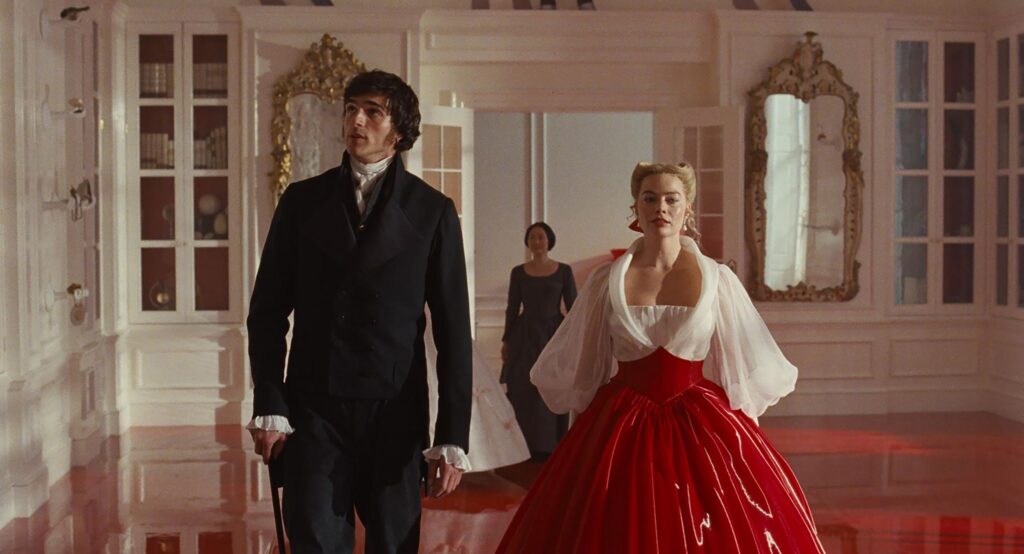
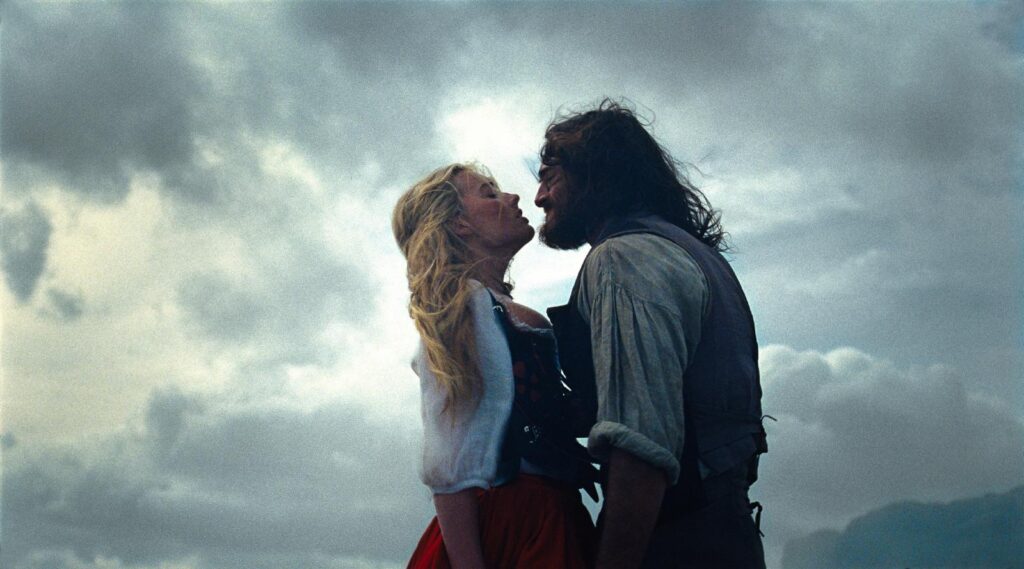
This approach has its rewards. As a storyteller, Fennell is not subtle, but as an image-maker, she is skillful. There are few great scenes in Wuthering Heights, but certain shots are breathtaking in their audacity. My favorite moment occurs when the camera—operated by the exceptional Linus Sandgren, who also photographed Saltburn (not to mention most of Damien Chazelle’s output)—finds a despondent Cathy collapsed on the ground, her red dress accenting the checkered black-and-white floor; unsatisfied, Fennell dissolves to Heathcliff on horseback, his dashing, cowboy-like figure set against a scarlet sky. Earlier, Cathy peeps on a pair of underlings engaging in BDSM, and she’s so overwhelmed that she dashes off to the moors and masturbates, the music swelling with operatic intensity. It’s all horribly over the top, and that excess is what makes it work.
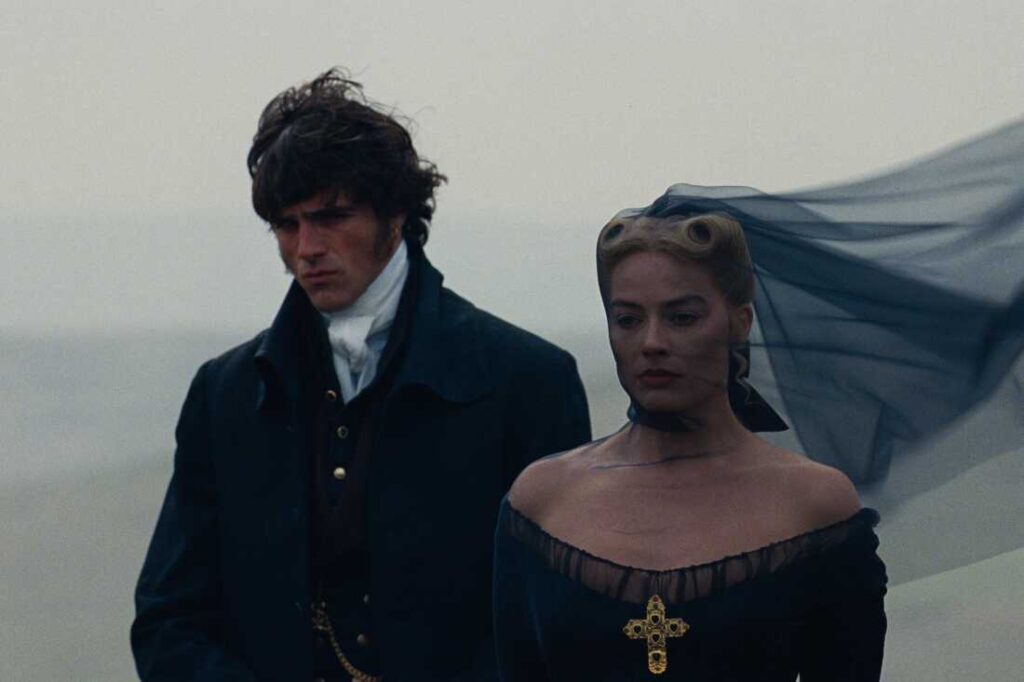
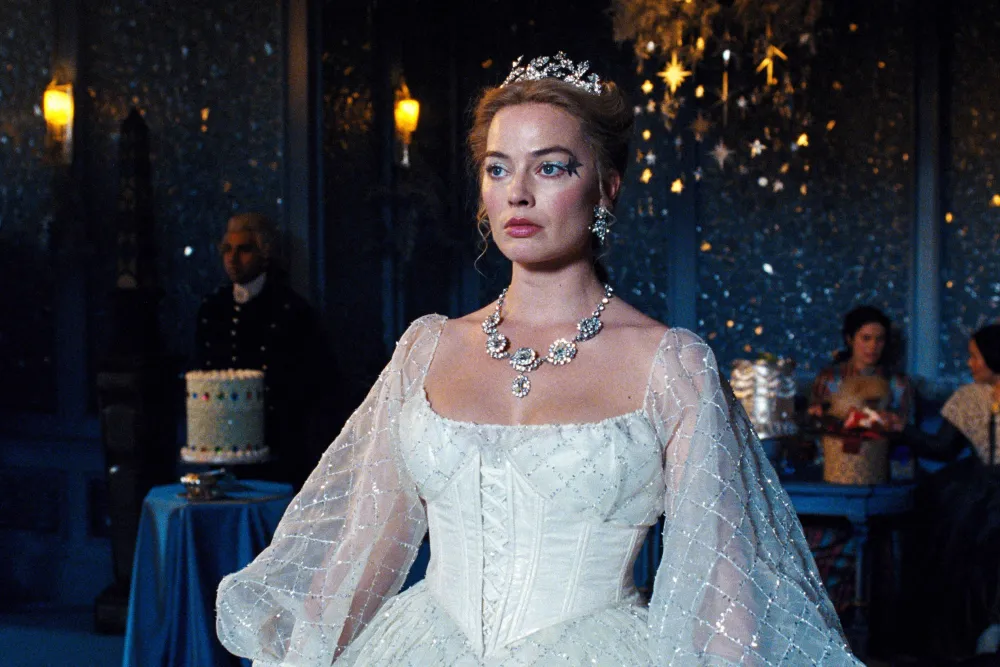
Yet while Wuthering Heights is a work of potent craftsmanship—the opulent costumes are by Jacqueline Durran, the Gothic production design by Suzie Davies—it rarely achieves emotional authenticity. Everything is so perfumed, so florid, that the characters’ humanity is obscured. It’s a macro version of the scene where Cathy’s companion (a poorly served Hong Chau) repeatedly yanks the strings of a tight-fitting corset across her mistress’ back—beautiful, but challenged to breathe.
This sense of restriction also pollutes the actors’ chemistry. Early on, Robbie and Elordi pantomime their desire well enough; there’s a nice scene where a shivering Cathy laments the lack of firewood, and Heathcliff promptly snaps his chair in two and tosses its remnants into the hearth. But once Heathcliff transforms from devoted rake to impetuous rival—symbolically shedding his flowing locks and beard in favor of a more coiffed look—the yearning becomes increasingly artificial. Fennell eagerly supplies the simulated sex—heady montages of thrusting tongues, trembling mouths, and quivering moans—but she never really heats that fireplace.
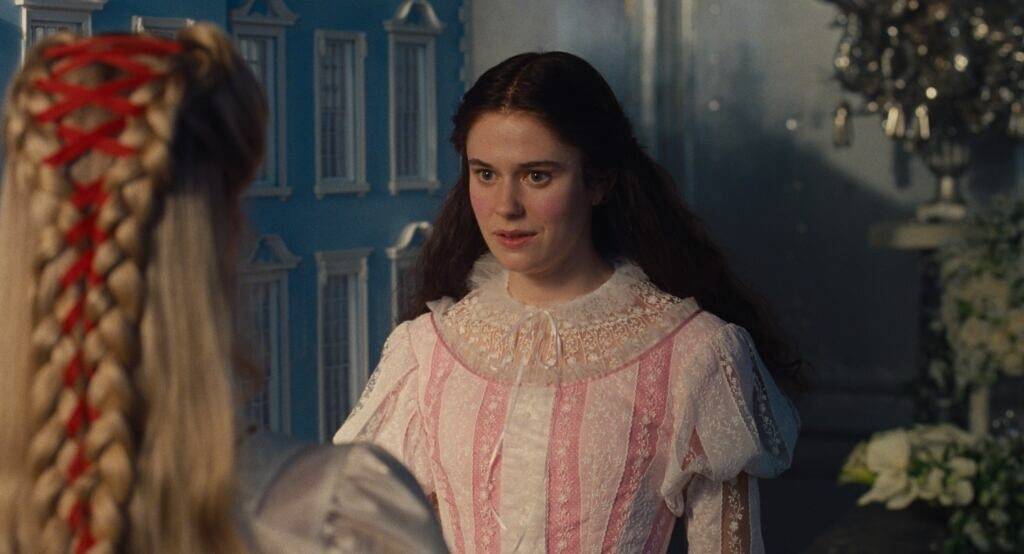
Except, that is, when she turns to Isabella (Alison Oliver), Edgar’s demure, ribboned ward who later becomes a pawn in Heathcliff’s vengeful scheming. Initially a paragon of propriety—when she sees Cathy straddling her estate’s walls, she emits a hilarious scream—Isabella’s arc is one of ostensible degradation, her abiding primness giving way to helpless surrender. It resembles the movie’s central relationship, only in reverse—what seems overheated on the page becomes strangely moving on screen—and Oliver locates just the right touch of impish energy, imbuing the sordidness with a perverse dignity.
Fennell would presumably blanch at anyone calling her work dignified; she’s not a sophisticate, she’s a provocateur! Yet Wuthering Heights ultimately feels caught in between its warring impulses of splendor and squalor. It provides memorable sights—a pink wall infested with leeches, a monument of beer bottles piled to the ceiling, a dress stained with blood—but it neither elevates nor punctures the majesty of its source. It’s an impressive picture whose garishness makes it less a product of imagination than assault. Maybe it’s an ugly movie after all.
Grade: B-

Jeremy Beck is the editor-in-chief of MovieManifesto. He watches more movies and television than he probably should.