We’re ranking every TV show we watched in 2025—all 97 of them. If you missed the first installment, you can find it here.
85. Only Murders in the Building (Hulu, Season 5; last year: 67 of 88). Sigh. Schematically, the design of this show remains appealing, as the criminal investigation is just scaffolding for the actors’ cheerful, exasperated banter. But five seasons in, the dialogue lacks the zip it once possessed, and rather than settling into a groove, the character dynamics have calcified. There’s nothing wrong with Only Murders in the Building constantly repeating itself, because formulaic shows like this are supposed to repeat themselves. But the initial vivacity has been replaced by tedium and obligation (plus an annoying reliance on high-wattage guest stars). It might be time for these folks to move out.
84. Yellowjackets (Showtime, Season 3; 2023 rank: 50 of 94). The problem here is basically the opposite of Only Murders: Yellowjackets was a brilliantly conceived concept that had a very obvious shelf life, only its hit status required the network to keep perpetuating more episodes. This results in an “up the ante” approach, wherein each new season needs to be even crazier and more dramatic than the last. Yet while the first season of Yellowjackets perfectly straddled the border of high-pitched insanity and human fallibility, pushing further has skewed things to the point of ludicrousness. That doesn’t make the show boring, and a few moments—in particular a wilderness-set “trial” that gives new meaning to due process—find the right tone of absurdist anguish. But for the most part, Yellowjackets is now just bonkers for the sake of being bonkers—a feral animal backed into a corner, lashing out because it has no other choice.
83. The Night Agent (Netflix, Season 2; 2023 rank: 56). Sure whatever.
82. The Morning Show (Apple, Season 4; 2023 rank: 70). Oh how this show desperately wants to be about something, namely the here and now. Forget timelessness; The Morning Show is intended to be a document of our time, commenting on the particular existential horrors of our fraught present (but also invariably being set, like, two years ago). It’s an ambitious concept, and the ideas at play—broadly about the imperiled status of the fourth estate, but also specifically about things like AI and, uh, the Olympics—are worth exploring. They just deserve a treatment that isn’t so utterly stupid. The series tries very hard, but its frantic depiction of pseudo-intellectuals shepherding a media empire isn’t remotely convincing, and the inconsistent characters no longer connect to the strident themes. (Also, a scene in the finale featuring Marion Cotillard is so boneheaded, it leaves a bitter aftertaste.) This show needs to take its own advice and log off for a bit.
81. Duster (HBO Max, Season 1). I wish this show were good. Conceptually, the premise of Josh Holloway as a wheelman embroiled in a ’70s conspiracy is deeply appealing. But despite the imprimatur of J.J. Abrams and the gravitas of Keith David, Duster doesn’t really work. The plotting is byzantine and dull, the messages are forced, and the set pieces don’t carry the promised oomph. It’s a promising series that quickly runs out of gas.
80. Blossoms Shanghai (Criterion, Season 1).
79. M: Son of the Century (MUBI, Season 1).
It’s probably a bit xenophobic of me to lump these two shows together, but they have more in common than a non-English language. They’re both made by auteurs, they’re both handsomely shot, and they’re both shockingly dull. Blossoms Shanghai is the work of Wong Kar-wai, and on the surface it delivers what you’d expect from the director of Chungking Express and In the Mood for Love: glamorous characters, simmering romantic yearning, an overall sense of elegance. But in narrative terms, this thing is a chore. It runs 30 episodes, only it’s designed to operate as one those dreaded “We’re really making a 23-hour movie” enterprises, meaning it’s just an endless unspooling of an inert plot. (Every episode runs the exact same length with a six-second margin, between 47:33 and 47:39, suggesting that it was shot all at once and then mathematically chopped into identically sized installments). Beyond that, the subject matter here is weirdly tedious, focusing extensively on stock market trading, dueling restaurateurs, and even fashion-industry competition. This would be forgivable if it were undergirded by complex characters, but despite some sensitive performances, the emotions never really evolve. Wong’s pedigree might suggest that Blossoms Shanghai is appointment viewing, but I’d sell high if you can.
M: Son of the Century is a bit more conventional. Directed by Joe Wright (one of my all-time faves), it chronicles the rise of Mussolini through Italy’s broken government in the 1920s. As with most Wright productions, it’s impressively stylized, with a sepia tone, slick camerawork (by Seamus McGarvey), and vivid set design (the amphitheater of the Italian parliament recalls the striking chambers of Darkest Hour). It’s also a slog. The parallels between Benito Mussolini and Donald Trump need little embellishment, but the writers underline the comparison clumsily; when the antihero here says “Make Italy great again,” it’s a clanging line rather than a pointed barb. Beyond that, the story of fascism’s emergence is less disturbing than just depressing. I deal with this shit every day; I don’t need to see it reimagined with lustrous images and fanciful rhetoric.
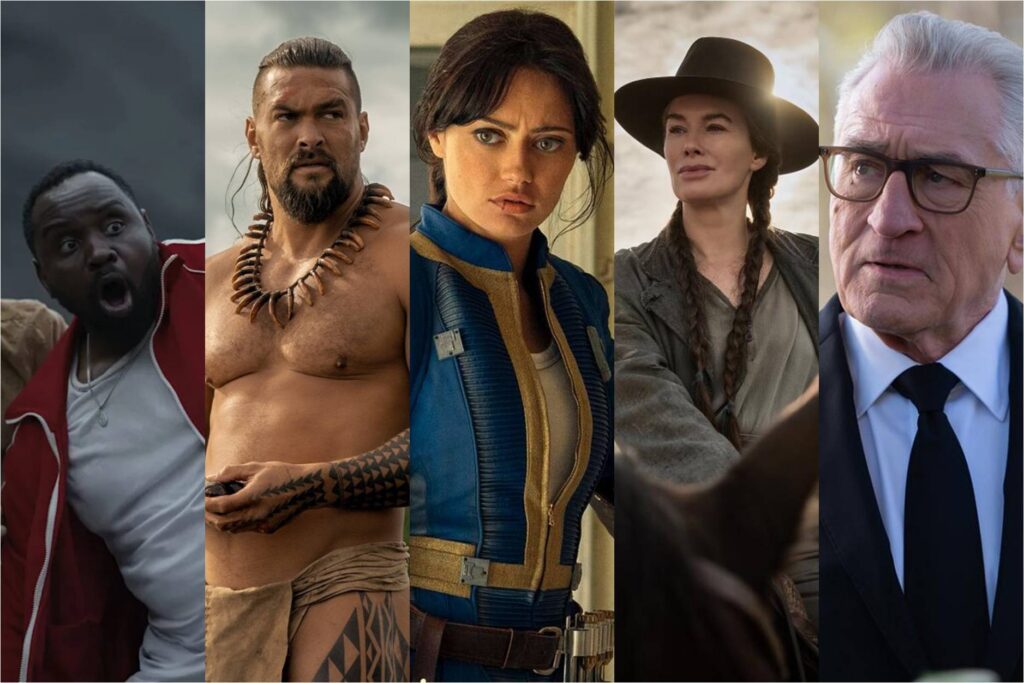
78. Zero Day (Netflix, Season 1). Maybe I should be careful what I wish for. If Son of the Century is a cautionary tale that makes its political points too strenuously, Zero Day is an ostensibly charged thriller that refuses to make any political points at all. It stars Robert De Niro as a former President entrusted with investigating a cataclysmic security breach, and it unfolds as a kind of mythical ode to centrism. In the show’s telling, Both Sides are equally morally culpable for the United States’ present predicament, and only rigorous dispassion can expose the lies and carry the day. You will forgive me if I find this notion wanting. It’s a shame, because in nuts and bolts, Zero Day is capably executed, with appealing performances from Lizzy Caplan and Jesse Plemons, among others. I suppose this threshold competence gives the series an inadvertent meta kick. Your communications platform is meaningless when your message is fraudulent.
77. Untamed (Netflix, Season 1). The location does the heavy lifting here. Untamed is set in Yosemite (filming took place in Canada), and the vastness of the mountains and forests lends the series a gratifyingly specific chill. Otherwise, it’s just Netflix 101: a generic murder mystery with a traumatized hero (Eric Bana), thinly sketched secondary characters, and some vaguely progressive messaging. Set aside its foreboding environment (plus a half-decent set piece or two), and Untamed is interchangeable with any other streaming property. Unlike Bana’s backstory, it could be worse.
76. Chief of War (Apple, Season 1). I think Jason Momoa is a better comedian than serious actor, but I appreciate his ambition with Chief of War, a stately epic about internecine conflict in the Hawaiian islands. Yet despite its noble intentions, the show’s sober approach thwarts any potential immersion or excitement. There are a few nifty fight scenes, and Luciane Buchanan (from The Night Agent) has screen presence, but overall the series is too respectable to be absorbing. Odd that a Momoa-led production about heroic warriors would feel so timid.
75. Hostage (Netflix, Season 1). I was about to write that this suspense thriller is just like every other Netflix series of its ilk, but then I remembered: It’s only five episodes! It doesn’t pad out its narrative endlessly for no reason! It only kind of pads out its narrative for questionable reasons. Hostage isn’t good, despite a characteristically strong turn from Suranne Jones; its hijinks are silly, and its presentation of geopolitics is laughable. But at least it doesn’t wear out its welcome.
74. Fallout (Amazon, Season 2; last year: 51). Speaking of needlessly padded narratives. I’ve never played the videogame it’s based on, so I have no idea how much of Fallout is rooted in its source versus how much has been freshly invented. What I do know is that there are a lot of subplots here, and most of them are filler. (The finale airs tomorrow; I am skeptical that it will alter my opinion in this regard.) Ella Purnell remains thoroughly watchable, especially when paired opposite Walton Goggins, and the production values are strong enough that each episode offers some flavorful sights. But from a storytelling perspective, Fallout is sluggish and scattered, devoting far too much time to characters and settings that aren’t sufficiently distinctive to warrant the attention. Somebody needs to hit the reset button.
73. Dope Thief (Apple, Season 1). This series left such little imprint on me, I was stunned to learn that it aired in 2025 and not, like, five years ago. It’s nice to see Brian Tyree Henry in the lead, and the Philadelphia location lends some verisimilitude. Beyond that, it just leaves me in a smoky haze.
72. Squid Game (Netflix, Season 3; last year: 71). At the risk of spoiling things, the very last scene of Squid Game—which is wholly disconnected from the remainder of the series—features Cate Blanchett tormenting some poor sap in Los Angeles, implying that the titular contest (and the show itself) will reach American shores. It’s a playful tag that’s also oddly dispiriting, underscoring the series’ insistence on propagating itself for no reason beyond a commercial desire to produce more episodes. Fittingly, Season 3 is basically a replica of Season 2; the games themselves are immersive and imaginative, and everything else—in particular the maritime adventuring—is a total snooze. Squid Game fancies itself a thoughtful philosopher on human nature and capitalism, but all it cares about is the bottom line.
71. The Abandons (Netflix, Season 1). A distaff Deadwood is a neat hook, and Lena Headey and Gillian Anderson are sufficiently talented to execute it. Yet the longer The Abandons runs, the more it begins to feel like cosplay, imitating a feminist Western epic without really embodying that concept’s thorny possibilities. The elements are theoretically in place—dusty sets, bloody violence, dastardly double crosses—but there’s no heat behind them. It’s a glossy production with a false front.
Coming tomorrow: Wizards, superheroes, teachers, and robots.

Jeremy Beck is the editor-in-chief of MovieManifesto. He watches more movies and television than he probably should.