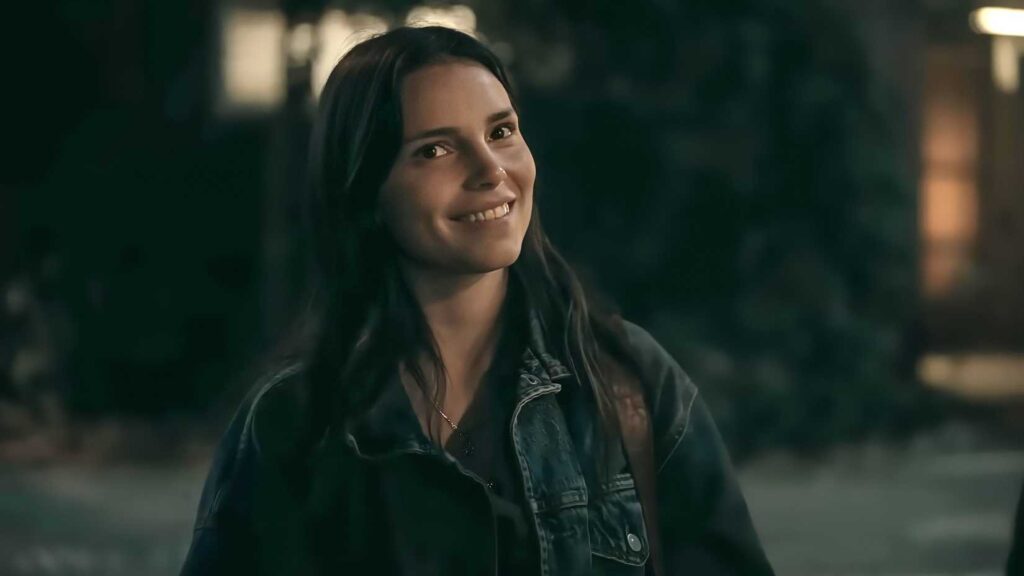
You’ve met dudes like Bear before, especially at the movies. He’s a lovelorn sad sack—a sweet, sensitive guy nursing a crush on a beautiful, unattainable girl. The first time we see him, he appears to be finally confessing his true feelings, delivering the kind of anecdote-laden speech that tends to produce everlasting happiness (think the end of When Harry Met Sally). This proves to be a feint—he’s in fact rehearsing his declaration of love—but it nonetheless cements Bear as an earnest, sympathetic protagonist. We’re all rooting for him.
Given this setup, you might think that Obsession, the second feature from multi-hyphenate Curry Barker, is a romantic comedy. It isn’t. It’s a horror movie, one that traffics in supernatural phenomena, jolting suspense, and sporadic bursts of blood and gore. It’s consistently unsettling, and not just for the way it interrogates how cinema exalts nobly suffering men at the expense of idealized, objectified women.
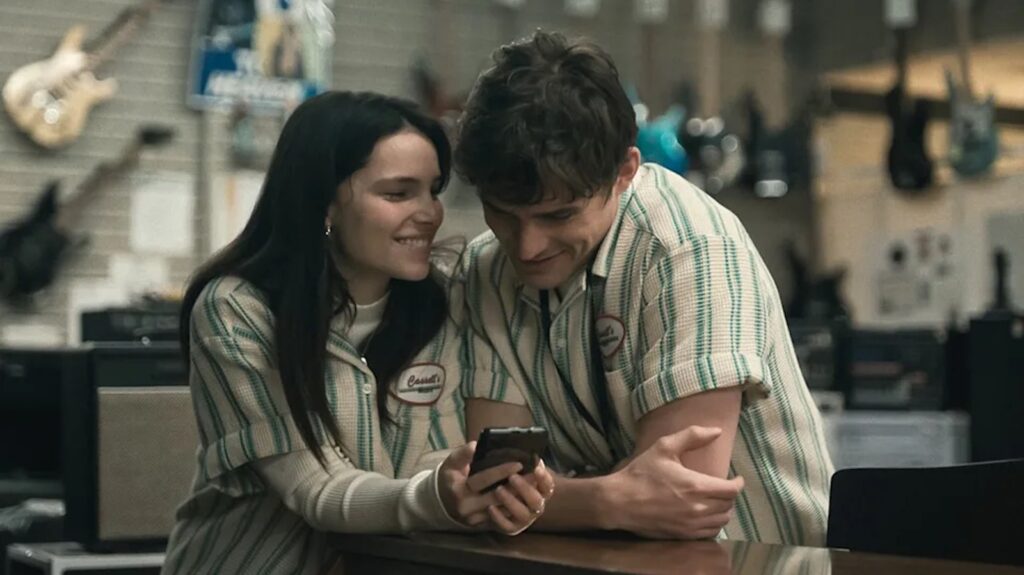
The object of Bear’s idealism is Nikki (Inde Navarrette), his coworker at a local record store. (That such an establishment remains economically viable is one of several signs that Barker exhibits little interest in contemporary realism.) Nikki has “friend-zoned” Bear (Michael Johnston), which means that while he enjoys spending time with her, their quasi-intimacy has rendered him miserable. His best friend, Ian (Barker’s longtime creative partner Cooper Tomlinson), advises him to come clean, provided he doesn’t do so at their weekly bar trivia, a cherished ritual that can’t be tarnished by emotional authenticity. But because Bear is a character in a movie—behold, the classic screenwriting trope of someone asking “Did you have something you wanted to tell me?” followed by a hard-swallowing “no”—he’s too crippled by fear and indecision to speak his mind. Instead, he resorts to… other methods.
The hook of Obsession is that, while its title hints at Bear’s unrequited affection for Nikki, its plot actually operates in reverse. Despondent over his lack of nerve, Bear cracks open a “One Wish Willow,” a thrift-store novelty that purports to grant its holder a single desire. (Kudos to Haley Fitzgerald for her one scene as the fabulously indifferent cashier who sells Bear the trinket.) “I wish Nikki loved me more than anyone in the entire world,” he whimpers. Then there’s a knock on his car window: Nikki is feeling lonely, and she’s sad because her dad is sick, so maybe she could stay at Bear’s place tonight?
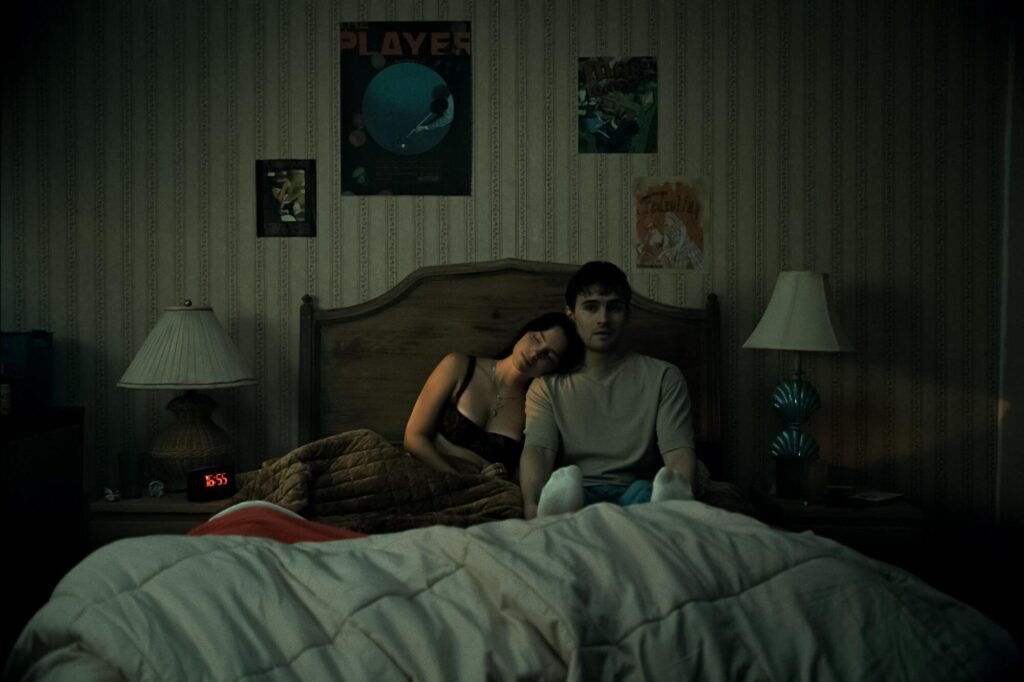
Jackpot! But as it turns out, being the target of all-consuming devotion comes with a few strings. At first, Bear is thrilled with Nikki’s newfound besottedness, and he’s willing to overlook some of her eccentric mannerisms, like how when they watch TV on the couch, she keeps pivoting her face away from the screen and toward him. But as their relationship intensifies, her behavior grows commensurately more troubling. She tapes the front door shut to prevent him from going to work. She makes him a sandwich from meat that is, shall we say, not stocked on grocery store shelves. She watches him sleep, and when he tries to get up to use the bathroom, she clamps her arms around him and howls “STAYYYY!!” Even her movements tend to carry a creepy arrhythmia, to say nothing of her rictus smiles.
Structurally, Obsession is a one-way narrative, tunneling deeper and deeper as Bear’s dream of romantic bliss quickly turns into a nightmare. This presents a storytelling challenge; it’s difficult for Barker to build momentum while essentially just replaying the same scene over and over. “Be careful what you wish for” isn’t an especially profound insight, and the screenplay’s hammering of its thesis can feel repetitive and predictable.

Yet the movie still works, thanks to Barker’s persistent ingenuity and Navarrette’s rigorously demented performance. Shot on the cheap, Obsession is hardly gorgeous, but Barker still brandishes some canny visual tricks. My favorite image in the film is an ostensibly functional dialogue scene between Bear and Ian in the record store, with Nikki in the distant background at the cash register; she’s completely out of focus, but you still see her head turned away from any potential customers and toward Bear, and you can somehow sense her just looking. Using a cramped aspect ratio to heighten the claustrophobia, Barker often shrouds Navarrette in shadow, dimming her face and forcing us to squint to make out her expressions.
And those are quite something. It’s a bit frustrating that Nikki’s character progresses along a straight (downward) line rather than traversing an arc, but Navarrette’s extraordinary physicality is gripping throughout. Wielding an array of grins, frowns, and stares, she embroiders the role’s single-minded mania with remarkable variety. She’s Anya Taylor-Joy from hell.
Obsession is satisfying as a straightforward horror flick—the sequence where Nikki kills the vibe at a party by reciting a truly perverse fairy-tale passage is a brilliant piece of tone-shifting—but there’s also a brain rattling inside its jumpy body. Its most thoughtful idea lies in its deconstruction of on-screen gender types. Bear, with his soft features and general diffidence (his name itself is something of a joke), might typically be the hero of an Apatowian comedy; in fact, he is this movie’s villain, centering his own wants at the expense of Nikki’s autonomy. His cowardice and egoism are most crisply articulated during a bleakly funny scene when he improbably calls One Wish Willow’s customer service line and asks a catatonic employee (voiced by Barker) for assistance—not to cancel his wish, but to alter it. This guy should join a support group with the entitled pricks from Ruby Sparks and Companion.
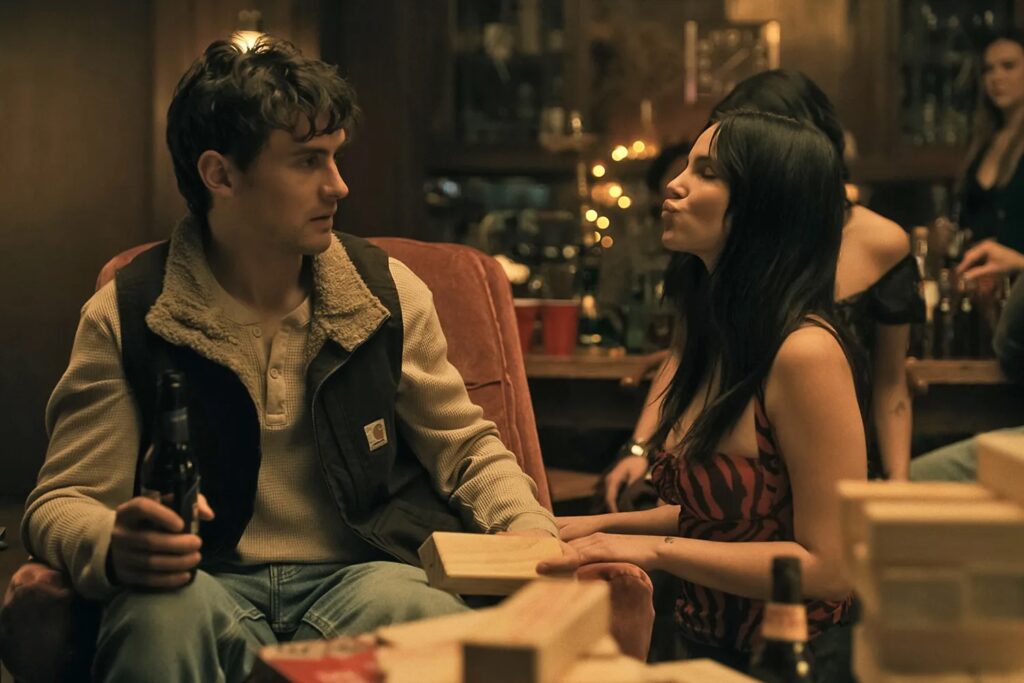
For all its frights and frenzy—dead cats, paralyzed urinations, heads smashed into bricks—Obsession is scariest in its rare, haphazard moments when the real Nikki breaks through her paranormal captivity and speaks with her true voice. These usually manifest in spasmodic curses and gestures, but there’s a hypnotic scene late where she pleads with Bear for a mercy killing, her volume never rising above a whisper. It’s a haunting sequence that’s all the more upsetting for its pervasive quiet.
Not that Obsession skimps on shouts, shocks, or overall mayhem. Yet Navarrette’s electric, deceptively grounded performance infuses it with a rich, human texture, so much so that I’m compelled to disregard its somewhat banal life lessons. Seeing no possible downside, I hereby wish that Inde Navarrette stars in a whole lot more movies. Maybe that seems selfish, but I’m doing this for both of us. Surely she’ll understand.
Grade: B+

Jeremy Beck is the editor-in-chief of MovieManifesto. He watches more movies and television than he probably should.