Over three decades ago, in Wolfgang Petersen’s In the Line of Fire, John Malkovich played a brilliant sociopath who waged metaphysical war on an elderly Secret Service agent who’d failed to prevent the Kennedy assassination. Now, in Martin McDonagh’s Wild Horse Nine, Malkovich stars as an aged CIA spook who may have actually killed JFK himself. If he shows up in Roland Joffé’s November 1963 (arriving in theaters next month), it’s time to get the ghost of Jim Garrison on the horn.
Not that Wild Horse Nine, McDonagh’s fifth feature, is principally concerned with manufacturing suspense. Sure, it contains pockets of excitement—bursts of gunfire, screeches of tires—but it mainly operates as a dialogue comedy, camouflaging its tenderness and its anger behind McDonagh’s characteristically sharp wordplay. It’s a hangout movie, albeit one with deceptive punch.
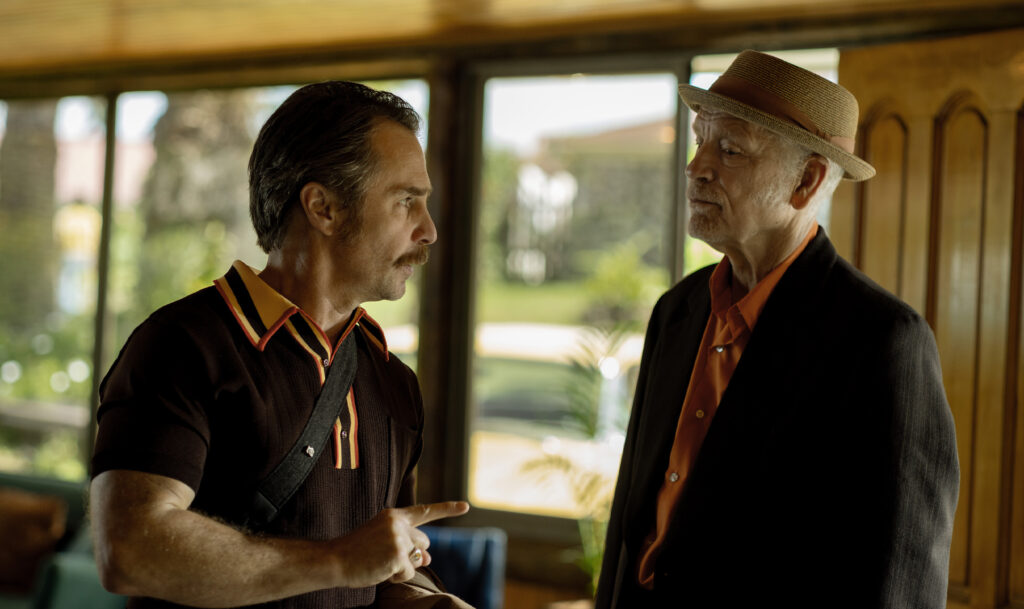
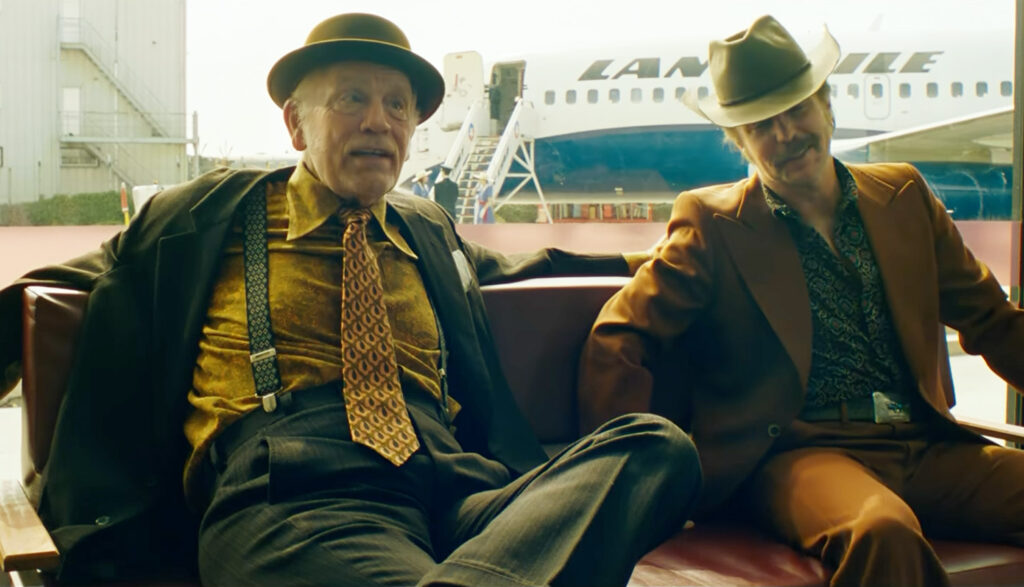
The players charged with delivering McDonagh’s Abbott-and-Costello verbiage—strictly speaking, it’s more like Costello-and-Abbott, given their respective roles—are Malkovich and Sam Rockwell, who won an Oscar nine years ago for the director’s Three Billboards Outside Ebbing, Missouri. They play Chris and Lee, a pair of Langley operatives fomenting unrest in Chile. (The year is 1973, and Pinochet hasn’t yet unseated Allende from power.) Lee maneuvers with an efficient secrecy that’s recognizable to fans of spy fiction, but Chris isn’t so clandestine. “We came down here to destabilize your democracy,” he says to two shell-shocked female college students at an airport. “Your country is going to get fucked.”
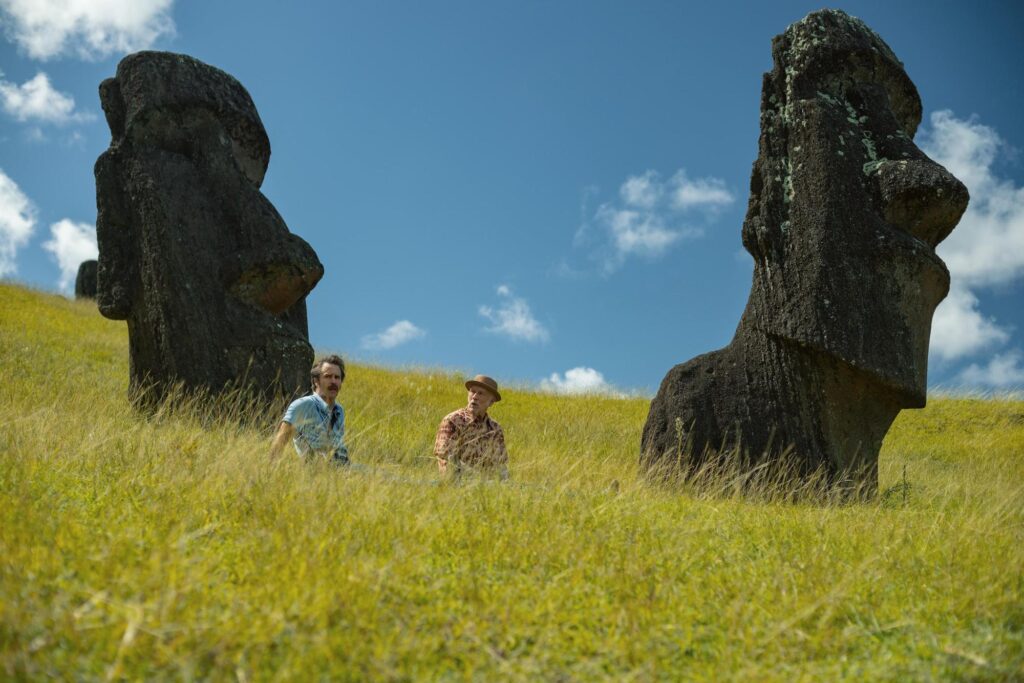
Such cruelty wouldn’t seem to constitute the bones of crowd-pleasing cinema, but McDonagh has a way of making heaviness feel light. In genre terms, Wild Horse Nine dabbles and pivots—it’s a keystone-cops comedy that’s also a political satire and a little bit of a ticking-clock thriller—but as a matter of narrative, it’s primarily a road picture. Chris and Lee, having satisfactorily planted seeds for the upcoming military coup, take a well-earned excursion to Easter Island (“Its indigenous name is Rapa Nui.” “How about you shut the fuck up.”), where they plan to soak up some sun and visit the famous heads moai. Mostly, they talk, which tends to involve Chris saying something absurd or profound (or both) and Lee rolling his eyes or shaking his head.
McDonagh’s dialogue is very funny—there are digressions about whether dinosaurs are eligible to enter heaven, how to use incongruous photographs to conceal explosives, and why a country’s form of government is related to the quality of its cheese—and if Wild Horse Nine had no broader agenda than just luxuriating in its stars’ repartee, it would’ve remained perfectly enjoyable. But the relationship between Chris and Lee turns out to be a bit more slippery and complex than just professional partners who make each other chuckle. Chris, we discover, has terminal cancer, and his arch witticisms and philosophical musings are accompanied by regular morphine injections and bouts of memory loss. Lee, in addition to being Chris’ friend, is also his minder, which tinges their humorous interactions with responsibility and regret. This is further complicated by the consternation of their handler (Steve Buscemi), an unsmiling bureaucrat who’s tasked Lee not just with supervising Chris but with extracting precious information about the older man’s activities on a certain November day in Dallas 10 years prior.
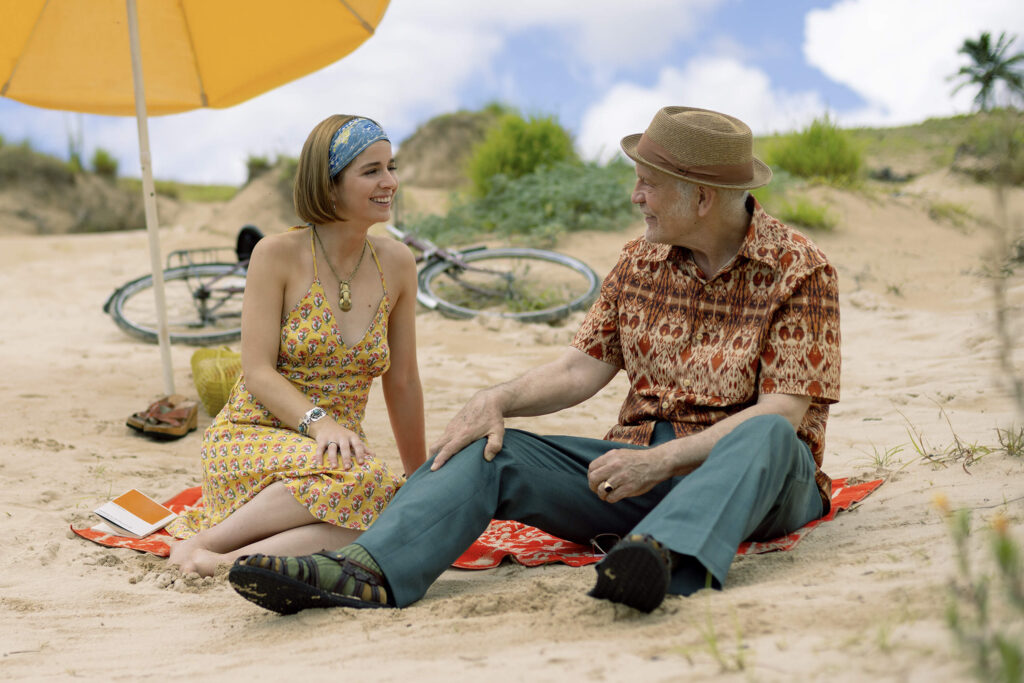
As it progresses, and without sacrificing its snappy rhythm, Wild Horse Nine quietly adopts the posture of an elegy. The title proves both metaphorical and literal; Chris, who knows he’s on his last legs, is a maverick whose motel room happens to be numbered nine, but he also repeatedly encounters a stallion roaming the countryside, and its majestic purity compels him to reflect on his own dirty deeds. This inspires him to strike up a quasi-friendship with Monica (Mariana di Girolamo), one of those aforementioned students whose initial disgust toward Chris slowly gives way to fascination and affection, even as his disarming frankness—“Never let them get you in a car,” he advises ominously—unsettles her.
It might seem dubious that an attractive young woman would want to spend her vacation chatting with a salty septuagenarian, but that would discount the charm of Malkovich, who turns McDonagh’s words into delicious morsels, and who imbues Chris with a craggy vivacity that only underlines his encroaching wistfulness. Malkovich has had a long, rangy, not entirely consistent career, but his performance here feels like a capstone—a cementation of his off-kilter slyness. (In this, the movie might be a decade-old spiritual sequel to Hell or High Water, which featured a similar legacy-defining star turn from Jeff Bridges.) Next to him, Rockwell exhibits the humility to play the straight man, earning laughs without reaching for them and emphasizing Lee’s frustration without raising his voice.
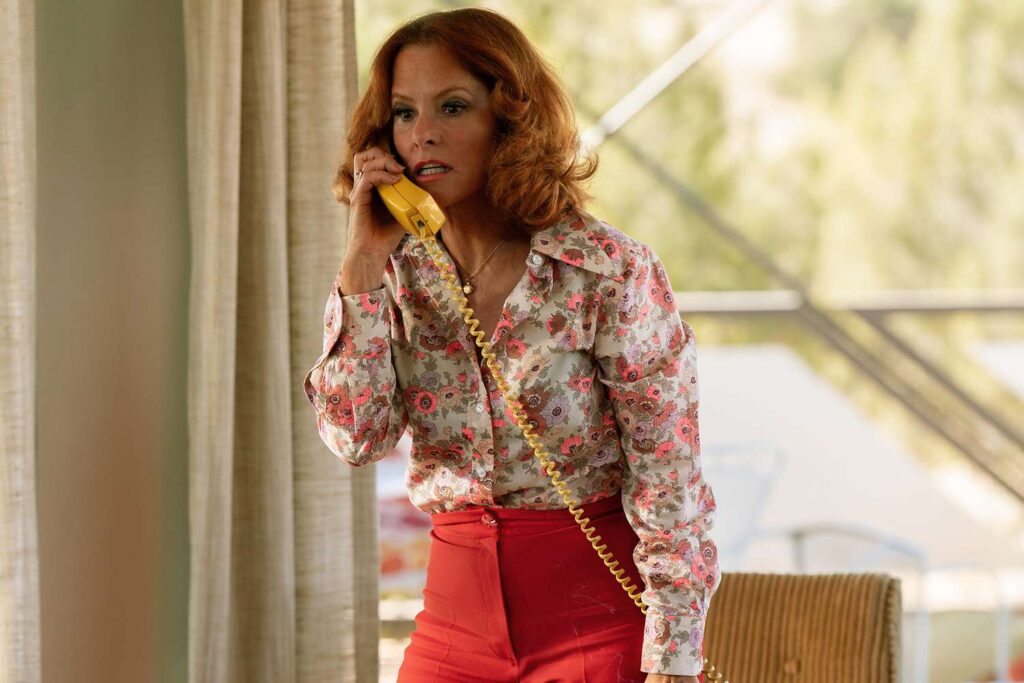
To the extent it cosplays as an espionage picture, Wild Horse Nine isn’t especially dynamic, serving up an action-ish climax whose choreography is unpersuasive. (It doesn’t help that the film’s female characters are underserved, most notably Parker Posey as Lee’s harried, two-timing wife; certainly there is no feminine presence on par with Frances McDormand’s towering performance in Three Billboards.) Yet despite its half-hearted set pieces, the movie’s third act acquires surprising heft, transforming this lark of a buddy comedy into a poignant drama that’s both emotionally satisfying and thematically forceful.
With Three Billboards, McDonagh—who was born in London but is a citizen of Ireland—grappled with the distinctly American ugliness that embodied Donald Trump’s ascent, even as he dared to humanize Rockwell’s vulgar racist in the process. (The popular critique of that film seemed to amount to, “How dare this foreigner lecture us about domestic prejudice and also contend that bigots are people”; perhaps this backlash is why McDonagh retreated home for his follow-up, the decidedly Irish fable The Banshees of Inisherin.) Here, he takes a jaundiced view of U.S. imperialism, a topic that feels disturbingly fresh despite the half-century-old setting. Running beneath the movie’s playful, jokey demeanor is an undercurrent of rage—a seething indictment of a bullying superpower. Chris and Lee may not be bad people, but they work for a bad man, and they’ve actively made the world a worse place. Like most episodes of history, this one is prone to repeating itself.
Somehow, none of this agitation dilutes Wild Horse Nine’s easy pleasures, nor does it generate a bitter aftertaste. Maybe I’m feeling unduly optimistic in light of this week’s midterm elections, but the stealthy urgency of this movie strikes me not as plaintive but emboldening—less a lament than a rallying cry. It may be too late for Chris to achieve redemption, but that isn’t true for the rest of us. We’re all characters in our own political thriller. And we can’t let them get us in a car.
Grade: A-

Jeremy Beck is the editor-in-chief of MovieManifesto. He watches more movies and television than he probably should.