In the purest sense, the Cannes Film Festival is similar to the Oscars in that it features voters giving awards to their favorite movies. Beyond that, the two bodies have little in common. The Academy is demographically vast (nearly 10,000 voting members), even as it invariably highlights films made in the U.S. and Britain. (It does create a specific category for non-English pictures—the perplexingly renamed Best International Feature—to ensure a modicum of global representation.) Cannes is both quantitatively smaller, presided over by a jury of just nine artists, and culturally broader, screening titles from around the world and studiously spreading its honors across its various categories. (There are no Everything Everywhere All at Once-style sweeps on the Croisette.) The festival also carries a heightened level of prestige that renders it, depending on your perspective, either admirably grand or performatively snobby.
Yet for (ugly) American cinephiles, the biggest difference between Cannes and the Oscars isn’t temperamental; it’s temporal. The Oscars function as a coronation, crowning a winner at the end of the long, often-insufferable period of discourse known as “awards season.” Assuming you live in a decently populated area (or, increasingly, subscribe to the right streaming services), you can watch most of the nominees well in advance of the ceremony, allowing you to wield an informed opinion in the eternal, infantile debates about who should win Best Supporting Actress. (To be clear, this website devotes a week of coverage each year to exactly those debates.) The Academy fancies itself the arbiter of excellence, but it really just ratifies preexisting consensus.
The Cannes jury, by contrast, is a tastemaker. The films that screen at the festival have rarely been showcased anywhere else, and unless you can jet-set to France, you won’t be able to watch them for months or even a year, depending on distribution agreements. This means that, whereas the Oscars confirm extant opinions, Cannes manufactures anticipation. Unfolding over a few weeks in May, it tells you what to look forward to in the year’s final quarter, provided U.S. studios get their act together and actually bring the damn movies to theaters—as they did twice in recent weeks.
Fjord, the winner of the Palme d’Or (i.e., Best Picture) at this year’s festival, is in many ways a prototypical Cannes contender. It’s long. It’s talky. It’s depressing. It grapples with contemporary politics and prejudices. It isn’t so much an “eat your vegetables” film as a scrupulous inquiry into whether, in fact, vegetables should be eaten in the first place.
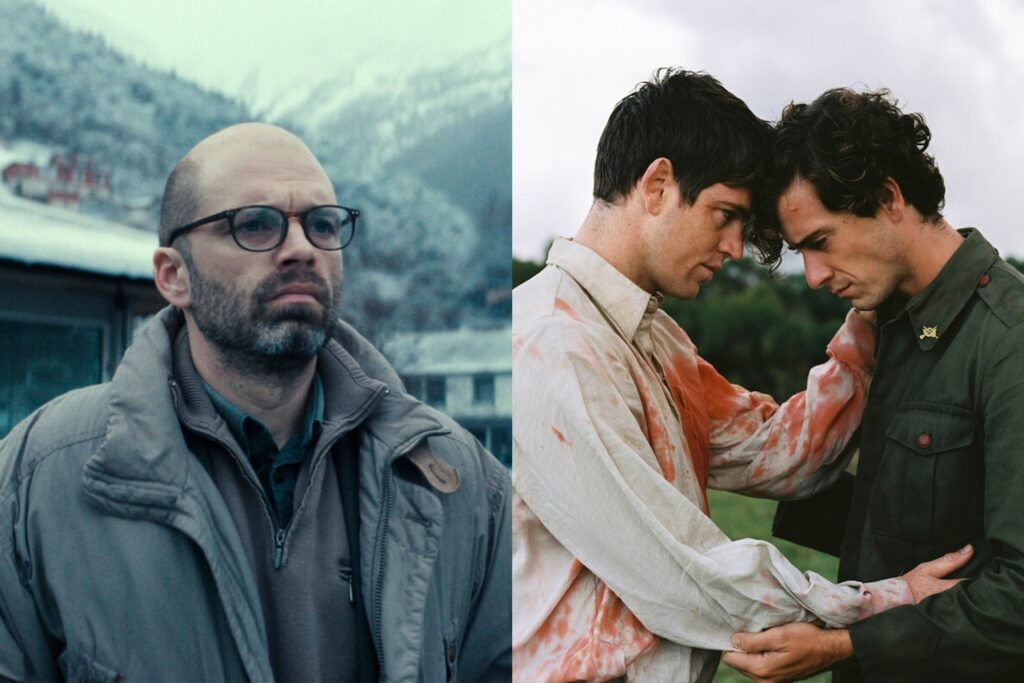
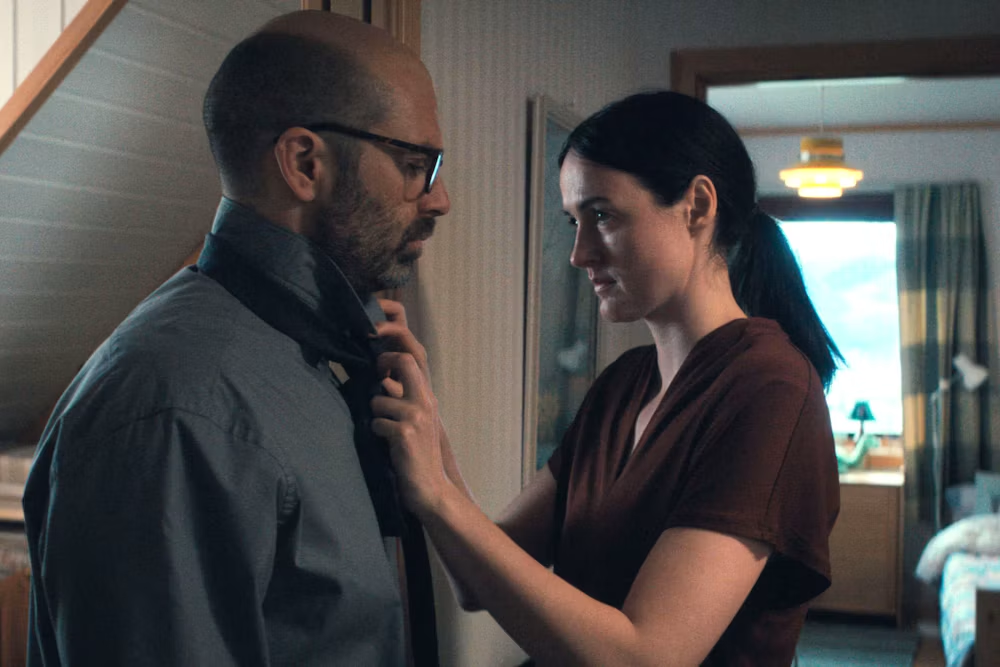
For all its severity, Fjord features an actor who is, if not quite a movie star, then at least a superhero: the Winter Soldier himself, Sebastian Stan. Scarcely recognizable beneath a shaved head and thick glasses, he plays Mihai Gheorghiu, a Romanian technician who’s just moved with his wife, Lisbet (Renate Reinsve), and their five children to her native Norway. It seems like a healthy development, because who wouldn’t want to live in Norway? It has good schools and universal healthcare and attractive blondes and crystal-clear ponds. (That avalanche-proof facility? It’s a metaphor.) But while the Gheorghius initially receive a warm welcome, the reception for these devout Christians quickly grows chilly. “They’re punished,” Mihai says when explaining to his neighbors’ daughter, Noora (Henrikke Lund-Olsen), why his two eldest children—the young teenagers Elia (Vanessa Ceban) and Emmanuel (Jonathan Ciprian Breazu)—can’t attend her birthday party. Some punishments are harsher than others.
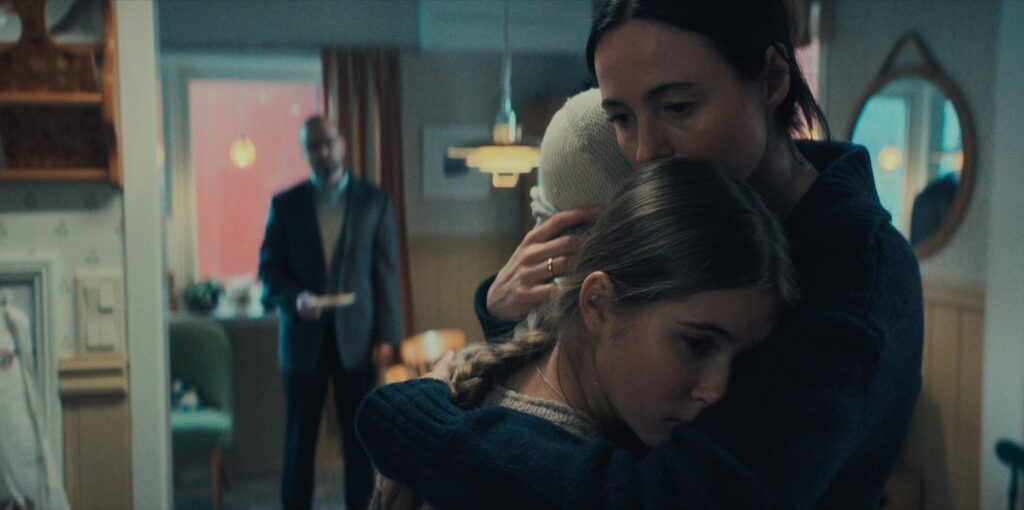
In genre terms, Fjord is a legal procedural. After a teacher discovers bruises on Elia’s neck, the school suspects Mihai and Lisbet of child abuse. Local authorities then initiate parallel civil and criminal proceedings, setting the stage for a lengthy trial and—more immediately and distressingly—removing four of the Gheorghius’ children from their home and placing them in foster care. (During a particularly tense scene, Lisbet refuses to relinquish her baby; the social services worker backs down.) Mihai, who confesses to occasionally spanking his kids but denies otherwise striking them, surmises that he and Lisbet are victims of religious persecution, and while she strategizes with lawyers, he fires up social media and attempts to turn their plight into a cause célèbre among the Christian right. (Naturally, some of his most vocal supporters hail from the United States.)
Written and directed by Cristian Mungiu (Graduation, R.M.N.), Fjord in some ways recalls Anatomy of a Fall, the 2023 Palme winner about a murder case. But while Mungiu is similarly coy about unseen events, his film isn’t really designed as a mystery or a collective search for elusive truth. Instead, what principally concerns Mungiu is how the Gheorghius’ circumstances implicate a collision of societal values, among both his characters and his audience. For example, I consider myself a morally upright liberal, which means I support religious freedom, public education, and due process, while I oppose homophobia, corporal punishment, and state-sanctioned overreach. Whom, then, am I supposed to root for in Fjord? Mihai and Lisbet love their children, but as parents they are harsh, incurious, and (at least in his case) bigoted. And while the Norwegian governmental apparatus may claim to be acting in Elia and Emmanuel’s best interests, its agents also exhibit a bias against the Gheorghius that seems to go beyond mere safeguarding and veers toward belligerence. If this movie lacks a true villain, it certainly doesn’t have any heroes.

The danger of this construction is that, in apportioning culpability so thoroughly—less “both sides” than “no sides”—Mungiu abdicates the responsibility to present a coherent point of view. Maybe, but Fjord’s sobering sense of judgment dovetails with its rigorous technique. Using long takes and steady camerawork, Mungiu adopts an immersive style that might be called dispassionate compassion. Without ceremony but with lucid observation, his steadfast bluntness lends the movie a clear-eyed authenticity which—along with the inhabiting, unshowy performances from Stan and Reinsve—makes you feel the characters’ roiling pain.
Mungiu’s breakout film was 2007’s 4 Months, 3 Weeks, and 2 Days, which also won the Palme, and which examined the human costs of political oppression. Where that was a period piece, Fjord is set in the present day, and it feels unnervingly attuned to the powder keg of modern culture wars and their downstream consequences. This comes through most sharply in the relationship between Elia and Noora, which in a happier universe might have formed the backbone of a feverish queer coming-of-age story. Here, it’s reduced to a swatch of loaded text messages, too-quick hugs, and unfinished conversations. We can never be sure what happened inside the Gheorghius’ home. But we do know that these kids, caught in an unending battle between their parents and their community, are very much not all right.
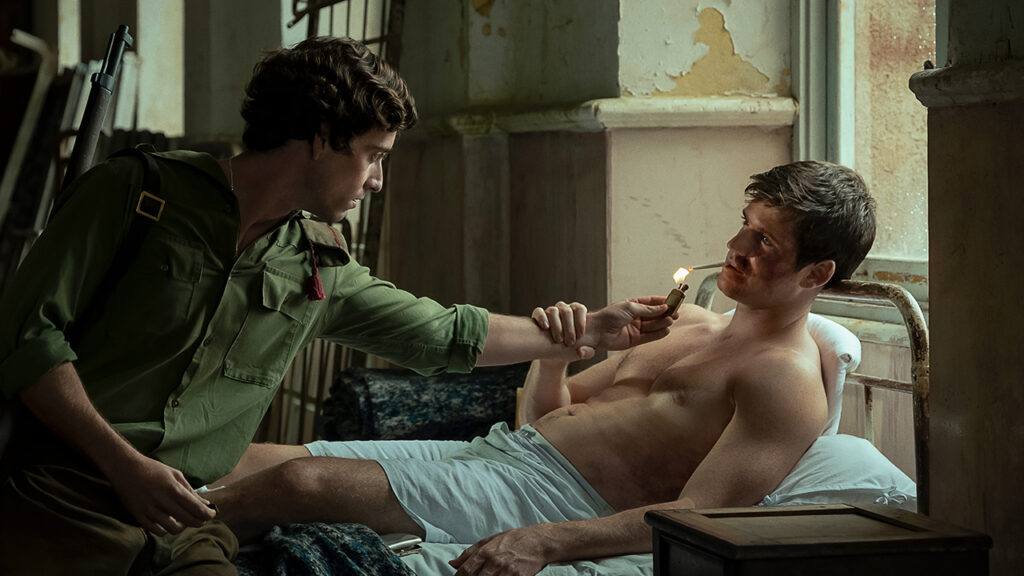
The concept of generational trauma comes to the fore in La Bola Negra, a historical epic about the bitter legacy of fascism. From the filmmaking duo of Javier Ambrossi and Javier Calvo (winners of Cannes’ Best Director prize), it’s a hugely ambitious movie, spanning multiple timelines and tackling weighty themes. If it doesn’t bundle its many ideas with consummate elegance, it at least makes an impression.
The first and most interesting of La Bola Negra’s three disparate (but inevitably connected) periods is set in 1937, when a young Spaniard named Sebastián (the musician known as Guitarricadelafuente, making his big-screen debut) lives in an impoverished village that’s excited to host Mussolini. (In one of the film’s most quietly disturbing images, small children practice performing a fascist salute.) In a humdinger of an opening sequence, encroaching Italian aircraft instead lay waste to the town—whether this bombing is a purposeful military operation or a bureaucratic mix-up is never made clear—causing Sebastián to flee for his life, the camera racing alongside him as his family is annihilated. He eventually joins up with Franco’s Nationalists, less out of ideological alignment than self-preservation.
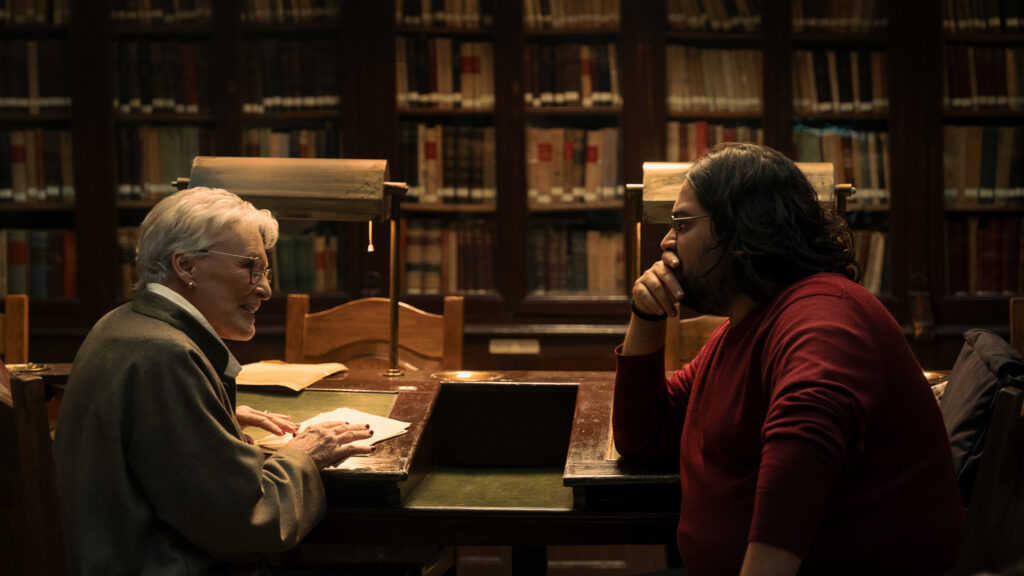
It’s a bold introduction, and the movie’s subsequent leaps in time, both forward and backward, only reinforce the breadth of its aspirations. In 1932, a handsome chap called Carlos (Milo Quifes) applies for admission into an exclusive society, only to be blackballed (hence the title) on account of his presumed homosexuality. Then someone is swiping on dating apps, and suddenly it’s 2017, as a frumpy researcher, Alberto (Carlos González), receives word of the death of his estranged grandfather. The sweeping design of La Bola Negra—which Netflix, to its credit, uncharacteristically released in nearly 500 theaters ahead of its streaming debut in December—is to systematically weave these separate threads into a tapestry, one that paints a unified picture of institutional subjugation and individual persistence.
It’s an intriguing (if familiar) blueprint. The problem is that on their own merits, two of the three storylines struggle to engage. The Alberto material is mostly just unpleasant, featuring an aggressively hostile relationship with his mother (Lola Dueñas), along with a hazily sketched partnership with his boyfriend (a curiously flat Julio Torres). The scenes with Carlos, on the other hand, are more mannered, and while their artificiality serves a narrative purpose, that doesn’t make them dynamic. Only Sebastián’s tribulations at an encampment, where he ends up guarding a wounded loyalist (Miguel Bernardeau) whose frankness functions to bare his own desires and self-loathing, are independently engrossing.

At the same time, Ambrossi and Calvo—collectively referred to as the Javis on account of their shared first name—supply sufficient flair to hold your interest as they prepare to drop their hammer. On leave with his quasi-comrades, Sebastián attends a burlesque-style exhibition presided over by a flamboyant singer (an appropriately glamorous Penélope Cruz), and the sequence marries thematic inquiry with visual immediacy. There is also a striking scene where Carlos gets pulled into a communal dance, activating a welcome touch of fantasy. Many of the film’s images, whether of manmade architecture or natural wonder, are eye-catching, even majestic.
And despite its clumsiness, La Bola Negra ultimately sums to more than its parts, even if its third-act reveals are more predictable than earth-shattering. The movie is based in part on an unfinished play by Federico García Lorca, and it carries a real sense of loss—not just for Lorca, but on behalf of all queer artists who were crushed under the bootheel of tyranny. Yet while the Javis don’t shrink from the reality of this cruelty, they nonetheless imbue the picture with a fighting spirit, affording it a measure of grace. La Bola Negra argues, with greater conviction than clarity, that the world is full of beauty as well as ugliness. And the very act of making art amounts to its own, unconquerable form of resistance.
Grades
Fjord: B+
La Bola Negra: B

Jeremy Beck is the editor-in-chief of MovieManifesto. He watches more movies and television than he probably should.