The Best Movies of 2013: Honorable Mention (Part II)

Leonardo DiCaprio in The Wolf of Wall Street

We’re recapping the movies that made honorable mention for the Manifesto’s top movies of 2013. If you missed Part I, you can check it out here.

Phil Spector. HBO’s most celebrated quasi-theatrical feature in 2013 was Steven Soderbergh’s Behind the Candelabra. I liked that movie just fine (even if I preferred another Soderbergh picture—see below), but I’m somewhat disappointed that critics lavished such praise on it, especially when television’s preeminent network released another, superior film about a troubled celebrity. David Mamet’s Phil Spector may lack the glitz and glamour of Soderbergh’s effort, but it’s nevertheless a lean, hypnotic glimpse into the psyche of an unhinged protagonist, as well as a fascinating exploration of the American legal system.

Read More

The Best Movies of 2013: Honorable Mention (Part I)

Amy Acker and Jillian Morgese in Much Ado About Nothing

And finally, we arrive at the best of the best. Well, almost. Over the past several years, the Manifesto has taken a rather flexible approach when setting the upper bound of its annual “best of” list. Back in 2010, 20 films made the cut. In 2011, a particularly fertile year at the movies, we expanded the field to 25. And for 2012, we narrowed things to a sweet 16. Essentially, the vintage of the particular cinematic year has influenced the length of the list. But this elastic methodology has also saved me from making agonizing choices, sparing me the sheer pain—the metaphysical agony one incurs from settling on a group of 10 titles to officially represent the year’s best—of such a hopeless, arbitrary task.

But that pain is really what list-making is all about. It’s supposed to be difficult, even if it’s also, as a ruthlessly quantitative exercise, rather stupid. Top 10 lists function as de-facto time capsules, a window into the author’s opinions of that particular moment, even if those opinions inevitably mutate with age. They also, if compiled properly, can inspire debate, which is always a healthy consequence of web-based discourse (even if such debates occasionally decay from robust argument to hateful mud-slinging). Perhaps my favorite part of publishing my own top 10 list—an undeniably personal exercise—is having people tell me precisely where I went wrong. And so, going forward, the Manifesto will only be featuring 10 titles on its official best-of list at year’s end.

Read More

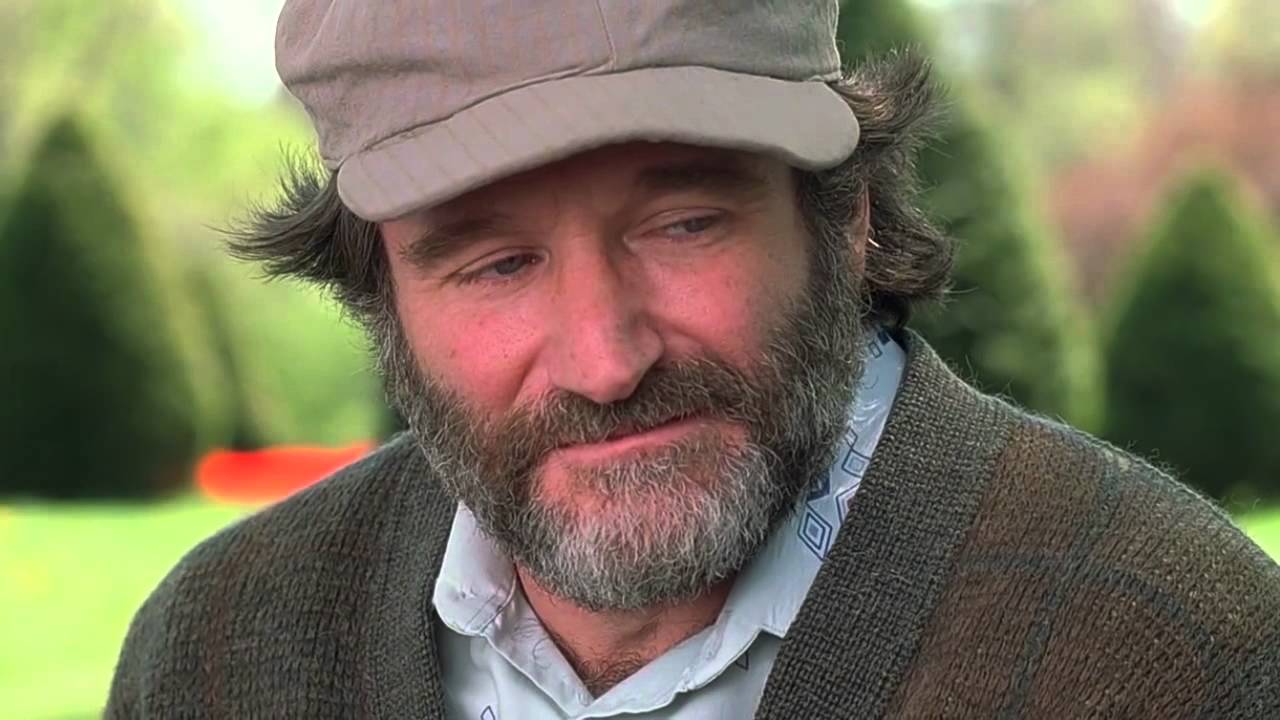
R.I.P. Robin Williams, and my 10 favorite Robin Williams performances

There’s an episode of Louie in which Louis C.K. and Robin Williams find themselves as the only mourners at a man’s funeral. They spend the rest of the morning together, reminiscing about the departed and eventually confessing that he was something of a schmuck, which probably explains why his funeral was exclusively attended by two men who barely even knew him. After some bizarre plot developments typical of Louie‘s randomness—as it turns out, the deceased was beloved as a generous benefactor at a local strip club—C.K. and Williams amiably go their separate ways. Before they part, however, they promise each other that no matter what happens, whoever outlives the other will be sure to attend the dead man’s funeral.

It’s a funny, mordant joke, but it also highlights the (presumably intentional) illogic of the casting. Robin Williams, who died yesterday in an apparent suicide at the age of 63, was enormously well-liked and brought unbridled joy to countless moviegoers (and televiewers) of multiple generations. This was not a man who needed the assurance of a balding, overweight comedian to attend his funeral, lest no one else be present. This was a man whose line of mourners is certain to stretch well around the block. Read More

The Executors of 2013, Pt. III: Feat. World War Z, Star Trek Into Darkness, and This Is the End

Chris Pine and Zachary Quinto in Star Trek Into Darkness

Today, we’re wrapping up our look at the Executors. If you missed them, you can find Part I here and Part II here.

Nebraska. It’s not quite accurate to say that Alexander Payne has matured. He’s older than he used to be—most of us are—but Payne’s directorial signature already seemed fully formed when he debuted in 1996 with Citizen Ruth, and his follow-up, the brilliant satire Election, felt like the work of a visionary. It’s not as though he ever needed seasoning. But if Payne hasn’t grown up as a filmmaker, he’s definitely changed, trading in the jaundiced worldview of his earlier work for something more mellow and contemplative. It’s a shift that’s produced The Descendants, one of 2011’s best films, and now Nebraska, an even quieter and more reflective picture about love, death, mental illness, and human decency. Election 2.0 this is not.

Read More

The Executors of 2013, Pt. II: Feat. The Hunger Games 2, Iron Man 3, and Monsters U.

On to Part II of the Executors. If you missed Part I, you can find it here.

Fruitvale Station. It’s easy to brand Fruitvale Station as a hyperbolic piece of biased blubber. Ryan Coogler’s debut feature tells the tragic tale of Oscar Grant, a young black man who was murdered by Bay Area police in the early-morning hours of New Year’s Day 2009. (The officer claimed the shooting was accidental. Three guesses what Coogler thinks of that claim.) It’s sad stuff, and Coogler has no qualms with divesting you of your tears, even as he also quietly asks for your outrage. The problem is that, while Fruitvale Station traffics in complicated issues of race, class, and profiling, it fails to adequately grapple with the complexity of those issues. As a result, viewers who approach the movie as a piece of social commentary will find it muddled and hopelessly strained. Read More