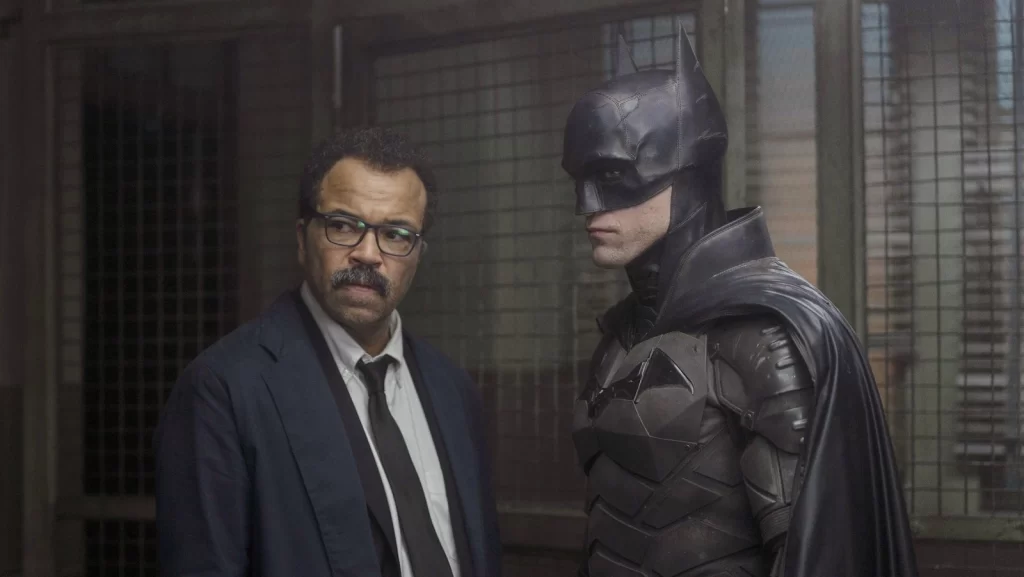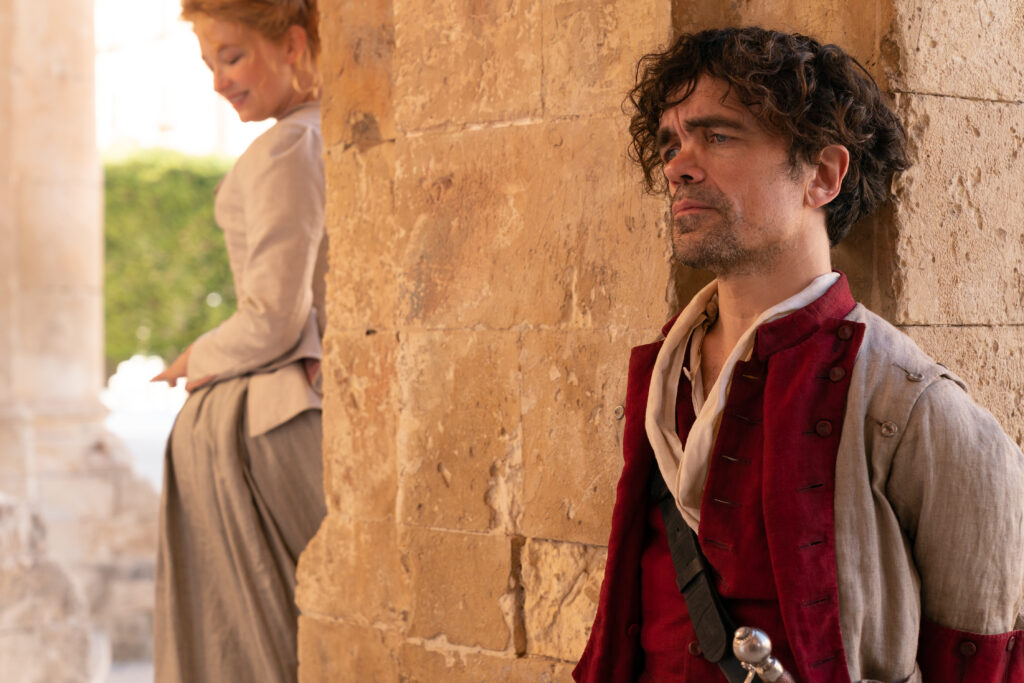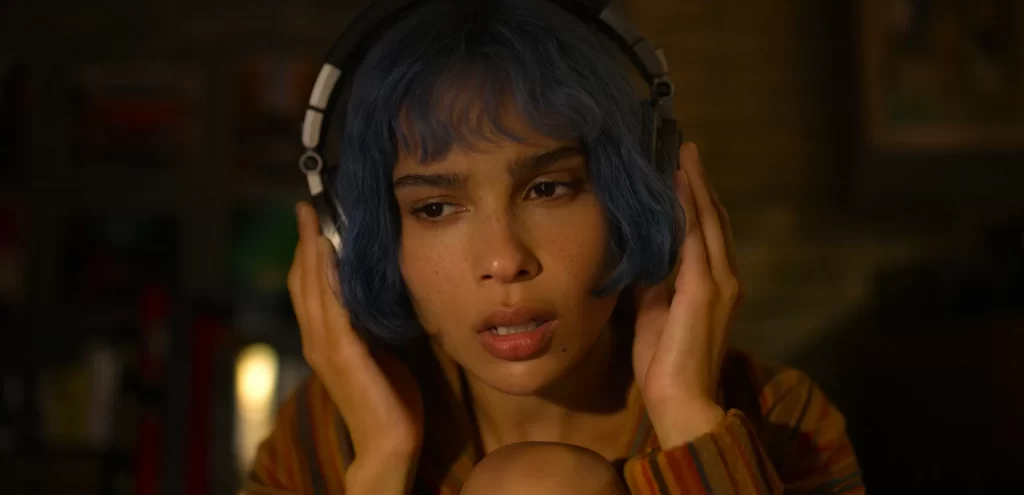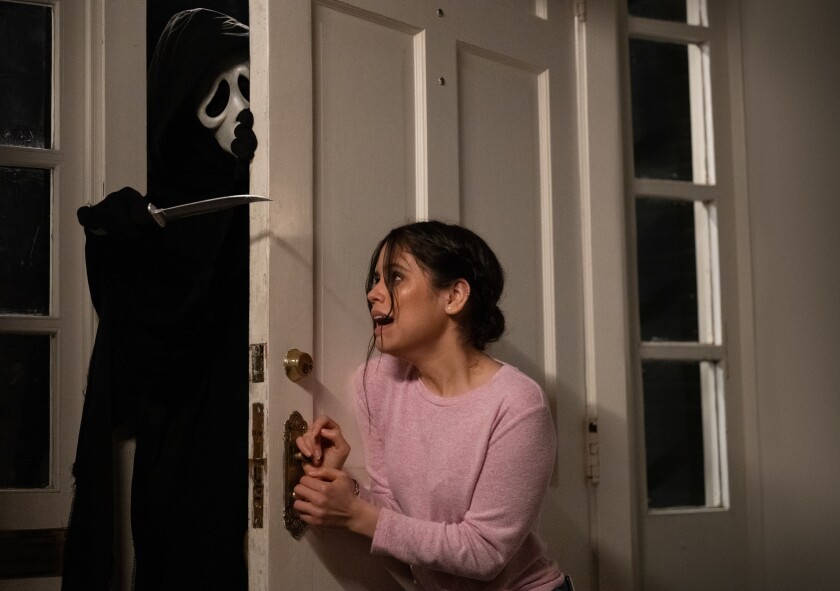
Dune, The French Dispatch, and World-Building Great and Small

Timothée Chalamet in Dune and The French Dispatch

Denis Villeneuve and Wes Anderson are strangely similar filmmakers, even though they make exceedingly dissimilar films. Villeneuve’s movies are grand, sprawling adventures that envision alien life forms and contemplate dystopian futures. Anderson, by contrast, makes tidy, compact comedies whose foremost exotica are their characters’ eccentricities, and which tend to unfold in an unspecified but highly particular recent past. Yet both directors are true artisans skilled in the craft of cinematic world-building; for them, the screen is a coloring book for their fertile imaginations, one that should be sketched in as boldly and minutely as possible. Put differently, Villeneuve and Anderson treat movie-making like a work of galactic creation. One looks to the skies, the other to the soul, but both construct their own universes, packed with detail, whimsy, and awe.

This past weekend was something of a feast for cinephiles, as it brought new films from the two auteurs, both of which the COVID-19 pandemic had delayed for roughly a year. Villeneuve’s Dune, the long-awaited adaptation of the beloved science-fiction novel by Frank Herbert, finds the Canadian literally building a brand new world, one teeming with wonder and innovation. Anderson’s The French Dispatch, meanwhile, is more earthbound but no less profligate in its assembly. Both are natural progressions that reflect their makers’ career-long preoccupations, yet while both are undeniably impressive aesthetic achievements, only one fully succeeds as a piece of dramatic entertainment. Read More

The Last Duel: He Said, She Said, They Bled, Who’s Dead?

Adam Driver and Matt Damon in The Last Duel

Things get hairy in The Last Duel, and not just metaphorically. In this proudly old-fashioned, deceptively intricate medieval drama from Ridley Scott, a fraught marriage faces down a crucible of inequality—social, emotional, and intellectual, yes, but most of all follicular. As Jean de Carrouges, a hirsute warrior in perpetual need of both a paycheck and a shower, Matt Damon is armed with a bushy blond beard and an infested mullet that would make Joe Dirt jealous. Opposite him is Jodie Comer as Marguerite, whose flowing locks are regularly woven into elegant braids or neatly arranged into symmetrical ringlets. Gender disparity is the movie’s primary theme, one that’s tidily symbolized by Carrouges’ flagrant untidiness.

Coyly patient and sneakily stimulating, The Last Duel’s complexity reveals itself slowly, so much so that it initially seems familiar and drab, another of Scott’s ponderous Middle-Age epics. (Other examples include the underrated Kingdom of Heaven, the forgettable Robin Hood, and that one about the entertainer with the sword.) The superb screenplay, which Damon co-wrote with Nicole Holofcener and his bestie Ben Affleck (from a book by Eric Jager), cleaves neatly into three chapters, with each replaying the same series of critical events from the perspective of a different character. The first, which centers on Carrouges, is by far the weakest, though this is less a matter of poor execution than a byproduct of the script’s adroit design. Before surprising us with slippery variations and clever shifts in point of view, Scott and his writers must undertake the functional, somewhat laborious work of sketching out the film’s basic conflict. Read More

No Time to Die: Do You Expect Me to Squawk? No, It Expects You to Cry

Daniel Craig in No Time to Die

The pandemic may have delayed James Bond, but can James Bond defeat a pandemic? It’s a piece of unnerving cinematic kismet that No Time to Die, the fifth and final entry starring Daniel Craig as everyone’s favorite martini-drinking secret agent, finds the erstwhile 007 racing to stop the release of a deadly bioweapon. Originally set for release in April 2020 (ha!) before being postponed roughly 35 different times over the past 18 months, this latest depiction of Ian Fleming’s tuxedoed superspy has suffered gravely on its bumpy journey to the multiplex, so much so that its fictional threat—mass distribution of airborne toxins—seems both eerily prescient (the script was completed well before COVID-19’s arrival) and oddly quaint. When compared with widespread vaccine obstinacy, performative litigation over mask mandates, and right-wing disinformation campaigns, how dangerous can a single supervillain really be?

But nobody watches a James Bond flick for the plot; it’s the man with the golden puns we’re after. Every new 007 develops his own signature—the pithy charm of Sean Connery, the jocular cheese of Roger Moore, the arch distance of Pierce Brosnan—and the Craig era has been defined by a brooding intensity that mingles, sometimes productively and sometimes awkwardly, with an emotional vulnerability. The first blond Bond has always been a capable puncher and competent quipper, but his legacy is the sting of loss that lingers over his romantic entanglements; what were once male-gaze rituals of masculine conquest and feminine adoration became, in the new millennium, something resembling genuine, mutual relationships. As the capstone to Craig’s decade-and-a-half term of service in the role of 007, No Time to Die strives to marry the franchise’s more traditional elements—the gadgets and the globe-trotting, the brutes and the babes—with its newfound sensibility of heartache and regret. Read More

Titane: Extra-Vehicular Activities

Agathe Rousselle in Titane

Car trouble gets a remodel in Titane, the blistering new thriller from the French provocateur Julia Ducournau. If you think the dudes from the Fast & Furious flicks are into vehicles, wait until you meet Alexia, a woman with a metal plate wedged into her head and a screw loose in her brain. The plate was installed during her childhood (the screw has presumably been loose since birth), after she inspired a crash by distracting her father while cooing “vroom-vroom” from the backseat; far from holding a grudge, as soon as she’s released from the hospital, she plants an adoring smooch on the sedan’s window. Flash forward 20-odd years, and her affections for automotives have, shall we say, matured, even if her moral compass continues pointing straight toward a black hole.

Ducournau’s first feature was Raw, and if you saw it, you haven’t forgotten it, especially the scene where a hungry teenage girl nibbled on her sister’s severed finger. Her follow-up bears a number of similarities, many of them appellative; Garance Marillier, who previously starred in Raw as that ravenous limb-muncher, returns here in a smaller role again playing someone named Justine, while other key characters are once more called Alexia and Adrien. More substantively, both films interrogate femininity in a masculine world, and the chaos that results when women start pushing past the guardrails that polite society has erected for them. Read More

Malignant, The Card Counter, and Movies Going All-In

Oscar Isaac in The Card Counter; Annabelle Wallis in Malignant

Last Sunday, the critic Walter Chaw tweeted that, because more than 90% of the new movies he watches are “pretty much the same”, he’s more likely to appreciate a film that “just cocks an arm and swings for all it’s worth”. I might quibble with the mathematical accuracy of his first statement, but despite the mixed metaphor, I’m inclined to agree with his second; even when they fail, ambitious movies tend to be more memorable than their cautious counterparts. Chaw presumably had a specific picture in mind, but this past weekend provided multiple titles that refused to play by multiplex rules. One is far better than the other, but both succeed in upending expectations and carving out their own atypical territory.

At the outset—and, in fact, for the majority of its running time—James Wan’s Malignant isn’t especially novel. Despite stemming from a nominally original screenplay by Akela Cooper, it’s another haunted-house chiller that would fit snugly inside the Conjuring cinematic universe that Wan created back in 2013. Its heroine, Madison (Annabelle Wallis, best known to me as Grace on Peaky Blinders), is plagued by visions of a malevolent spirit called Gabriel, one of those shadowy creatures who’s never quite in focus but who looks a bit like the skeleton-masked bank robbers from The Town, only blacker and nastier. In addition to somehow speaking through electronic devices like a demonic Siri, Gabriel seems to be a burgeoning serial killer, and Madison—in an arresting manipulation of the image—periodically finds her mind transported to the sites of his murders, forced to watch his grisly wet work like a helpless, paralyzed bystander. Read More