Inside Out: Sweet Emotions, and Sad Ones, Too

Five emotions wrestle with one another, and more, in "Inside Out"

At one point in Inside Out, the two main characters walk under a lettered archway that reads, “Imagination Land.” It’s a fitting marker, given that this movie is the latest (and nearly the greatest) offering from Pixar, that cinematic factory of innovation and ingenuity that has been delighting audiences for two decades with its inimitable blend of vibrant animation and smart storytelling. Also fitting is that the protagonists are named Sadness and Joy, as these are the two primary emotional responses that Inside Out deftly, generously evokes. You will undoubtedly experience pangs of sadness in watching this poignant portrayal of a child in crisis, struggling valiantly to process her swirling feelings of confusion, alienation, and loss. As for joy? That comes from everything else.

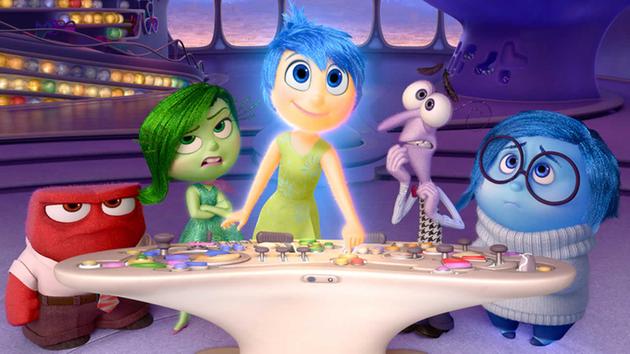
The ostensible hero of Inside Out is Riley (voiced by Kaitlyn Dias), a plucky, relatively normal 11-year-old whom we first meet moving with her parents from the ice-covered lakes of Minnesota to the bustling cityscape of San Francisco. Yet while Riley is the film’s chief human character, she is not its focal point. Rather, Inside Out takes us inside Riley’s brain to explore the workings of her emotions, which we discover are literal beings themselves, with their own bodies, minds, and temperaments. They include Fear (Bill Hader), a jumpy lavender fellow with a bowtie and a prominent proboscis; Disgust (Mindy Kaling), a greenish girl with wavy hair and perpetually rolling eyes; and Anger (Lewis Black, naturally), a squat and fiery hothead who regularly bursts into flame and whose color you can probably guess. Rounding out this fantastic five are, of course, Sadness and Joy; Sadness (The Office‘s Phyllis Smith, perfectly cast) is a rotund blue figure who wears oversized spectacles and shuffles her feet morosely, while Joy (Amy Poehler, ibid) is the yellow-skinned, cobalt-haired pixie who serves as the group’s perky, quietly flawed leader. These five personifications of feeling—exposed nerve endings made real—operate in concert (and occasionally in conflict), huddling over a gadget-laden control panel and helping to shape Riley’s experiences, her emotional reactions, and, really, her entire life. Read More

To Greatness and Beyond: In Anticipation of Inside Out, Ranking Every Pixar Movie

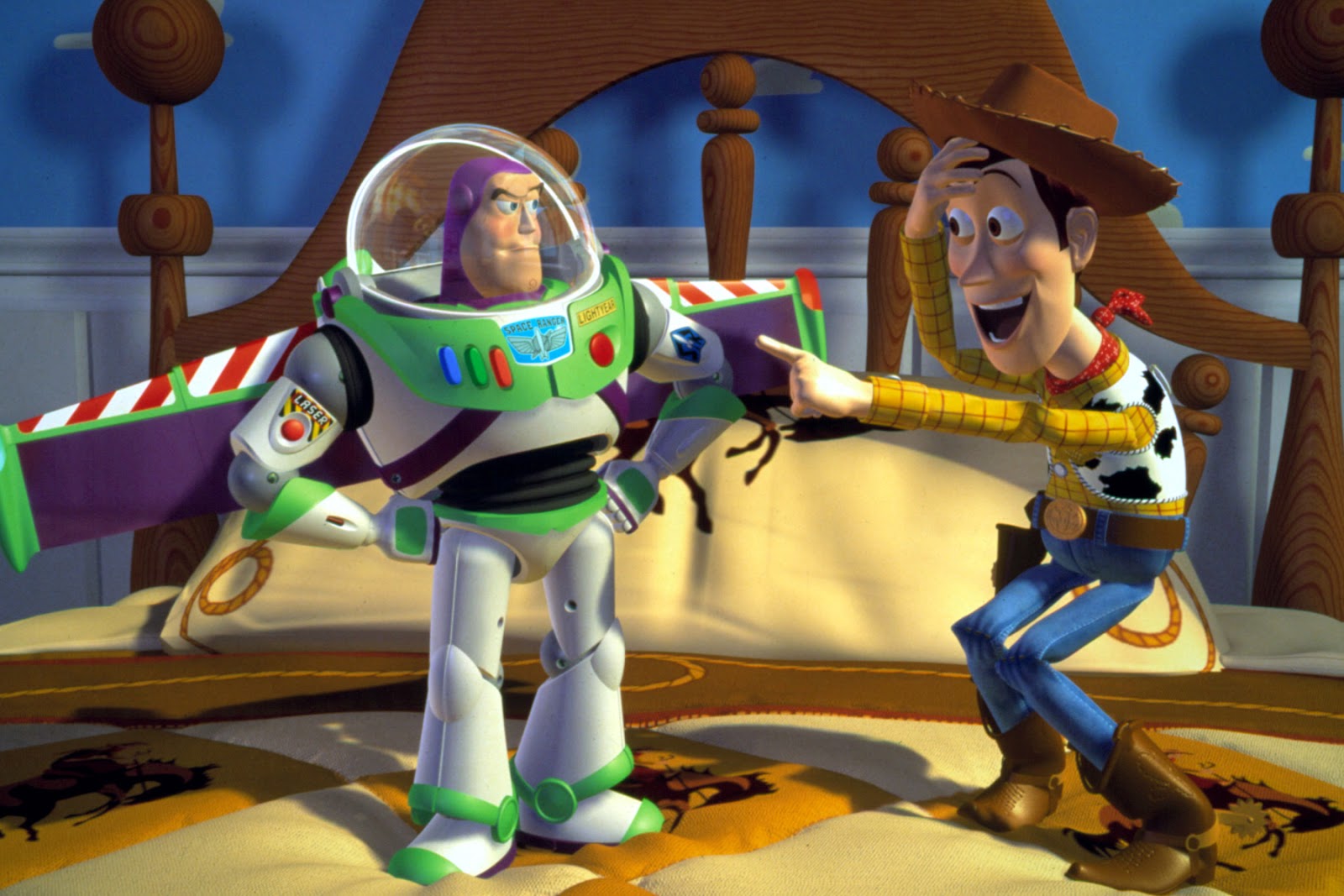
Buzz Lightyear and Woody got Pixar started back in 1995 with "Toy Story"

Pixar is the only movie studio that has achieved brand recognition. You never hear people say that they’re excited about the new Fox Searchlight release or that they’re lukewarm on the latest Warner Bros. picture. But Pixar, through a 20-year, 14-film run of (mostly) extraordinary and original work, has cultivated its reputation to the point that it’s become the industry benchmark for animated fare. Read reviews of animated releases from other companies, and you’ll invariably find comparisons to the gold standard, whether laudatory (“Looks just as good as any Pixar movie!”) or—more commonly—derogatory (“It isn’t bad, but it’s no Pixar.”).

This did not happen by accident. The studio sports a stellar success rate, both commercially and (more importantly, at least in this context) artistically. It is also a model of storytelling consistency, which should not be confused with sameness. The typical Pixar movie exhibits two key characteristics: breathtaking animation and inspired imagination. The rest of the world is gradually catching up on the first front—DreamWorks’ How to Train Your Dragon 2 is an especially gorgeous example—but John Lasseter and his brilliant minions remain comfortably in the lead on the second. There is something magical about the studio’s best works, an ability to transport you to worlds of limitless invention and possibility. But as innovative as these movies can be, they also often carry a profound emotional resonance, grounding their fantastical stories in recognizable human feelings. The old line on Pixar movies is that they’re enjoyable for both kids and adults, but what they really do is temporarily transform curmudgeonly adults into joyous kids. Read More