Phoenix: Back from the Dead, But Something’s Off

Suspension of disbelief is typically a viewing requirement at the multiplex, not the art house. Superhero movies and science-fiction flicks are expected to stretch the boundaries of reality in ways anathema to dialogue-driven dramas and period pieces. Phoenix, Christian Petzold’s electric, implausible anti-love story, is the type of muted, modestly scaled film that you wouldn’t expect to ask audiences to take a giant leap of faith. But it does precisely that, hinging on a conceit that, if rejected, threatens to topple the entire enterprise. If you refuse to accept the cornerstone of Phoenix‘s vertiginous plot, you may struggle to find rapture in its supple technique and vast emotions. But if you surrender yourself, you are likely to become intoxicated by its smoky beauty and limitless longing.
I strongly urge you to try your best, though my urgings are insignificant compared to those of Nina Hoss. A German-born actress best known to American audiences as one of Philip Seymour Hoffman’s weary spies in A Most Wanted Man (and also the anchor of Petzold’s sobering Cold War film, Barbara), Hoss delivers a transcendent performance as Nelly, a concentration camp survivor who was shot in the face during the war (in a wise decision, the details of the shooting are never explained), and who begins the film wrapped in bandages. She’s returning to Germany with her friend, Lene (Nina Kunzendorf, perfectly crisp), in order to undergo facial reconstructive surgery. When the doctor asks Nelly whom she wants to look like, she demands that he return her to her original self. “You won’t look exactly the same,” the surgeon warns her, and the subtitles for that line might as well be accented in bold. Read More
.jpg "Russell Crowe cast himself as the hero in his directorial debut")
 Slavery was horrible. This is not up for debate; it’s a fact. Yet our discussion of this wretched time in our civilization tends to feel removed and academic. How, we wonder, could society have countenanced the suppression of an entire race? What forces could have conspired to treat people as nothing more than property? Was nineteenth-century America motivated by economic gain, rationalizing that the ends justified the means, or did slave owners honestly believe in racial superiority? These are questions worth asking, lest such horrid history repeat itself, but they approach slavery more as an intellectual concept than as the actual, systemic brutalization of humans. 12 Years a Slave—Steve McQueen’s gripping, unapologetically savage account of one servant’s struggles—bucks that trend and instead takes a hauntingly intimate approach. It is not about slavery’s politics. It is about its mechanics.
 As wonderful as it is to watch, American Hustle was assuredly a difficult film to make. It has a labyrinthine plot, replete with double crosses, false identities, fake accents, and cons nested inside other cons. Its structure is ungainly, with cascading flashbacks, multiple voiceovers, and repeated shifts in point of view. And its based-in-truth narrative, about the FBI’s ABSCAM sting in the 1970s, is laden with insider minutiae, ranging from the mechanics of organized crime to the breadth of political corruption to the egotism of law enforcement. You would think, given the need to balance all of these plates spinning on screen, that American Hustle would require a workmanlike and disciplined director, someone capable of streamlining the screenplay’s disparate elements and synthesizing its busy plot. Instead, it got David O. Russell.
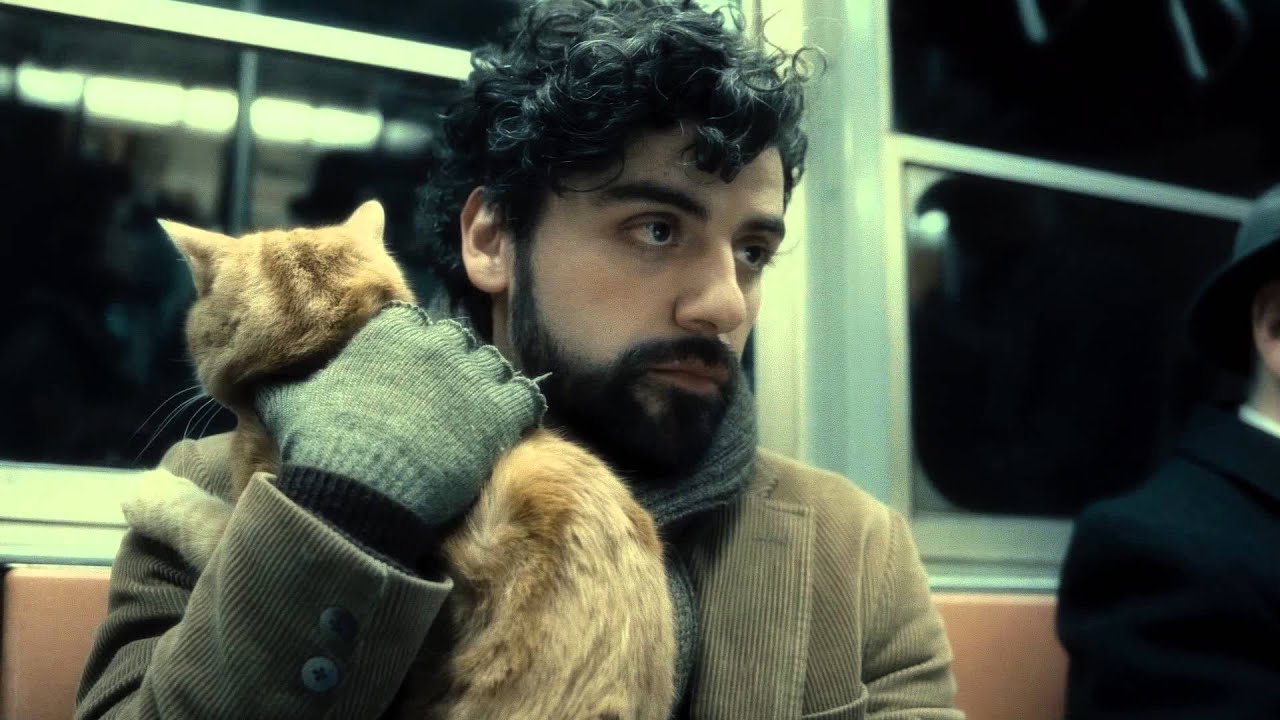 Not much happens in Inside Llewyn Davis, the sixteenth—and arguably most soulful—feature from the inimitable Joel and Ethan Coen. Its narrative is elliptical, to the point that it ends literally where it began. It chronicles a week in the life of a New York folk singer (Oscar Isaac, extraordinary) who shuffles from one indignity to the next; he crashes at various houses (“Got a couch?”), scrounges for any gig he can find, and huddles to keep warm, lacking a winter coat to protect him from the city’s bitter chill. It systematically deconstructs its title character, establishing his talent and promise before methodically breaking him down through a series of humbling, escalating defeats. Not much happens, and yet for Llewyn, so much does.