Focus: Will Smith and Margot Robbie Are Light as Air, But the Plot Is All Fumes
A breezy, sexy, ultimately empty crime caper, Focus is a victim of its own sleight of hand. It is so intent on hoodwinking its audience and disguising its characters’ motivations that it doesn’t entertain so much as tease, constantly taunting us with one version of events before yanking out the rug again and again. It’s the kind of movie where nothing is what it seems. That does make things unpredictable, since no viewer could possibly anticipate Focus‘ sudden twists and hairpin curves. But following this movie’s labyrinthine structure becomes less a tantalizing task of puzzling things out than a tedious exercise of wait-and-see. When you’re constantly on guard for the next big surprise, nothing is truly surprising.
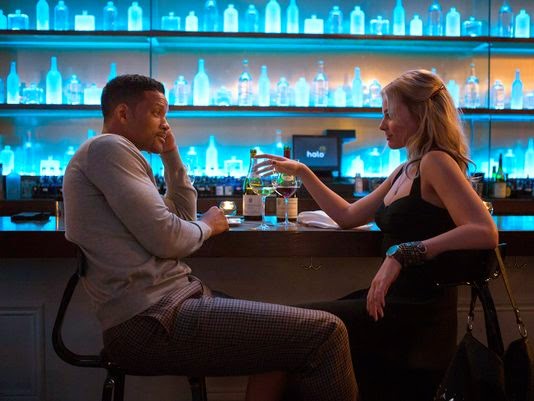
Here’s the good news: For its first 40 minutes or so, Focus is a blast. The ageless Will Smith stars as Nicky, an inveterate con man who decides to tutor Jess, a fledgling pickpocket played by the fast-emerging Margot Robbie (last seen heating up the screen in The Wolf of Wall Street and set to appear next summer as Jane in Warner’s Tarzan reboot). They make a pretty pair, he with his relaxed handsomeness, she with the pale blue eyes and curves that need no introduction. Their difference in years may consternate some viewers—at 46, Smith is nearly twice the age of the 24-year-old Robbie, and his goatee now betrays the slightest whispers of grey—but his charisma hasn’t waned, and it’s easy to buy the mutual attraction that quickly leads them tumbling into bed. It’s a romance that operates on surface appeal rather than real heat, which proves problematic once Focus tethers its twist-and-turn plot to the notion that Nicky, typically such a cool customer, has fallen desperately in love. Read More
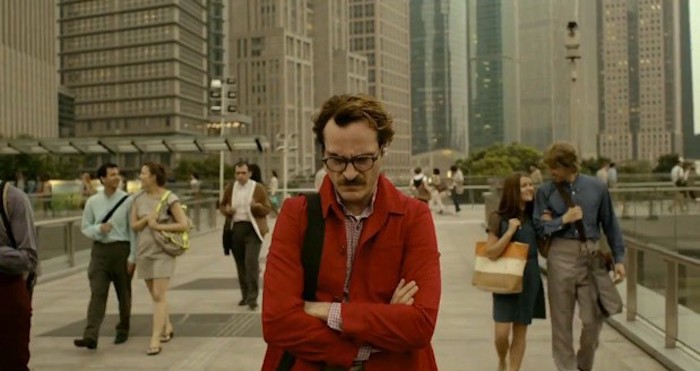 Can a computer have a soul? Can a movie? Her, Spike Jonze’s breathtaking, devastating film about a lonely man and his sentient operating system, spends a good deal of time pondering the first question and, in the process, answers the second. But let’s not bury the lede here: This is a movie about a man who falls in love with a machine. No matter the miracles science has provided in the new millennium, this is a tough sell. Yet the unique genius of Her—beyond its remarkable and vast imagination—is that it acknowledges the absurdity of its premise while simultaneously committing to it with the utmost sincerity. The result is a film that’s often uproariously funny, playfully mocking its gorgeous self-made universe with wit and good humor. But Her also, through a combination of sublime technique and heartfelt storytelling (Jonze also wrote the script), offers acute insight into the dynamics of modern relationships: what it means to be alone, to be loved, to be depressed, to be happy. It’s a movie about machines that affirms our very humanity. And it makes resoundingly clear that even if computers may not have souls, some movies surely do.
 “I’d like to think that there’s more to a person than just one thing,” Aimee Finicky says early in The Spectacular Now. I’d like to think she’s right. There is certainly more than just one thing to The Spectacular Now, James Ponsoldt’s swooning, touching third feature. Like Aimee, it refuses to be pigeonholed. This is partly because, in strict genre terms, it has no strict genre; instead, it melds elements of various tropes, making it not only a winning coming-of-age story, but also an earnest teen romance, a wistful family drama, and even a sobering study of addiction. But far more important than the multiplicity of the film’s form is the raw power of its content. The Spectacular Now is not one thing, because it is many things: spry and funny, sad and heartfelt, honest and scary, rueful and rewarding. It’s a movie that would make Aimee Finicky proud.
 Before Sunrise was never supposed to start a franchise. A touching, wondrous glimpse of two people meeting and immediately falling in love, Richard Linklater’s 1995 romance worked perfectly well as a standalone story of a single night, even if the tantalizing ambiguity of its ending—in which nascent lovers Jesse (Ethan Hawke) and Celine (Julie Delpy) agreed to meet again in Vienna in six months’ time—left viewers speculating as to what happened next. But to our surprise, Linklater resumed their story in 2004 with Before Sunset, which reunited Jesse and Celine for a few fateful hours in Paris. As it turned out, logistical issues prevented the lovers from reconnecting in Vienna, but even after nine years, their chemistry still crackled, and Before Sunset concluded with the winsome suggestion that they might in fact live happily ever after. Did they? To answer that question, Linklater and his two leads (who, for this film and the last, are also his writing partners) have returned with Before Midnight, which shatters our fairytale expectations with stark realism and painful honesty. Jesse and Celine may yet find bliss, but as this movie makes ruthlessly clear, it won’t be easy.