
An aphorism claims that, while dying is easy, comedy is hard. Writing about the genre is no less difficult. I’m not just talking about the peril of ruining jokes by explaining them. I’m also bemoaning the challenge of translating physical reactions—giggles, winces, hoots and howls—into descriptive assessments. The purest analysis of comedy is also the most tautological: The reason it was funny is that it made me laugh.
With the possible exception of horror (hello Obsession!), comedy is the format that most benefits from theatrical exhibition. Even as their quantity has dwindled (often migrating to Netflix), jokefests benefit from collective appreciation—the cascades of laughter that ripple through the audience. We may be sitting alone, but we watch them together.
This is why the experience of disliking a comedy is so unpleasant, not to mention fraught with danger. It is a sinking feeling, to be surrounded by cackling strangers and to wonder, with bafflement, what they’re so amused about. This in turn makes you vulnerable to accusations of snobbery—the idea that you’re too highbrow to lower yourself to such plebian tastes. But there is no joy in disapproving of art that others find hysterical, in countering their uproarious laughter with stony silence. There is only disappointment, and maybe confusion. Why don’t I get it?
I don’t get much about Gail Daughtry and the Celebrity Sex Pass, which seems to put me in the critical minority; it certainly places me in opposition to the couple sitting next to me, who hollered enthusiastically throughout our sparsely attended screening. I don’t begrudge them their jubilation; I just wish I shared it. This isn’t to say the movie left me completely cold; I’d estimate that I laughed 10 times (such as when Fred Melamed had a conversation with a mailbox). This means that I only rejected around 97% of the film’s jokes.
Gail Daughtry is the work of David Wain, whose cultish filmography includes Wet Hot American Summer and They Came Together. To say that his comic sensibilities don’t jibe with my own is, shall we say, an understatement. In point of fact, the concept of understatement is completely foreign to Wain, who prefers to hammer his jokes to within an inch of their lives, give them a nanosecond to recover, then return and stomp them to death.
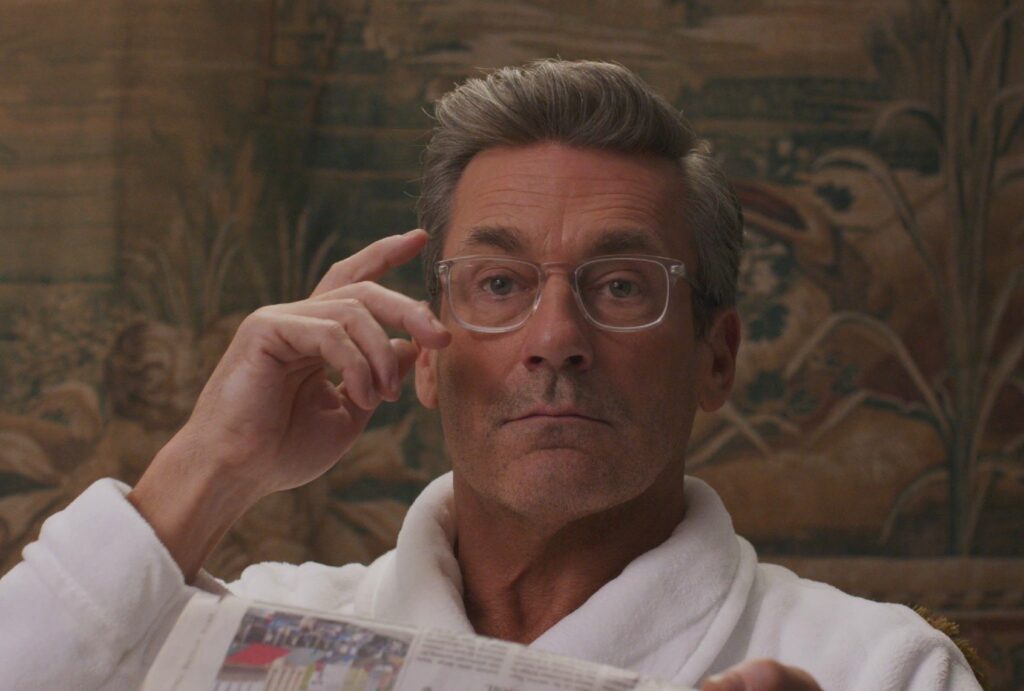
The scene that best encapsulates Gail Daughtry occurs when John Slattery, playing an exaggeratedly obnoxious version of himself, attempts to enter an hotel room, sticking his foot into the threshold as a security guard tries to slams the door shut. (Mad Men scholars will flash to one of Roger Sterling’s most withering line readings.) This happens once, and Slattery yelps in pain as the door smashes into his foot. Then it happens again, and Slattery wails again. Then it happens a lot more; I didn’t keep count, but I’d wager the tally reached 15 times, maybe even exceeding 20. This is the David Wain school of comedy: If at first you don’t succeed, bludgeon your audience into submission.
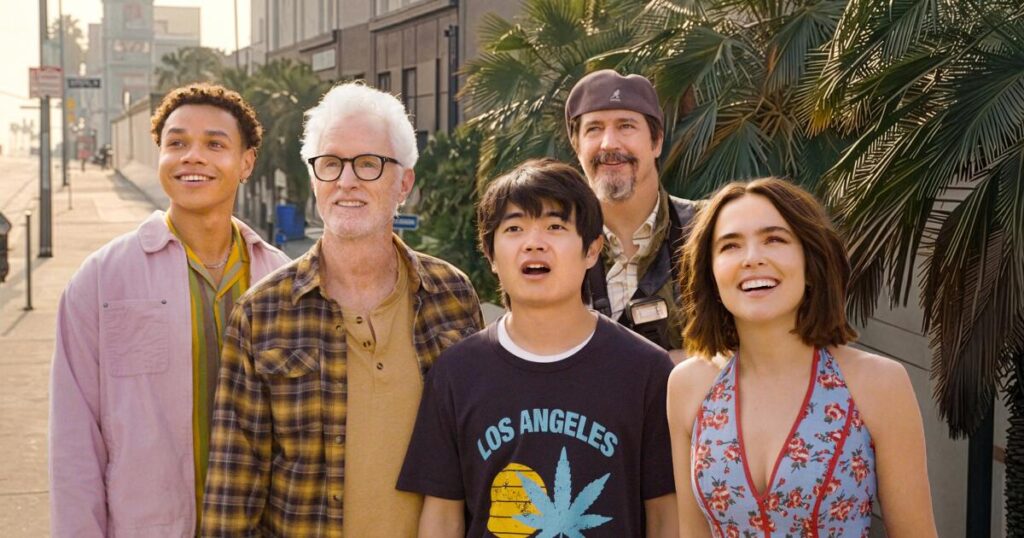
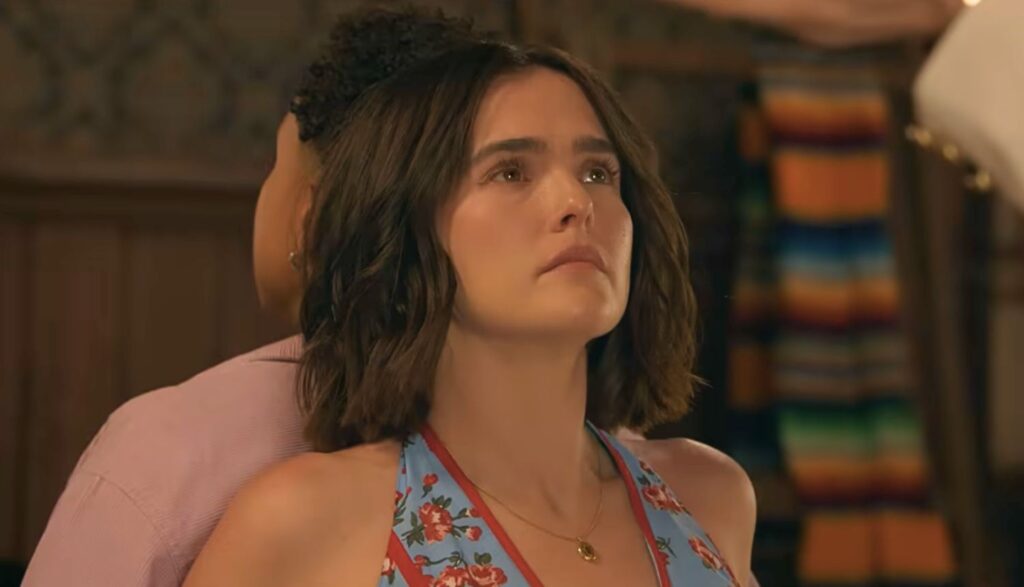
The plot of Gail Daughtry traces an arc similar to The Wizard of Oz, but it isn’t really a spoof picture. Instead it’s simply a work of absurdism, attempting to generate humor through excess and repetition. Its havoc begins when Gail—portrayed by Zoey Deutch, who also just starred in Voicemails for Isabelle, Netflix’s far more conventional, far more enjoyable romantic comedy—playfully discusses the titular permissive infidelity with her fiancé (Michael Cassidy), who promptly exercises his option and sleeps with Jennifer Aniston. Enraged, Gail resolves to even the score and travel from Kansas to Los Angeles, where she hopes to have sex with Jon Hamm. She’s accompanied, at various points, by a trio of hapless men: a loyal hairdresser (Off Campus’ Miles Gutierrez-Riley), an aspiring agent (Ben Wang, from American Born Chinese), and a has-been photographer (Ken Marino, who wrote the script with Wain).
Aniston and Hamm have both worked with Wain before (she in Wanderlust, he on the insufferable Wet Hot TV series), and there’s certainly nothing wrong with a filmmaker who surrounds himself with a regular troupe of actors. (I like Wes Anderson movies, after all.) Still, Gail Daughtry’s casting exhibits an irritating, self-satisfied quality, featuring cameos from a number of celebrities whose appearances have no visible payoff. At one point, Weird Al Yankovic shows up. Penn Jillette too. Hey, there’s Paul Rudd, the original Wet Hot star, winking at the camera, and there’s his old partner in French kissing, Elizabeth Banks (whose random emergence admittedly made me laugh). The overall vibe is one where recognition is meant to equal amusement. See these familiar faces? Isn’t that cute?
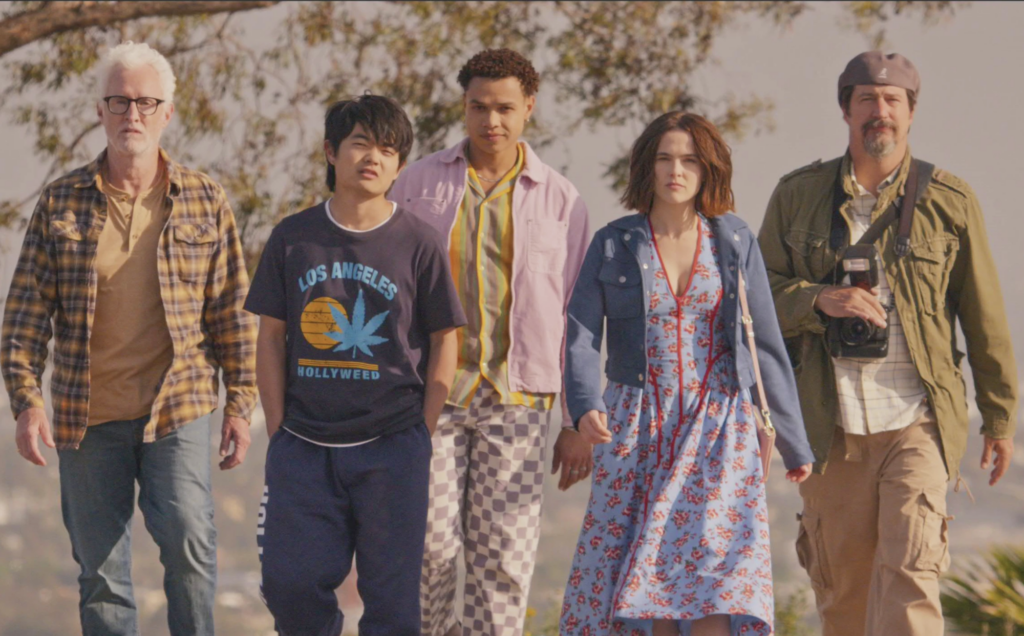
This is annoying but hardly fatal. The real problem with Gail Daughtry is that its lunacy is tedious rather than witty. The movie takes pride in indulging in nonsense, and that’s perfectly fine, but its constant mania—the bursts of violence, the self-serious flashbacks, the demented characters—is just absurdity for absurdity’s sake. The jokes fly faster and faster, with a laugh-at-me! desperation that quickly grows stultifying.
I wish I felt differently. All of the actors are appealing, and the artistic conceit of Gail Daughtry and the Celebrity Sex Pass—to provide viewers with a frenetically silly experience—is a noble goal. But Wain’s execution is too sweaty, too antic, to actually be funny. Strange, how a giddy ensemble comedy can make me feel so alone.
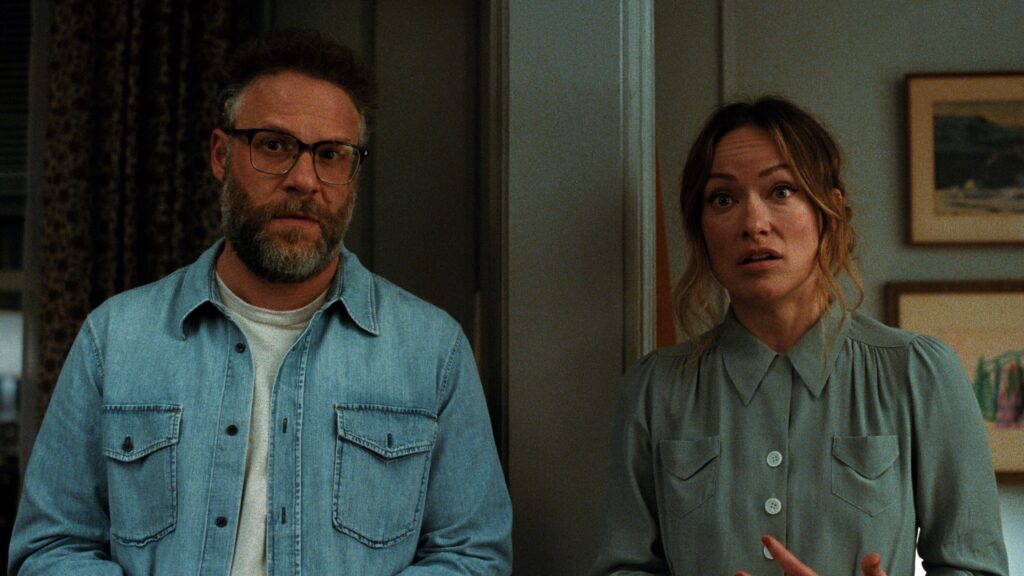
The Invite, the other comedy that appeared in wide release last week, traffics in a less frantic, more grounded form of humor. It’s a member of the dinner-party subgenre, recalling Who’s Afraid of Virginia Woolf, Guess Who’s Coming to Dinner, and other films with less interrogative titles. The premise is simple: Two couples meet at a residence for an evening of food, drinks, and conversation. Over time, their polite chitchat will gradually give way to caustic insults and hard truths. Feelings are hurt, intoxicants are imbibed, and relationship fault lines are exposed. Also, they might all fuck.
It’s that last possibility which purports to give The Invite its frisson of novelty. Directed by Olivia Wilde from a script by Will McCormack and Rashida Jones (adapting the Spanish picture Sentimental, which I haven’t seen), the movie contemplates sex not just as a potential climax but as its main dramatic subject. Joe (Seth Rogen) and Angela (played by Wilde herself) are unhappily married, and one cause of their distress is the perpetually noisy lovemaking of their upstairs neighbors, Pína (Penélope Cruz) and Hawk (Edward Norton). So when Joe learns that Angela has invited these carnal gymnasts for dinner, he vows—to his wife’s horror—to defy social taboos and confront them about their chandelier-rattling sex life.
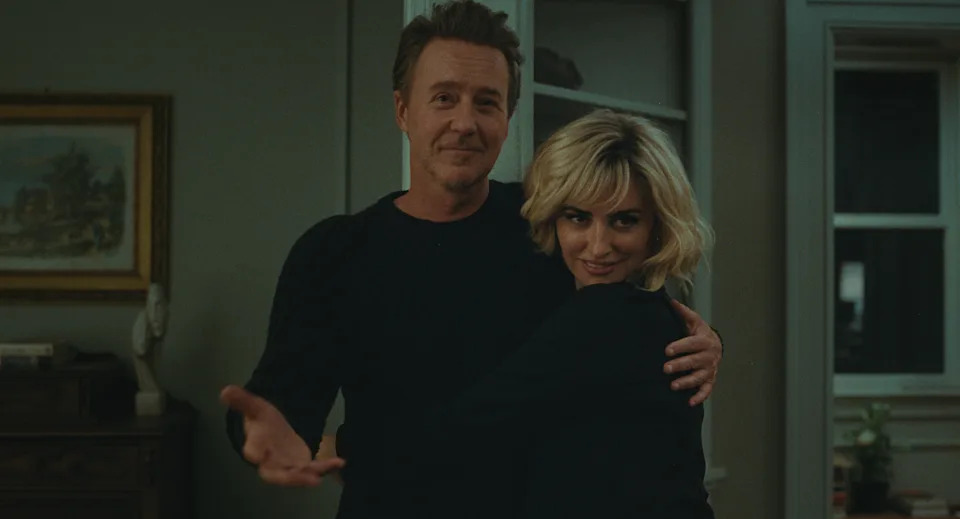
One of the assumptions of The Invite is that watching people talk about sex is axiomatically funny. It’s meant to be a tableau of antithesis: well-heeled adults sipping champagne in a roomy San Francisco apartment, discussing riotously kinky behavior. Orgies. Pegging. Orgasms. Are you laughing yet?
You might be, if not necessarily for reasons you’d expect. That’s because, despite its Woody Allen vibes and its constantly cringing characters, The Invite isn’t really a comedy. It’s more of a quiet domestic drama, observing middle-aged ennui with clarity and sadness. (An alternate title might be Liv & Rogen & Ed & Malice.) It’s a depressing movie. It also made me laugh a lot more than Gail Daughtry.
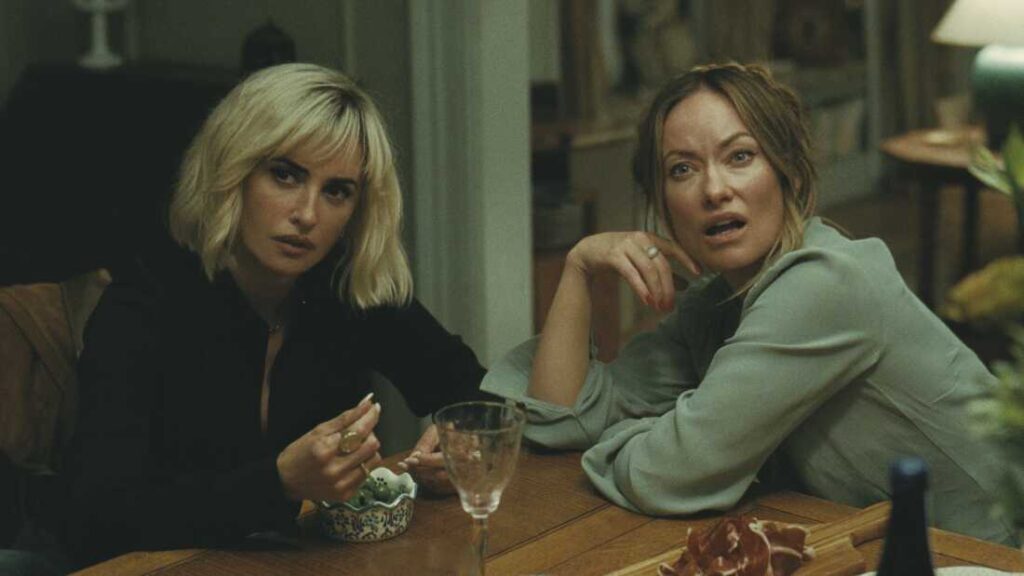
That’s an ill-fitting comparison, to be sure. But where Gail Daughtry revels in buffoonery, The Invite roots itself in humanism, depicting recognizable people who are flawed, anguished, and three-dimensional. Well, two of them are. Cruz and Norton are both solid here, and Wilde provides each of them with a big late scene (Norton’s monologue in particular is a stunner), but Pína and Hawk are really just foils—paragons of happiness and vivacity designed to illuminate Angela and Joe’s relative misery and mundanity.
Which is funnier than it sounds. Rogen is often castigated as a performer of limited range, but he remains a master of deadpan snark, and he conveys Joe’s grouchiness with precise details and grace notes. Yet it’s Wilde who most surprises. Her Angela is a bundle of nerves—sickly smiles, mirthless laughs, darting eyes—and Wilde systematically reveals the paralyzing fear beneath her fluttering exterior.
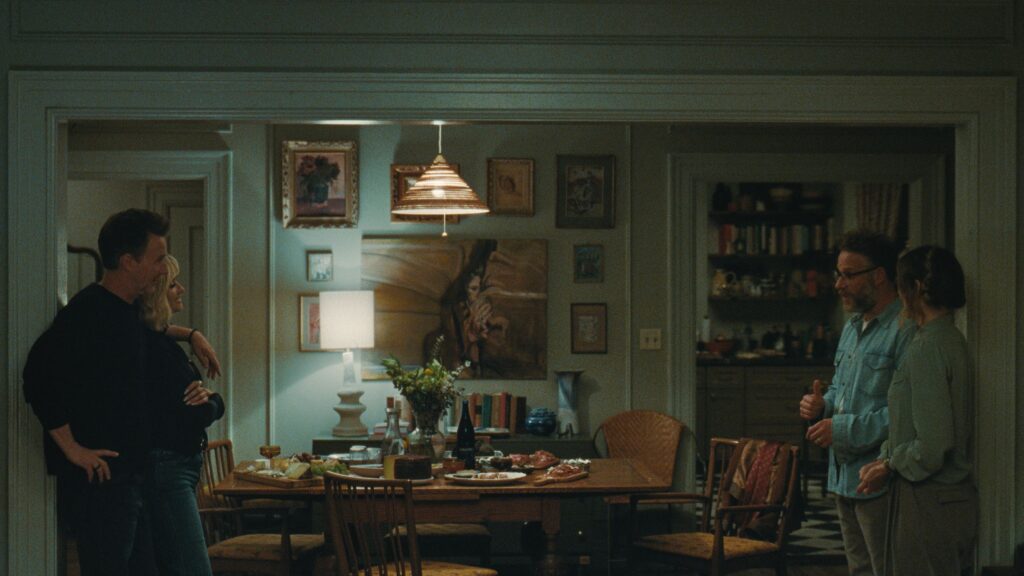
This is Wilde’s third feature as a director, following the stellar coming-of-age comedy Booksmart and the messy-but-ambitious thriller Don’t Worry Darling, and if she hasn’t yet developed a consistent sensibility, she also refuses to repeat herself. Visually speaking, The Invite isn’t exactly glamorous, with low lighting and drab colors. But while Wilde overdoes the hyperactive editing early on, she soon settles into a confident rhythm, often placing characters on opposite edges of the frame to emphasize the metaphorical distance between them.
Taxonomically, The Invite is more funny-sad than funny-haha, but its ability to generate humor from bleakness is a testament to its emotional acuity. Gail Daughtry may be wandering a crazed version of Los Angeles, but it’s the realism of these Bay Area blunderers that proves more jarring. When confronted with characters this hopelessly adrift, all you can do is laugh.
Grades
Gail Daughtry and the Celebrity Sex Pass: C
The Invite: B

Jeremy Beck is the editor-in-chief of MovieManifesto. He watches more movies and television than he probably should.