
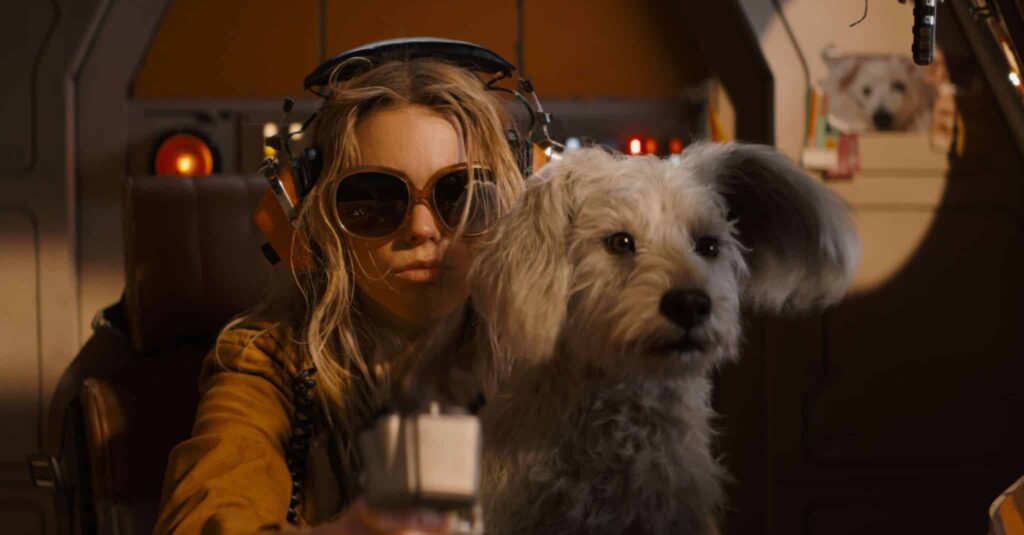
It takes all of 15 seconds for Supergirl, the latest comic-book jaunt in the reimagined DC Universe (not to be confused with the DC Extended Universe—that’s deader than Ezra Miller’s career), to announce its tonal intentions. As the guitars of a Sleigh Bells song churn on the soundtrack, a white dog with floppy ears careens through a ramshackle interior, settles atop a newspaper whose headline proclaims the exploits of Superman, and urinates all over the front page. The message is plain: The Man of Steel’s cousin is too hip, too fun, to be fettered by wholesomeness or optimism.
At least, that’s the idea. But while Supergirl, which was directed by Craig Gillespie from a script by Ana Nogueira, operates with a sheen of irreverence—the pop-punk needle drops, the eye-rolling insouciance, the slow-motion beatdowns—it isn’t truly rebellious. After all, it’s a cautiously designed would-be blockbuster, the second venture in producer James Gunn’s ongoing refurbishment of prized intellectual property, following the smash hit that was Superman (which Gunn wrote and directed himself). This means that, as much as Supergirl presents itself as arch and quippy, it must also fulfill the usual commercial imperatives: fitting into a carefully constructed mythology, supplying uplifting themes, and taking care not to actually offend anyone (well, aside from the misogynistic trolls who perceive the very existence of a female-centered superhero flick as an assault on their values). And this solemn, grudging duty places the movie squarely in conflict with its main character.
Her name is Kara Zor-El, and your appreciation of her might hinge on the extent of your foreknowledge of her lore. Not being a student of comic-book history, my sole familiarity with Supergirl derives from the recent television series, which aired for six seasons on CBS and (more prominently) the CW. It was an imperfect show, often clunky and cheap-looking, but its lead performance from Melissa Benoist was unimpeachable; her Kara was a radiant beacon of hope, one who grappled with the challenges of modern American life but refused to let its ugliness cloud her vision of a better tomorrow. She was the kind of earnest, unironic character whose abiding sincerity has no place in Gunn’s seriocomic empire.
Instead, the Kara of this Supergirl is an indifferent boozehound, one who’s less interested in saving planets than in using their gravitational fields to play cosmic fetch with her dog. It’s a recognizable type—what was Tony Stark if not a superior bad boy?—but it works here thanks to Milly Alcock. The former House of the Dragon star takes a decidedly different approach than Benoist—her Kara is inherently suspicious as well as acerbic—but Alcock underlines the character’s spiky toughness in a way that lends power to the inevitable surfacing of her decency. Heroism doesn’t come naturally to Kara—she’s less like Clark Kent than Jack Sparrow—and that discomfort is what makes her heroic.
The plot of Supergirl carries Kara to any number of planets, each with a differently colored sun, but in franchise terms, the scope of her journey is gratifyingly narrow. Sure, good old Clark (David Corenswet) shows up for a bit to substantiate the enterprise’s synergy, but the adventure on display is relatively self-contained, rather than serving as table-setting for an upcoming episode. After her precious pooch, Krypto, is poisoned by a malevolent brigand called Krem (Matthias Schoenaerts), Kara resolves to track down the bandit and recover his antidote before the dog dies from his wounds. She is accompanied, to her own consternation, by Ruthye (Eve Ridley), a teenage girl who seeks vengeance against Krem for slaughtering her family during an oddly unpleasant early scene.
Like most movies of its ilk, Supergirl features an (un)healthy share of ostensibly kinetic set pieces that struggle to translate its heroine’s mighty powers—laser eyes, impossible strength, the whole flying thing—into legible, tangible action. As a choreographer, Gillespie certainly hasn’t solved this problem, but he does at least seem to be aware of it. Several early sequences—a brawl at a bar, a raid of a spaceship by tech pirates—are played for light comedy rather than whiz-bang excitement, with as much focus on the top-notch musical cues (Wet Leg, Wolf Alice) as on the computer-generated mayhem. There’s the occasional sweeping camera move, but when Gillespie allows one fight to play largely off-screen, it’s more than just a playful shift in perspective; it’s a smart diagnosis of what works and what doesn’t.
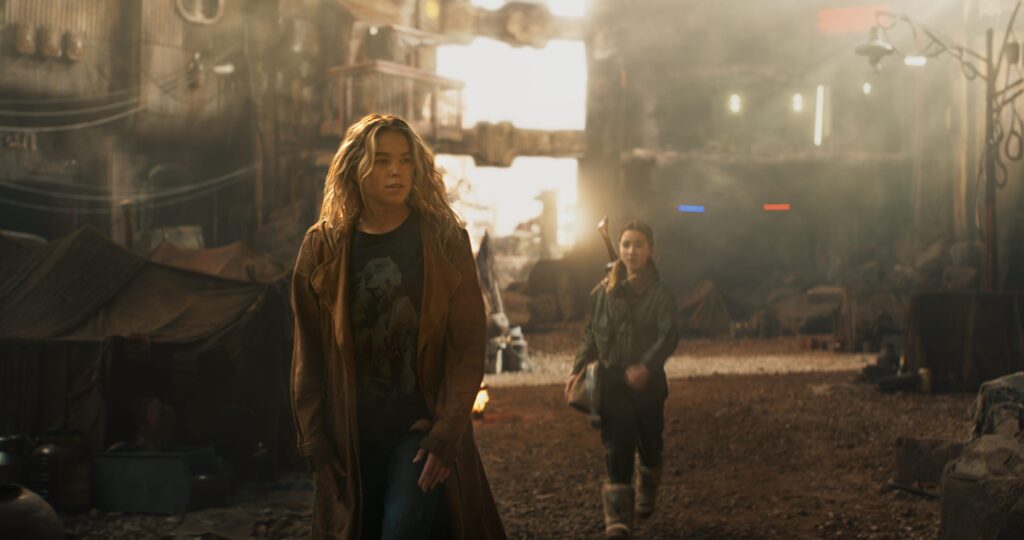
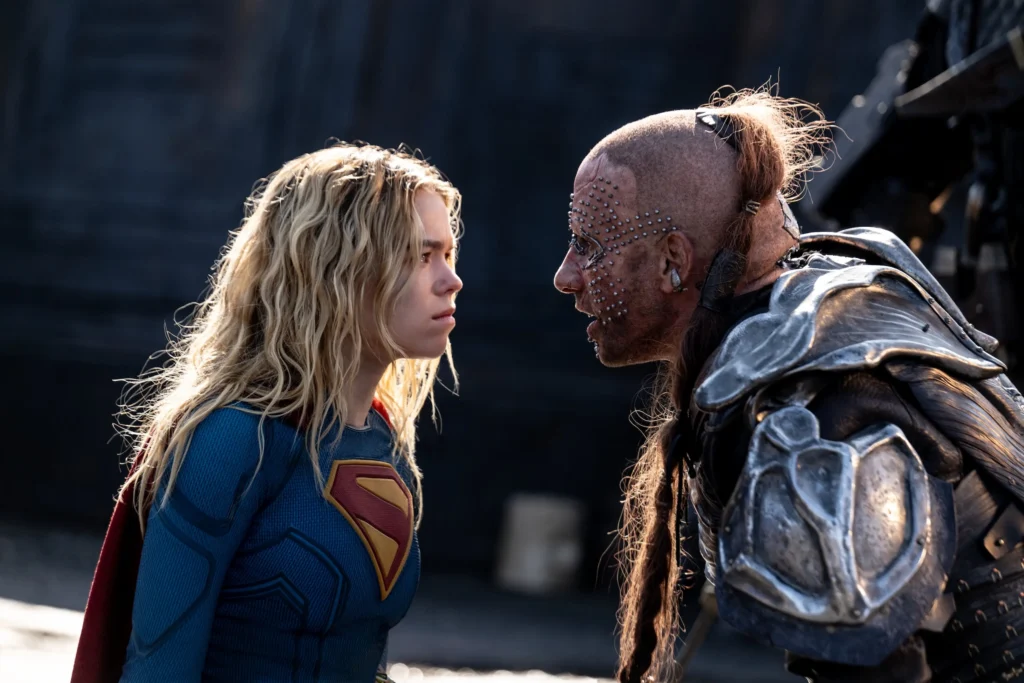
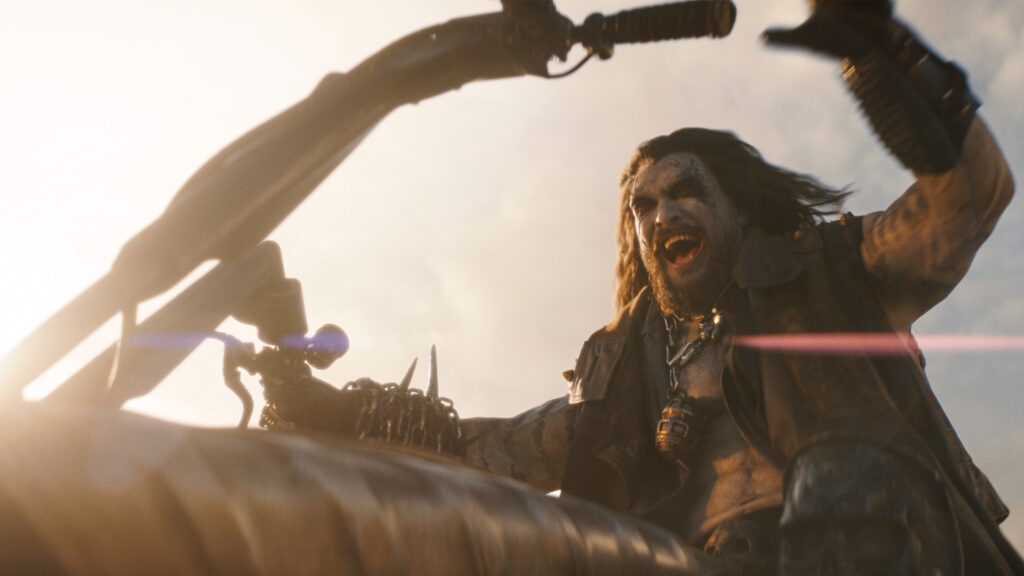
The film’s screenplay is less astute in its troubleshooting. Despite Alcock’s persuasive performance, the thawing of Kara’s frosty heart feels forced and trite, while her surrogate parenting of Ruthye doesn’t work as either a feminist empowerment narrative or a buddy comedy. Much of their relationship centers on the concept of retribution—Ruthye fancies herself a sword-swinging dispenser of justice, while Kara is constantly warning her charge that retaliating against Krem will permanently stain her soul—but the movie’s ultimate message regarding revenge proves to be incoherent. Some of that fault may lie with Krem himself, who proves to be a tacky and unsatisfying villain; Schoenaerts is typically a physically imposing presence, but he feels strangely slight here, as though he’s relying on the face-dotting makeup to do his work for him. (Also present is a hulking, glam-rock foil named Lobo, whom Jason Momoa imbues with brawny, anarchic charm, but whose off-kilter energy never really pays off.)
Clumsier still is Supergirl’s insistence on rounding out Kara’s backstory. We are subjected to several flashbacks to her childhood, when her father, Zor-El (David Krumholtz), tried and failed to stop the ongoing collapse of her home planet of Krypton. It’s unclear if these passages, which feature people speaking a foreign language and fleeing a sacred land, are meant to invoke the Jewish diaspora, but Gillespie and Nogueira aren’t equipped to process that level of allegorical resonance. On the page, Kara is a more interesting character than Clark because, whereas he landed on Earth as a baby with no memory of his alien heritage, she recalls Krypton with fondness and pain, thus stranding her in permanent limbo. Yet the movie fails to properly exploit Kara’s adrift nature, instead just presenting it as a stock obstacle to be overcome through spunk and resolve.
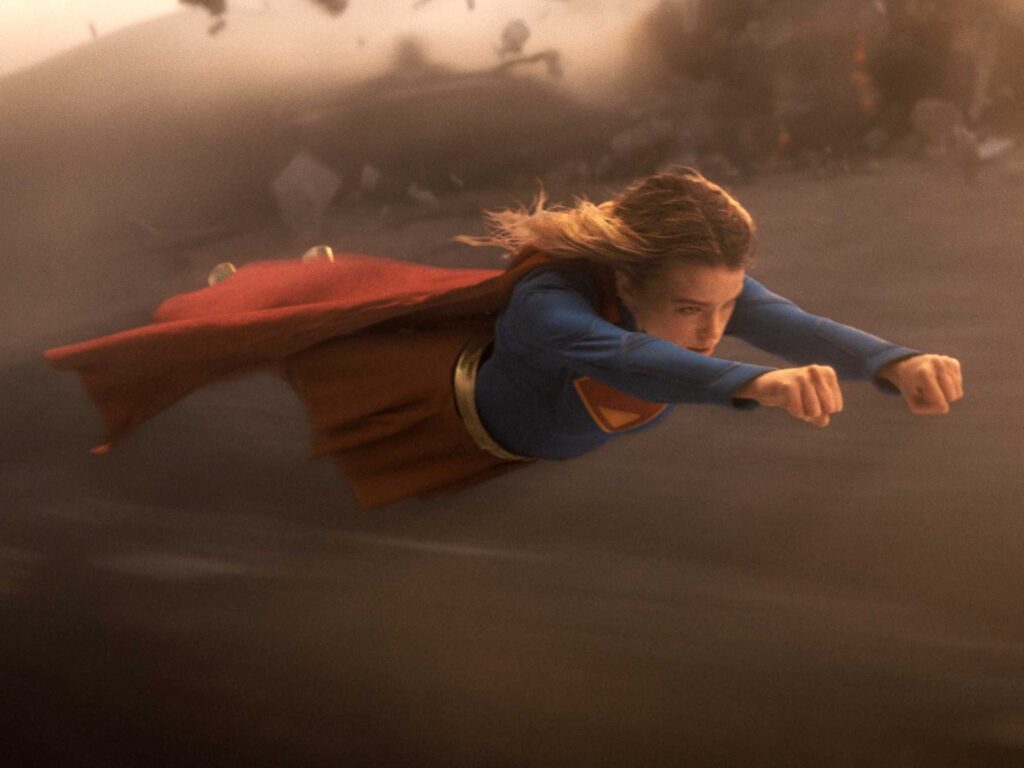
Even if Kara isn’t precisely a conflicted figure caught between two worlds, Supergirl is nonetheless a victim between the push and pull of whimsical personality and corporatized tedium. There’s a moment in the climax when a distaff cover of an early-aughts radio hit starts to play, and Kara’s speeding-bullet flight acquires a shiver of genuine transcendence. Unfortunately, most of the third act is groaningly familiar, with blurry visuals, weightless punching, and chintzy special effects. When Kara finally dons her distinctive blue-and-red leotard with that famous “S” insignia, it’s intended to be a gesture of catharsis, but it really signals the movie’s ensuing surrender to trudging conventionality.
“You don’t always need to be nice,” Zor-El intones to his daughter, “just be good.” But Supergirl, despite a missing-kids subplot that puts a sex-trafficking spin on Indiana Jones and the Temple of Doom, is more nice than good, imparting banal life lessons without insight or distinction. It’s a pleasant, passably entertaining movie. Kara would probably hate it.
Grade: C+

Jeremy Beck is the editor-in-chief of MovieManifesto. He watches more movies and television than he probably should.