Ranking Every TV Show of 2016, #s 88-71: Zombies, Gangsters, and Comedies

Alycia Debnam-Carey in "Fear the Walking Dead"

I have a confession to make. I should probably tell this to someone more qualified to process my shame—a friend, a rabbi, a shrink—but instead, I’m going to tell you. In the year 2016, I watched 88 different TV shows.

That’s right. Eighty-eight.

This is, of course, far too many television shows for any functional adult to watch in a given year. Yet it is also somehow not enough. When I started this project in 2014, I’d seen 50 shows that year; last year, I upped that total to 62. Now I’m at 88, and that gargantuan figure still constitutes a measly 19% of the year’s scripted shows. #PeakTV isn’t just a glorious era for the medium of television—it’s also inhumane.

But this is the world we live in, and I’ve made my peace with it. Each of the past two years, I’ve included a brief laundry-list of shows that I regretted not watching. This year, I’m done apologizing. If the forthcoming series of posts fails to include your favorite show, by all means yell at me about it; I’ll then politely remind you that I watched 88 freaking TV shows last year (for the record, I watched every episode of each show on this list—no pop-ins here), so I’m sorry that I couldn’t make room for your precious little SyFy drama or Adult Swim comedy. (Also, I’ll try to watch it next year, promise.)

Per usual, we’ll be releasing our rankings over five separate posts, with a new post dropping each day this week, concluding with the top 10 on Friday. As always, if you find yourself flabbergasted that I could somehow rank Show X above/below Show Y, please bear in mind that (1) ranking works of art is a fruitless and arbitrary exercise, and (2) my taste is better than yours.

Without further ado, here begins the Manifesto’s ranked list of every TV show we watched in 2016:
Read More

Oscars 2016: Nomination Prediction Results

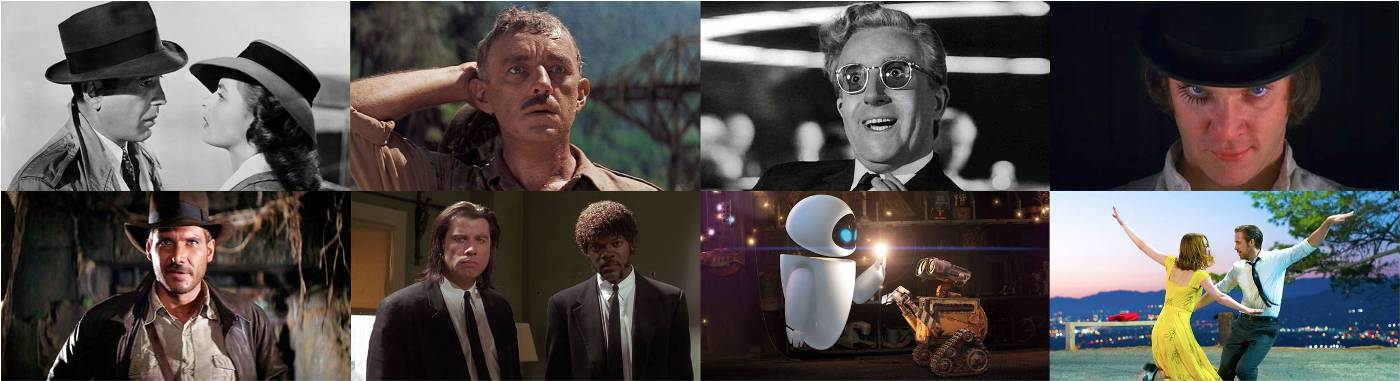
Ryan Gosling and Emma Stone in "La La Land", which tied a record with 14 Oscar nominations

After two straight years of hitting on 80% of our Oscar nomination predictions, the Manifesto improved dramatically this year, rocketing all the way up to… 81% (56 out of 69). The Academy’s choices proved relatively middle-of-the-road, which isn’t necessarily a bad thing—sure, I could (and, in this very post, will) quibble about a few candidates that were unjustly omitted, but for the most part, this year’s nominees constitute a respectable and enjoyable slate of movies. Just keep that in mind when you’re reading a bunch of “The Oscars are out of touch!” hot takes over the next month.

Here’s a quick look at the major categories in light of this morning’s announcement.

BEST PICTURE
Arrival
Fences
Hell or High Water
Hidden Figures
La La Land
Lion
Manchester by the Sea
Moonlight
Hacksaw Ridge

Analysis: I went low, they went high. Go figure. Still, although I incorrectly surmised that Hacksaw Ridge would fail to make the cut, I hit on my remaining eight guesses. With the caveat that I’ve yet to see Lion (this weekend!), it’s a strong Best Picture contingent overall; at least four of these nominees are likely to end up on my top 10 list, and the remaining are diverting at worst.

Current favorite: La La Land. The only potential challenger I see is Moonlight, but for it to make headway, the frontrunner is going to have to experience significant backlash. And by “backlash”, I mean something more potent than the current deluge of insufferable “think-pieces” that are popping up online like faux-insightful whack-a-moles. Read More

Oscars 2016: Nomination Predictions

Amy Adams in "Arrival"

With the nominations for the 2016* Academy Awards being released tomorrow morning, it’s time for the Manifesto to unveil its official predictions. I’ve hit on a mediocre 80% of my predictions each of the last two years, so we’ll see if I can improve on that mark this year (I don’t have high hopes). Per usual, we’re only predicting nominations for 13 categories; we’ll have predictions for the winners in all 21 feature fields prior to the big show on February 26.

(* Although most websites refer to these as the 2017 Academy Awards, all of the movies were released in 2016, so I prefer that nomenclature.) Read More

Silence: Keeping the Faith, But Losing His Way

Andrew Garfield and Yôsuke Kubozuka in Martin Scorsese's "Silence"

There are passion projects, and then there’s Silence, an enormous undertaking that the 74-year-old Martin Scorsese has been trying to make for more than a third of his life. Instantly announcing itself as a Very Important Film—it opens on a black screen to the chirping of crickets and croaking of frogs before the noise suddenly cuts out, rendering the title card eponymous—it is markedly different from the director’s most popular works. There are no avaricious gangsters, no amoral sinners, no Rolling Stones songs, no De Niros or DiCaprios. Independently, this stylistic departure is by no means problematic; filmmakers should hardly be expected to pigeonhole themselves within particular genres or methods. But Silence’s dissimilarities to the rest of Scorsese’s oeuvre go beyond topic or setting—other features that typically attend one of his productions are also absent. There is, for example, no joy, no humor, no entertainment, no energy. When viewed from a long distance, Silence reasonably resembles a hugely ambitious, sporadically staggering work of art. Only when you get up close and try to engage with it do you realize it’s the worst movie Scorsese has made in several decades.

Of course, that doesn’t mean all that much—even Scorsese’s relatively minor works (Hugo, Bringing Out the Dead) tend to thrum with vigor and excitement. But Silence, which chronicles the persecution of Christians in seventeenth-century Japan, is different. Scorsese has long grappled with the weighty themes and thorny contradictions of Catholicism, most notably in The Last Temptation of Christ, his gripping telling of the Crucifixion that concluded with an operatic and highly controversial detour. Yet where Last Temptation was robustly entertaining as well as intellectually fascinating, Silence betrays no interest in narrative momentum. The result is a cruel irony: Here is a film that was unquestionably a monumental labor to create, yet it exhibits no discernible effort to actually connect with its audience. It’s a violation of the very selflessness that Silence preaches; Scorsese has made this movie for nobody but himself. Read More

Hidden Figures: Black Women Have the Bright Stuff

Janelle Monáe, Taraji P. Henson, and Octavia Spencer in "Hidden Figures"

In the opening scene of Rushmore, a math teacher asks Jason Schwartzman whether he might be able to come to the blackboard and solve an impossibly complex equation. Schwartzman’s character does so effortlessly and receives the adoring congratulations of his classmates, at which point Wes Anderson reveals that the sequence is a dream. Hidden Figures, Theodore Melfi’s sincere and sappy biopic of three black women who worked at NASA during the height of the Space Race, is essentially a feature-length version of this scene, minus the concluding fake-out. It fancies itself a hard-hitting historical drama, but it’s really a frothy, wish-fulfillment fantasy.

And what’s wrong with that? Hidden Figures may not trouble your mind or get under your skin, but it does provide a welcome, feel-good tonic for these troubled times. It insists, with disarming directness, that the evils of prejudice and entrenchment will always succumb to the virtues of hard work and human decency. Its period setting is one of extreme unease (as opposed to now?), but its tone is unabashedly wholesome and reassuring. Read More