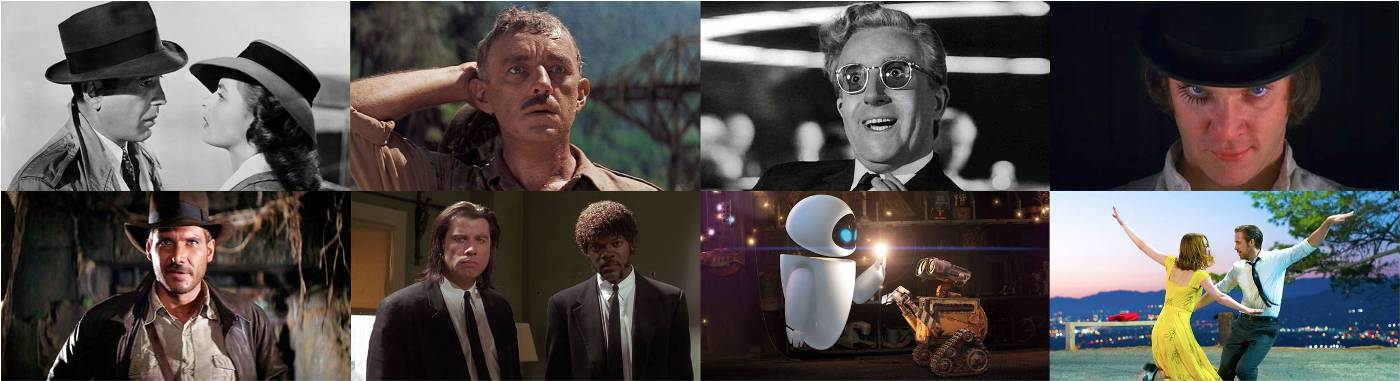
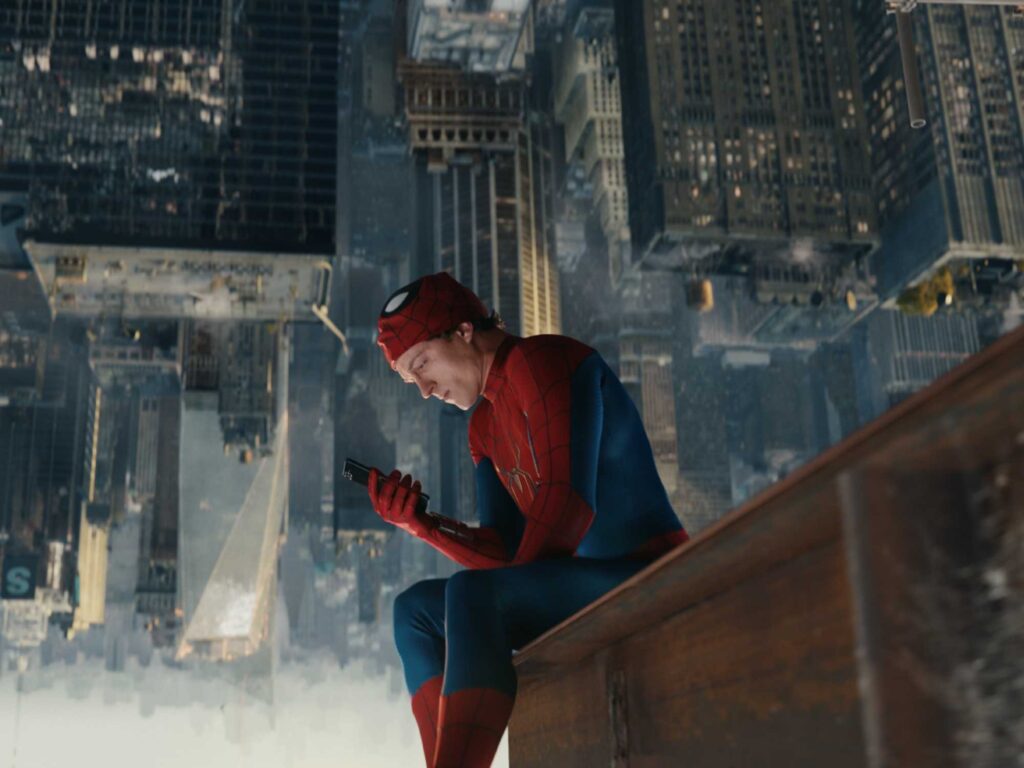
They say you can’t go home again, but Spider-Man sure did try. The subtitles of the superhero’s most recent big-screen trilogy—Homecoming, Far from Home, and No Way Home—all concerned his proximity to sanctuary, reflecting a longing to return to safe and familiar territory. But the franchise’s latest adventure, again starring Tom Holland as the Queens-based red-and-blue webslinger, is styled Brand New Day, a restorative title that promises novelty and opportunity. As you may remember (or not!), following a whole lot of magical hullabaloo, No Way Home culminated with the wizard Doctor Strange casting an obliviate-like spell, wiping the world’s collective memory of Spidey’s alter ego, Peter Parker, a sweet-natured boy with a big brain, a broad smile, and a slim bank account. This marked a significant sacrifice for Peter—most notably, he forfeited his cherished relationships with his girlfriend, MJ (Zendaya), and his best friend, Ned (Jacob Batalon)—but in storytelling terms, it created the tantalizing prospect of a cinematic reset button.
At its best, Brand New Day capitalizes on this artistic freedom, probing unexplored territory and tackling interesting themes. It’s a spry and appealing blockbuster with a sincere human center. But for all its liveliness and charm, it rarely feels genuinely new, instead repeatedly evoking prior, better Spider-Man movies.
Not explicitly, though. One of No Way Home’s most enjoyable qualities was also the most shameless thing about it: the way it raided the franchise’s IP war chest and unearthed villains and heroes from the series’ long-dormant incarnations. Brand New Day is, to be sure, a Marvel Cinematic Universe production, with its share of costumed crossovers; over its 145 minutes, Peter swaps intellectual theories with Bruce Banner/Hulk (Mark Ruffalo), bickers and bonds with Frank Castle/The Punisher (Jon Bernthal), and receives expository intelligence from Yelena Belova/Black Widow (Florence Pugh), the last of whom has created a home office at an indoor Manhattan pool. (Naturally, shooting took place in England and Scotland.) But it isn’t especially concerned with the Avengers, the Fantastic 4, or any of the other cooperatives fighting for space on the digital marquee. It’s about Spider-Man alone, albeit in more ways than one.
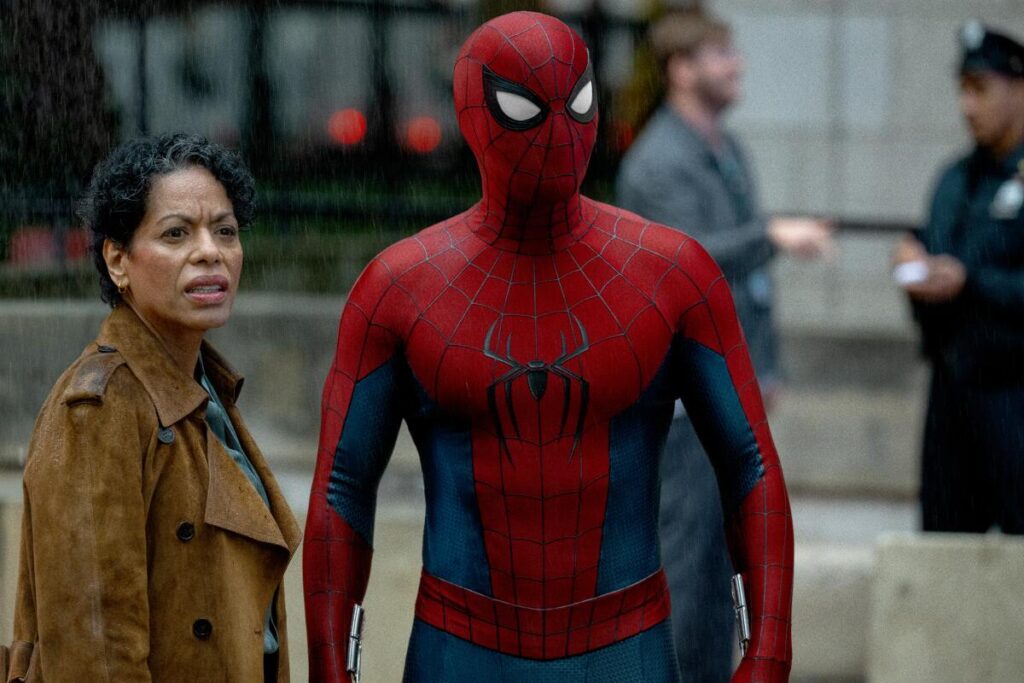
Directed by Destin Daniel Cretton (replacing Jon Watts) from a script by continuing screenwriters Chris McKenna and Erik Sommers, Brand New Day opens with a brisk, fluid montage (set to TV on the Radio’s “Wolf Like Me”) establishing Peter’s new normal. He has achieved a kind of vigilante comfort, routinely dispatching comic-book foes like Ramrod and Scorpion, and chatting amiably over phone with a Big Apple detective, DeWolff (The Bear’s Liza Colón-Zayas). But while he’s got the superhero thing down, the human part of his life is less fulfilling. Inhabiting a dilapidated studio apartment, he doesn’t seem to have made any new friends in the wake of losing MJ and Ned, whom he stalks online through the latter’s cheery TikTok videos. With the exception of DeWolff and his automated assistant (an overqualified Naomi Watts), it’s unclear if he ever speaks to anyone at all.
As with most comic-book films, Brand New Day grapples with the duality of masked crime-fighting, following both Spider-Man’s exotic travails against nefarious threats and Peter’s more relatable quest for happiness. The twist here is that, whereas Peter’s “great responsibility” typically interferes with his personal relationships, he no longer has any loved ones to deceive and/or protect. In Kill Bill, David Carradine characterized Spider-Man as a mere costume that Peter Parker puts on to hide his true self. But now, is Spider-Man still Peter’s secret identity, or is it just all he is?
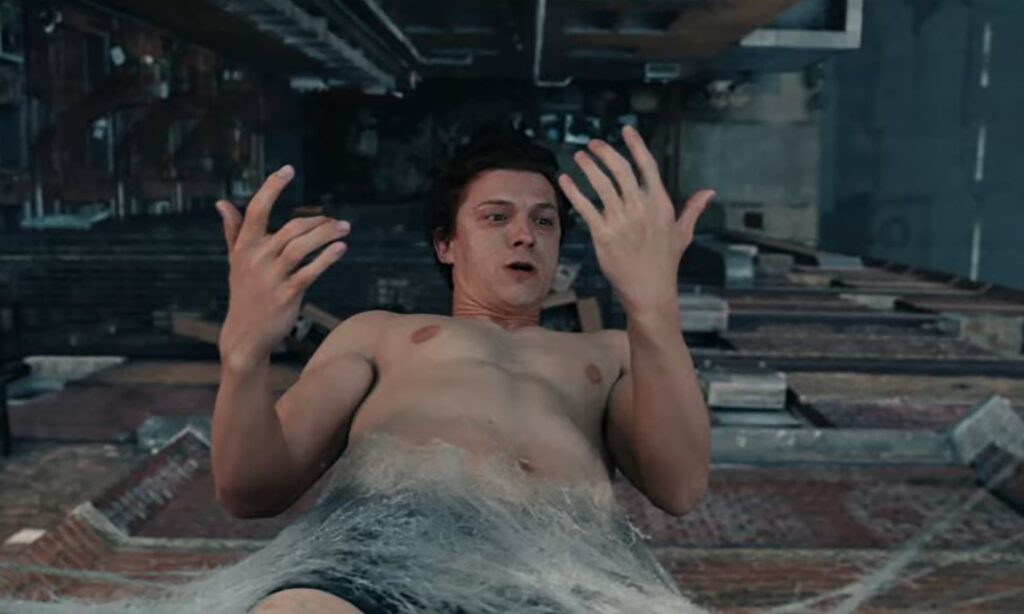
It’s an unsettling question, especially once its ramifications start manifesting physically; in essence, Peter (d)evolves to become less man and more spider. (Cretton visualizes this development, somewhat clumsily, with a videogame-like display that contains two meters—one monitoring the status of Peter’s human hormones, the other showing elevated levels of arachnid activity.) Unlike Tobey Maguire’s Spider-Man (more on him in a bit), the Peter of this universe has always manufactured his own webs, so he’s shocked when one day his body starts shooting mesh of its own accord (no, this isn’t a puberty allegory, you perv), disrupting his usual calibration. He also finds himself prone to bouts of rage when fighting, his eyes often clouding into inky blackness. These episodes, the product of apparent mutations, lead Peter to seek out Dr. Banner, whose “inhibitor” technology—the fancy gauntlets that prevent him from randomly transforming into Hulk—he hopes to modify in order to resurrect his prior stability.
If Brand New Day is ultimately a movie about the importance of a healthy work-life balance, it doesn’t always find the right equilibrium. To begin with, its preoccupation with solitude renders it deficient in the zippy ensemble comedy that has long been the MCU’s stealthiest asset. Nor does it fully exploit Holland’s gawky charm or Zendaya’s willowy grace. To be sure, it delivers two very good scenes between Peter and MJ: one set on a rooftop against the night sky, when a seemingly cathartic kiss is revealed to be a dastardly feint; the other in a nondescript interior, where the characters’ feelings spill out in a mix of anger, hunger, and sorrow. But on the whole, the film operates as a kind of emotional placeholder, deferring any resolution or progression of its relationships to a subsequent installment.
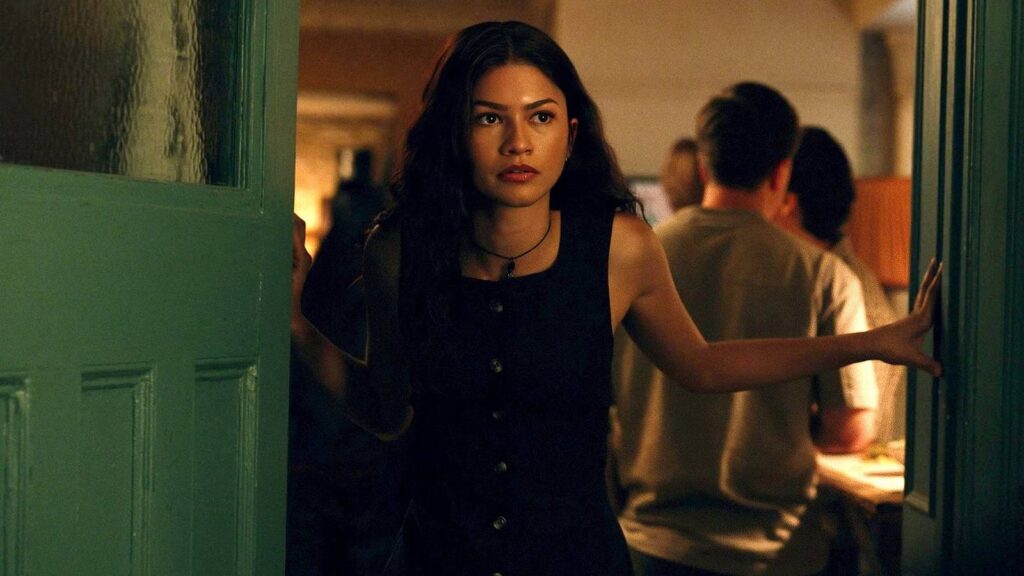
Speaking of other Spider-Man movies: Despite its nominal independence, Brand New Day can’t help but evoke Sam Raimi’s earlier trilogy, sometimes even courting the comparison. That aforementioned kiss, for example, occurs with Peter half-masked, an obvious visual echo of the famous upside-down smooch from the original Spider-Man. Peter’s mounting loneliness, along with the inexplicable distortion of his powers, recalls the pangs of sadness he experienced during the superior Spider-Man 2. (Remember Alfred Molina’s Doc Ock? He had an inhibitor chip too.) And his descent into anger mimics a similar slide in Spider-Man 3, when his colorful suit warped into a dark, foreboding monochrome.
My biases are showing, and so is my age. My affection for the Raimi/Maguire pictures is unbridled, and it inevitably weighs on my appreciation of any competing iteration. But a younger generation weaned on Holland’s aw-shucks affability won’t be so burdened, and besides, viewers of any demographic can admire much of Cretton’s work here, which at times transcends studio competence and reaches a more inspired ingenuity.
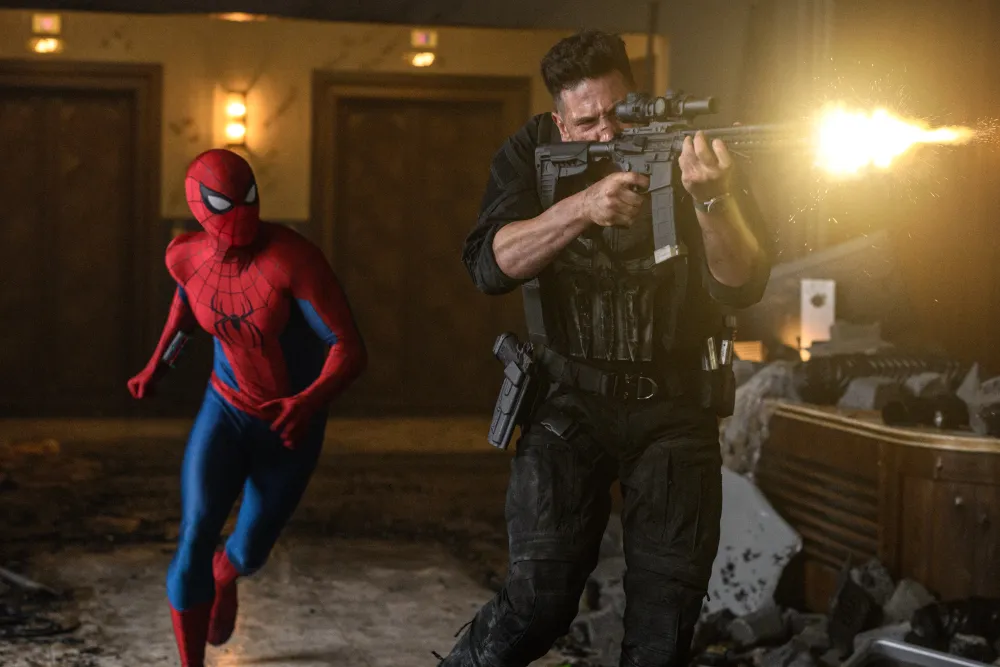
Most notably, the villain of Brand New Day is one of the franchise’s most disturbing antagonists—at least at first, when it remains shrouded in anonymity. As if taking a page from the Denzel Washington supernatural thriller Fallen, a malevolent and invisible entity springs from one body to the next, temporarily possessing its host and bending it to its will. It’s a daunting challenge—how can Peter fight a foe whom he can’t see?—and it imbues this bright, noisy blockbuster with the shivers of a horror movie.
As with Peter’s “volunteer” policing, the ripple effects of this conceit—the prospect of omnipresent mind control in the age of AI—constitute knotty ideas that Brand New Day declines to fully explore. Instead, Cretton dutifully supplies a handful of acrobatic action scenes, most of which lack the tangible punch he brought to Shang-Chi and the Legend of the Ten Rings and instead unfold with the effects-heavy weightlessness that tends to plague the MCU. The happy exception is a climactic fight against a quintet of red-robed ninjas called The Hand, which Cretton choreographs with whooshing élan.
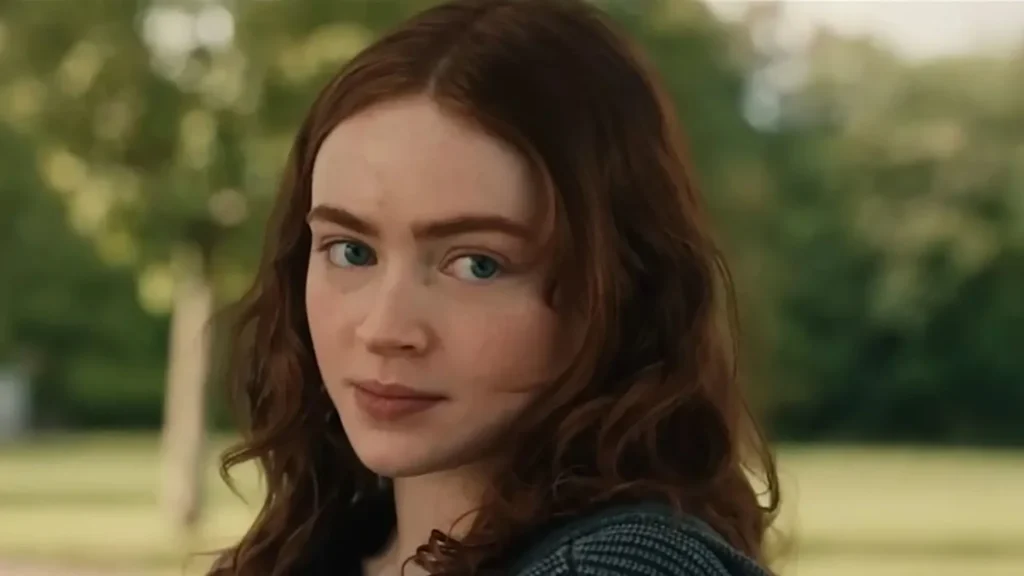
A key player in that set piece is played by Sadie Sink, and while spoiler sensitivity forbids me from naming her character, I can say that her presence proves both gratifying and troubling. Beyond his fraught repartee with Zendaya, Holland displays an easygoing chemistry with most of his scene partners: Pugh’s devil-may-care superiority, Bernthal’s rugged humanism, Batalon’s dopey sweetness. (He may no longer remember Peter, but Ned remains obsessed with Spider-Man, having invented a tracking app whose interface is splendidly janky.) Sink provides a different dynamic, and her simmering fury results in earnest messages about isolation and acceptance which are moving on their own terms. (A sequence of her locked in a facility, strapped to a chair while being observed from behind glass by officious lab techs (led by Tramell Tillman), conjures palpable memories of her work on Stranger Things.) At the same time, the mystery of her character reminds you that Spider-Man remains part of an ongoing enterprise, one that’s heavily invested in corporate synergy.
The achievement of Spider-Man: Brand New Day is that it mostly reconciles its commercial imperatives with its personal aspirations, rather than being at war with itself. Often entertaining, moderately thought-provoking, occasionally touching—it’s a fun movie. It just can’t quite rid itself of that inhibitor clamped to its skull.
Grade: B

Jeremy Beck is the editor-in-chief of MovieManifesto. He watches more movies and television than he probably should.