At the Movies in 2022, Concept Is King

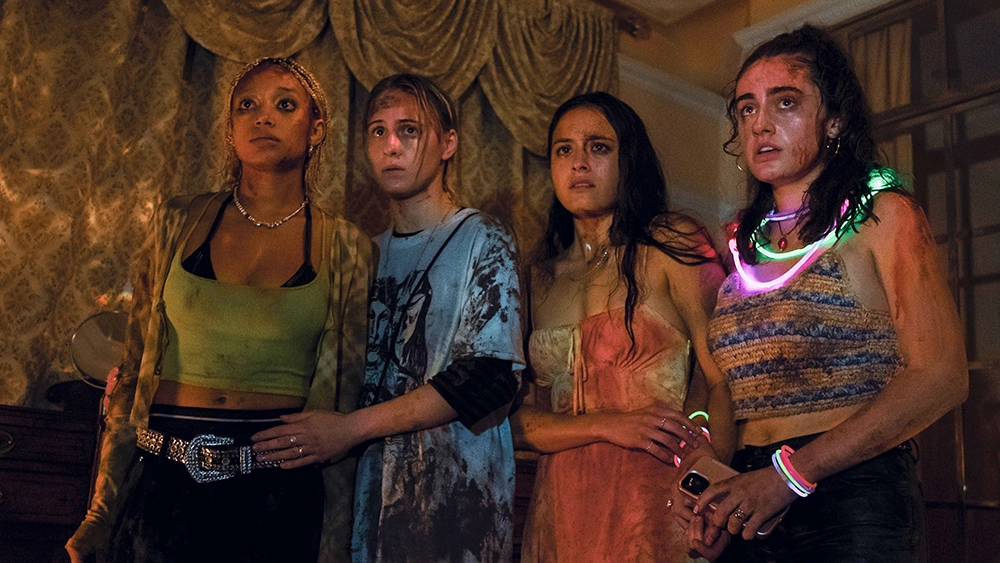
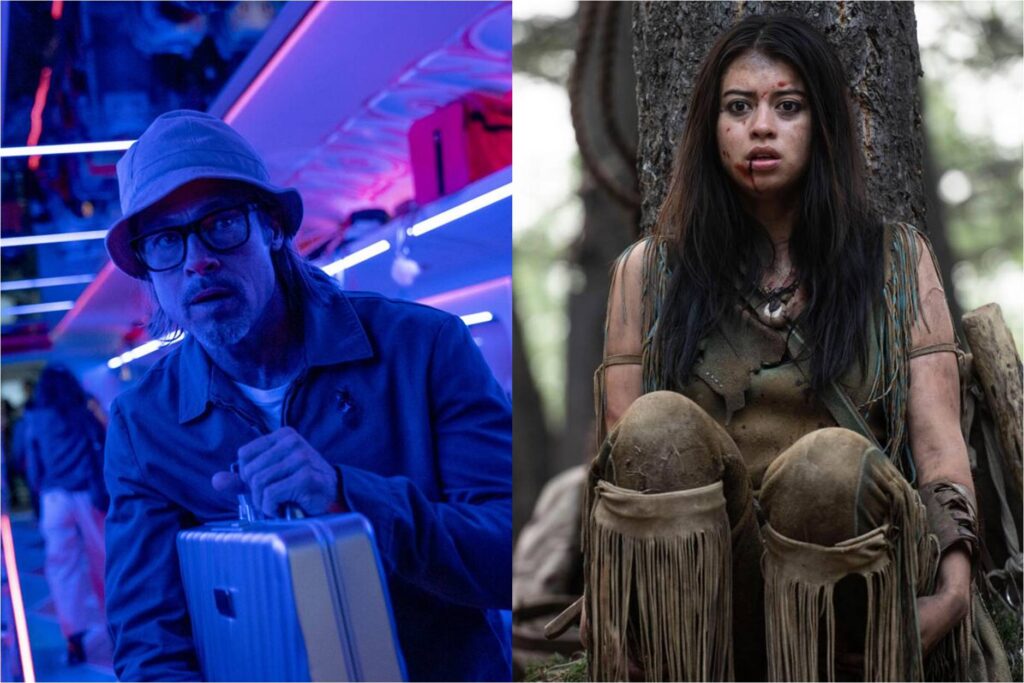
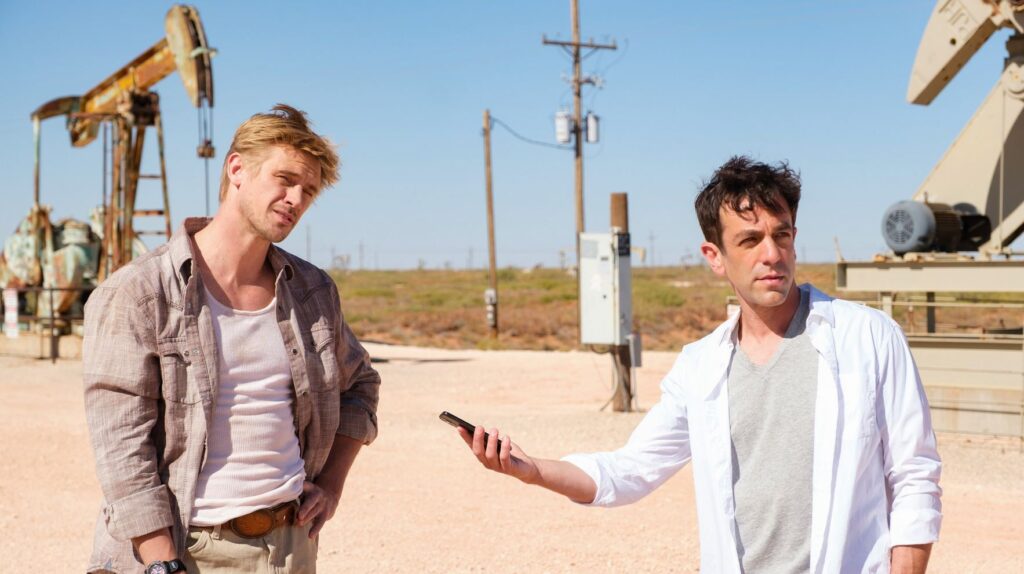
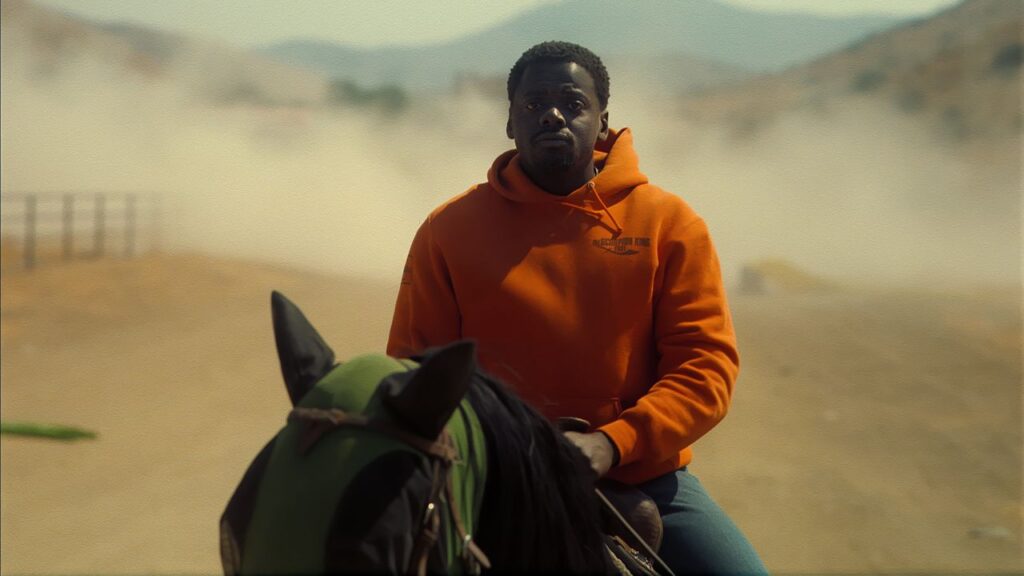
Ana de Armas in Deep Water, Sandra Bullock in The Lost City, Daisy Edgar-Jones in Fresh, Mark Rylance in The Outfit, Mia Goth in X

When it comes to modern movies, there are now two Americas. The first is a land of franchise dominance and corporate hegemony, where superhero flicks and sequels rule the multiplex. Even for fans of costumed entertainment—and I generally count myself among their number—surveying the box-office landscape can yield a dispiriting and homogenous view. The 10 highest-grossing films of 2019 were all based on existing IP, with seven hailing from the Walt Disney Company and an eighth (Spider-Man: Far from Home) that’s fully enmeshed within the Marvel Cinematic Universe, i.e., the Mouse House’s flagship franchise; zoom out to the top 15, and only two pictures (Us and Knives Out) were truly original creations. The COVID-19 pandemic aggressively accelerated this trend, and while cautious audiences may finally be returning to theaters, they only really pack the place for familiar properties. The mushrooming sprawl of these four-quadrant productions—competently made, ruthlessly merchandised, exceedingly familiar, rigorously safe—has inspired many industry experts to lament the death of cinema.

Maybe they’re right. After all, as the collective conception of a box-office hit perpetually narrows in scope and variety, it’s difficult to imagine studios routinely green-lighting risky original projects. And yet! I am once again compelled to repel these dire predictions, because there lurks beneath this marketplace of non-ideas a second America—one where original movies keep getting made, and in different shapes, sizes, and styles. Last month alone saw the release of at least five new films that are noteworthy for their strangeness, their pluck, their originality. Forget recycled superhero stories; these are movies with genuine concepts. Read More

The Batman: A Dark Blight Rises

Robert Pattinson and Jeffrey Wright in The Batman

Who’s the big bad of The Batman? Modern superhero movies can scarcely subsist on just one antagonist, and this latest take on Gotham City’s caped crusader—directed with spirit and smarts by Matt Reeves, from a script he wrote with Peter Craig—piles on the villains the way his makeup artists slather prosthetics onto Colin Farrell’s face. Farrell, as it happens, plays the Penguin, but while his mannerisms seem to echo Robert de Niro’s work as Al Capone in The Untouchables, he’s hardly the film’s apex predator, instead operating as a mid-level mobster with women to leer at and masters to serve. One of those masters is Carmine Falcone (John Turturro), a slippery mafia don who’s too shallow and profit-oriented to fill the role of comic-book megalomaniac. It surely can’t be Selina Kyle (Zoë Kravitz), a waitress at Penguin’s sleazy nightclub who possesses several feline pets, some calf-high boots, and a knack for cracking safes; she may be Catwoman, but she’s not a madman. The most logical candidate is the Riddler, portrayed here by Paul Dano as a disturbed and disturbing serial killer who knows how to wield blunt instruments and a grudge. He’s a bad dude, no question, but The Batman has the nerve to suggest that his dastardly schemes are merely symptomatic—the inevitable consequence of a more pernicious evil. What if, the movie asks, the real villain is you?

Well, not you you; if you’re reading film criticism online, you’re surely more cultured than the particular brand of troglodytic malcontent that this movie places in its surprisingly topical crosshairs. The Batman posits, with unnerving fluency, that some of the creeps who swarm your social-media mentions are more inclined to blow up a theater than attend one. Remember the gun-toting monster who murdered 12 people and injured 70 others at a midnight showing of 2012’s The Dark Knight Rises? This time around, he might as well be a character. Read More

Cyrano: A Nose by Any Other Name

Peter Dinklage and Haley Bennett in Cyrano

In the eighth-season finale of Seinfeld, Jerry and George are again bemoaning their inability to sustain a functioning relationship when the latter seizes on the concept of a “relationship intern”—a way of combining forces and channeling them into a single partnership. “Maybe the two of us, working together at full capacity, could do the job of one normal man,” George hypothesizes. This is a very funny conceit that also bears more than a cursory resemblance to the plot of Cyrano de Bergerac, the Edmond Rostand play in which a disfigured poet invisibly assists a dimwitted beefcake in his pursuit of a beautiful woman. Showing us a hero, Rostand wrote us a tragedy, but the comedy inherent in his premise has proved irresistible for American studios, which time and again—in the 1987 Steve Martin vehicle Roxanne, in the poorly regarded 2000 teen flick Whatever It Takes, in the tender 2020 queer romance The Half of It—have sweetened the original’s heartbreak with dollops of reassuring syrup. Among its many achievements, Joe Wright’s new big-screen adaptation, simply titled Cyrano, honors its progenitor’s abiding despair. It’s a movie full of big, bold emotions—lust and love, anger and hunger, jealousy and solidarity—but most of all, it is profoundly sad.

This isn’t to say that the picture is unduly dour or moribund. To the contrary, Wright has leveraged his considerable technical skill—alongside the contributions of his customarily skilled retinue of artisans—to create a spry and dynamic production, one that retains the essence of Rostand’s text while also updating it with lush cinematic vigor. This isn’t simply a matter of prettifying the screen, though the costumes and wigs (by Massimo Cantini Parrini and Jacqueline Durran) are appropriately fabulous, while Sarah Greenwood’s striking production design imbues the film with a bold degree of theatricality. Special mention must be made of Seamus McGarvey’s cinematography, which combines light and shadow in intoxicating ways; certain dusky scenes possess an ethereal glow as though the actors are being illuminated less by a lighting rig than by the moon. Yet the most obvious change from the stage version is structural: This Cyrano is a musical. Read More

KIMI: Uneasy Listening

Zoë Kravitz in KIMI

Steven Soderbergh routinely turns his camera into a bullhorn, using the crispness of his images (which he photographs himself, under the pseudonym Peter Andrews) to voice his displeasure with the ugliness of modern society. His latest picture, KIMI, gestures toward any number of topical themes: the physical and emotional aftershocks of the COVID-19 pandemic, the dystopian possibilities of the encroaching surveillance state, the venality and brutality of the corporate aristocracy. Yet despite glimpses of social-justice protests and hints of conspiratorial malfeasance, KIMI isn’t really a message movie. It is instead a lean and efficient thriller: 89 precisely calibrated minutes of setup, tension, and payoff.

The economy is often one of Soderbergh’s narrative preoccupations, but drop the article, and it becomes one of his artistic strengths. It’s a gift shared by KIMI’s hero, Angela (Zoë Kravitz), an adept computer programmer who spends her work-from-home days scrolling through audio streams and slicing her way through lines of code. In essence, she’s an interpreter for KIMI, the Echo-like smart device that Angela is paid to make even smarter, updating its software to recognize that “peckerwood” is an insult and “ME!” is a Taylor Swift song. Sleek and tastefully designed, KIMI is shaped like an eggshell-white cone, and she’s all ears; whenever you say her name, her base glows neon-pink and she cheerfully announces, “I’m here.” (Her soothing voice, supplied by Betsy Brantley, is virtually indistinguishable from Siri or Alexa.) Her purpose is service, and her persistent monitoring of her environment—she is, quite simply, always listening—is merely a method of continually enhancing her performance. Surely there are no downsides to this sort of thing. Read More

Scream: The Ghostface That Launched a Thousand Quips

Jenna Ortega and Ghostface in Scream

Scream is the fifth movie in the Scream franchise, which launched a quarter-century ago with a movie that was also called Scream. If you find this title repetition annoying, you aren’t alone; the film’s characters agree with you. “It should’ve been called Stab 8, not just Stab,” someone grouses at one point, referring to the series within the series that has apparently suffered from creative drought. This kind of meta commentary can be exhausting, but here it carries an element of sincerity. Despite being a bunch of cheap slasher flicks with no big stars, the Scream pictures have always aspired to a fairly lofty level of ambition, striving to combine playful semiotic analysis with genuine cinematic terror. These movies don’t just want to mock the clichés of classic horror; they also want to be horror classics.

Which this new Scream is not. Directed by Matt Bettinelli-Olpin and Tyler Gillett, the duo behind the similarly sly Ready or Not, it’s more functional than suspenseful, serving up the usual medley of shrieks, spurts, and shocks with formulaic toil. But it’s nevertheless appealing, with solid performances and a witty script (from James Vanderbilt and Guy Busick) whose insights extend beyond the usual canned callbacks and self-referential humor. The movie is predictably stocked with insignificant twists—who’s the real killer? who cares?—but its biggest surprise is that it actually has something to say. Read More