The BFG: Off to Giant Country, and Packing Light

Ruby Barnhill and Mark Rylance, in Steven Spielberg's "The BFG"

For a director who is renowned for purveying inspirational entertainment, Steven Spielberg’s resume is surprisingly light on kid-friendly pictures. Sure, E.T. imprinted his inimitable brand of humanistic fantasy upon an entire generation, but beyond that, The Beard has largely eschewed family-oriented fare, preferring to smuggle his predilection for warmth and decency inside colder, darker films. (The only real exceptions are the ill-received Peter Pan sequel Hook and the underloved animated romp The Adventures of Tintin). Hell, he turned down Harry Potter. Still, Spielberg at his core is a crowd-pleaser, and in adapting Roald Dahl’s beloved children’s classic The BFG, he’s clearly invested in delivering excitement and wonder to a new era of wide-eyed kids.

Judged against these lofty goals, The BFG is a failure, even if it is also, on different terms, a worthy accomplishment. This weird, amorphous movie is by no means going to become a staple on cable television, destined to be re-watched over and over; it will not be endlessly quoted in the schoolyard or relentlessly imitated at the multiplex. (In fact, it is already fizzling at the domestic box office.) But in failing to craft a cultural touchstone, Spielberg has done something arguably more impressive: He’s made a children’s movie that’s interesting. Read More

The Shallows: The Bold Babe and the Sea

Blake Lively takes on a shark in "The Shallows"

Water, water is everywhere in The Shallows, and there isn’t a drop to drink, though that’s due less to its salt than its color. Not long into this lean, mean thriller from Jaume Collet-Serra, the tranquil blue of the sea’s waves gets stained with blood, and a peaceful getaway transforms into a harrowing struggle of survival. It never becomes anything more than that, but that’s part of its charm. The Shallows may lack the towering ambition of Gravity or the scrupulous minimalism of All Is Lost, but its gritty flair and appealing star nevertheless make it a worthy entrant in the “man vs. nature” canon. At the very least, it will have you thinking twice the next time you consider wading into the water.

Not that The Shallows‘ opening act is particularly frightening; in fact, if you ignore the scary tone-setting prologue, it’s positively idyllic. Our protagonist is Nancy (a revelatory Blake Lively), a medical student journeying to a secluded Mexican beach that her mother once told her about. It’s as advertised, with golden sand leading into a majestic gulf whose giant waves render this isolated inlet a surfer’s paradise. Read More

Finding Dory: Remember, Remember, the Fish Blue and Tender

In "Finding Dory", Marlin the clownfish and Dory the tang are back for another adventure

One of the many running jokes in 2003’s Finding Nemo—that magnificent maritime adventure from Pixar Animation Studios—was that its main character, Marlin (voiced by Albert Brooks), was a clownfish but was spectacularly unfunny. In fact, Marlin was a neurotic grump, far more prone to panic than humor. He’s still grousing about anything and everything in Finding Dory, but one of his complaints stands out. “Crossing the entire ocean is something you should only do once,” he grumbles. It’s a gripe that might as well be chum to metaphor-hungry film critics—not that I have anyone in mind—looking to compare this sequel to Finding Nemo, which remains one of Pixar’s greatest achievements. The computer-animation pioneer is renowned for many things—breathtaking visuals, witty dialogue, mature themes smuggled inside kid-friendly packages—but perhaps its defining trait is its commitment to originality. This is, after all, the studio that has told tales of culinarily gifted rats, silent robots, and anthropomorphized emotions. Which brings us back to Marlin’s gloomy, profound question: Is it really worth crossing the ocean twice? That is, can a straightforward sequel really be worthy of joining the animation giant’s formidable canon?

Yes and no. What, you were expecting a straight answer? Fine, I’ll be blunt: Finding Dory is not as good as Finding Nemo. Yet even that seemingly straightforward assessment comes with a caveat, namely: so what? Comparing sequels to their originals is a reductive way of evaluating them on their own merits; that’s especially true when said original is one of the best movies of the prior decade. Finding Dory may, er, swim in the shadow of its progenitor, but that shouldn’t preclude us from weighing its standalone value as a movie. Read More

The Conjuring 2: The Kids Are All Right, Until the Demon Shows Up

Vera Farmiga is haunted by demons in "The Conjuring 2"

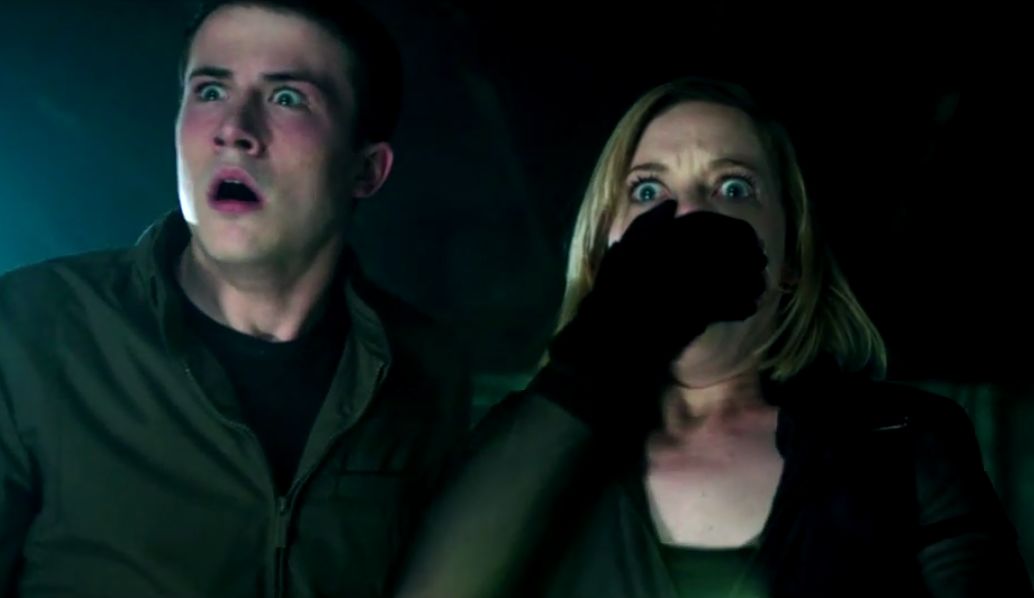
Everything undead is alive again in The Conjuring 2, a skillfully constructed dispensary of the heebie-jeebies. Directed by the 21st century’s preeminent purveyor of nightmares, James Wan (Saw, Insidious), it’s a methodical exercise in modern horror, with all of the required elements: a haunted house, a possessed child, jolt-scares, intrepid investigators, and shadowy things that go bump in the night. There’s not a whole lot new to see in this dark, foreboding film, but in horror, familiarity can breed fear as well as contempt. When coming face-to-face with The Conjuring 2‘s predictability, you may be inclined to roll your eyes, but then, you may be too afraid to open them in the first place.

The original Conjuring didn’t reboot the horror genre so much as reinvigorate it, reminding viewers that scary movies can be patient and legitimately disturbing rather than just loud and schlocky. It also demonstrated just how effective a director Wan can be. Having traded in the vulgar sadism of Saw for something more contemplative, he proved to be a master of the slow build, wringing tension from ostensibly mundane images and objects. The Conjuring was horror as negative space, turning the absence of incident into its own clammy terror. By the time Lili Taylor chose to play a seemingly innocent game called “hide and clap” with her young son, I practically needed a ventilator. Read More

The Lobster: Looking for Love as the Clock Ticks Down

Colin Farrell and Rachel Weisz in "The Lobster"

Early in The Lobster, the deadpan, depraved, deeply romantic black comedy from Yorgos Lanthimos, a woman discusses the unsuitable hypothetical couplings of various animals. She notes, for example, that a wolf and a penguin could never live in harmony. “That would be absurd,” she scoffs. Fair enough. But when it comes to Lanthimos, absurdity is relative. The Greek director’s prior film, Alps, followed a four-person troupe of bizarre ambulance-chasers who waited for people to die, then impersonated the deceased for the bereaved’s benefit (in return for a fee). Before that he made Dogtooth, a nightmarish study of three home-schooled teenagers who had no names, learned a false language, and regarded house cats as ferocious beasts to be decapitated on sight. Dogtooth was consistently fascinating, Alps intermittently so, but both depicted their human grotesqueries so persuasively that they were easier to admire than adore. The Lobster is different, even as it’s more of the same. It retains the hypnotic surrealism of Lanthimos’ earlier work, but it also possesses something even more startling: a heart.

All of Lanthimos’ films operate on multiple levels, working as tidy, intimately scaled pieces of off-kilter esoterica while also asking big, loaded questions about social customs and human relationships. Here, he’s exploring the freighted topic of love. That’s hardly a novel hook for a movie, but The Lobster is less interested in defining love than in examining how we view it as a symbol of status. And so it inquires: Are married people truly happy? Are single people really alone? When we claim that we are in love, what do we mean? Is coupledom a shield against the sadness of isolation, or is it a prison that suppresses freedom and individuality? And if you get caught masturbating, shouldn’t you be forced to stick your hand in a burning-hot toaster? Read More