Juliet, Naked: London Calling, Washed-Up Rock Star Emailing

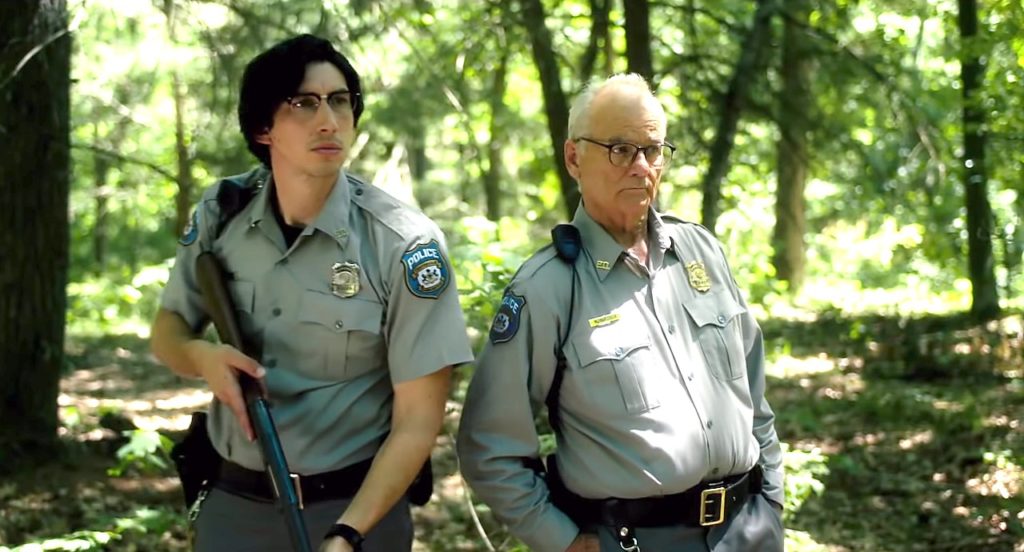
Rose Byrne and Ethan Hawke in "Juliet, Naked"

If High Fidelity was a lovingly critical look at the maniacal behaviors of fandom—the all-consuming need to know as much as possible about popular artists, and to lord your superior tastes and knowledge over other worshippers of your ilk—Juliet, Naked is about the crippling consequences of artistry itself. Adapted, like High Fidelity, from a novel by Nick Hornby, it stars Ethan Hawke as Tucker Crowe, a has-been musician who a quarter-century ago released a beloved alt-rock album and then suddenly vanished from the public eye. Now he lives in his ex-wife’s garage in Upstate New York, barely knows four of the five children he fathered via four different women, and shuffles through grocery stores looking for cereal and gardening supplies. He’s like the ghost of Jeff Buckley crossed with the Dude from The Big Lebowski, if the Dude still collected royalty checks.

If that sounds like the recipe for a punishing study of squandered talent, never fear. Directed by TV veteran Jesse Peretz (Nurse Jackie, Girls) from a script by Evgenia Peretz (the director’s sister), Jim Taylor, and Tamara Jenkins, Juliet, Naked is a spry and largely delightful romantic comedy, a welcome summer breeze of warm humor and enveloping gentleness. It’s more of a curio than a landmark, which means it’s unlikely to be pored over for decades by the collectors and fanatics who populate Hornby’s works. But its disarming lightness should not be mistaken for insubstantiality. There’s craft in telling a story that’s decidedly pleasurable but doesn’t churn its sweetness into froth. Read More

Crazy Rich Asians: Headed East with Prince Charming, But the Queen’s Got Claws

Awkwafina, Nico Santos, and Constance Wu in "Crazy Rich Asians"

There are no princesses with skin as white as snow in Crazy Rich Asians, but it’s a modern fairy tale all the same. Thoroughly clichéd yet undeniably crowd-pleasing, this cheery adaptation of Kevin Kwan’s best-selling novel by no means rewrites the rom-com playbook, but it does flesh out its pages with vivacity and color. Just as there can be wisdom in convention, there can be pleasure in familiarity, and there’s something strangely satisfying about seeing this movie hit all of the requisite beats—the quirky friends, the manufactured crises, the playful montages, the happily-ever-after resolution (oops!)—with energy and enthusiasm. It’s fun to watch, even if you’ve seen it all before.

Except, of course, that you haven’t, not quite. That’s because Crazy Rich Asians is the rarest of Hollywood studio releases: a movie made of Asians, by Asians, and for (though by no means exclusively for) Asians. This long-overdue development may inspire consternation as well as celebration—to quote a different (and of course whiter) member of the genre, “What took you so long?”—but in the spirit of the film’s plucky optimism, I’ll choose to see the good, and to hope that its commercial success may at long last portend increased diversity in American cinemas, both in front of and behind the camera. But while I’m very happy that Crazy Rich Asians exists, I can’t entirely ignore its flaws or exalt it as a model of the form. In other words, it is great that this movie was made; that it was made does not make it a great movie. Read More

Eighth Grade: Welcome to Hell. Don’t Forget Your Zit Cream.

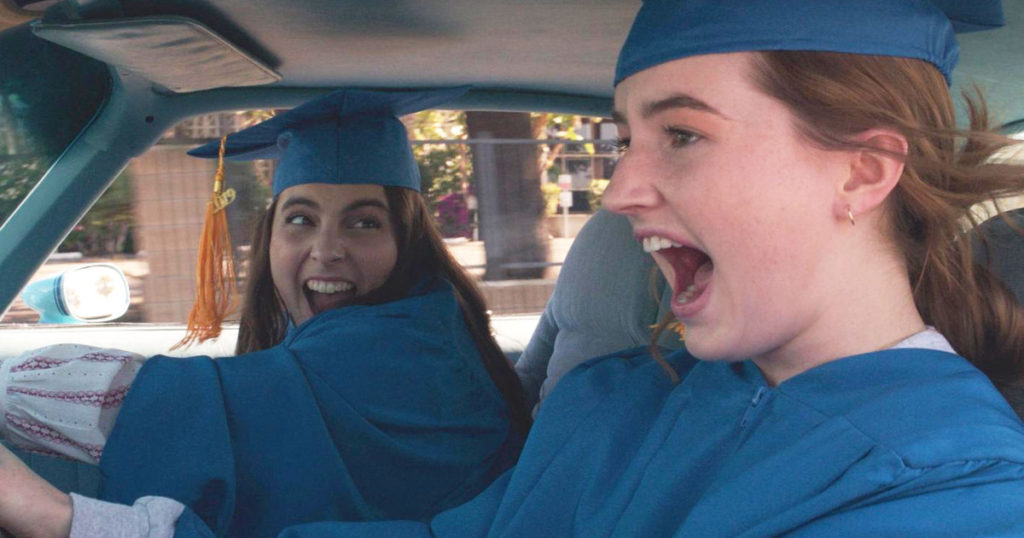
Elsie Fisher in the piercing coming-of-age film "Eighth Grade"

Kayla, the heroine of the skin-crawling dramedy Eighth Grade, is a perfectly normal 14-year-old girl, which is another way of saying that her life is a complete disaster. She is anxious, awkward, and prone to extremities of emotion, mood swinging violently from euphoria to despair. As you watch this graceful and lovely movie, the directorial debut of the comedian Bo Burnham, you will feel compelled to envelop Kayla with affection, to promise her that everything will be OK. Of course, if you actually did that, she would likely shrink away from you and squeal in embarrassment. The only people more annoying than the kids who make Kayla miserable are the adults who try to make her feel better.

In a certain sense, Eighth Grade is a horror movie, given how it evokes memories of adolescence with ruthless clarity; you cannot experience Kayla’s tribulations without recalling the heightened agonies of your own youth. Yet one of Burnham’s smart storytelling choices is to avoid ladling on the trauma too heavily. This film is not an after-school special about bullying or self-esteem, nor is it a nauseating tale of social and sexual misadventure in the vein of Welcome to the Dollhouse. It is instead a measured, compassionate look at one teenager’s particular struggles as she suffers through one final week of middle school. Read More

Deadpool 2: Lacking in Wisdom, But Still Cracking Wise

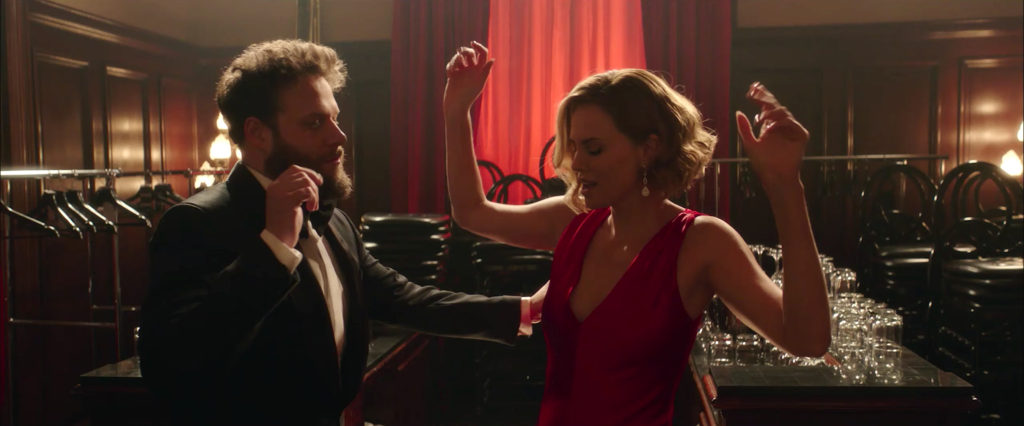
Zazie Beetz, Ryan Reynolds, and Terry Crews in "Deadpool 2"

The dirty little secret of Deadpool was that, for all its supposed subversiveness—the meta commentary, the vulgar jokes, the extreme gore and relentless profanity—it largely proceeded as a straightforward superhero origin story. So it’s only logical that Deadpool 2 abides by the Law of the Sequel, doubling down on the original’s purported irreverence while also methodically expanding the franchise’s universe and setting the stage for further installments to come. If you deemed the first Deadpool to be an anarchic laugh riot, you’ll likely be sated by this follow-up’s well-stocked buffet of ad-lidded one-liners and bloody carnage. And if, like a certain humorless critic, you found the original to be a mildly clever, philosophically vacant sketch concept that quickly wore out its welcome, well, at least you still get to spend a few hours hanging out with Ryan Reynolds.

Reprising his role as Wade Wilson, the potty-mouthed assassin with a red leotard and a severely burned face, Reynolds receives a co-writing credit this time around (shared with Rhett Reese and Paul Wernick, who scripted the first film), suggesting that the affable actor improvised acre-sized swaths of his dialogue. (In fact, given that Wade spends most of his time wearing a head-to-chin mask, it’s fair to wonder if Reynolds just muttered “insert wisecrack here” while on set, then looped in his gag of choice during post-production.) Here he favors a high-volume approach that seems rooted in the ZAZ school of comedy, the notion that if you keep the jokes flying fast enough, you’ll land enough punches to keep the audience in stitches. And he does land his fair share; apologizing to his girlfriend for arriving home late, Wade explains, “I was fighting a caped badass, but then we discovered that his mom is named Martha too.” Read More

Lady Bird: Desperate to Leave the Nest, But Still Learning to Fly

Saoirse Ronan and Laurie Metcalf in "Lady Bird"

There is a blink-and-you’ll-miss-it moment late in Lady Bird, Greta Gerwig’s funny and piercing and achingly humane directorial debut, that perfectly encapsulates the movie’s warmth and lucidity. Christine, the tempestuous teenager at the center of Lady Bird who insists that everyone refer to her by the film’s title, is repainting her bedroom. As a ribbon of white varnish rolls over the formerly pink wallpaper, it obliterates the printed names of two boys that Lady Bird had previously scrawled into the wall. Those names, which once filled Lady Bird with ardent longing, have been erased, the desires they inspired living on only as relics of her own memory. The implications are plain: Time passes. People change. And life—forgive me if you’ve heard this before—goes on.

Movies, however, must end. Yet when the final frame of Lady Bird cut to black, I was not ready to be done with it. I preferred to linger a few moments longer in the finely textured world that Gerwig had conjured with such candor, intelligence, and care. Perhaps I was simply overpowered—by the film’s sincerity, by its humor, by its grace—but I like to think that I was expressing fidelity to one of the clichéd-but-undeniable truths that this movie articulates with such heartbreaking clarity: When you love someone, it is hard to let them go. Read More