If you thought Danny Boyle’s zombies were fast, wait until you see his editing. Back in 2003, Boyle’s 28 Days Later infused the cinematic undead with new and decidedly speedier life; unlike the plodding and implacable flesh-eaters immortalized in George A. Romero’s Night of the Living Dead and its progeny, these creatures were frenzied and enraged, rushing after our human characters with haste as well as determination. Not all of the monsters in 28 Years Later, Boyle’s return to the franchise, are so athletic—a new species of beast called slow-lows lumber through the vacant countryside like sickly golems—but the pace of his filmmaking mirrors the deranged vigor of his most rapid marauders. One of the scariest things about zombies is that they never tire—they are always craving their next meal—and when it comes to pure energy, Boyle similarly exhibits no signs of slowing down.
Whether his skill matches his verve is another matter. For much of its first half, 28 Years Later adopts a style that proves less exhilarating than simply exhausting. The camera (often an iPhone) whipsaws through the scenery, attempting to mimic the characters’ rising heart rates and sowing chaos in the process. When arrows pierce the brains of rampaging zombies, Boyle invariably reshows the tearing of viscera from a different angle, like we’re watching a marksman’s overzealous highlight reel. Most curious is the hyperactive editing, which repeatedly splices the main action with bygone footage of antiquated warfare, like goose-stepping German troops or medieval British archers from Laurence Olivier’s adaptation of Henry V. It’s a historical seminar crossed with a Jason Bourne movie.
Zoom out, and you can appreciate this level of auteurist aspiration. Few contemporary mainstream sequels look or sound like this one. (The smeary cinematography is by Boyle’s regular collaborator, Anthony Dod Mantle; the antic musical score is by the Scottish hip-hop group Young Fathers.) The film’s visual and sonic assault is admirably distinctive, even if it can also be deadening. The price of ambition is potential alienation, and this movie, for good and for ill, displays a healthy appetite for risk.
Its story, while far from groundbreaking, is at least gratifyingly original—at least to the extent that term can apply to a franchise production. Boyle and his screenwriter, Alex Garland—both returning to this universe after serving as executive producers for the first sequel, 2007’s 28 Weeks Later—evince little interest in making the kind of legacy project designed to appeal to existing fans. There are no easter eggs, no winking cameos, no sweaty concerns with continuity. (An opening crawl provides newcomers with the essential data: There was a rage virus, Britain fell under global quarantine, yadda yadda.) To the extent 28 Years Later overlaps with its predecessors, it is purely in the realm of theme, as it once again explores how the remnants of a desiccated civilization must band together to rebuild society—a collective mission that pays tribute to humanity’s endurance while also acknowledging our tendency to mistrust, panic, and disappoint.
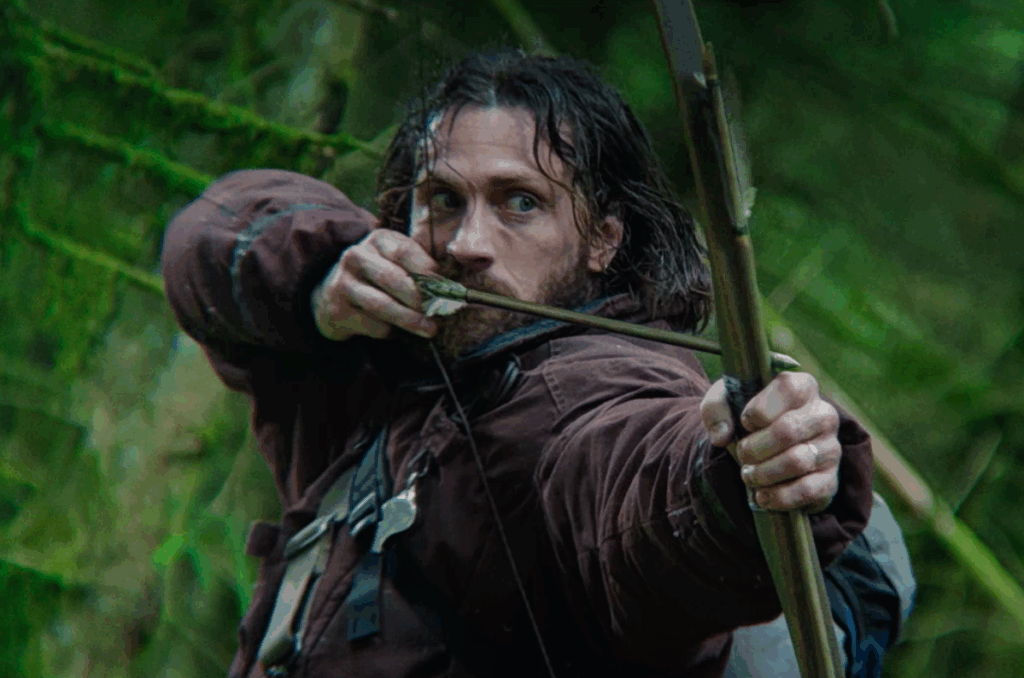
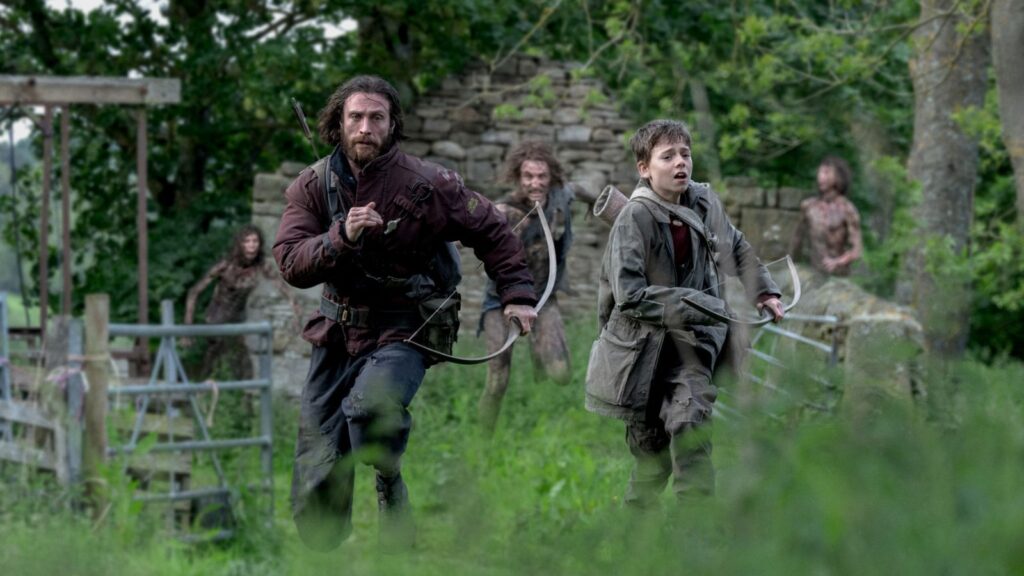
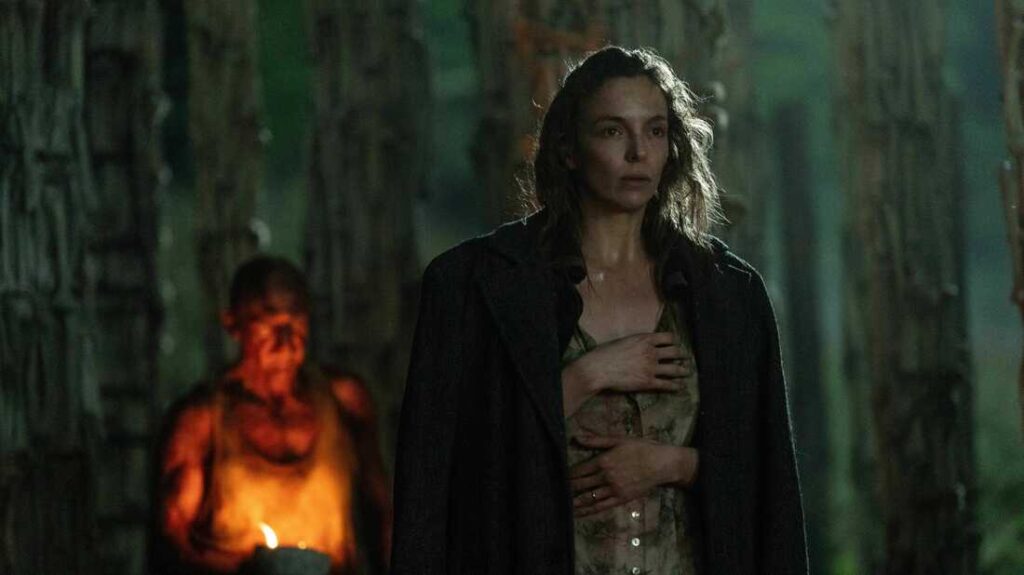
The wide-eyed learner of these lessons is Spike (Alfie Williams), a 12-year-old boy who lives in a small island village, one whose mighty wooden ramparts reflect its inhabitants’ efforts to keep the epidemic at bay. Despite his relatively meager circumstances (minimal electricity, no wifi), Spike seems happy enough, sharing a hearty breakfast with his father, Jamie (Aaron Taylor-Johnson), and sneaking bacon upstairs to his perpetually bedridden mother, Isla (Jodie Comer). But boys must become men—a series of crude diagrams on the schoolhouse wall catalog the various occupations in this makeshift republic, like Hunter and Farmer—and Jamie has decided that Spike must begin joining him on his routine forages to the mainland. Before they venture beyond their community’s vast gates, they’re sternly reminded by an elder that if they fail to return before dark, the greater good precludes any chance of a rescue operation. Why this warning would be relevant, I can’t imagine.
It’s a reasonably engaging setup, and the shot of Spike and Jamie leaving the security of their colony and traveling to the continent—to do so, they trudge across a narrow causeway that gets submerged by high tide—carries an elemental power. But once they reach a perilous forest and are predictably beset by various zombies, the movie paradoxically grows less exciting. Boyle, for all his dynamism, isn’t an especially gifted director of action. As anticipated, 28 Years Later supplies a number of scenes in which its human characters surveil, flee, and hide from “the infected,” but between the choppy editing and the indifferent choreography, these moments struggle to get your heart pounding. Despite the emergence of a gargantuan foe dubbed “the Alpha,” Spike and Jamie’s initial escapade—running from hordes, stumbling upon corpses—struggles to differentiate itself from conventional apocalyptic horror.
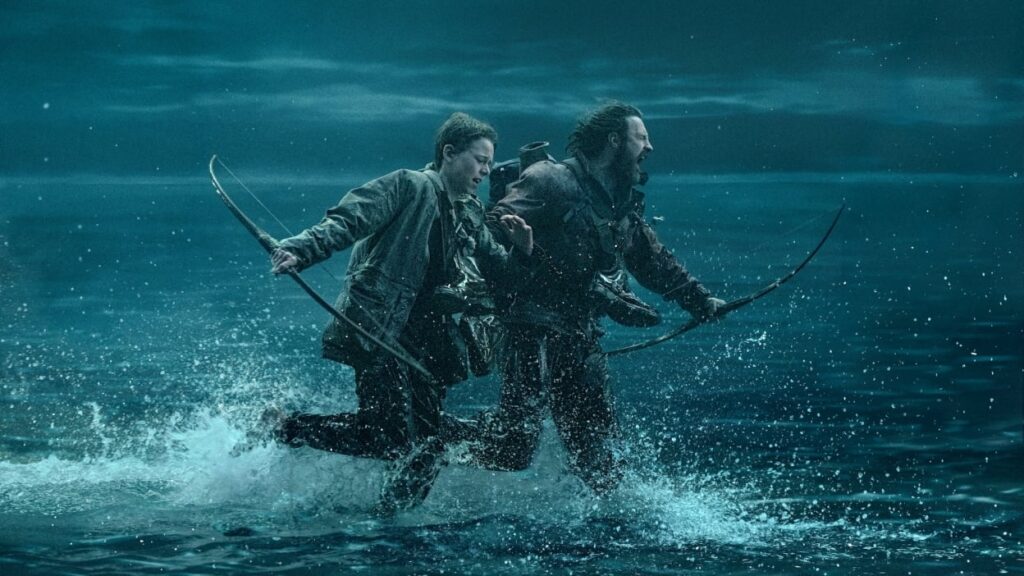
This lackluster quality would seem to (sorry) devour the film and deprive it of intrigue, but Boyle and Garland do have a few surprises in store, both narratively and tonally. Spike, perturbed by his mother’s illness and dismayed by his father’s infidelity, spirits Isla away from their cozy village, scouring the mainland for a rumored doctor who might be able to cure her malady. And as it subtly pivots from a coming-of-age story into a quest picture, 28 Years Later does something truly unexpected: It slows down.
I’m not implying that the movie’s superior second half is somehow devoid of dread or mayhem. There remain quite a few scenes of gnarly violence, most memorably when a person is decapitated, his spinal cord dangling from his severed head like string from a ball of yarn. But Boyle, in chronicling Spike and Isla’s dangerous journey—an excursion full of exploding buildings, poisonous darts, and of course snarling monsters—exercises an uncharacteristic patience. Rather than assailing you with a blizzard of movement and freneticism, he lets things breathe, building a considerable level of tension and also accumulating a remarkable degree of tenderness.
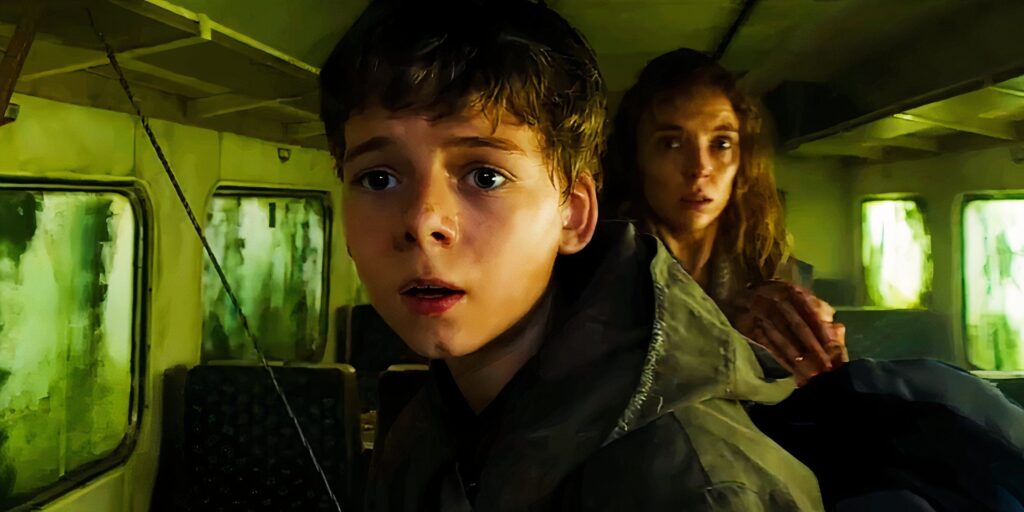
As 28 Years Later shifts into its third act, it acquires an ethereal glow, with a melancholy that’s both haunting and stirring. A scene set on an abandoned train is mesmerizing for the way it mingles life with death, while a brilliantly designed boneyard is less chilling than awe-inspiring. The movie also introduces a wonderful actor whose identity I shan’t reveal (naturally, they’re in the trailer), except to say that they infuse this hectic, aggressive production with bountiful feeling and magnificent gravitas.
Which is fairly noteworthy. If most horror flicks start out suspenseful before collapsing into screamy nonsense, this one does the opposite, attaining greater depth and meaning as it goes on. That doesn’t invalidate its flaws, but it does prove fitting, given that 28 Years Later is really about redemption—of Spike’s family, of humanity at large, of the movie itself.
Grade: B

Jeremy Beck is the editor-in-chief of MovieManifesto. He watches more movies and television than he probably should.