
Movie critics are supposed to crave subtlety. We like to complain about obviousness, whether it appears in the form of voiceover, backstory, or exposition. Bluntness is axiomatically amateurish; true artistry lies in the oblique, the implied, the invisible.
I’m mostly joking, even if I acknowledge that I’m not immune to this sort of rhetoric. But directness in cinema can be satisfying, provided the story is told well. Last weekend saw the release of two new movies, Materialists and The Life of Chuck, which exhibit a plainspoken quality that’s more appealing than insulting. They wear their hearts on their sleeves and get yours pumping in the process.

Materialists is the second feature from Celine Song, whose first movie, Past Lives, was a miracle—an intimate, gossamer triangular romance that also asked probing metaphysical questions about the nature of human connection. Materialists similarly involves a slightly askew triangle, but it’s decidedly less nuanced, instead operating as a straightforward and predictable tale of love lost and found. The characters in Past Lives often struggled to translate their feelings into words—they said as much with their eyes as with their mouths—but here they suffer no such hesitation; at one point, someone literally utters the phrase, “I’m materialistic.”
Is this clunky? Maybe at times. The movie opens with a quietly hypnotic scene set in prehistoric days, when a cave-dweller plucks a handful of gorgeous white flowers and then weaves one stem into a circle before silently slipping it onto his beloved’s ring finger—civilization’s first wedding band. It’s a striking image that Song insists on mirroring during the film’s denouement, when her heroine muses about ancient marital customs. The callback is unnecessary, undermining the visual loveliness with on-the-nose narration.
Yet the frankness of Materialists often serves the picture nicely, given its subject matter. It’s a movie about the challenges and complexities of contemporary matrimony, in particular the (possibly false) choice between marrying for love and for money. This is hardly a revolutionary conceit—when someone frames nuptials as a business transaction, it recalls Amy’s speech in Little Women about how marriage is “an economic proposition”—but Song’s screenplay fluidly underlines the disconnect between idealized romance and commodified attraction. She conceives of dating not as an amorous game but as a rigorous analytical exercise in which potential partners ruthlessly weigh pros and cons before deciding—one might say “settling”—on a prospective mate.
The chief facilitator in this ongoing assessment is Lucy, a successful, notably single woman who works as a professional matchmaker for an agency called Adore. (When she catches a man ogling her on the street, she shouts “Hey!” at him, but rather than calling out his lecherous instincts, she instead seizes an opportunity to give him her business card.) Played by Dakota Johnson with an intriguing combination of cynicism and naïveté, Lucy is good at her job (she’s responsible for nine marriages), partly because she perceives dating as an alignment of shared preferences. She’s also highly persuasive; when her latest bride-to-be gets cold feet, she marches into the suite and reminds her client of the value she can expect to receive from this lifelong transaction—a masterful coach motivating her star athlete to get back in the game.
That conversation includes an alarming confession (“Why do you want to marry him?” “He makes my sister jealous”), which isn’t atypical in Lucy’s line of work. At one point she compares herself to a therapist, given that her customers habitually disclose preferences that are rarely divulged in polite company. Some of these are funny, as when a 48-year-old man insists he wants to start seeing more mature women, then clarifies that he intends to up his target demographic from 24 to 27; others, entailing physical or racial appetites, are more disquieting. But all of this relentless candor begins to eat at Lucy, whose rigidly stable understanding of marriage begins to wobble.
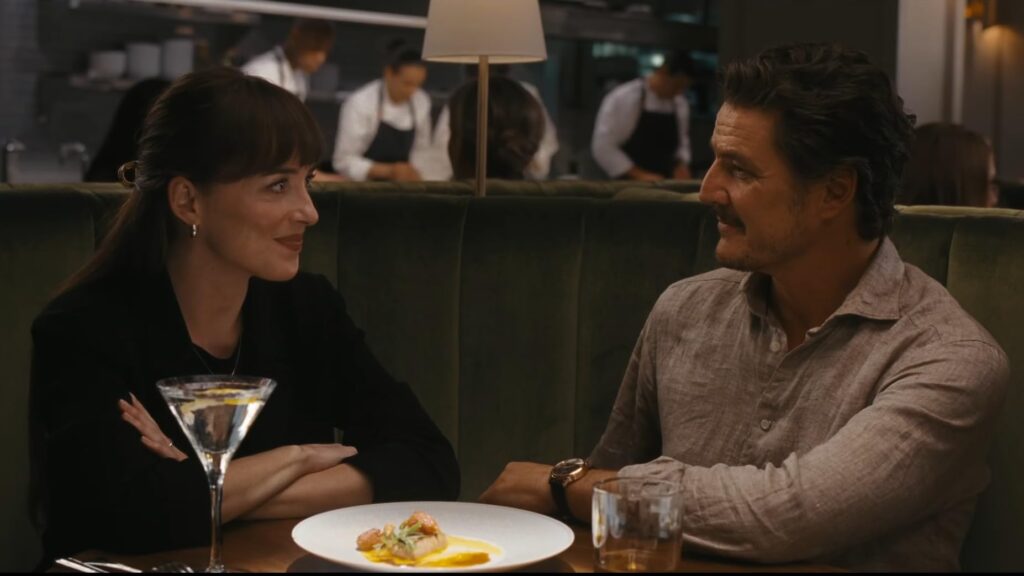
The arc of Materialists improbably recalls Hitch, the 2005 Will Smith vehicle in which a smooth operator specializes in teaching schlubs how to land babes, only to falter in his own love life. (It also, in its third act, evokes a different 20-year-old rom-com, Wedding Crashers.) But Song is less concerned with generating comic set pieces than with exploring her characters and their tangled feelings. That’s why the movie’s best scenes involve Lucy’s burgeoning relationship with Harry (an excellent Pedro Pascal), whom she meets at a wedding she helped arrange. (After catching a glimpse of Lucy in her strapless blue dress and silver choker, Harry amusingly chucks someone else’s place card on the ground and plops down in the seat next to her.) She describes him as a unicorn: smart, rich, tall (height is a constant sticking point in her dealings), handsome, elegant, sorry did I mention he was rich? Lucy, having vowed to marry someone wealthy, is helpless to resist Harry’s charms; when he informs her that his Tribeca penthouse is worth $12 million, he may as well have dosed her with Spanish fly.

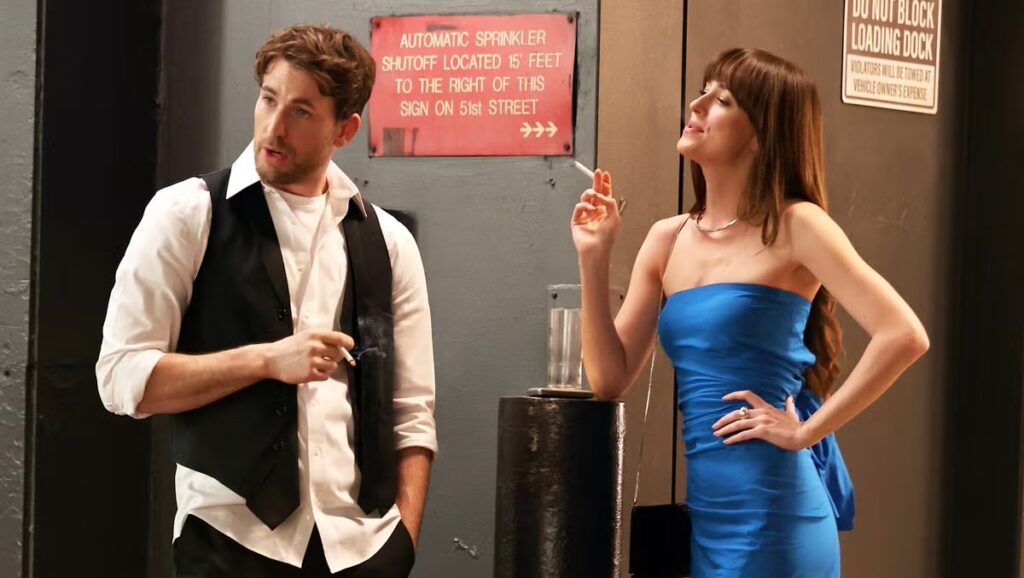
Are Lucy and Harry perfect for each other, or is their partnership a product of compatibility rather than passion? You don’t get any points for guessing correctly, especially not when the movie introduces John, a struggling stage actor and Lucy’s ex-boyfriend, who just happens to take the smoldering form of Chris Evans. It is a bit convenient—maybe more than a bit—that Lucy is presented with two viable and single men who are, if not complete opposites, at least financially and temperamentally inverted; one represents safety and security without true ardor, the other symbolizes youthful longing and its attendant monetary shortcomings.
They are both decent guys, though, and even if Materialists stacks its deck, it also asks thoughtful questions about happiness (personal and professional) in the modern world. That it does so bluntly is both vice and virtue, risking clumsiness but sharpening its emotional stakes. Lucy regularly speaks in terms of value, and Materialists’ most annoying and arresting trait is its honesty—its “what you see is what you get” quality. It may not be marriage material, but it still shows you a good time.
At first glance, The Life of Chuck is less vulnerable to accusations of obviousness. To the contrary, its structure its visibly unusual. Adapting a short story by Stephen King, writer-director Mike Flanagan unspools the narrative in reverse, beginning with “Act Three” and then purporting to rewind things from there. It’s an engaging touch that immediately imbues the proceedings with a sense of mystery; it also disguises the movie’s stature as a straightforward (straightbackward?) weepie.
At the outset, though, sadness is far from most people’s minds; the more prevalent sensations are confusion and fear. We open on a high school teacher, Marty (Chiwetel Ejiofor), whose students are more attentive to their phones than their classmate’s rendition of a Whitman poem. This in itself is hardly uncommon, but the alerts they’re receiving are more alarming. Whether as a result of climate change or some other man-made or divine catalyst, the world seems to be on the verge of literal collapse. Much of California has crumpled into the Pacific. Fires and earthquakes are rampant. A giant sinkhole emerges in the town square. Most cataclysmically: Pornhub is down.
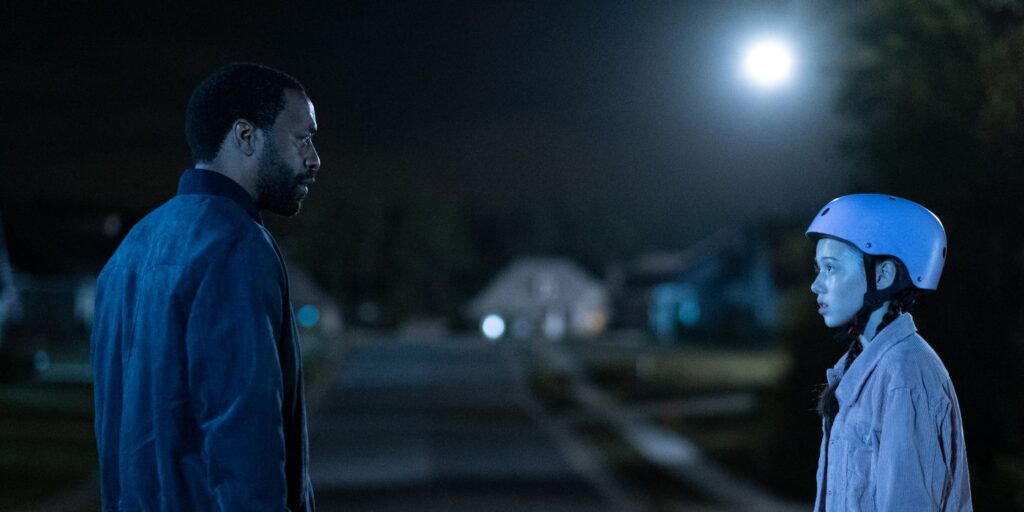
One of Ejiofor’s less illustrious roles was in 2012, the Roland Emmerich disaster yarn about (surprise) the end times. But in its opening reel, The Life of Chuck evinces no interest in chronicling global heroism or planetary destruction. It instead proceeds as a series of two-handed conversations; Marty reconnects with his ex-wife (Karen Gillan), gets traffic updates from an electrician (Matthew Lillard), and ponders society’s fate with a mortician (Carl Lumbly). All the while, he keeps seeing vexing advertisements—on the radio, on television, even on billboards—thanking someone named Chuck for “39 great years.” Chuck is presumably a famous figure, so why is it, Marty wonders, that nobody seems to have heard of him?
The architecture of The Life of Chuck makes it especially challenging to discuss the movie without dipping into spoilers, but one interesting thing about it is its consistently humane tone. Ostensibly, its first act functions as a puzzle-box thriller, incorporating strains of metaphysical freak-outs like Don’t Worry Darling, The Adjustment Bureau, and even Horton Hears a Who. (In one unsettling flourish, a hospital’s heart monitors all start beeping at the same rate, even when they aren’t connected to anything.) Yet rather than maximizing tension (as he did routinely on his TV series like The Haunting of Hill House and Midnight Mass), Flanagan keeps the atmosphere even-keeled, observing Marty’s increasingly unstable surroundings with curiosity rather than frenzy. The narration, delivered in a clear and sonorous voice by Nick Offerman (and presumably lifted from King’s pages, which I’ve not read), further contributes to this sense of steadiness.
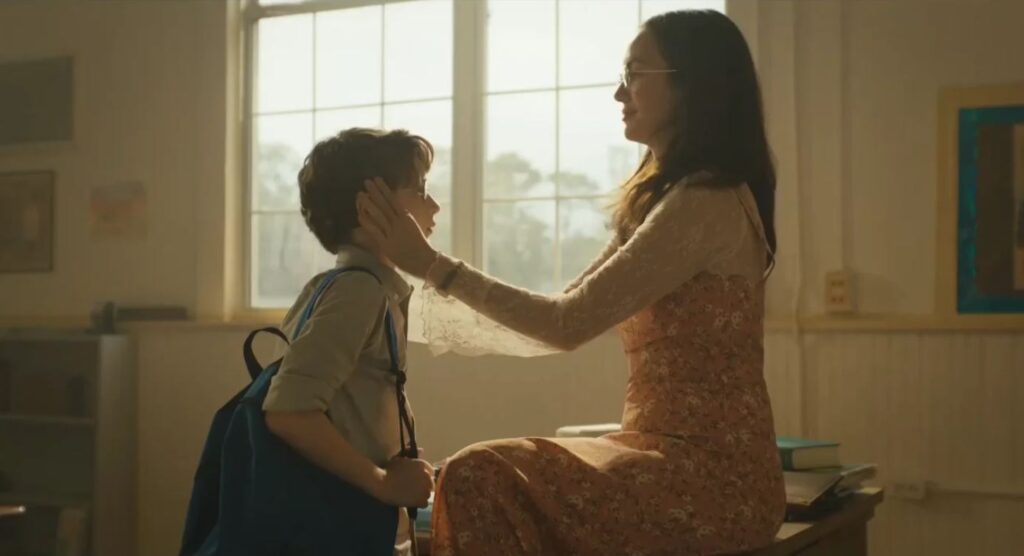
The irony is that, in adopting such a measured approach, The Life of Chuck really wants to pulverize you—not with its plot twists (which aren’t really designed to be surprising), but with its ruthless accumulation of pathos. The film’s promotional materials have highlighted raves that use words like “magical” and “life-affirming”; such adjectives tend to produce growls among crusty critics (not that I have anyone in mind) who chafe against blatant appeals to sentimentality. But while I didn’t cry watching The Life of Chuck, I did smile frequently, appreciating both the earnestness of its story and the caliber of Flanagan’s presentation.
Flanagan’s previous feature was an adaptation of King’s Doctor Sleep, an uneven but visually imaginative sequel to The Shining. That picture, along with most of Flanagan’s television work (which also includes the gripping Fall of the House of Usher), deployed impressive horror technique to frighten its viewers, even as it simultaneously applied a subterranean layer of plaintive sincerity. The Life of Chuck, despite its mild apocalyptic iconography, brings that tenderness up to the surface. For all its plotty subterfuge, it is a nakedly emotional paean that emphasizes some of literature’s most soothing themes: the importance of family, the preciousness of childhood, the value of pursuing your dreams.

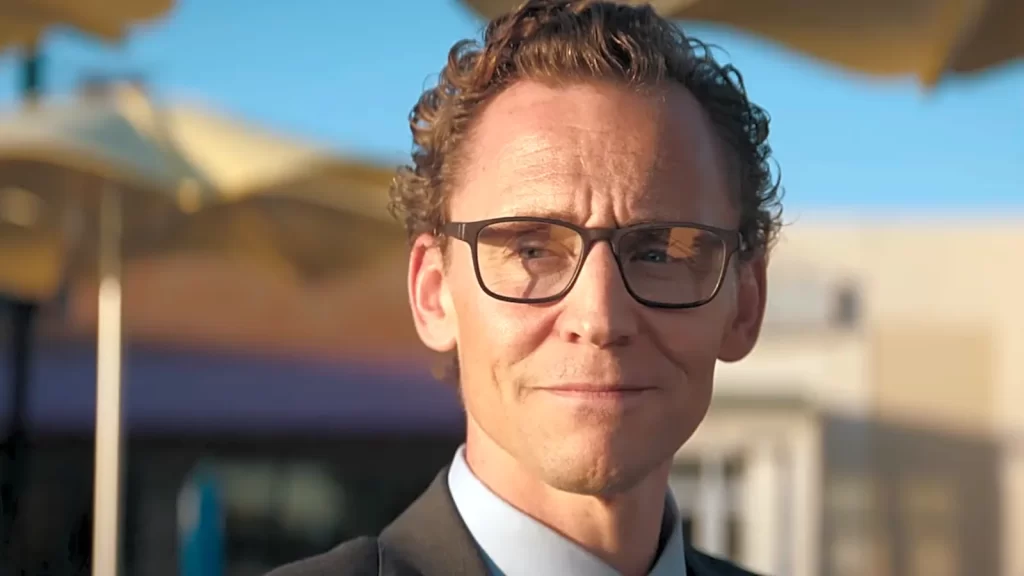
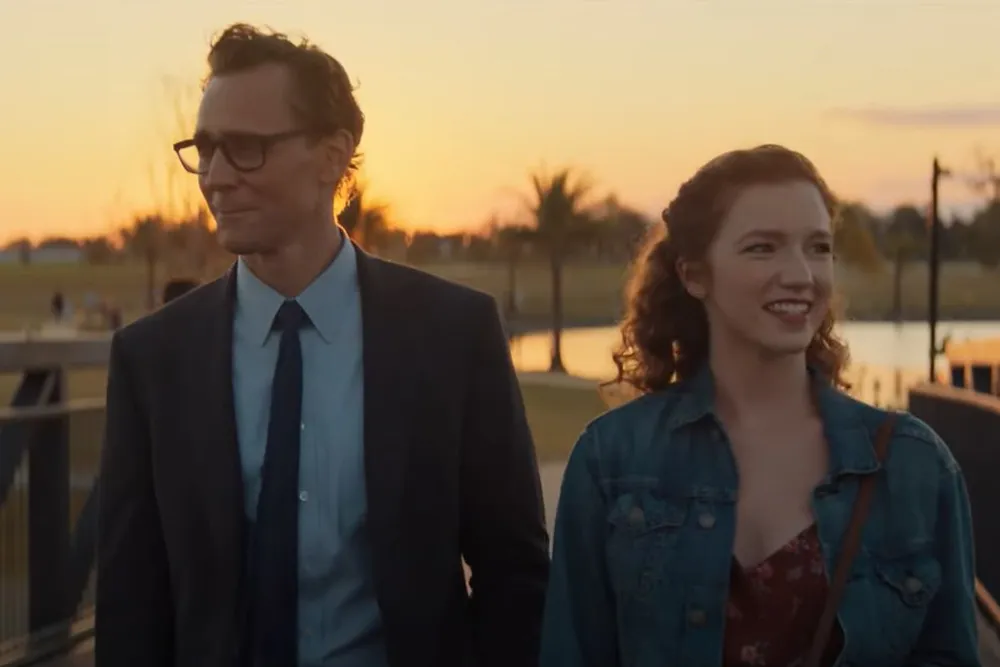
On the page, such evident tear-jerking inevitably flirts with triteness. But there is nothing corny about the sequence where Chuck (Tom Hiddleston), an accountant hurrying his way to a mind-numbing conference (Offerman calls him “Mr. Businessman”), suddenly stops on the street and then starts dancing to the drumbeat of a busker (Taylor Gordon, aka The Pocket Queen). There’s a reason the gathering crowd of onlookers begins clapping enthusiastically, especially once Chuck pulls in a spectator (Annalise Basso) and twirls her with gusto; the whole thing is an exhilarating display of energy, rhythm, and joy. Sue me, it is magical.
But while that scene is the movie’s unquestioned high point, it also helps camouflage a broader thinness; for all its pleasure and polish, The Life of Chuck doesn’t ultimately say anything all that meaningful. Its third act—technically “Act One” in its upside-down chronology, and subtitled “I Contain Multitudes”—is its most palpably King-inflected, with the standard tropes of youthful trauma and lightly supernatural visions. (There’s a presumptive teenage bully on hand too, though the screenplay cleverly zigs away from this anticipated zag.) It even delivers another extended dance sequence, and though the choreography is appealing, the repetition dulls some of the luster.
And yet, the film’s persistent heart-tugging manages to feel disarming rather than cloying. Benjamin Pajak, as the preteen Chuck, does lovely work articulating boyish wonder and anxiety, while Flanagan rounds out the ensemble with performers from his TV company—Rahul Kohli, Kate Siegel, a particularly delightful Samantha Sloyan (pulling a complete 180 from her villainy in Midnight Mass and The Midnight Club)—who help the movie’s universe feel lived-in. (Also, holy shit that’s Mia Sara!) There’s a gentleness to the imagery that works in counterpoint to the heavy-handed dialogue, infusing its in-your-face messaging with a quiet beauty.
Coincidentally, both Materialists and The Life of Chuck feature characters explicitly talking about math, discussing when certain things do or don’t properly add up. (Stretch further, and Chuck’s sliding-doors future—his decision to become either an accountant or a dancer—resembles Lucy’s choice between the reliable Harry and the quixotic John.) To be sure, both movies are the product of careful engineering, systematically marshaling their emotions and outright declaring their ideas. But their forthrightness isn’t awkward so much as lucid, reflecting the skill of filmmakers who know how to balance their equations just so. Done right, formula contains multitudes.
Materialists grade: B
The Life of Chuck grade: B

Jeremy Beck is the editor-in-chief of MovieManifesto. He watches more movies and television than he probably should.