
The top grosser at the box office last weekend was a sing-along version of KPop Demon Hunters, Netflix’s animated phenomenon about a girl-pop trio who use their musical talents to battle demons disguised as a boy band. I’m not lamenting this; it’s a mostly charming movie, and it’s nice to see any Netflix product in theaters, even if that company remains philosophically committed to eradicating the very existence of cinema. KPop Demon Hunters is also an original work, meaning its success derives from thoughtful artistry and word-of-mouth rather than by leveraging intellectual property.
Not every new release last weekend was so triumphant. Look considerably lower down the box-office chart, and you’ll find the debut of three movies with original screenplays that combined to gross less than one-third of Demon Hunters’ $19M. (I’m ignoring Splitsville, which played in just five theaters across the country.) When I last performed this exercise in 2021, I expressed gratitude that original pictures had returned to theaters as the industry rebounded from the COVID-19 pandemic. Four years later, I’m less optimistic about our cinematic future. But let’s celebrate (and evaluate) what we’ve got, while we’ve still got it.
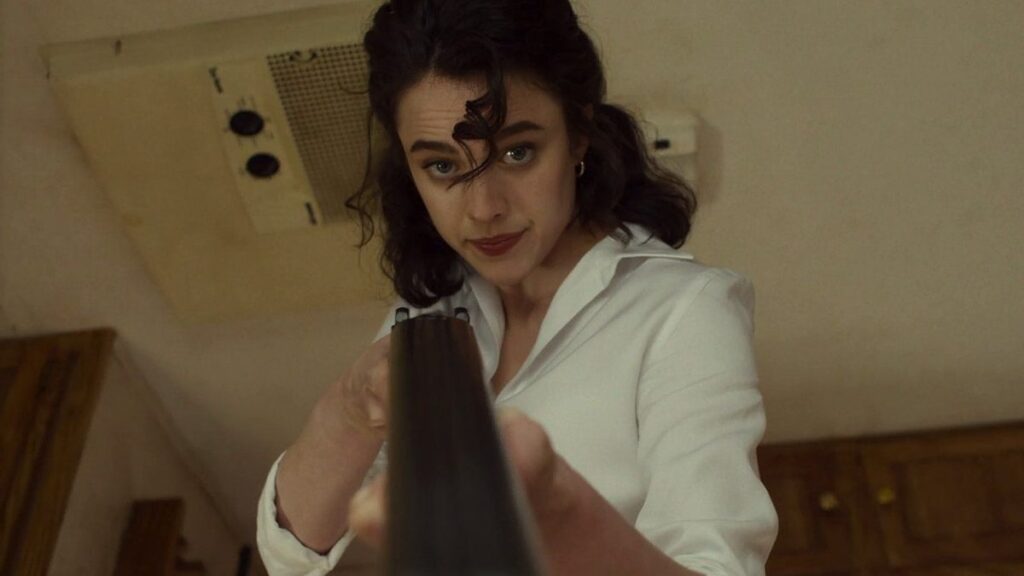
Honey Don’t is Ethan Coen’s third solo feature as a director since he parted ways with his brother Joel (following The Ballad of Buster Scruggs), and the second straight to star Margaret Qualley. It’s another screwball comic neo-noir, and it features the same colorful outlandishness that characterized some of Coen’s collaborations with his sibling. Yet while movies like Raising Arizona and (the forever underrated) Intolerable Cruelty expressed their oddball charm via deceptively elegant screenplays, Honey Don’t’s storytelling is less precise. It carries the spark of classic Coens without the discipline.
It has plenty to meet the eye, though, beyond Qualley’s looping curls and clacking heels. She plays Honey O’Donahue, a private eye cruising the streets of Bakersfield in a sky-blue ’70s Chevelle. Honey is a cross between Sam Spade and Lisbeth Salander, and through a combination of curiosity, pluck, and sheer coincidence, she soon finds herself embroiled in a convoluted conspiracy—one that implicates the cops, the mob, a criminally charismatic reverend (Chris Evans, enjoying himself), and possibly Honey’s own niece (Talia Ryder, from Never Rarely Sometimes Always).
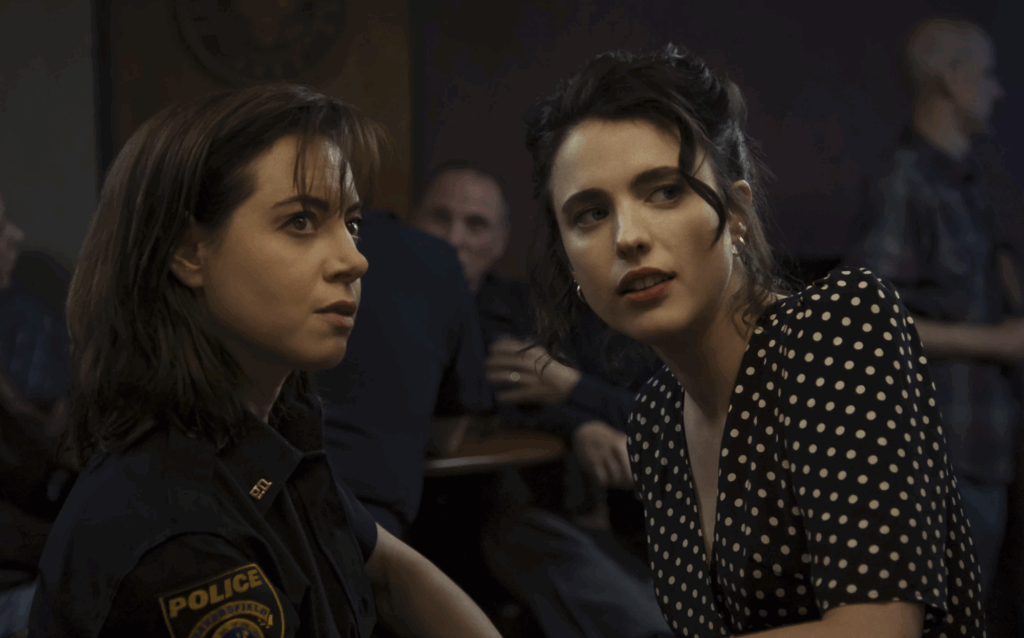
It’s a bit too much plot, but on a scene-to-scene basis, Honey Don’t is reliably entertaining. Coen knows how to choreograph a set piece; the film features a number of shootings and stabbings, and they all unfold with sharp, stinging clarity. The images have a dusty luster (the cinematographer is Ari Wegner, who also shot The Power of the Dog), making you feel both the beauty and the oppressive warmth of the California location. Speaking of heat, there’s a healthy amount of sex on display (much of it comic), though the movie’s most electrifying sequence involves a fully clothed Honey sitting at a bar with MG (Aubrey Plaza), their rat-a-tat foreplay acquiring a charge that threatens to overload the city’s power grid.
I wish I could say that Coen and his writing (and life) partner, Tricia Cooke, marshaled these individual moments into an intricate and gripping narrative. Yet while Honey Don’t is confidently made, its screenplay feels sloppy and indifferent. Various elements—a suspicious client (Billy Eichner), an abusive and remorseful father (Kale Browne), a French femme fatale (Lera Abova)—are meant to be embroidered into a tapestry of vice and lust, but the movie struggles to integrate them, resulting in a story that’s clumsy and patchy. Coen’s prior picture, Drive-Away Dolls, was similarly slapdash, but it had greater heart in its central relationship, and in Qualley’s vivacious performance; she’s appealing enough here, but she still can’t prevent Honey from scanning as a construct rather than a fully realized character.
“You’re a good fuck, Honey,” someone tells her, “but you ain’t doing shit socially.” It’s a fair assessment of Honey Don’t, a reasonably enjoyable and occasionally exciting movie that’s empty at its core.
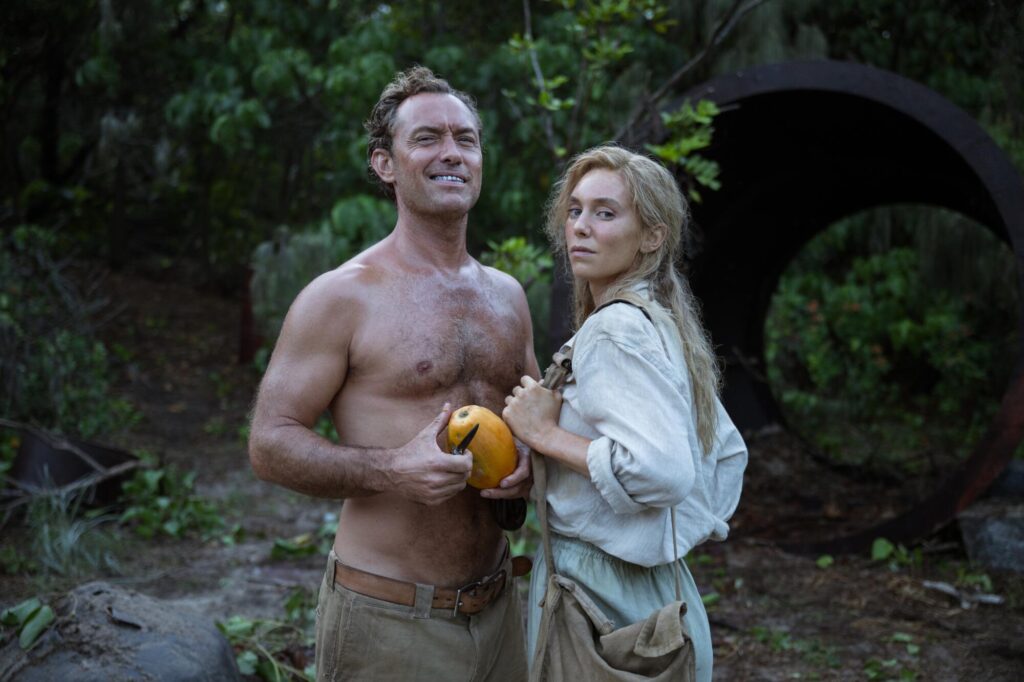
More thought-provoking, if less visibly provocative, is Ron Howard’s Eden. It tells the true (ish) story of the 1930s settlement on Floreana, a small island in the Galápagos. A handful of citizens, wary of rising fascism (sound familiar?), abandon their contemporary clamor and resolve to build a more peaceful and secluded life on a rocky outcropping. They face challenges, and not just the wild boars and hostile climate; turns out, human greed and selfishness can travel across oceans.
Howard’s movies tend to be affirming and sentimental, so Eden’s atmosphere of roughness and cruelty represents relatively new territory. His approach is anthropological, coolly observing the chaos as his characters’ lofty ideals clash with their baser impulses. The film’s triangular community comprises three competing factions: the philosopher Dr. Friedrich Ritter (Jude Law) and his companion, Dore (Vanessa Kirby), who crave solitude as Ritter hammers away at his manuscript; the Wittmers, Heinz (Daniel Bruehl) and Margret (Sydney Sweeney), who fancy themselves loyal disciples of Ritter’s teachings but who receive a rather rude reception; and Eloise (Ana de Armas), a self-styled baroness who’s coddled by menservants and who plans to turn the island’s harsh beach into a grand and lucrative hacienda.
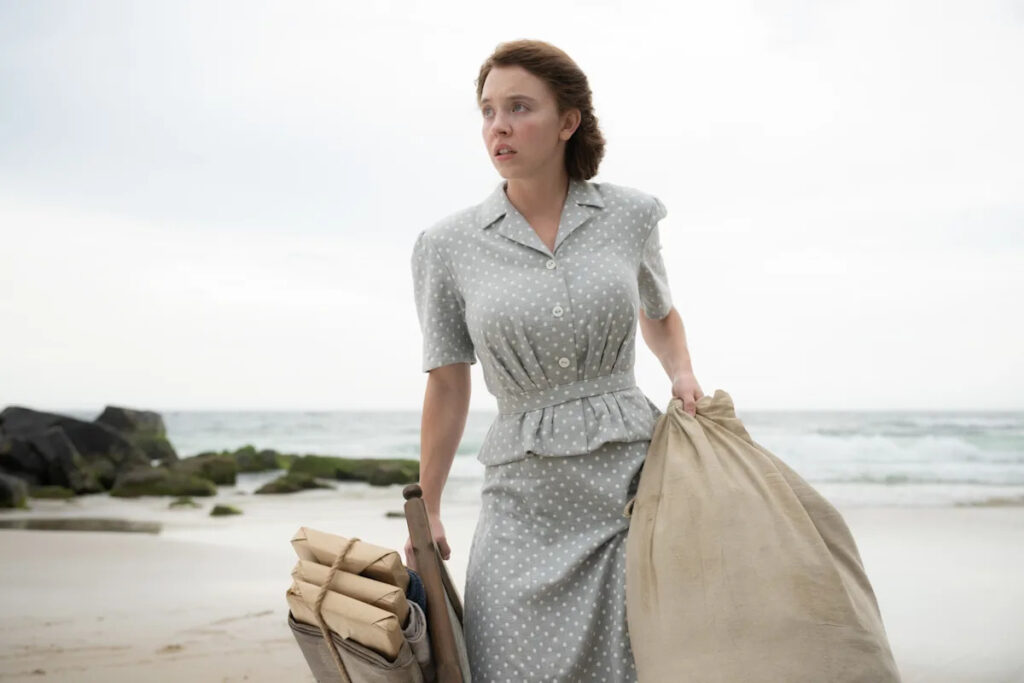
Depending on your perspective, Eden’s worldview is either jaded or lucid, as Noah Pink’s screenplay turns the movie’s title into a bitter joke; this purported utopia quickly becomes a cesspool of scheming, stealing, and killing. The mayhem is abstractly intriguing but not all that involving in the moment. In essence, the film operates as the inverse of Honey Don’t: Its broader narrative is compelling, but it doesn’t have many interesting scenes. The exceptions are a stressful birthing sequence witnessed by feral dogs (and coincidentally recalling the climax of Immaculate), and an ostentatious luncheon where feigned politeness gives way to barbed accusations and festering resentments.
As is always true with a Ron Howard production, Eden is a work of sturdy professionalism, and its actors embody their roles capably. Yet the only two who make an emotional mark are Sweeney, who brings a cagey intelligence to Margret’s apparent passivity, and de Armas, whose eccentric energy lends this grubby little movie some much-needed pop. Eloise is a ridiculous character, but she keeps things lively. When she isn’t around, this would-be paradise can feel drab as hell.
Relay, the new thriller from David Mackenzie (Hell or High Water), takes place nearly a century later than Eden, but it features its own classical bona fides. It’s a man-against-machine conspiracy yarn, pitting two small but determined people against the might of a ruthless corporation. You will not agonize over whether to align your sympathies with the GMO giant that employs wet workers to safeguard their proprietary research, or with Lily James.
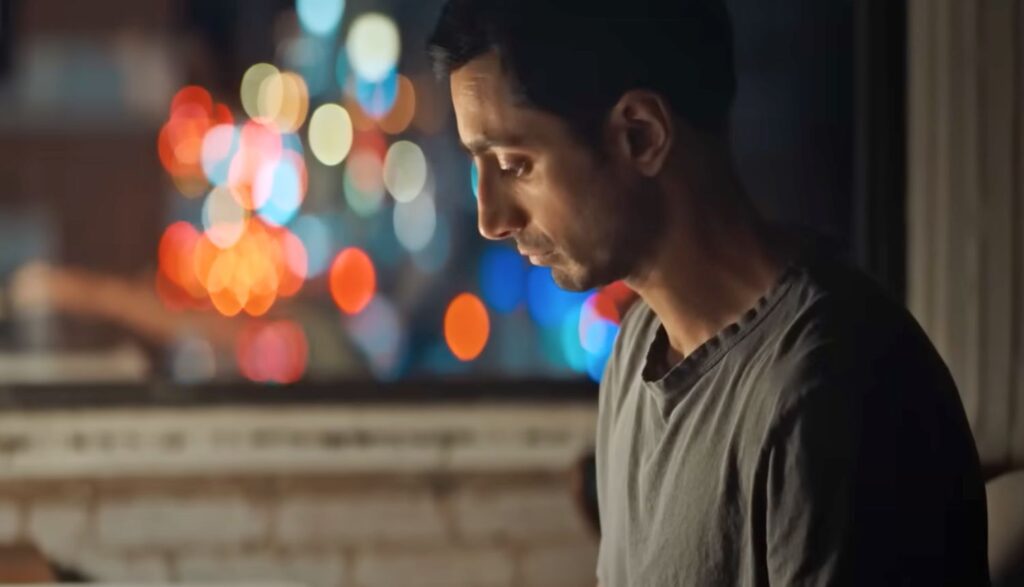
The mechanics of Relay are impressively detailed, but its overall arc—which might be described as Michael Clayton by way of Zero Effect—is straightforward. James plays Sarah, a scientist who uncovers malfeasance at her company; rather than blowing the whistle, she hopes to return classified documents in order to avoid reprisals. (Her car has already been torched.) To that end, she recruits (“receives” is probably the more accurate term) the services of Ash (Riz Ahmed), a mysterious operative who specializes in back-channel dealings and cloak-and-dagger espionage. All Sarah needs to do is follow Ash’s instructions to the letter, and those creepy private-security grunts (played by Sam Worthington and Willa Fitzgerald) will leave her alone.

The bold strokes of Relay may be familiar, but its particulars are decidedly unusual. Ash never meets his clients face-to-face; in fact, he never even speaks to them. He instead communicates through the titular messaging service, transmitting his thoughts via teletypewriter to a phone operator, who then verbalizes them to Sarah on the other end of the line. This chain of conversance carries certain quirks; for example, when Sarah has finished talking, she’s instructed to utter the phrase, “Go ahead.”
It’s an intriguing setup that also presents Mackenzie with an obvious formal challenge. It goes without saying that Ash, the consummate professional and a stickler for discipline, will break all of his rigid rules as he finds himself growing closer to Sarah. (She may not be able to see him, but he still knows that she looks like Lily James.) How can Mackenzie convey this budding connection when his two leads never share the screen or even talk to each other?

The answer, beyond some crisp and canny editing, is simple: Ahmed’s face. It takes roughly 45 minutes into Relay before Ash says a word, but the actor still registers microscopic shifts in emotion, silently conveying anxiety and longing. Ash and Sarah’s rapport grows—and his inflexibility wanes—at just the right pace, culminating in a scene where Ash bypasses the relay service and contacts Sarah directly (albeit posing as one of its conduits); it’s a simple phone call that also functions as both a profound expression of tenderness and a dangerous breach of protocol.
For most of its runtime, Relay proceeds as enjoyable cinematic spycraft; scenes where Ash gives Sarah’s pursuers the runaround, manipulating their movements and sending them on goose chases, are quite satisfying. And then, the screenplay (by Justin Piasecki) introduces a twist that’s so wildly unexpected, it threatens to destabilize the film’s carefully calibrated mix of new-age technology and old-fashioned suspense. I confess that I spent much of the final 20 minutes distracted, my brain constantly replaying prior scenes (in the context of new information) rather than tracking the latest plot developments.
I’m not sure I missed much. Relay’s climax is its weak spot, as its clever cat-and-mouse and enduring tension deteriorate into hectic chases and shootouts. It’s a pity, but it doesn’t diminish the movie’s abiding intelligence or its inspired sense of novelty. If Mackenzie wants to keep making these kinds of smart, mature thrillers, all I can say is: Go ahead.
Grades
Honey Don’t: B-
Eden: B-
Relay: B+

Jeremy Beck is the editor-in-chief of MovieManifesto. He watches more movies and television than he probably should.