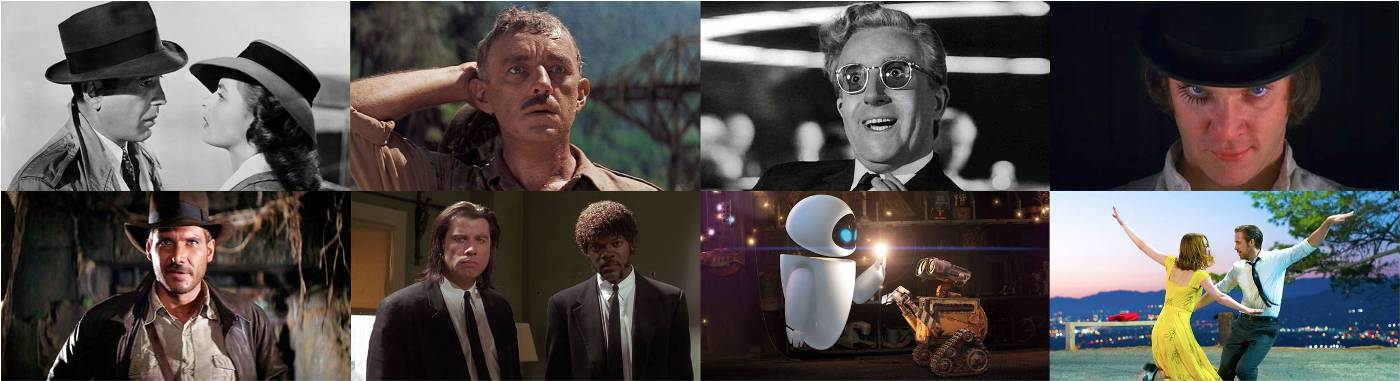
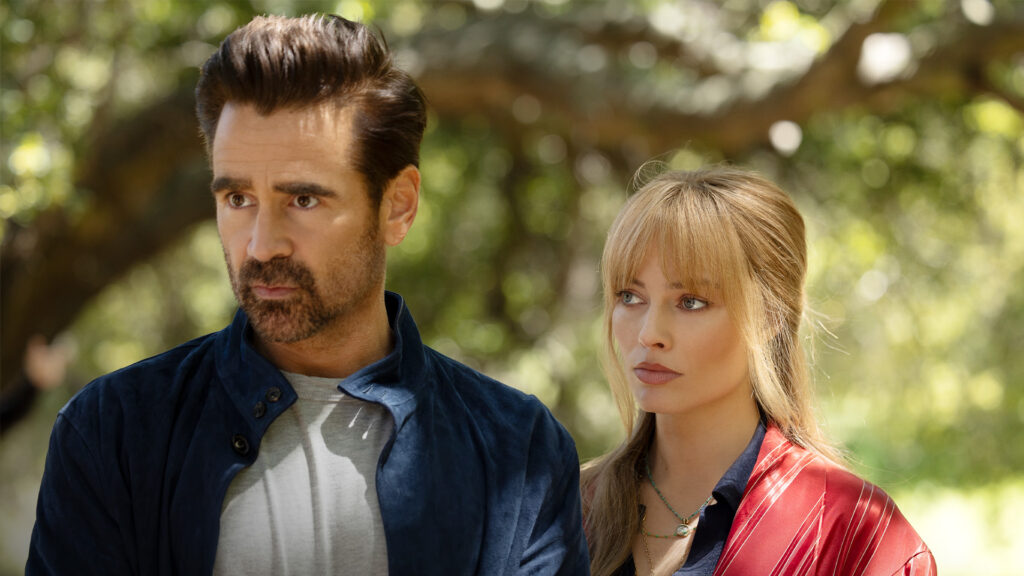
He doesn’t want the GPS. Who the hell needs a GPS? He can just use his phone. Aha, the saleswoman points out, but what if his phone craps out on him? A few feeble protests later (“I don’t think it will.” “But what if it does??”), he relents and agrees to the upsell, at which point the woman exclaims in triumph, “Fuck yeah!”
There is no small degree of metaphor in this early exchange in A Big Bold Beautiful Journey, when a lonely single man named David (Colin Farrell) rents—“has foisted upon him” is probably more accurate—a 1994 Saturn from a strangely persistent agent in a pinstriped suit and pencil haircut (Phoebe Waller-Bridge, presumably improvising her thick German accent on the day of shooting). After all, a GPS is designed to guide you to a preplanned destination, allowing you to surrender your agency and simply obey the device’s rhythmic commands. So when this particular model, which speaks in the soothing voice of Jodie Turner-Smith, suddenly asks David, “Would you like to go on a big, bold, beautiful journey?” he hardly has any choice in the matter, and neither do you.
Directed by Kogonada from a screenplay by Seth Reiss, A Big Bold Beautiful Journey is a work of blatant, buoyant magical realism. This means that, depending on your perspective, it is either shamelessly manipulative or giddily imaginative. Then again, why choose? As its title suggests, this expansive romp leaves ample room for both sneering condescension and swooning romanticism. It is hackneyed, obvious, and artificial. It is also sweet, absorbing, and delightful.
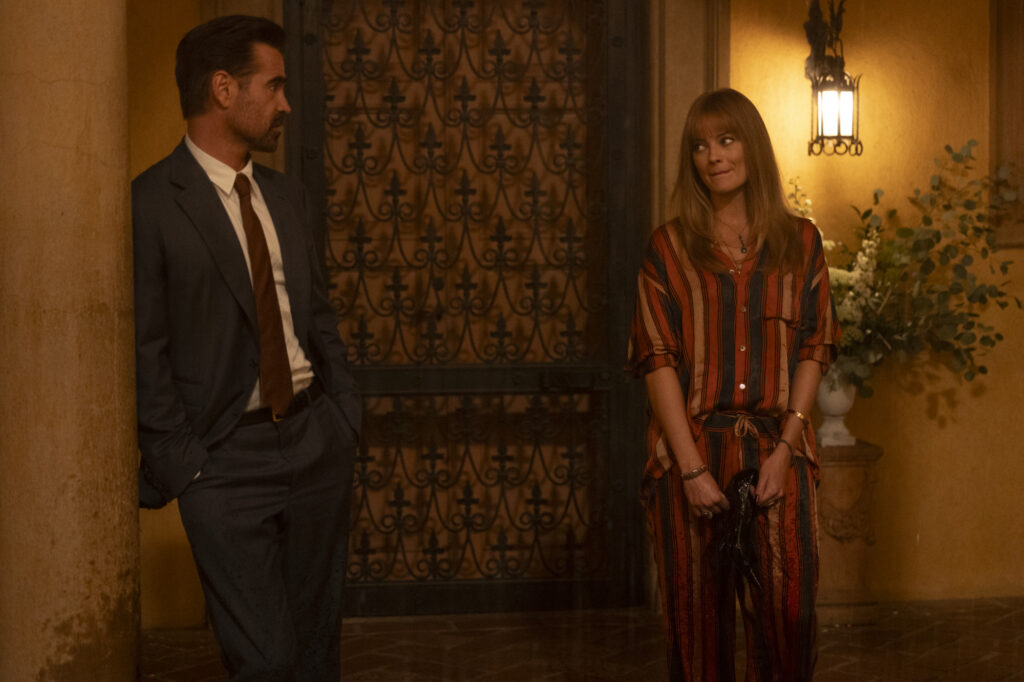
The movie’s tone may be pure cornball, but its plot is a product of mechanized engineering. David, who was forced to rent that Saturn from an amusingly cavernous garage after finding a boot on his car, is traveling to a wedding, where he meets (or meet-cutes) Sarah (Margot Robbie). Turns out they live in the same (unnamed) city—she’s downtown, he’s on the north side—a coincidence that spawns the type of charged, snappy flirting endemic to the romantic comedy. They don’t spend the night together—in a striking mirror image that peers through adjoining windows, we see David lying down to sleep alone while Sarah robotically climbs into bed with an unknown wedding guest in the next room—but the next day, thanks to the cheerful badgering of that damn GPS, they encounter each other again at a Burger King, and then they’re cruising the countryside and just maybe falling in love.
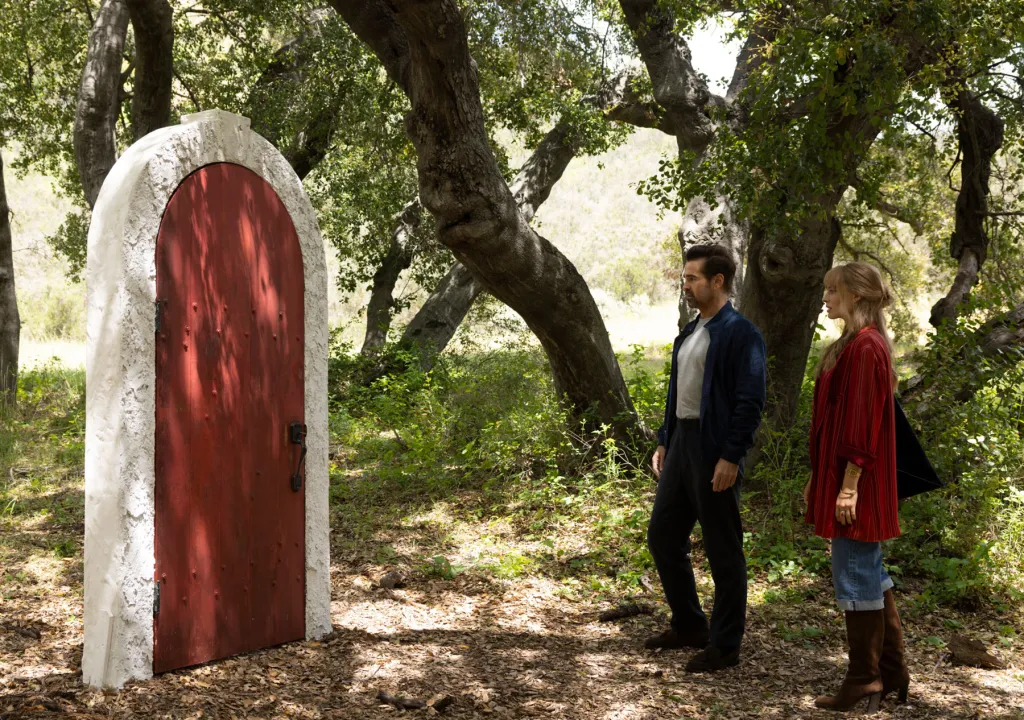
Structurally, A Big Bold Beautiful Journey (where are the commas??) is a fantastical picaresque. Following the satellite’s periodic instructions, David and Sarah come across a series of metaphysical doors dotting the landscape, each one operating as a portal to a fraught moment in their past. As they reenact prior life episodes, they discover more about each other—she cheats in order to avoid commitment, he’s paralyzed by his parents’ suffocating love—circling the possibility of romance while also running into self-imposed barriers to intimacy.
The invisible hand steering David and Sarah’s fanciful excursion operates not with subtlety but with crude, clumsy force. Every rom-com carries a whiff of machination, but Beautiful Journey is so ruthlessly calculated that its gimmicky narrative threatens to overwhelm its humanity. David and Sarah are pleasant to be around, in no small part because they’re played by appealing actors, but they struggle to carve out the necessary space to become actual characters. They aren’t people, they’re pawns in the movie’s slick game.

And yet! On a scene-to-scene basis, Beautiful Journey is more often than not enchanting. The obvious highlight is a sojourn at David’s old high school, when he’s forced to reprise his leading role in the drama club’s rendition of a hit ’90s musical revival—a calamitous event that Sarah helps transform into a moment of redemption. But the less showy sequences are similarly affecting. In one scene, Sarah and David reimagine painful breakups with their exes (Billy Magnussen and Sarah Gadon), their separate conversations suddenly fusing into a crisscrossing avalanche of hurt and blame. Later, they return to their childhood homes, and the script introduces an asymmetrical twist, with Robbie embodying Sarah’s preteen self while Farrell occupies the soul of David’s father and comforts his heartbroken 15-year-old son (i.e., himself). Sure, it’s corny; it’s also lovely.
Kogonada’s prior feature (also starring Farrell) was After Yang, an intelligent, meditative science-fiction yarn. Where that movie was sensitive and restrained, this one is sentimental and operatic. Yet while Beautiful Journey lacks After Yang’s philosophical nuance, there is a certain bravery to its heart-on-its-sleeve approach; it may manufacture its emotions, but it does so openly and honestly.
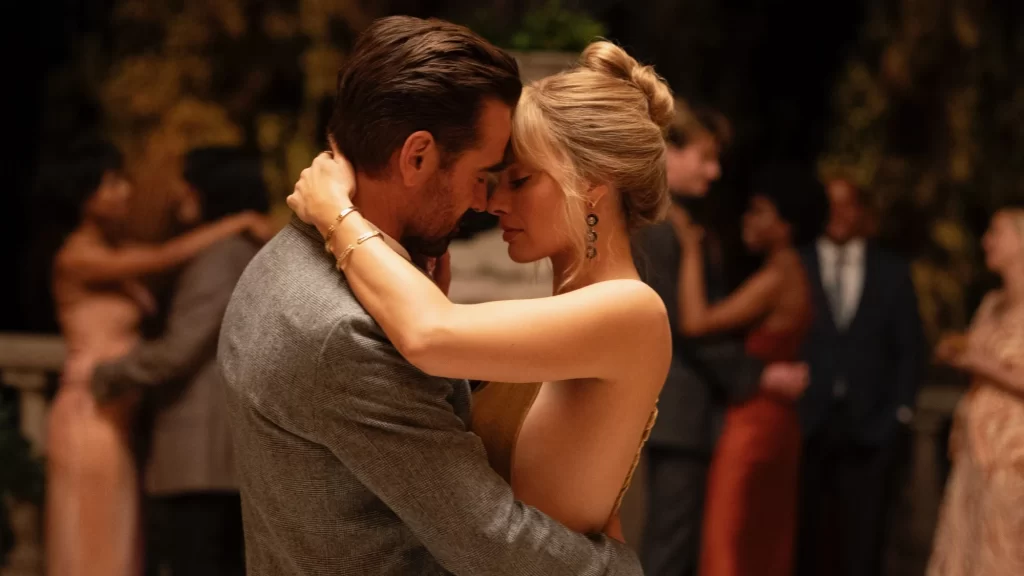
Or maybe I’m just grateful for the opportunity to spend time in the company of two movie stars applying their gifts to a story that is, if not mature, then at least original and sincere. The chemistry between Robbie and Farrell is more warm than electric—she’s forced to use an American accent, while he’s allowed to maintain his Irish brogue—but they make a gorgeous pair, and their glamour helps elevate the picture above its schematic construction. Kogonada’s fluid aesthetic does the same, with vivid colors and sharply composed images that create a lightly heightened style in keeping with the film’s dreamlike nature.
I’m not blind to this movie’s overwrought qualities. But the next time I rent a car, I’m getting the GPS.
Grade: B

Jeremy Beck is the editor-in-chief of MovieManifesto. He watches more movies and television than he probably should.