Like everyone else, the title is hiding something. The prepositional phrase “after the hunt” implies an event followed by an aftermath: cause and effect. Yet one of the purported insights of this intriguing, frustrating movie is that contemporary life is a pinwheel of controversy and catastrophe—a perpetual cycle of predation, victimization, and antagonism. After this hunt is over, another one is sure to follow. And eventually, they’ll come for you.
Who are “they,” exactly? After the Hunt, which was directed by Luca Guadagnino from a script by Nora Garrett, supplies no shortage of potential bogeymen. The woke mob. Coastal elites. Old white men encrusted with privilege. Young Black women exploiting affirmative action. Out-of-touch shrinks who don’t know the difference between The Doors and The Smiths. Bearded professors. Protesting students. Queer people. (Seriously, at one point somebody snarls at a non-binary character, “Beat it, they!”)
The scene that best crystallizes After the Hunt’s inflamed worldview arrives late, when a disgraced faculty member dares to venture onto campus. Enraged undergrads, having just learned of her misdeeds in the university paper, encircle her like vultures descending on a carcass, badgering her with questions and lobbing accusations. After a few moments of feeble deflection, she screams in pain and collapses to the ground. You know the saying: Sticks and stones may hurt me, but words will perforate my ulcer.
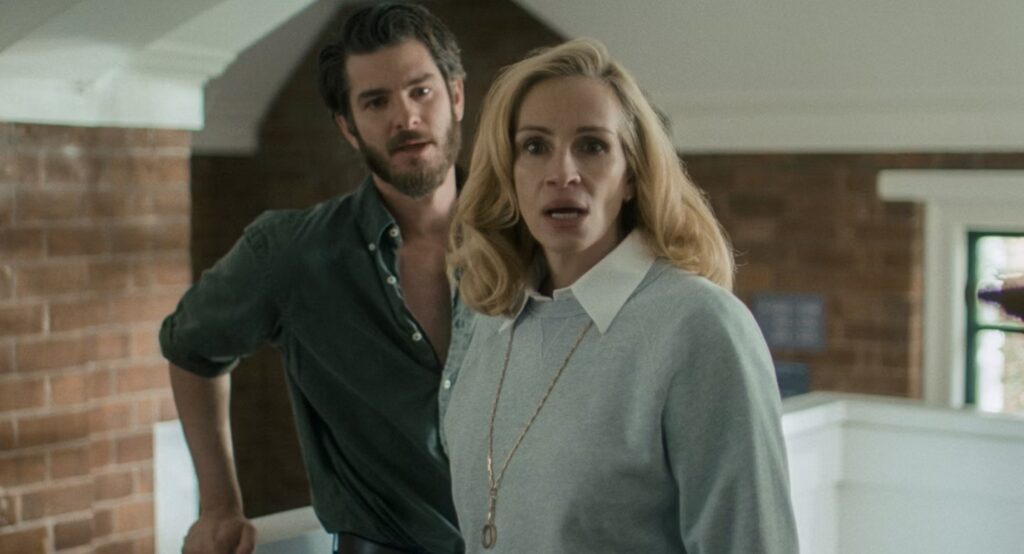
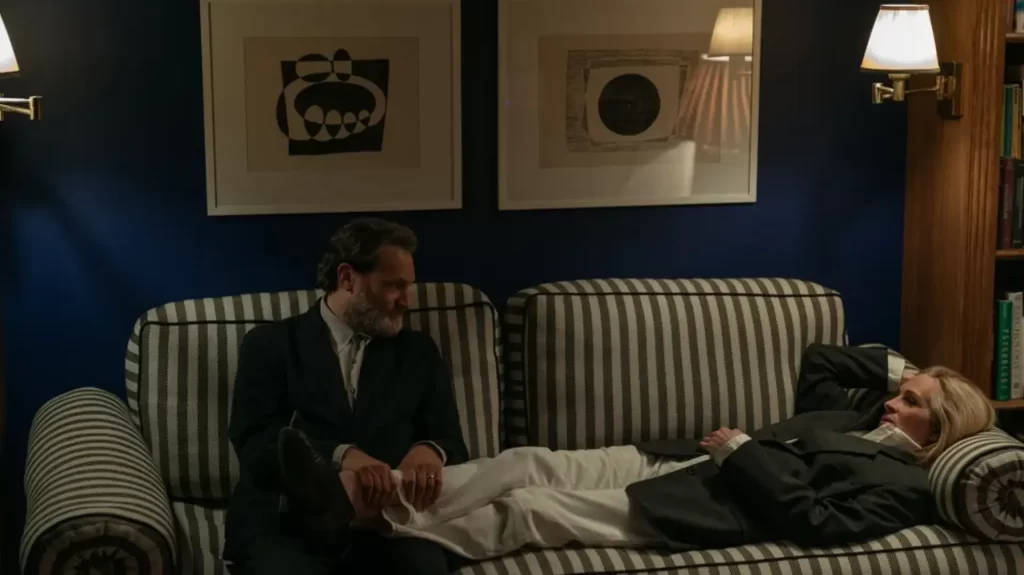
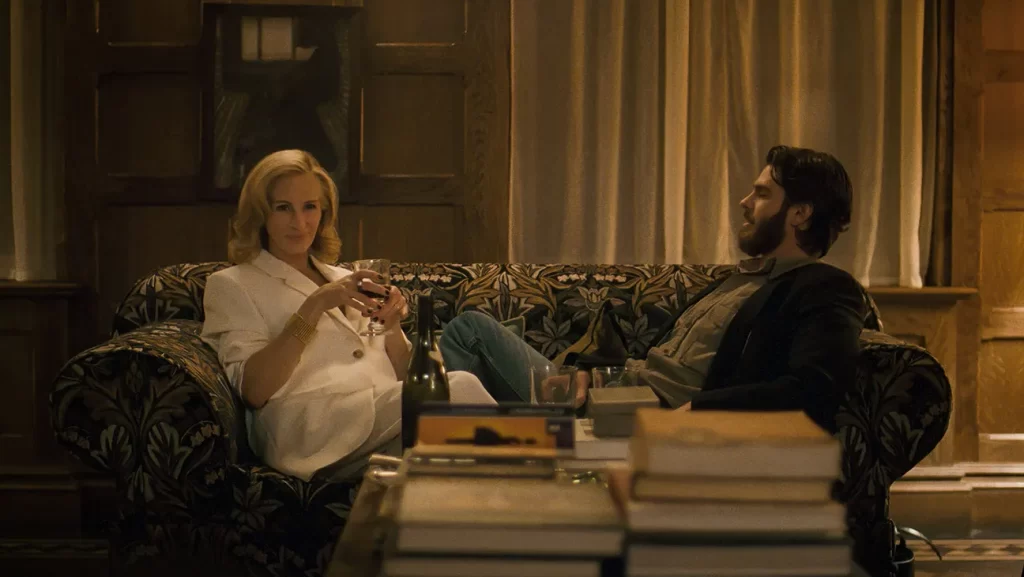
To be fair, not every moment of After the Hunt reverberates at such a fevered pitch. The movie’s story may be simplistic—a fraught, tawdry tale of anxiety and betrayal—but Guadagnino takes his time establishing his characters, luxuriating in their erudite snobbery. Alma, an unusually glamorous philosophy professor at Yale—in related news, she’s played by Julia Roberts—is hosting a dinner party. Her husband is Frederik (a helpless Michael Stuhlbarg), but you could be confused for assuming she’s actually married to Hank (Andrew Garfield), given the wide smiles and physical intimacy they exhibit while sharing a loveseat. Alma and Hank and both up for tenure, and one of their students opines that she has better odds because, well… the current climate has afforded her certain advantages. In other words: She’s a woman.
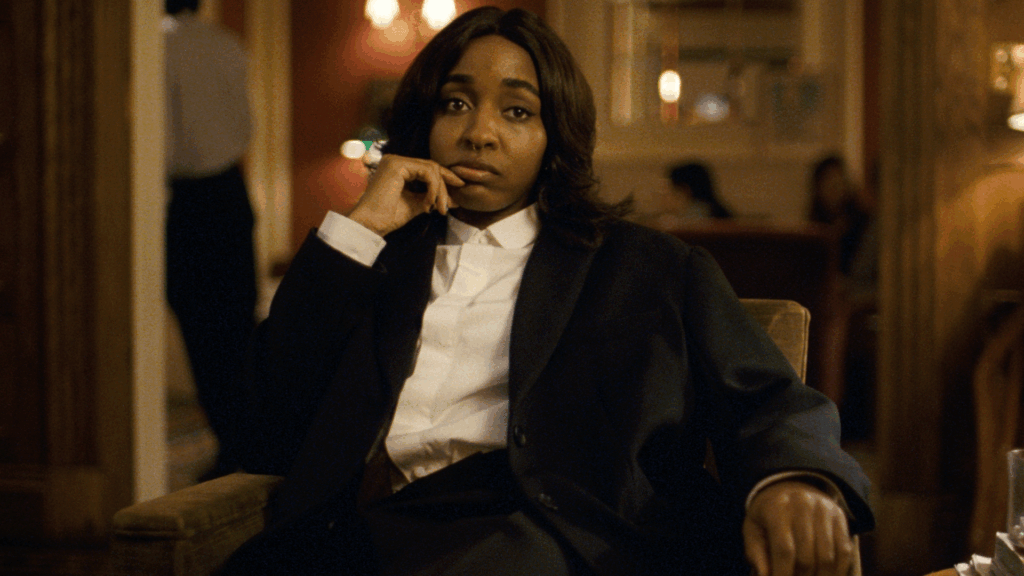
The cringeworthy nature of that remark, and the spirited debate it inspires among these supercilious wine-swillers, reveals one of After the Hunt’s thematic preoccupations. The movie aims to grapple with traditional conceptions of identity—race, class, gender—and examine the role they play in modern academia. Has Alma achieved her elevated position because Yale felt compelled to diversify its faculty, or is she a brilliant woman who’s had to work twice as hard to succeed in a male-dominated field? Does Hank, whose perfectly trimmed beard obscures his poor upbringing, admire Alma for her brains as well as her beauty, or does he resent her apparent ease when he’s labored all his life? And what about Maggie (Ayo Edebiri), their gay Black pupil whose parents have donated to the school; is she a promising scholar destined to follow in Alma’s footsteps, or has she simply leveraged her wealth and minority status while possibly plagiarizing her dissertation?
These questions are likely to fascinate only a small percentage of the moviegoing audience: sociologists, intersectionality majors, New York Times opinion columnists. So After the Hunt adds a more pressing inquiry to its pile: What happened after the party? The following day, Alma finds a visibly shaken Maggie lurking outside Alma’s apartment, where Maggie reports that last night after walking her home, Hank “crossed a line.” And with those three carefully chosen words, the pristine order governing these haughty intellectuals is thrown into chaos.
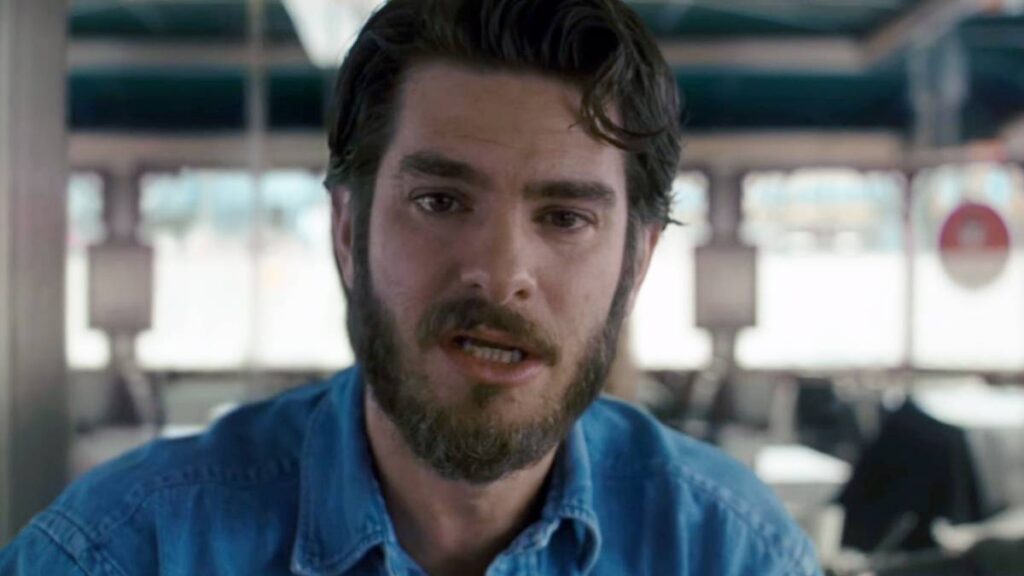
You might expect the remainder of the movie to unfold as an investigative procedural—a “he said, she said” mystery that pits Maggie’s alleged trauma against Hank’s insistence on due process. But while After the Hunt pays glancing attention to these matters—it’s the kind of topical infotainment designed to conjure think-pieces about #MeToo and free speech and “cancel culture”—its real focus is Alma. Her once-secure grasp on her cozy lifestyle begins to slip, and she is plunged into a reckoning involving angry students, disapproving colleagues (Chloë Sevigny plays the university’s musically clueless psychiatrist), suspicious pharmacists, and a secret backstory that resides under some conveniently loose floorboards.
There is plenty of fuel on hand for a cleansing metaphorical fire. The problem is that Alma, like everyone else in the movie, is a cipher rather than a character—a writerly construct meant to provoke fretful chatter about How We Live Now. Roberts manages to tamp down her charisma, but this just results in a voided, vacant personality. Garfield’s live-wire performance is more engaging, yet once Hank vanishes from the picture, the dramatic urgency flags; in turn, the screenplay’s artificiality becomes more pronounced, and Guadagnino’s direction is exposed less as artistic flair than sweaty distraction.
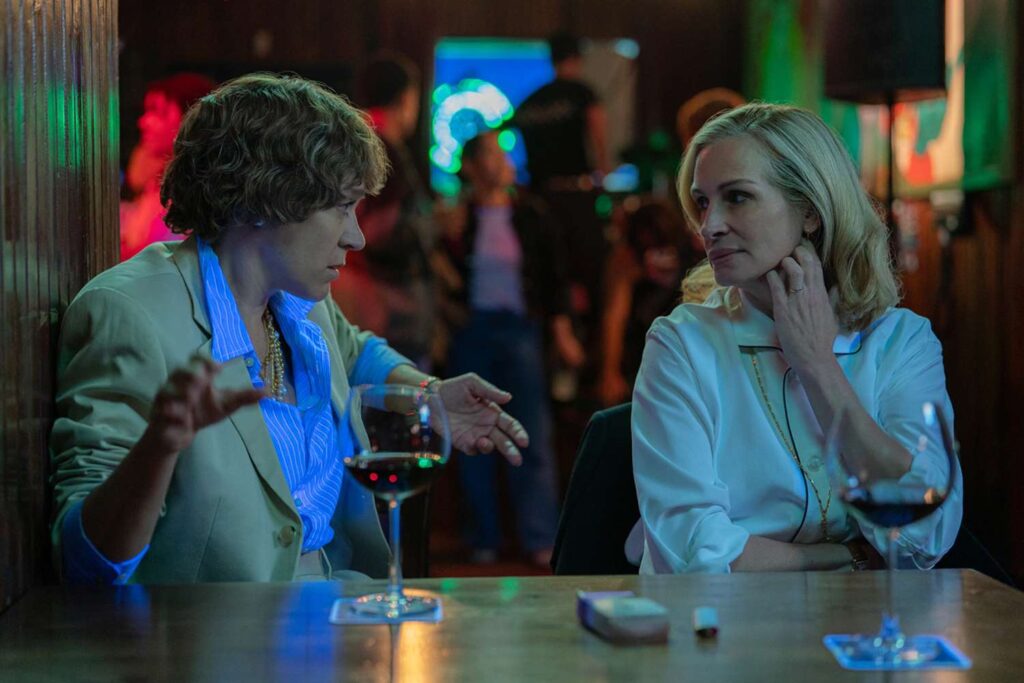
After the Hunt attempts to frame itself as a ripped-from-the-headlines docudrama—the opening title card informs us that “it happened at Yale,” implying a grain of truth to a fictional plot (filming took place at Cambridge)—but it mostly operates like a play, progressing from one dialectical dialogue scene to the next. Guadagnino, presumably recognizing the dryness of this material (behold, the Electra complex!), compensates with some of the stylish flamboyance he brought to Challengers (which was great) and Queer (which wasn’t). The camera often swoops away from traditional over-the-shoulder shots to provide intimate, Jonathan Demme-style close-ups, as though the actors are talking to you directly. The editing acquires the menacing rhythms of a thriller. And the score, by the prolific duo of Trent Reznor and Atticus Ross (their first mention on this site since, er, last week), begins with delicate piano before swelling into symphonic strings and booming electronica. (Also, a campus bar keeps playing The National; these kids are all right!)
All of this restless activity suggests that Guadagnino is deploying his agitated technique to camouflage the banality of his narrative. At the risk of succumbing to grade inflation, I give him partial credit for trying. After the Hunt isn’t especially coherent in its themes—it seems to argue that everyone in academia is selfish and entitled, which isn’t the most explosive insight—but it’s a strenuously serious movie that at least attempts to translate the gestalt of collegiate controversies into the language of cinema.
It just doesn’t quite work. There are too many long, clunky scenes, like when Alma battles with a perplexed student (Thaddea Graham) over the implications of a classic work, or when Alma and Maggie hunker down for a kitchen-table tête-à-tête only to be repeatedly interrupted by Frederik bursting through their saloon doors, his blaring music impeding their conversation. (The latter bit unfortunately recalls the superior 50 Cent sequence from Anatomy of a Fall.) These dull passages only reinforce the movie’s engineered quality—the sense that it’s not so much a fully realized story as a thought experiment.
One of Guadagnino’s most obvious flourishes is his periodic use of a ticking clock over montages, evoking the intensity of an action picture. It’s certainly arresting, but it ultimately brings to mind another recent cultural movement in the exact wrong way. Before this movie even starts, its time is up.
Grade: C+

Jeremy Beck is the editor-in-chief of MovieManifesto. He watches more movies and television than he probably should.