
In a perfect world, I’d use this website to write long-form reviews of every new movie I watched. Sadly, I lack both the time and the talent to do so. Yet my combination of OCD and narcissism compels me to always register my opinions in some fashion—typically via Letterboxd, where I can scribble down two-paragraph capsules that convey my overarching thoughts without adhering to the formal style and detail of a proper review. (For example, I never found the time to review Hamnet, but my spoiler-heavy Letterboxd blurb digs into that film’s majestic ending.) I try not to shill for corporations, but whether you’re the dorkiest of cinephiles or just a casual viewer, it’s a free and useful app, and—what was I saying about narcissism again?—if you’re ever searching for my thoughts on a movie that I didn’t review here, you can likely find them there.
This week, though, rather than choosing a single title to highlight, we’re going rapid-fire through some recent releases—a blend of audience-pleasing blockbusters, independent fare, and streamers that Netflix refused to let you see in a theater. Let’s get to it.

Zootopia 2. This sequel to Disney’s 2016 hit faces a predicament common to other members of its (har har) species. I’m not talking about kid-friendly animated adventures; I’m talking about buddy-cop comedies. The driving energy of the first Zootopia, beyond its surprisingly provocative conceit regarding predators and prey, was the relationship between Ginnifer Goodwin’s naïve, enthusiastic bunny and Jason Bateman’s sly, jaded fox. (Their respective surnames are Hopps and Wilde, and sue me, that’s cute.) Their mutual suspicion inevitably gave way to firm friendship, which means—much like Lethal Weapon 2 and Another 48 Hours—this follow-up struggles to mine the pairing for further dramatic tension. The screenplay, by Jared Bush (who also directed with Byron Howard), tries to manufacture some conflict—Hopps insists that they need to prove themselves, while Wilde doesn’t want to ruffle any feathers (speaking of which, stay tuned for Zootopia 3: Birds!)—but there’s no real evolution in their camaraderie. Similarly, although the plot explores how reptiles have been deemed societal pariahs, it basically just recycles the original’s themes about the importance of tolerance and the danger of prejudice. (To be fair, I’m writing this mere hours after the President of the United States referred to Somalis as “garbage,” so maybe these ideas are worth reiterating.)
The good news is that even if Zootopia 2 suffers from narrative and ideological repetition, it also replicates its predecessor’s vibrant technique and cheerful alacrity. The animation is exquisite in both its painstaking detail (you can feel the textures) and its overall design (bright colors, fluid motion). Hopps and Wilde are still a winning pair, especially when they’re engaging in James Bond-style hijinks (he even dons a tux). And while there are a few too many lazy “Zoo” puns, the dialogue is largely funny, with just the right dose of winking references to cater to adults without pandering. (Importing the score from a certain horror classic left me in stitches.) The end product is less a paradise than a charming tourist attraction; you may have already seen the sights, but you’re happy to revisit them all the same. Grade: B-
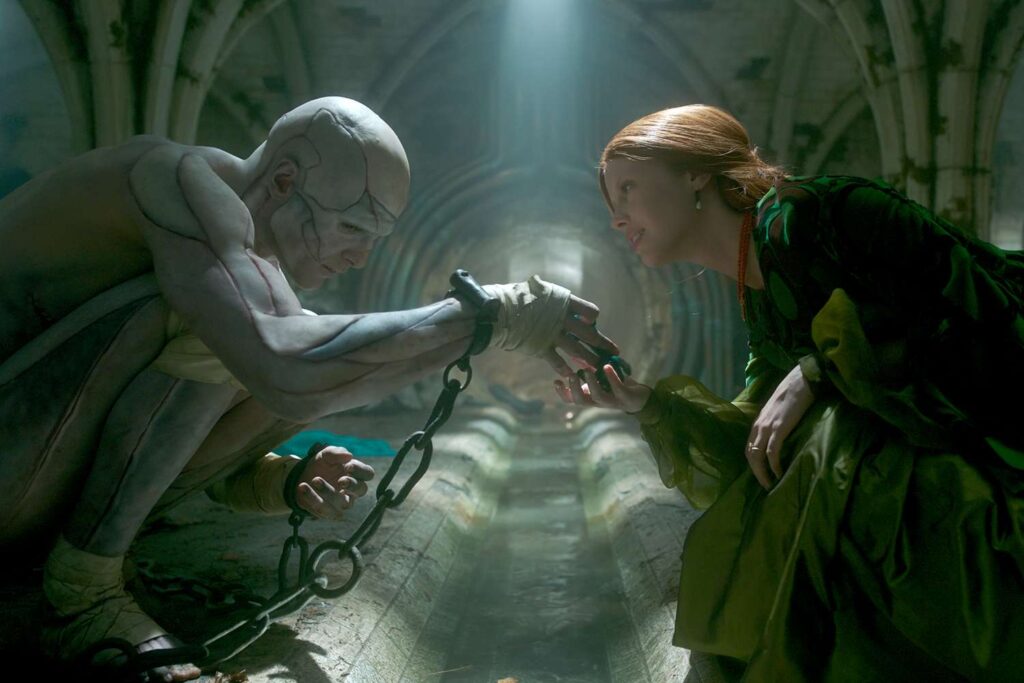
Frankenstein. The mythology of Frankenstein, in which a visionary wields his prodigious skill to transform dead flesh into new life, maps almost too neatly onto the art of movie-making. Cinema may not be alive, but at its best—when its creators alchemize the elements of their trade with just the right calibration—it moves and breathes with a certain vitality. This new Frankenstein, the latest labor from Guillermo del Toro, isn’t quite a great movie, but it does function as a proper tribute to the process of artistic imagination.
Del Toro can be a tinkerer and a dilettante, experimenting with genre and form, but here he reminds you of the sheer force of his talent. This is a beautiful production, with lavish sets, gorgeous costumes (Mia Goth in dresses!), and an abiding, towering grandeur. Rather than indulging in cleverness or whimsy, Del Toro has deployed an approach of ruthless classicism, transmuting Mary Shelley’s novel with scrupulous craft. Oscar Isaac is perfectly maddening as the titular scientist, while Jacob Elordi exhibits impressive physicality as his twisted, yearning creation.
And yet, there is something limiting about Del Toro’s rigidity. The heart of Frankenstein lies in how its obsessed doctor fails to grapple with the humanity of his own invention. Structurally, Del Toro’s adaptation makes sure the creature has his say—the screenplay is divided into two parts, with god and monster each relaying his own tale of woe—but spiritually it’s aligned with its physician, focusing more on precision than freedom. It’s a magnificent innovation that doesn’t quite carry the spark of life. Grade: B
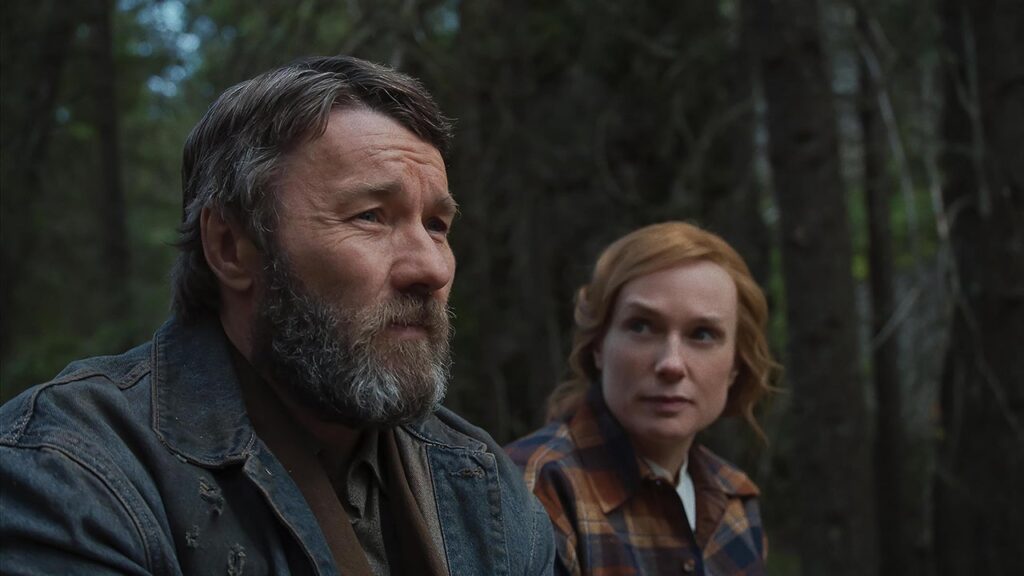
Train Dreams. Movies aren’t books. It is simply impossible to compress the detail and volume of hundreds of pages into two hours. But with Train Dreams, screenwriters Clint Bentley and Greg Kwedar have accomplished the improbable feat of mounting a motion picture that’s briskly paced, but which nonetheless unfolds with the scale and tone of a great American novel. (The pair previously wrote Sing Sing, which Kwedar directed; Bentley assumes filmmaking duties here.) The actor Will Patton provides somber narration (presumably lifted from Denis Johnson’s novella, which I haven’t read), yet the movie doesn’t feel like a filmed version of a manuscript. Instead it simply immerses us inside the life of one man, a logger named Robert Grainier (played with compassion and restraint by Joel Edgerton), as he shuffles along, allowing us to experience his pleasure and, more acutely, his pain.
Train Dreams doesn’t really have a plot, but it does feature an early catalyzing incident, when Grainier watches in stunned silence as his bosses grab his Chinese colleague and chuck him off a bridge—for no apparent reason beyond the man’s ethnicity. Bentley periodically brings the dead man back to life, showing him sitting watchfully at the fireside, the implication being that Grainier remains haunted by his own inaction in the face of murder. That might sound clumsy, but there is nothing didactic about Train Dreams; it merely observes, and any judgment comes from Grainier himself, not the movie. Nor does it descend into miserabilism; Grainier’s life is hard, but he also enjoys a happy marriage (Felicity Jones plays his wife), and though a mid-film tragedy sends him into despair, the picture surrounding him never spirals into blackness. How could it, when the invaluable Kerry Condon pops up to provide radiant warmth? The result is a modest portrait that’s also a fulsome chronicle of human existence—novelistic in scope, intimate in style. Grade: B+
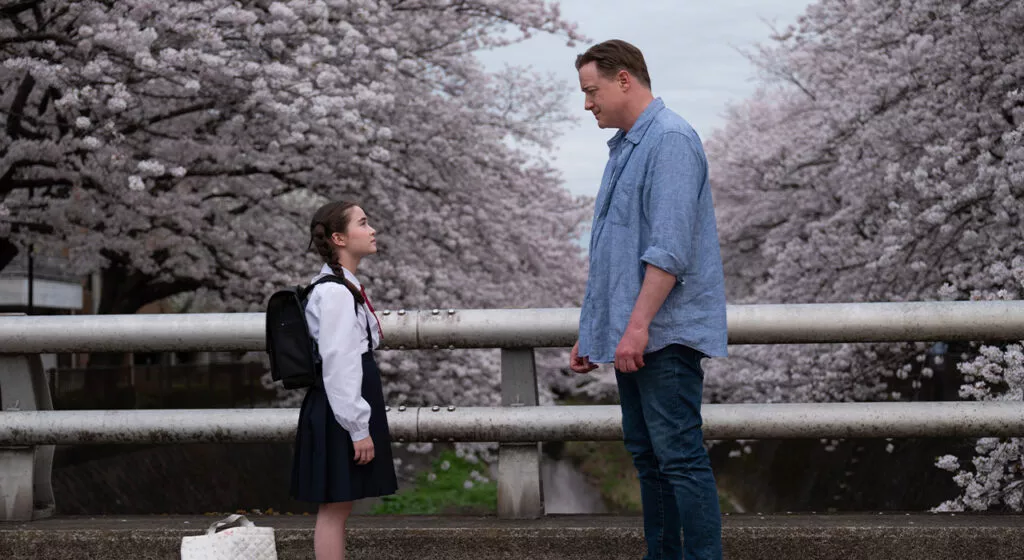
Rental Family. You can practically see the strings being pulled in Rental Family, a manipulative weepie that is, depending on your tolerance, either indecently contrived or touchingly heartfelt. Brendan Fraser stars as Phillip, a two-bit American actor living in Japan who stumbles into work with a boutique company whose employees briefly fulfill pretend roles. Their specialty is “apology services,” wherein a woman masquerades as a client’s mistress (so his wife has someone to slap, I guess?), but Phillip takes on two less inflammatory assignments. In one, he holds himself out as a journalist writing a profile of a has-been filmmaker in an effort to flatter the man’s ego in his dying days. In the other, he assumes the identity of a young girl’s long-absent father so that the school she’s applying to thinks she has a stable home life; naturally, the girl’s mother believes her daughter’s candidacy will go better if she believes Phillip is actually her dad, so he’s forced to deceive an adorable cherub as well as some snooty academics.
If you can imagine a convenient complication inherent in these scenarios, it probably emerges in Rental Family, which refuses to let logistical authenticity knock down its narrative house of cards. The sweaty lies, the inevitable bonding, the discoveries of duplicity, the sudden (and miraculous) job offer whose timing conflicts with a key event—it’s all here. But while the movie can feel fraudulent in how it continually stacks the deck, it’s also emotional in a way that feels sincere rather than artificial. There’s nothing especially plausible about its plot or its premise (which recalls Yorgos Lanthimos’ Alps), but it at least makes you feel something. At times, that something is exasperation; at others, it’s real affection. Grade: C+
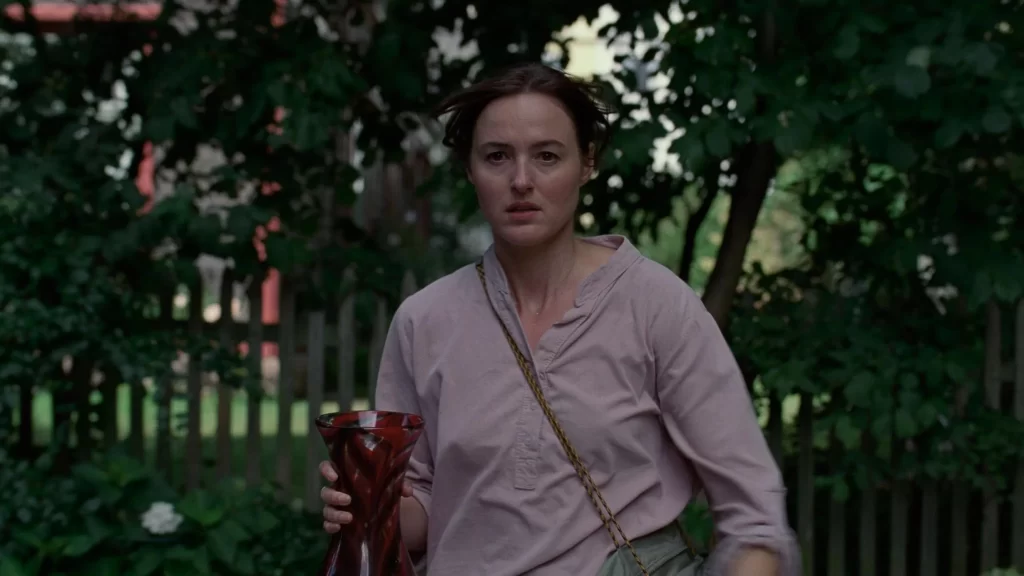
Sentimental Value. I am automatically entertained by movies about movies, but Joachim Trier’s exquisite drama is far more than another exploration of the creative process. It is also an interrogation of that act—the costs it imposes, the binds it inspires, the interplay between truth and fiction and history. It’s a smart, ruminative work that is also brimming with anguish, humor, and life.
Sentimental Value is such a rich text, so sweeping and provocative, that it’s almost a surprise how tightly focused it is, centering on a single, wounded family. When it opens, two Norwegian sisters—an actress, Nora (Renate Reinsve, star of Trier’s The Worst Person in the World), and a historian, Agnes (Inga Ibsdotter Lilleaas)—are holding a wake for their late mother in their childhood home, whose creaky pipes and fading wallpaper suggest one meaning for the film’s title. They are joined by their estranged father, Gustav (a terrific Stellan Skarsgård), an acclaimed director who returns less out of affection than opportunity; he’s written a script about his mother, who hanged herself when he was young, and he wants to shoot it in the family home with Nora in the lead role. When she refuses on account of their fraught past, he turns to Rachel (Elle Fanning, just right), an American movie star who was enraptured by a screening of one of his earlier films, and who leaps at the chance to round out her blockbuster filmography with a prestige picture.
What transpires from here is in some ways small; the screenplay, which Trier penned with his usual writing partner Eskil Vogt, chronicles the mundane problems that attend Gustav’s production (like Rachel’s shaky accent), and the fissures that reopen in his relationships with Nora and Agnes. Yet it also feels immense, touching on inherited trauma, marriage and motherhood, art and commerce, even European fascism. Trier’s magic act lies in how the movie’s thematic breadth never upstages its characters, which is why certain scenes—Nora falling out with a married lover, Gustav recruiting and then recoiling from his longtime (and now disabled) cinematographer—attain a heartbreaking intimacy. Reinsve and Skarsgård operate in perfect harmony; she’s cagey and brittle, while he’s blustery and pompous, the kind of vainglorious asshole whom you can’t help but enjoy being around. (When his great-nephew turns eight, he gives the kid the indelible birthday present of a DVD of The Piano Teacher.)
Nestled within Sentimental Value’s rolling tenderness and thoughtful insights are some sharp jabs at Netflix, which has provided financing for Gustav’s latest project. At a junket, a reporter asks Gustav if his new movie will be screening in theaters, and he finds the question baffling: “Where else would it play?” As someone who dolefully watched both Frankenstein and Train Dreams on his TV set (first-world problems, I know), I found Gustav’s irritation heartening. He may be a prick, but given the current state of cinema, he’s also the hero we need. Grade: A-

Jeremy Beck is the editor-in-chief of MovieManifesto. He watches more movies and television than he probably should.