Did you know that the Yellow Brick Road was paved with slave labor? That Munchkins were subjected to a despotic travel ban? That Michelle Yeoh and Jeff Goldblum can’t really sing? These revelations and more emerge in Wicked: For Good, the droopy, flabby conclusion to last year’s spirited introduction. Less a coherent second act than an endless culmination, this tepid musical makes sure to answer all of your burning questions about the lore of Oz, like how the Tin Man lost his heart or whether Dorothy was in fact a total brat.
The executives at Universal are surely not regretting their decision to split Wicked, the Broadway hit from Stephen Schwartz and Winnie Holzman (adapting Gregory Maguire’s novel), into two parts—not when the first raked in over $750M worldwide and the second is already smashing bespoke box-office records. But the motivation behind this maneuver was always commercial rather than artistic, and even as For Good profits financially, it suffers a painful storytelling cost.
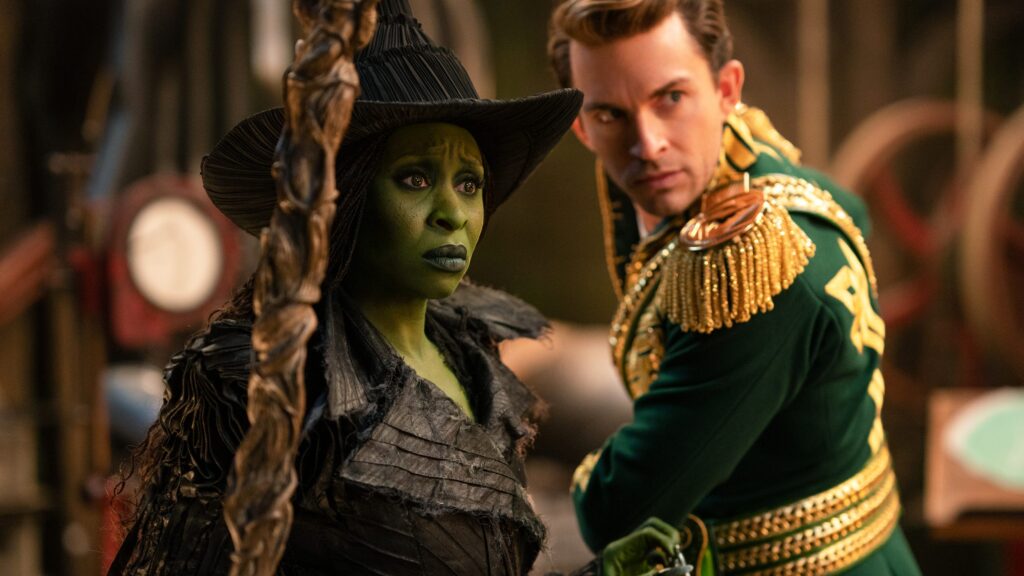
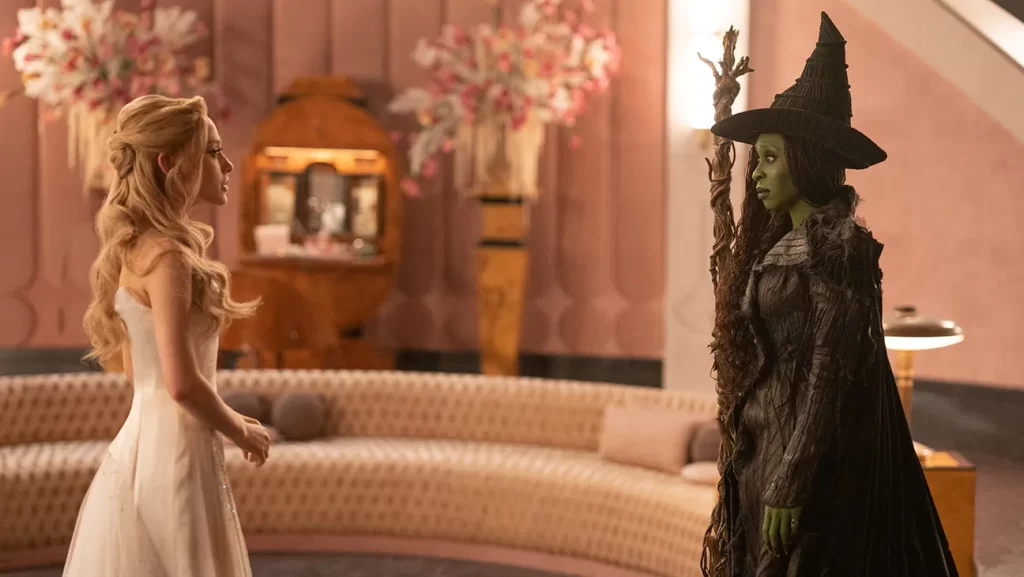
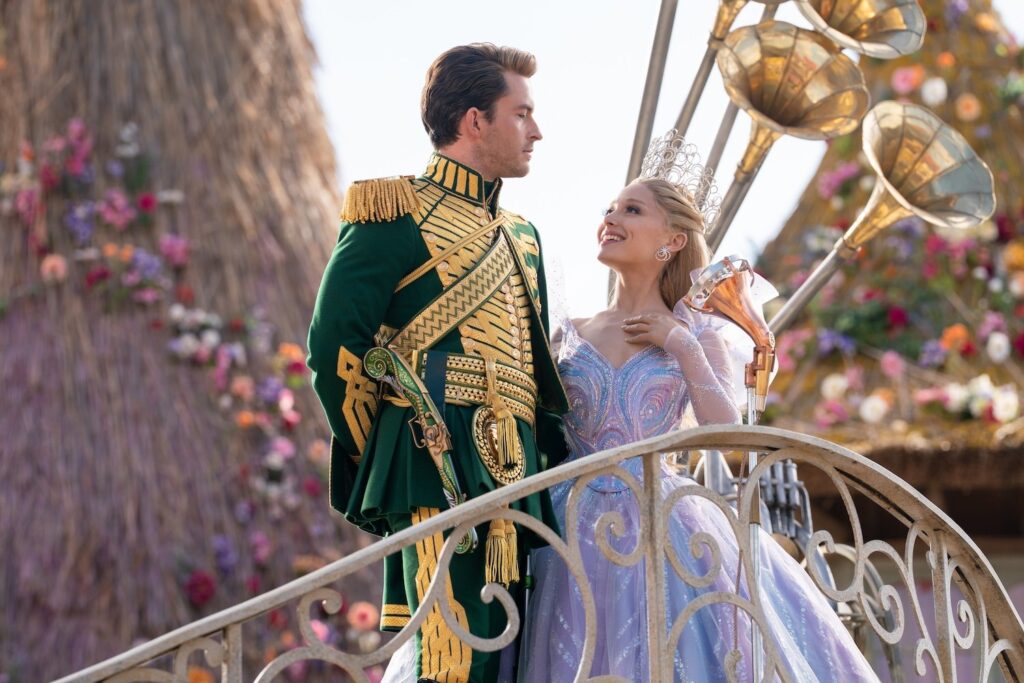
The weird part is that, viewed abstractly, For Good could have capitalized on its half-a-movie stature. The first Wicked was broadly enjoyable, but it was also overstuffed, operating all at once as an extended origin story, a political parable, and a young-adult romantic comedy. Much like the final Harry Potter films, For Good is unshackled from the tedium of scholastic hijinks, affording it the freedom to progress as a propulsive war picture. Elphaba (Cynthia Erivo), our green-skinned heroine whom we last saw defying both gravity and Oz’s great wizard (Goldblum), is now conducting guerrilla operations to expose his tyrannical duplicity. Her exploits place her in tension with her erstwhile best friend, Glinda (Ariana Grande-Butera), who hesitates to resist the status quo even though she shares Elphaba’s sympathy for the talking animals whom the wizard ruthlessly persecutes. Further straining the two witches’ relationship is their mutual longing for Fiyero (Jonathan Bailey), the handsome prince whose affections drifted from Glinda toward Elphaba during the course of the first film.
At least, I think they did; I don’t really remember. My encroaching dementia aside, the great structural flaw of For Good is how little weight it supports on its own, instead latching itself to its predecessor like a barnacle. For example, the romance between Elphaba and Fiyero carries no real heat, operating as a pantomime of emotion based on their prior flirtations. Similarly, the animal allegory is thin and awkward, vaguely referring to past events; when the Cowardly Lion (voiced by Colman Domingo) pops up to lament Elphaba’s meddling, you wonder what the hell he’s talking about. (The talking goat professor of Elphaba and Glinda’s youth returns but this time remains silent, presumably because Universal didn’t want to cut Peter Dinklage a second check.)
It’s perfectly fair for sequels to build on their precursors, and to presume a certain level of audience familiarity. Yet For Good never develops its own momentum, instead just lurching from one flat callback to the next while failing to replicate the original’s frequent joyousness. Certain sequences, like a flashback to the childhood of Elphaba’s sister (Marissa Bode) or the confirmation of a character’s parentage, feel shoehorned in, as though the filmmakers were scrambling to lengthen the narrative just to prevent accusations of insubstantiality. It’s a paradox of sweaty self-justification, one whose consequences are severe; For Good runs 23 minutes shorter than Wicked but feels twice as long.
Of course, the dull, padded quality of For Good’s plotting would matter less if its music and its set pieces were more invigorating. Sadly, the story’s abiding glumness also pervades the movie’s songs. They aren’t awful; director Jon M. Chu remains a capable craftsman, and several of the duets have a pleasing rhythm. But they all exhibit a deflating sameness, trafficking in brooding regret and resolve, without jaunty numbers like “Loathing” or “Popular” to serve as counterweights. Chu’s choreography is competent—“No Good Deed” crests with a nice shot of Elphaba floating in midair, flanked by her troop of flying monkeys—but it’s also oddly wan, lacking the imaginative flair he brought to Wicked or In the Heights.
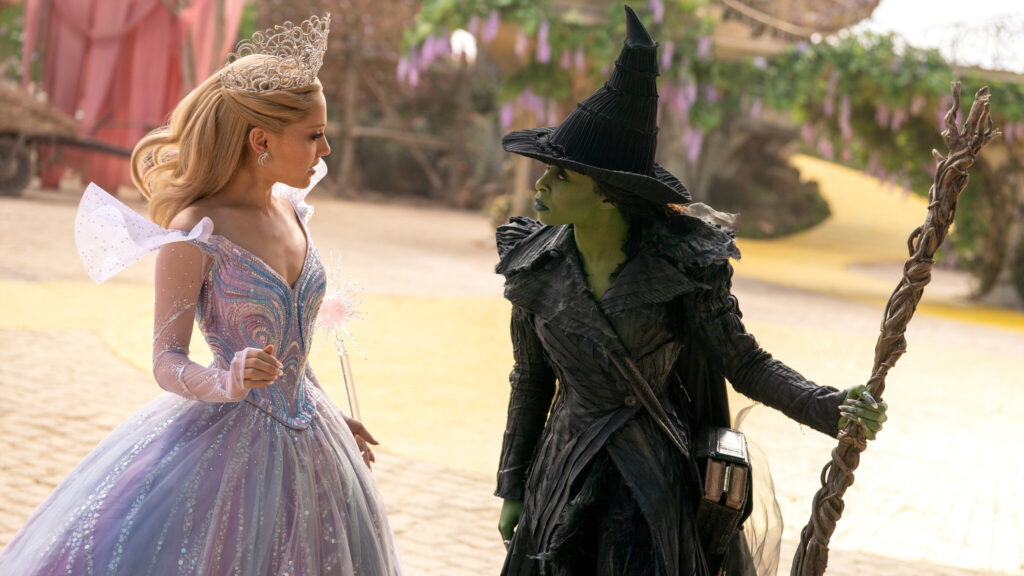
This isn’t to say that For Good is badly made. Technically, it’s accomplished: Paul Tazewell’s costumes remain eye-catching, Nathan Crowley’s production design is inventive despite some obvious green-screening, and Alice Brooks’ cinematography deploys some nifty mirror shots. But the artistry on display feels more serviceable than inspired. The lone exception is a fight scene between Elphaba and Glinda, when the latter gets to let her hair down and whip it around; it’s the one sequence that flashes its own independent spark, and the only time when Grande-Butera—whose vivacious performance was the best thing about Wicked—gets to showcase her comic talents.
Late in Wicked: For Good, we catch a glimpse of Dorothy and her famous slippers, depicted only as a shadow on a wall. It’s a clever shot, but it also exposes the film as a work of creative bankruptcy. The premise of this enterprise is to provide novel context and shading to a famous villain, but despite Erivo’s booming voice and Grande-Butera’s sad smiles, there is nothing truly new on screen—just a careful rendering of a beloved piece of intellectual property. The movie never finds its courage, instead dutifully following a Yellow Brick Road that winds up being a dead end.
Grade: C

Jeremy Beck is the editor-in-chief of MovieManifesto. He watches more movies and television than he probably should.