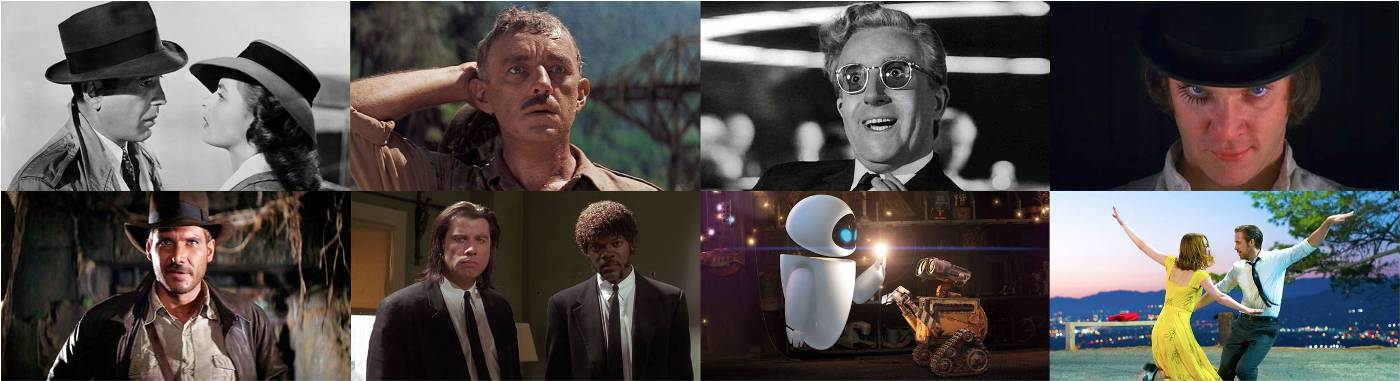
Benoit Blanc is a showman. Sure he’s a brilliant detective, but he doesn’t solve mysteries out of societal obligation or some pathological need to do justice. What animates him is the unveiling—the moment when he synthesizes all of the scattered clues and dangling threads into a cogent and satisfying portrait before a cluster of rapt onlookers. For him, the most important element of any crime isn’t the motive or the method. It’s the audience.
That Rian Johnson, the writer-director of three Blanc-centered pictures, shares his hero’s canny crowd-pleasing instincts has long been obvious. Whether making movies about high-school Bogarts or time-traveling assassins or intergalactic rebels, Johnson is a born entertainer, using his craft and his smarts to tell elegant, engaging stories whose crisp resolutions invariably inspire admiration and applause. Wake Up Dead Man is his third Blanc film, following Knives Out and Glass Onion, and it thus carries the inherent risk of diminishing returns—the danger that this now-franchise’s vibrant charms might calcify into shtick.
Yet while Johnson may be revisiting standard tropes, he is by no means repeating himself. Wake Up Dead Man delivers the expected pleasures; a gifted cast, lively dialogue, vivid images, an intricately tangled plot that practically demands a second viewing to properly unravel. Without diluting the zest of these ingredients, Johnson blends them into a newly concocted stew, embedding them within a different structure and—more importantly—imbuing them with a distinctive tone.
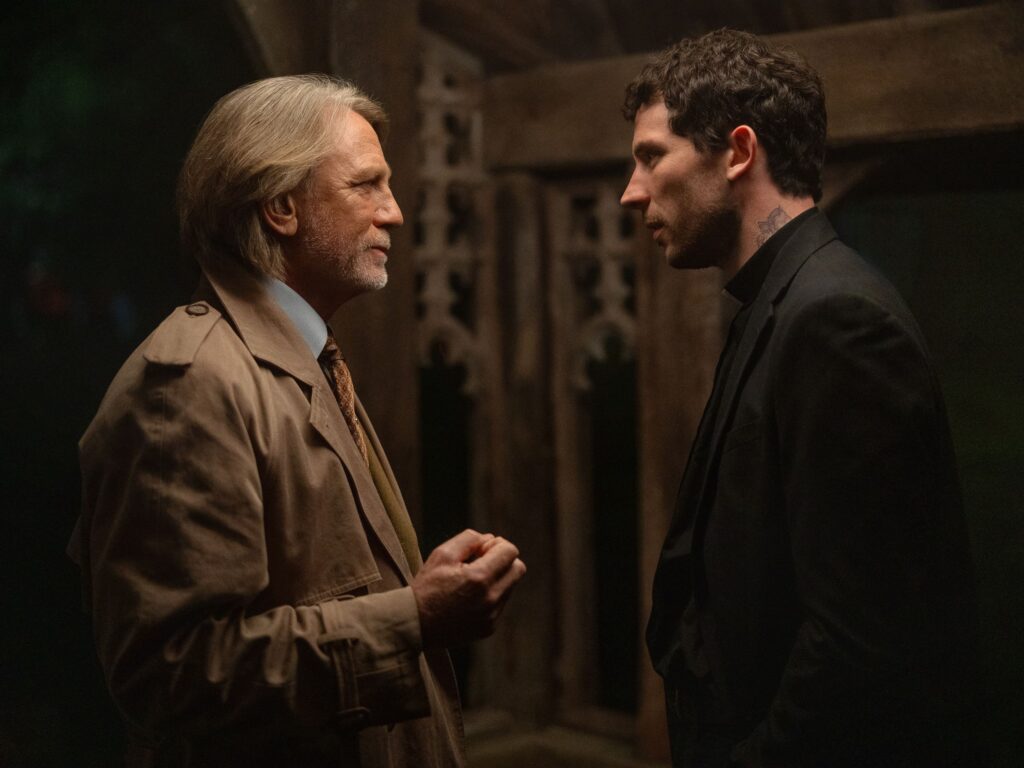
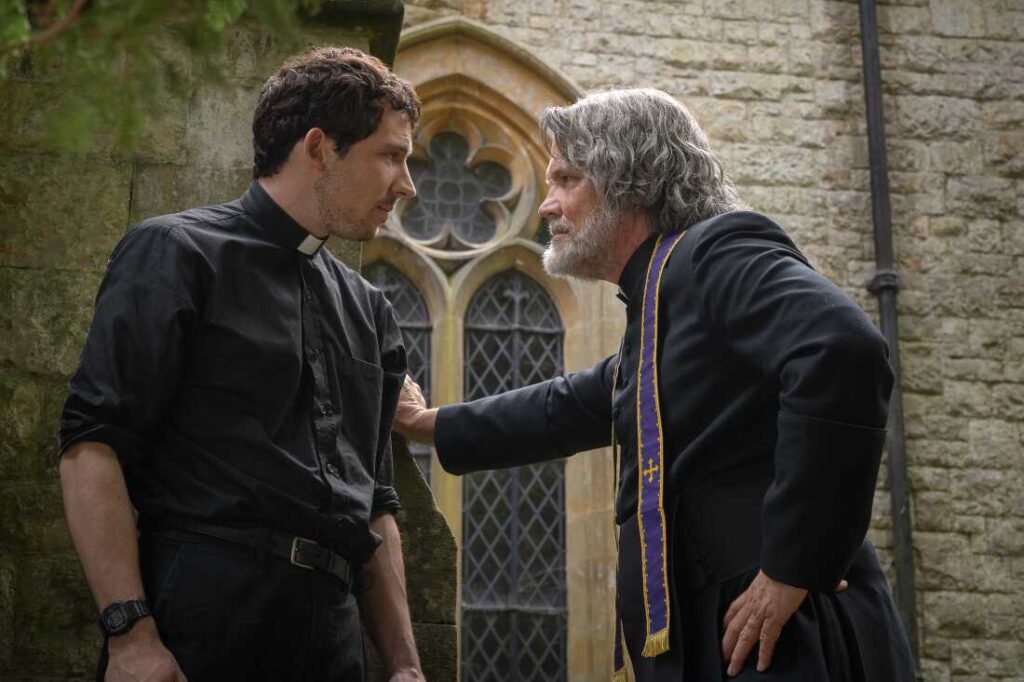
To begin with, although Wake Up Dead Man opens with a shot of its famous sleuth reading a manuscript by firelight, Blanc (Daniel Craig) otherwise sits this one out for the better part of an hour. The first act instead focuses on Father Jud (Josh O’Connor), a former boxer who has (more or less) tamped down his violent compulsions and has channeled his volatile temperament into the rituals and reformations of the priesthood. After briefly succumbing to his youthful fury and punching a fellow man of the cloth, Jud gets reassigned to a small parish in upstate New York that’s ruled by Monsignor Wicks (Josh Brolin), a fire-and-brimstone type who longs to restore America to its patriarchal, puritanical foundations. Wicks is a real piece of work—beyond his snarling sermons, he enjoys taunting Jud during confession by recounting his episodes of masturbation in agonizing detail—and his mouth-foaming demeanor tends to drive those around him to rage. It’s surprising somebody hasn’t killed him by now.
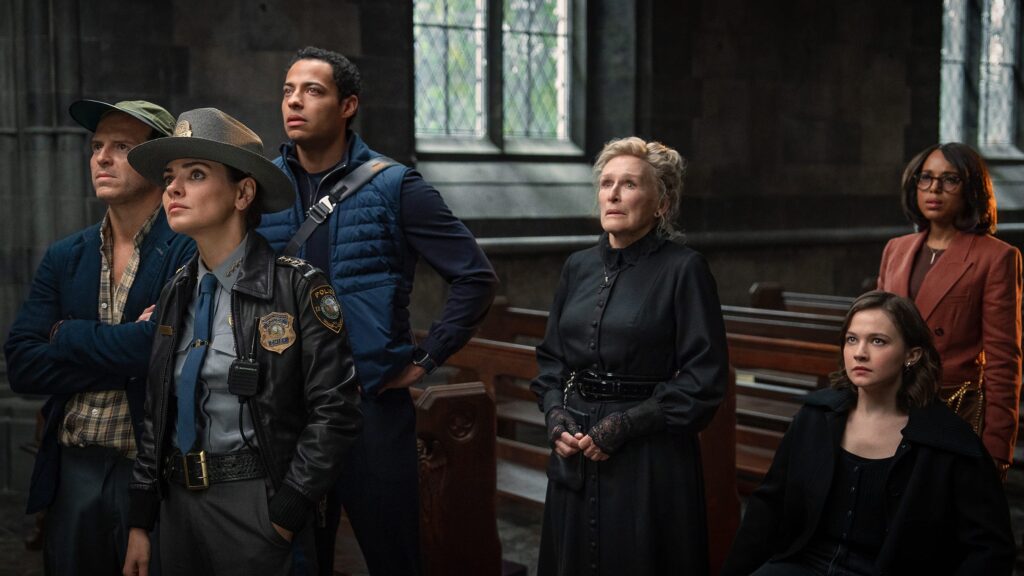
In most tales of murder, the identity of the perpetrator is both the most nominally suspenseful and the least interesting part; the greater intrigue lies in the suspects’ rangy attitudes and clashing personas. Thanks to his vast resources, Johnson has once again compiled an ensemble of capable actors whose recognizable faces allow him to quickly distinguish characters who otherwise aren’t all that dimensional. The usual types are here: the smarmy doctor (Jeremy Renner), the weary lawyer (Kerry Washington), the snobbish author (Andrew Scott), the rugged groundskeeper (Thomas Haden Church). Cailee Spaeny plays a disabled athlete who hopes her extensive donations will yield the blessings of a recovery, Daryl McCormack scores some laughs as a caricature of a right-wing influencer/failson, and Glenn Close provides a patina of gravitas as Wicks’ trusted confidant who is surely harboring her own secrets. (Mila Kunis is also on hand as a local cop whose primary function is to ask Blanc questions and express skepticism in the face of his perplexing answers.)
Jud describes all of these people (to say nothing of himself) as suspects, and in fact many of the people in Wake Up Dead Man seem to realize that they’re characters in a whodunit. The church book club’s reading list includes titles by Agatha Christie and John Dickson Carr, and once Blanc arrives, he explains that the crime scene—a body is found in a location that nobody could have feasibly accessed, an ornamented blade sticking out of its back—resembles a classic locked-room mystery. Such flourishes might have read as meta or glib, but Johnson is too punchy a writer to resort to stale allusions, and while he largely follows the contours of the genre’s conventions, he ends up slyly, powerfully subverting them.
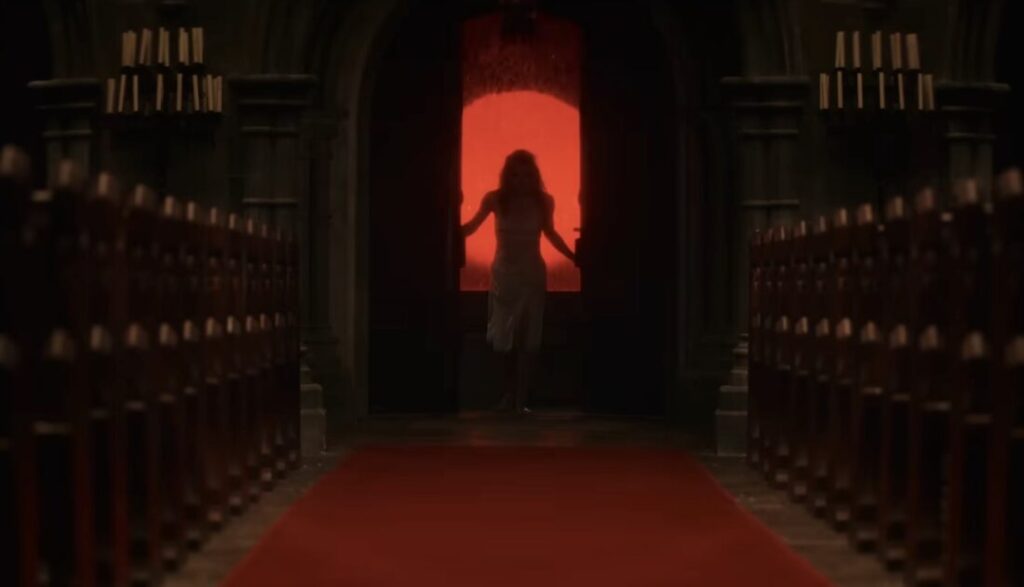
For much of its 144-minute runtime, Wake Up Dead Man coasts amiably, basking in the rhythms of its wordplay and the vivacity of its setting. There are some very funny moments: a hilarious Star Wars reference, a laundry-listing of the GOP’s hateful policies, a sudden burst of organ music from a Broadway smash. (There is also a pointed jab at Netflix, though it plainly wasn’t sharp enough to prevent the streaming giant from throttling the film’s theatrical release and forcing most viewers to watch it on the small screen.) Johnson also eagerly exploits Catholic architecture, supplying a number of gorgeous shots of sunlight piercing stained-glass windows (the cinematographer is Steve Yedlin), even as specific pieces of iconography—a crucifix, a mausoleum—factor in to the complex plot.
About which: As Wake Up Dead Man revs into its final act, the breathless anticipation that Johnson conjures is initially accompanied by a sense of deflating familiarity. As usual, Blanc begins piecing everything together, and the ensuing blizzard of revelations (a secret knife! a coffee-cup switcheroo!) is both exciting and somewhat dispiriting. Oh cool, Benoit Blanc solved another confounding murder. Is there anything else?
As it happens, there is. The revelations that constitute Wake Up Dead Man’s climax are tinged not with showstopping bravado but with curious, nigh-profound humanity. Resisting his impulse to act as a flamboyant magician, Blanc (i.e., Johnson) instead behaves with grace and empathy, and his restraint lends the movie a surprising tenderness. If Knives Out was playful and Glass Onion was scornful, Wake Up Dead Man is strangely hopeful, positing that anger and greed can be combated with reflection and compassion.
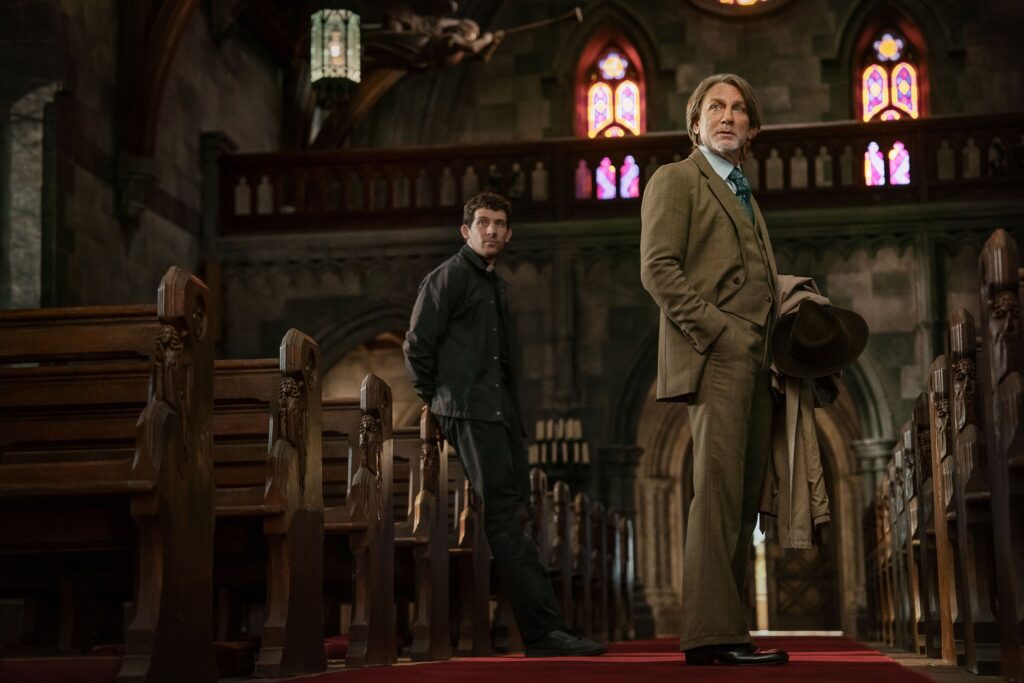
Those qualities extend to Craig’s performance, which adds glimmers of texture to a protagonist who otherwise remains obscenely enjoyable company. Now sporting wavy hair and a greying beard, Craig is now effortless in embodying Blanc with such perceptive wit, yet here he exhibits a certain humility, ceding the heavy emotional and thematic lifting to O’Connor. That actor, capping a very fine year that also included The History of Sound and The Mastermind, is a maestro of inner tumult and clenched purpose, but here he splices those with bedrock decency—never more so than during a striking phone call scene that begins as an anxious hunt for information before abruptly morphing into an earnest display of communion.
Johnson’s real achievement is how such warmth and gentleness in no way mitigates Wake Up Dead Man’s stature as a work of robust and agile entertainment. Instead, these seemingly disparate notes harmonize beautifully. Benoit Blanc is here to catch another killer. If he can make us better people in the process, that’s hardly a sin.
Grade: A-

Jeremy Beck is the editor-in-chief of MovieManifesto. He watches more movies and television than he probably should.