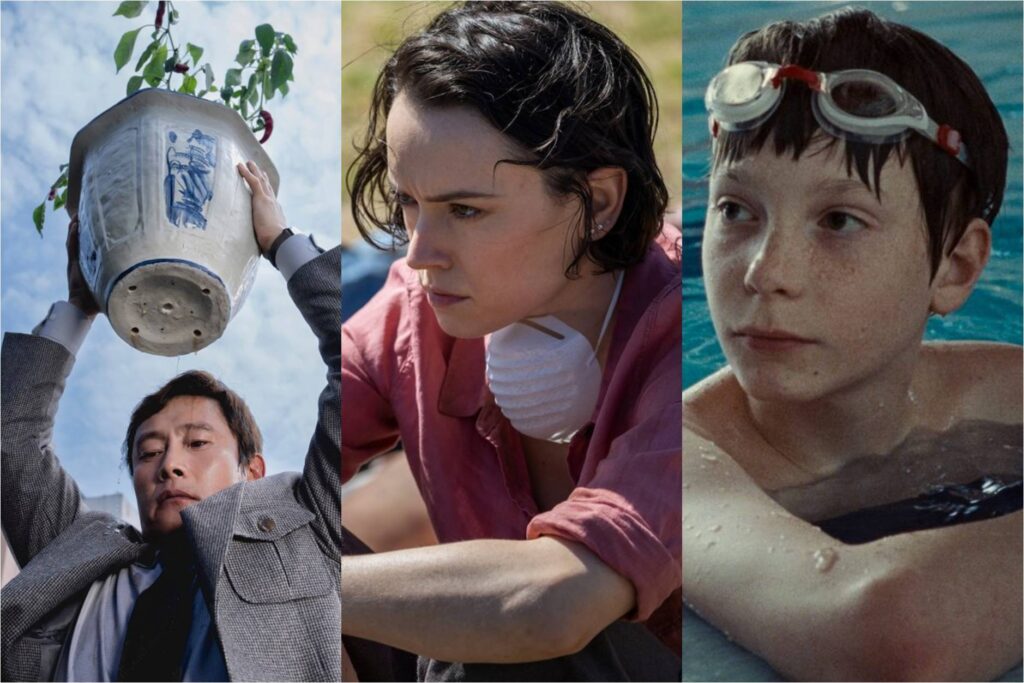
Christmas tends to be a big holiday for new movies, but New Year’s Day, not so much. Major studios rarely drop new films in the chill of early January, so the flip of the calendar instead becomes an opportunity for limited releases to expand slowly (sometimes glacially—looking at you, The Testament of Ann Lee). Today, we’re catching up with three independent pictures gradually making their way around the country, though viewers in some markets may be forced to wait until they hit streaming. This is why I support a national law requiring all movies to play in all theaters at all times.
No Other Choice. Capitalism is murder. You work and you work, pouring your blood and sweat into a numbing career that drains the life from you, in service of unfeeling bosses who can sack you whenever they want. (Note to any of my superiors who happen to be reading this piece: I love you and I love my job, please don’t fire me.) If you’re a CEO, they send you packing with a golden parachute. If you’re a line worker, they give you an eel.
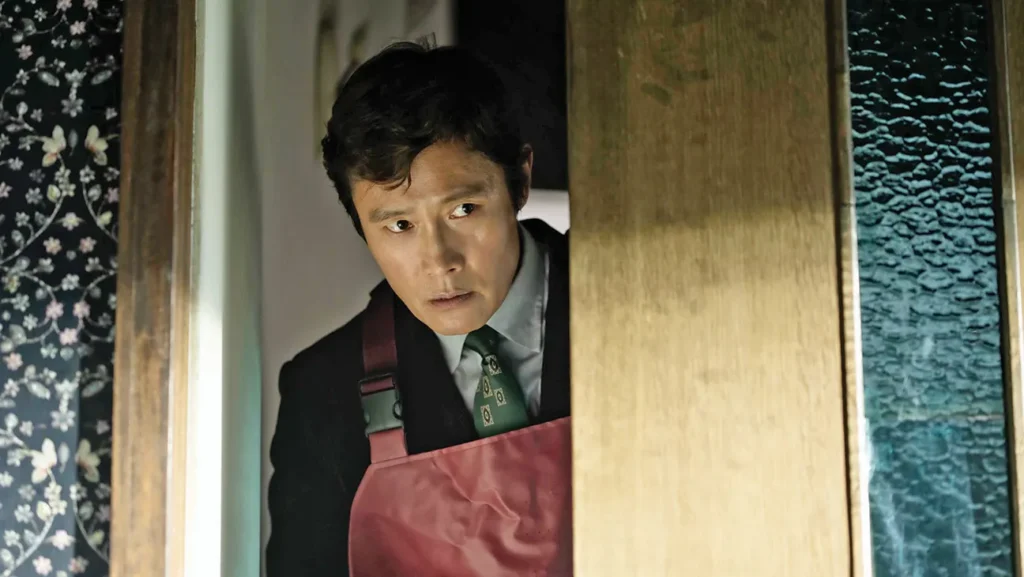
That ominous piece of slimy seafood arrives at the spacious home of Man-su (Lee Byung-hun, from I Saw the Devil and Squid Game), a middle manager at a paper company whose executives are choosing to downsize because, well, see the title. Desperate to regain employment, he initially resolves to kill his counterpart at a rival firm, only to realize—in a brilliantly orchestrated sequence involving clandestine surveillance, makeshift laundry, and potted plants—that he’d still face considerable competition. He thus modifies his plan into a more elaborate strategy that is both devilish and insane.
Based on a novel by Donald Westlake, No Other Choice represents a curious tonal pivot for Park Chan-wook, the gifted Korean auteur whose prior two features were The Handmaiden and Decision to Leave, two exhilarating noirs whose dazzling craftsmanship was matched by their giddy romanticism. (In between he made two TV series, the fantastic Little Drummer Girl, starring Florence Pugh, and the flawed but engaging Sympathizer, with Robert Downey Jr.) His new effort is a work of confidence and precision, but it’s less rapturously beautiful than those movies, instead trafficking in grime, gloom, and sleaze. Park still supplies some vivid flourishes, most notably in the form of superimposed images where one face is layered atop another, but the prevailing atmosphere here is one of mania and despair.
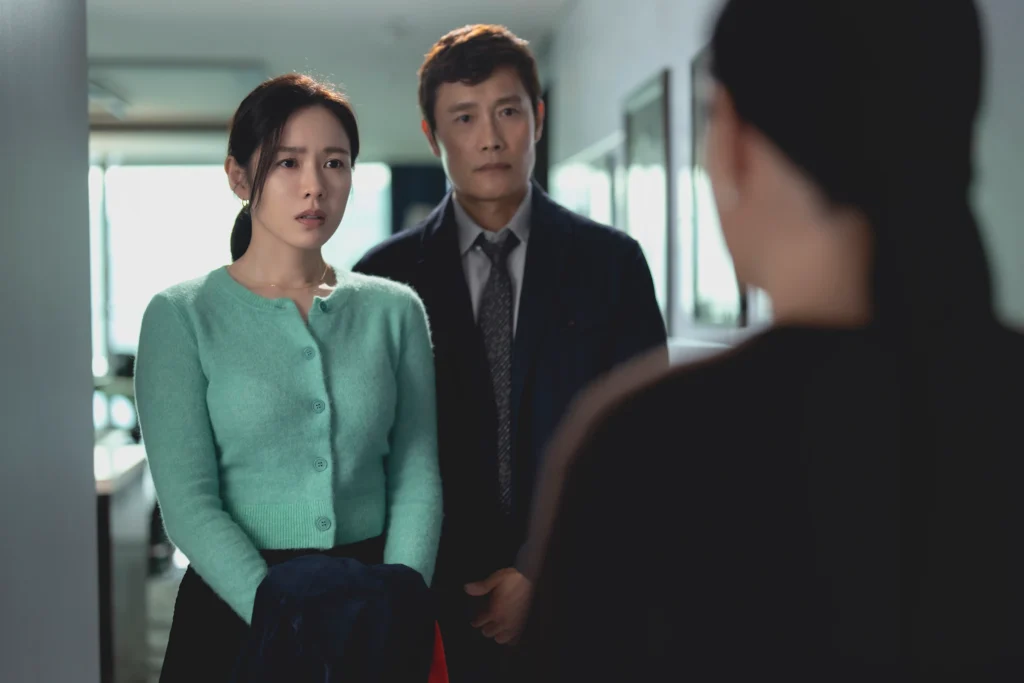
This isn’t always pleasant, and at times—as during an extended sequence involving a hapless shoe salesman (who’s considerably less skilled at his job than the dude in Marty Supreme)—No Other Choice can suffer from a surfeit of bad vibes. Yet in addition to being a bravura visual stylist, Park is also a master of timing and mayhem. The movie is ingeniously edited, indulging in apparent digressions only to crisply weave them into the main (and intricate) plot, and Park arranges seemingly disparate elements—a gnawing tooth, an ordering of résumés, a calculatedly removed bra—with rhythmic flair. The apex, a three-way fight sequence in which desperation collides with delusion, achieves a level of farce worthy of peak Coen Brothers.
Not everything operates on that level, and if you’re searching for a Park picture that mixes hot-blooded passion with superior elegance, you have, let’s say, alternative options. But No Other Choice remains superbly entertaining while also functioning as an angry pro-labor text in the age of AI-inspired layoffs. The robots may be coming for our jobs, but only humans can make a movie as deliciously inhumane as this. Grade: B+
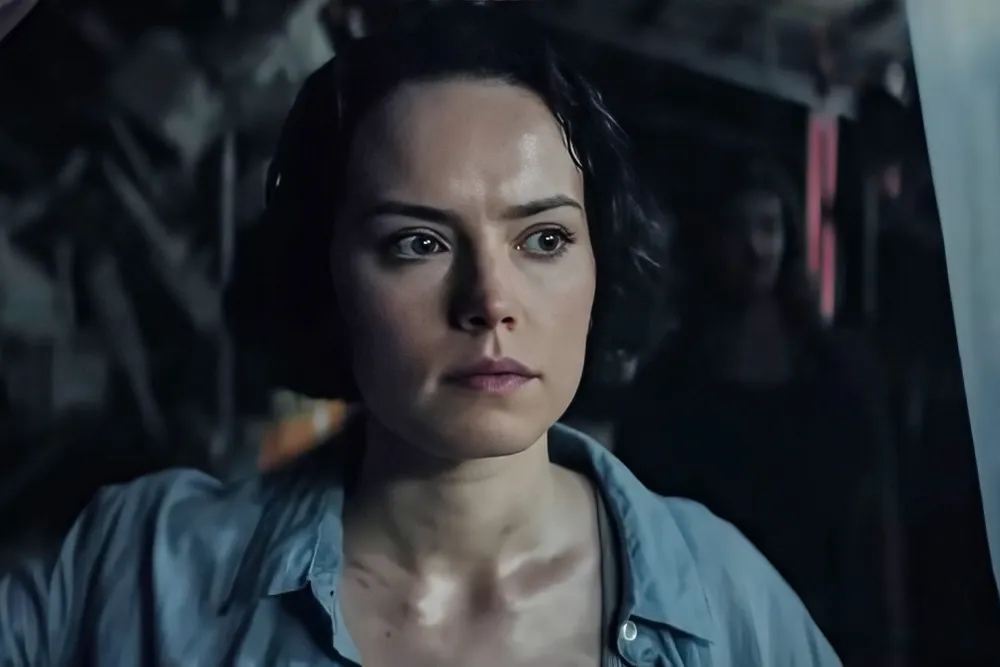
We Bury the Dead. Several strains of allegory run through We Bury the Dead—some intentional, others coincidental. Written and directed by Zak Hilditch, it opens with an efficient expository newscast informing us that the American military has inadvertently detonated an electromagnetic pulse off the coast of Tasmania, resulting in the immediate brain death of roughly half a million people. Taxonomically speaking, it’s fair to classify Hilditch’s film as a horror movie, but it also plays as a kind of contemporary fantasy, imagining a world where the U.S. government only attacks foreign nations by accident.
The more obvious metaphor at work here involves societal response in the wake of mass catastrophe. After reports surface that some of the island’s inhabitants have reawakened and begun shuffling across the apocalyptic landscape—don’t worry, they’re slow and docile, they totally won’t try to kill you—the Australian government recruits volunteers to scavenge the countryside and locate these half-dead beings, so that they might be dumped into mass graves with a measure of dignity. Our heroine, Ava (Daisy Ridley, playing an American), signs up in the hope of reuniting with her husband (Matt Whelan), whom she prays has somehow survived the blast and might be restored to his true self.
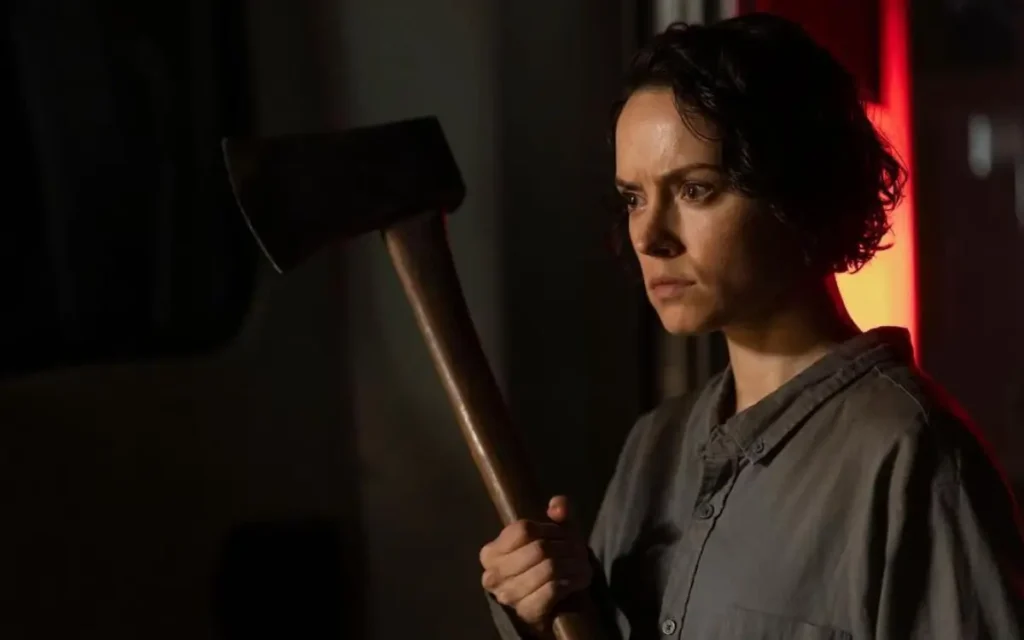
We Bury the Dead, then, is a zombie picture. (It is also the rare January 1 release, meaning it technically doesn’t fall under this piece’s “expanding indies” umbrella, but whatever, it’s not like Vertical expected it to make money.) It tracks Ava and a brash, good-looking compatriot (Brenton Thwaites) as they venture into the wilderness, inevitably besieged by threats both undead and living. In this regard, the movie is satisfactory but not explosive. Hilditch stages his set pieces well enough, using patience and depth of field rather than relying on cheap shocks. But aside from one haunting sequence involving a creature that’s both ghoulish and ghostly, it supplies little new carrion to an increasingly fatty subgenre.
And yet, We Bury the Dead conjures an atmosphere of rattling unease that’s tough to shake. Similar to 28 Years Later, it tends to be most unnerving when it’s most quiet, particularly when it rounds out Ava’s marriage through flashbacks that initially seem pointless but ultimately prove thoughtful and powerful. And while it’s become fashionable for critics to scoff at movies that use horror as a mechanism for tackling grief or trauma, We Bury the Dead tethers its themes to its protagonist, thanks to Ridley’s sturdy, fiercely controlled performance. Men will literally turn into zombies rather than go to therapy, but Ava will brave a hellscape in the pursuit of closure. Grade: B
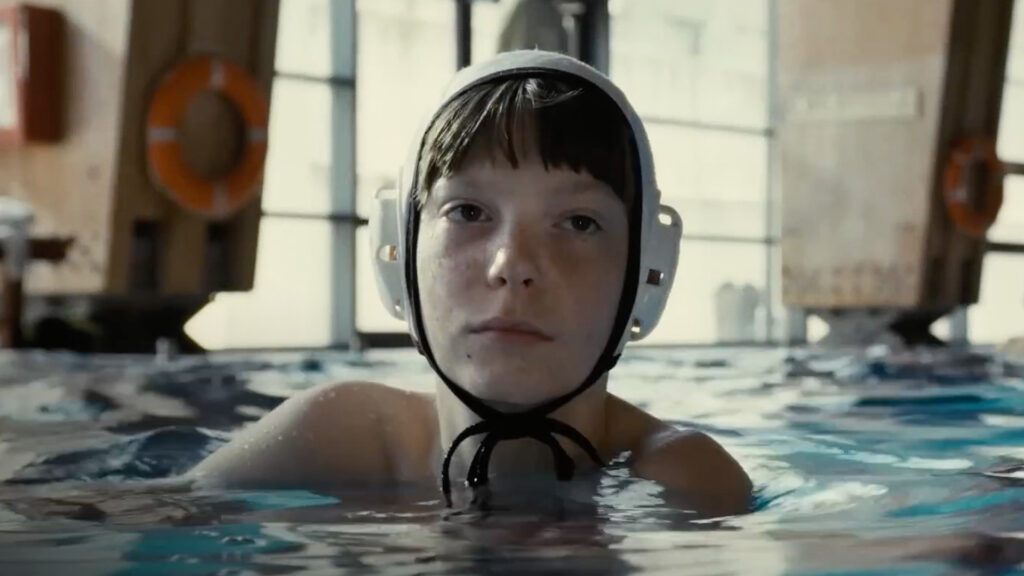
The Plague. Do you ever wish you could be transported to the halcyon days of your youth? If you’re in search of a cure for such nostalgia, just watch The Plague. It may not technically be a horror movie, but its blend of intimate realism and psychological anguish makes We Bury the Dead look like a comedy.
Not that it features a whole lot of action, empirically speaking. The feature debut of writer-director Charlie Polinger, The Plague unfolds over a few seemingly unremarkable weeks at a boys’ water polo camp in the summer of 2003. With minimal fuss, it tracks the lads as they bicker and bond, tell jokes and play pranks. Its unassuming style feels true to life, which is part of why it’s so scary.
Our surrogate is Ben (Everett Blunck), a diffident but relatively typical preteen who arrives for the camp’s “second session,” meaning he faces the perilous journey of assimilating into a faction whose boundaries and battle lines have already been drawn. There are quite a few other kids on screen, but only two really matter. One is Jake (Kayo Martin, calmly terrifying), a smallish boy with red curls who isn’t physically imposing but who nonetheless carries himself with enviable, unshakable confidence. The other is Eli (Kenny Rasmussen), a slightly pudgy kid with a nasty rash that’s turned him into a pariah.
The defining scene in The Plague arrives early, when Ben is eating lunch with the other boys in the cafeteria. The conversation is ordinary—they make fun of his slight speech impediment but otherwise seem reasonably friendly—but then Eli shows up and plops himself onto a bench, at which point everyone else scrambles away as though they’re fleeing from a live grenade. Momentarily confused, Ben soon follows the others, leaving Eli alone with his food and his thoughts. They aren’t happy thoughts.
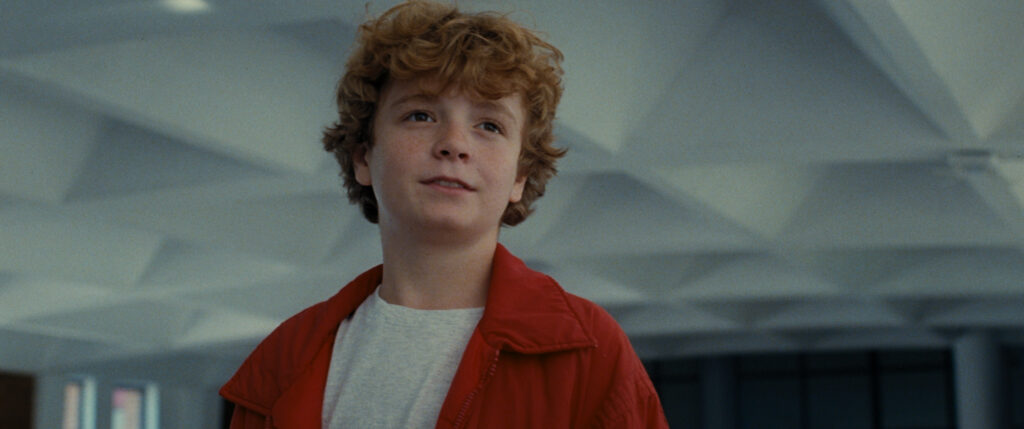
The movie’s chief insight is that in this moment, Ben has no choice but to go with the flock, and in the process to contribute to Eli’s ostracism. What’s he supposed to do, stay seated and commit social suicide? The film’s title nominally refers to Eli’s blotchy skin, but it really speaks to the infectious nature of adolescent cruelty—how it spreads through the social imperative to fit in, and how the easiest way to build yourself up is to put someone else down.
In terms of craft, The Plague is an impressive piece of rigor and vérité. Polinger throws in a few splashy underwater shots, but he mostly just observes as his young cast cultivates an atmosphere of incipient anxiety. (There is only one adult on hand, a bearded coach played by Joel Edgerton, and his dramatic function is to be useless.) Certain individual sequences are chilling— one display of collective violence unmistakably evokes Full Metal Jacket—and in combination they will have you shuddering in fear.
And yet, while I find The Plague entirely persuasive, I struggle to regard it with real enthusiasm. Its primary purpose isn’t to tell a story but to reinforce social truths that are as obvious as they are perpetual. Boys can be mean. Bullying is bad. Parents are clueless. The seeds of toxic masculinity are planted at an early age. Whoever said you should dance like nobody’s watching never had anyone watch them dance.
Or maybe I am just resentful that this movie forcibly resurfaces youthful memories better left submerged. The Plague is a resolute downer, but in one sense it’s strangely affirming: No matter what happens, I’ll never be a teenage boy again. Grade: B

Jeremy Beck is the editor-in-chief of MovieManifesto. He watches more movies and television than he probably should.