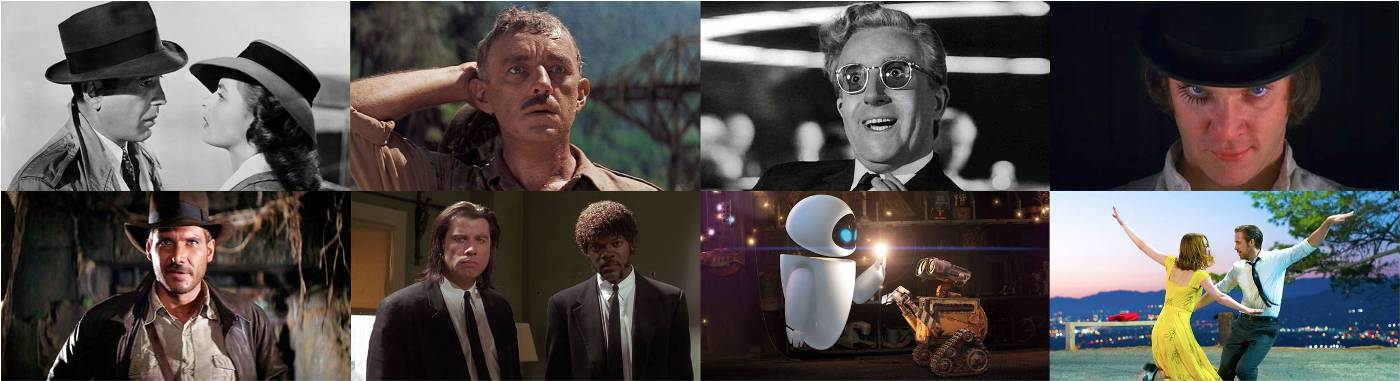
The plot of The Uprising, Paul Greengrass’ intermittently absorbing, broadly turgid new epic, revolves around death and taxes. This is only fitting, given that the movie substantiates another of life’s inalienable certainties: Greengrass’ inability to craft a coherent action sequence. It’s been a decade since the English filmmaker’s work was widely viewable in American theaters—News of the World was a COVID-19 casualty, while 22 July and The Lost Bus have long since vanished into the streaming abyss—but that hasn’t sapped him of his, er, restless energy. The Uprising is his most quintessentially Greengrassian film since his catastrophic Jason Bourne: hectic, dour, unapologetically bludgeoning. There’s a late fight scene where two muscle-bound men attempt to drown each other in foul-smelling mud—a visual that often approximates the act of watching Greengrass’ movies.
Actually, that’s unfair. Greengrass’ agitated style isn’t to my taste, but it hasn’t stopped him from making some pretty good motion pictures (emphasis on “motion”). His first two Bourne sequels were admirably punchy actioners that balanced their propulsive momentum with streamlined storytelling, while his best film, Captain Phillips, benefitted from its contained setting, forcing him to channel his jittery instincts into dramatic tension. The Uprising, set in England in 1381, is a more sprawling piece of historical fiction—it purports to chronicle the Peasants’ Revolt in the wake of the plague—but there are times when it manages, however briefly, to sit still.
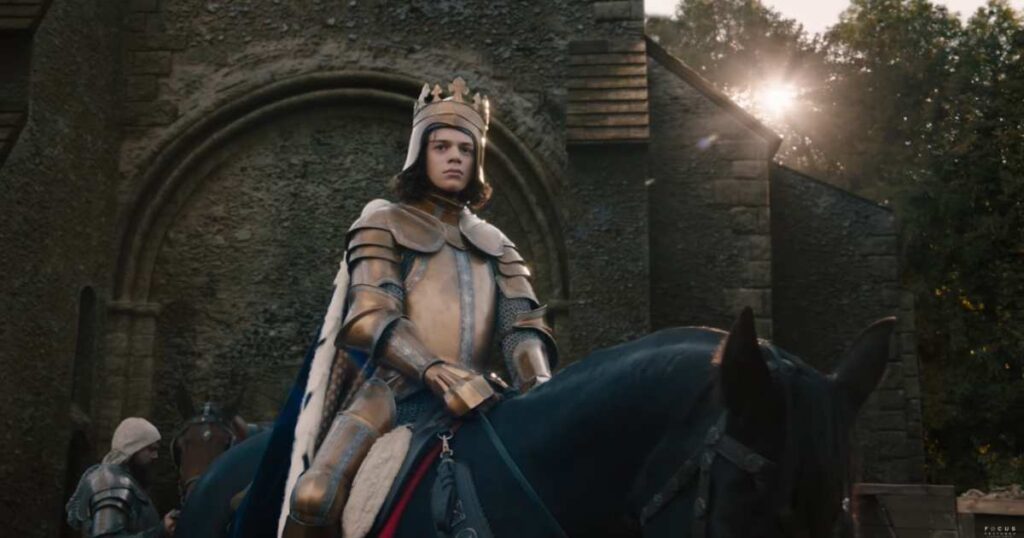
If Jason Bourne was primarily defined by his lack of memory, the hero of The Uprising—a bereaved farmer known only as Ploughman, played with stoic intensity by Andrew Garfield—is characterized by his grim solitude. He lost his wife and children to the epidemic (a few shabby crosses mark their resting place), and he now numbly works his land, without any visible source of joy or companionship. So he already isn’t in the best of moods when a pencil pusher arrives in his village and demands that he either pay a death tax or produce documentation of his prior compliance. Ploughman’s howl of anguish at this bureaucratic pedantry will surely resonate with anyone who’s cursed at their computer while using TurboTax, though most of us are unlikely to slit the throats of the collector’s brutish enforcers.
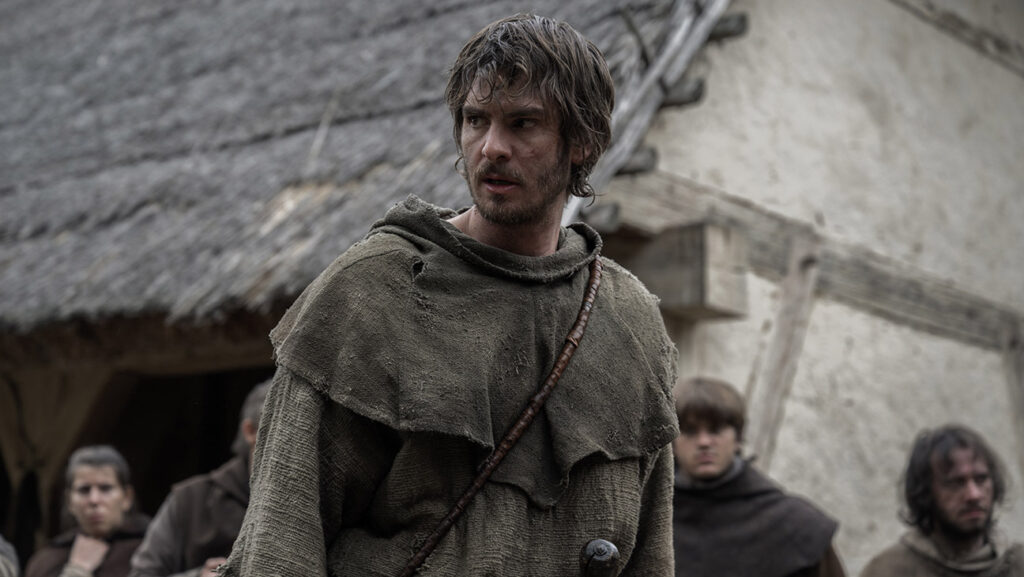
As with William Wallace (the parallels to Braveheart are not subtle, and not flattering), Ploughman’s public display of violent defiance ignites a greater rebellion among the common folk. Almost against his will, he becomes one-third of a triumvirate, joining the solider Wat Tyler (Cosmo Jarvis) and the priest John Ball (Jamie Bell). Curiously, their quarrel isn’t with King Richard II (Woody Norman), a 14-year-old invalid tormented by nightmares, but with his council, whom they accuse of manipulating the boy monarch. Given that these advisors are played by inherently untrustworthy character actors like Tom Hollander and Stephen Dillane, the insurgents might be onto something.
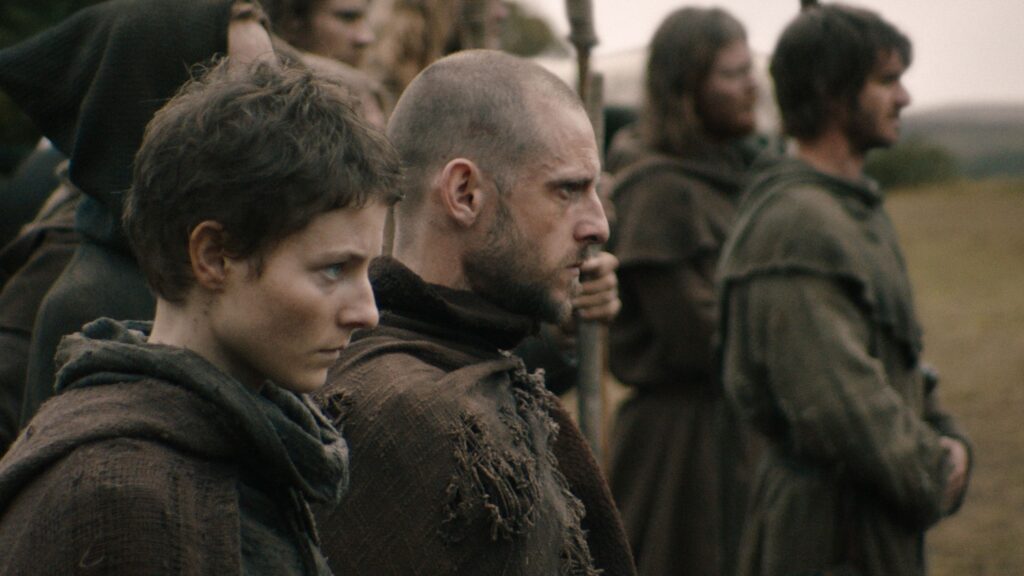
For all its mayhem and brutality, The Uprising is most interesting as a study of the complexities of building a unified political coalition. Ploughman, Tyler, and Ball may be ideologically aligned—they seek a panoply of civil rights and financial protections for the peasantry—but their missions aren’t quite the same. Ball, the most bloodthirsty of the lot, demands the execution of Richard’s cabinet, whom he brands traitors. Ploughman, despite his facility with a semicircular scythe that carves its way through plenty of flesh, is more diplomatic, recognizing the need for patience and potential compromise. As for Tyler, he seems to be vaguely in favor of self-determination without any specifics, which makes him both a dubious negotiator and a flat character.
Tyler’s dullness aside, the best moments in The Uprising examine how hard-charging rhetoric is often accompanied by clumsiness and hesitation. In one scene, Ploughman finds himself conveying a message to the queen mother (a nicely restrained Katherine Waterston), and he can’t help but be cowed by her icy regality. Later, the rebels’ parley with the king proves surprisingly suspenseful, with words doing the work of weapons. That Greengrass forces a spiritual kinship between Ploughman and Richard—they are both haunted by familial ghosts—only slightly tarnishes the sequence’s verbal verve.
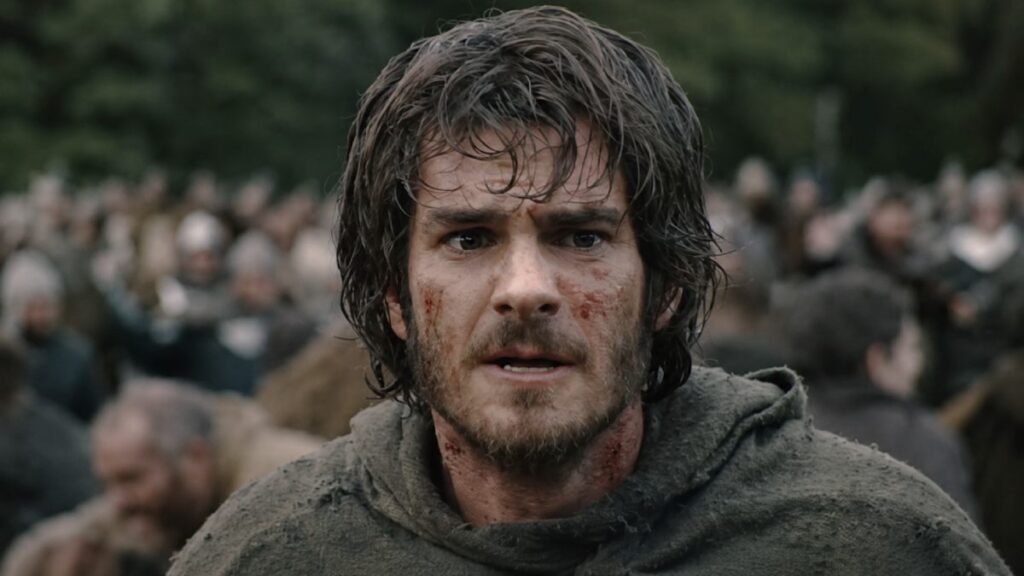
Alas, Greengrass is too committed to his miasma of suffering to allow these dialogue scenes to coalesce into anything thought-provoking. He instead devotes himself to his usual bloody business, as betrayals and factionalism lead to stabbings, beheadings, and other forms of grisly carnage—all of which he conveys via maximum chaos and minimum clarity. Greengrass’ shaky-cam technique was once regarded as a new frontier in cinematic innovation, but here he revels in the grubbiness of the past; the English countryside’s squelching muck and greyish murk only underscore the image’s putative immediacy, which is less exhilarating than punishing. He also has an unfortunate knack for blunting his actors’ charisma: An overqualified Thomas McKenzie shows up as a bright-eyed revolutionary who occasionally exchanges meaningful looks with Ploughman, but her director’s inexorable intensity can spare no time for anything as pleasurable as sex.
The Uprising’s strenuous seriousness is in some ways laudable—here is a gruff, grounded movie about the practical ramifications of tyranny and resistance—yet it too often collapses into joylessness. Braveheart has its flaws, but it’s more than just a series of handsomely shot battle scenes; it’s also soulful and funny. The Uprising is so rigorously glum, it neglects to develop its characters or articulate their humanity. (The epilogue, which impliedly links Ploughman to a certain folkloric legend, clangs both visually and narratively.) Despite its breakneck velocity, it keeps getting stuck in the mud.
Grade: C+

Jeremy Beck is the editor-in-chief of MovieManifesto. He watches more movies and television than he probably should.