Presence: Phantom Dread

Callina Liang in Presence

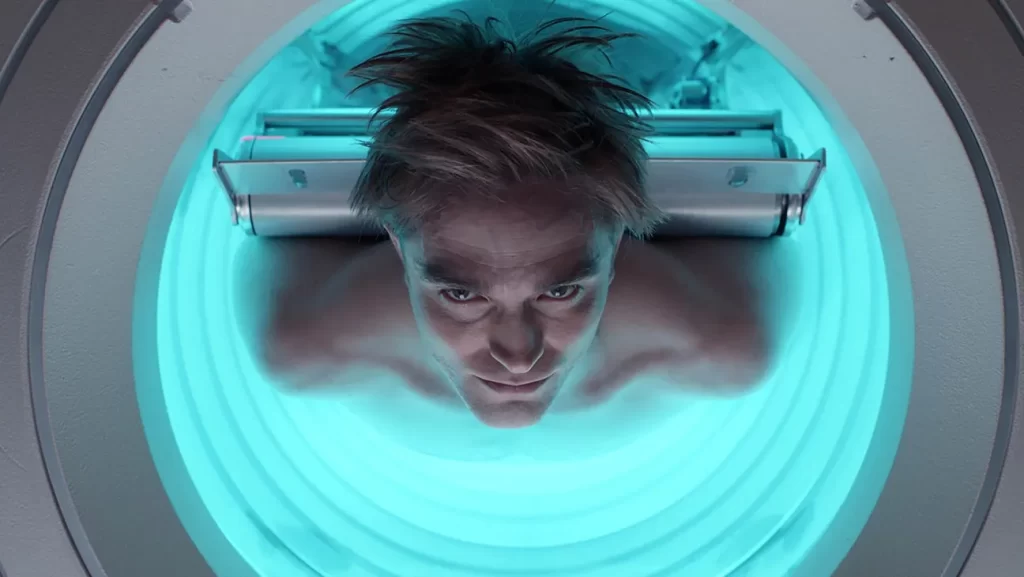
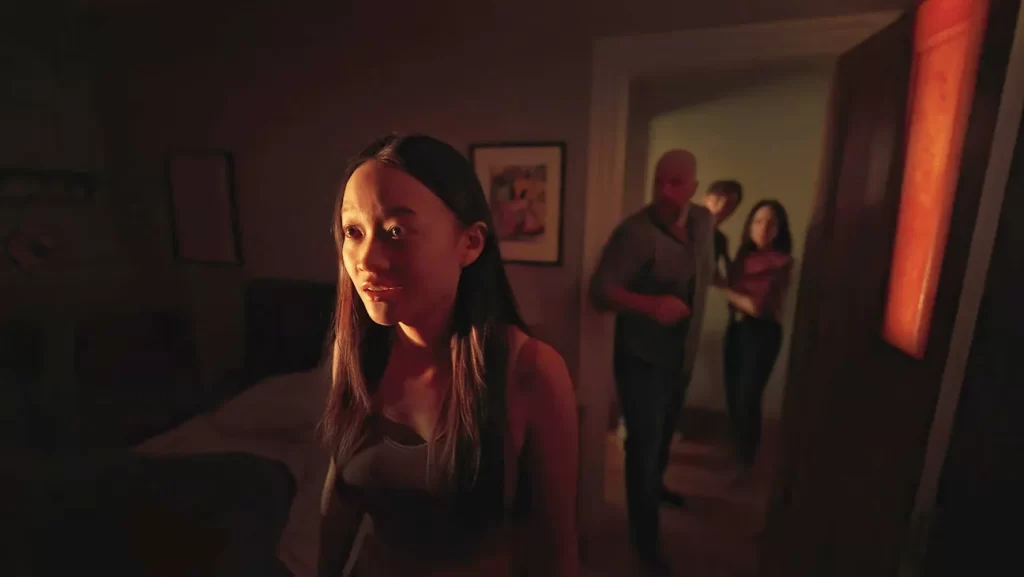
As auteurs go, Steven Soderbergh is relatively humble. His closing credits never use the phrase “a film by,” and while he typically shoots and edits his movies himself—not since 2011’s Contagion has anyone else fulfilled either of those roles in one of his features—he also deploys pseudonyms (Peter Andrews for cinematography, Mary Ann Bernard for editing), as if to minimize the fastidious control he exerts over his own productions. That’s especially noteworthy in the case of Presence, given that its star is, well, Steven Soderbergh—or rather, his camera.

To be sure, there are actors in this movie, which centers on a white-collar nuclear family that’s just moved into an appealing new home in suburban New Jersey; Lucy Liu and Chris Sullivan play the parents, respectively named Rebekah and Chris, while their disaffected teenage children are Tyler (Eddy Maday) and Chloe (Callina Liang). But the heart of Presence is its titular entity, an invisible being that roams about the house in a state of persistent curiosity, and whose field of vision doubles as the audience’s point of view. Read More

The Brutalist: Nadirs of the Lost Architect

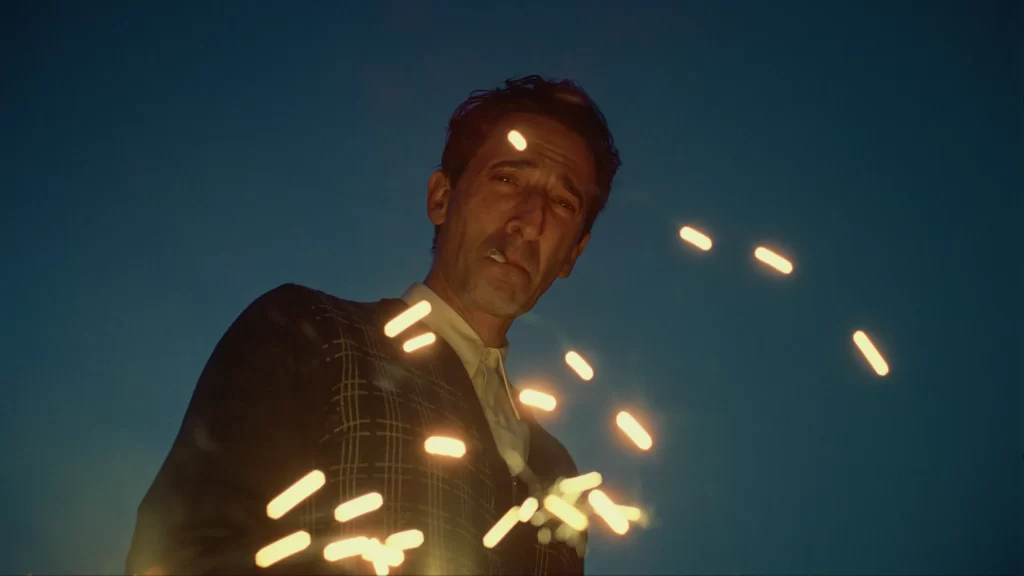
Adrien Brody in The Brutalist

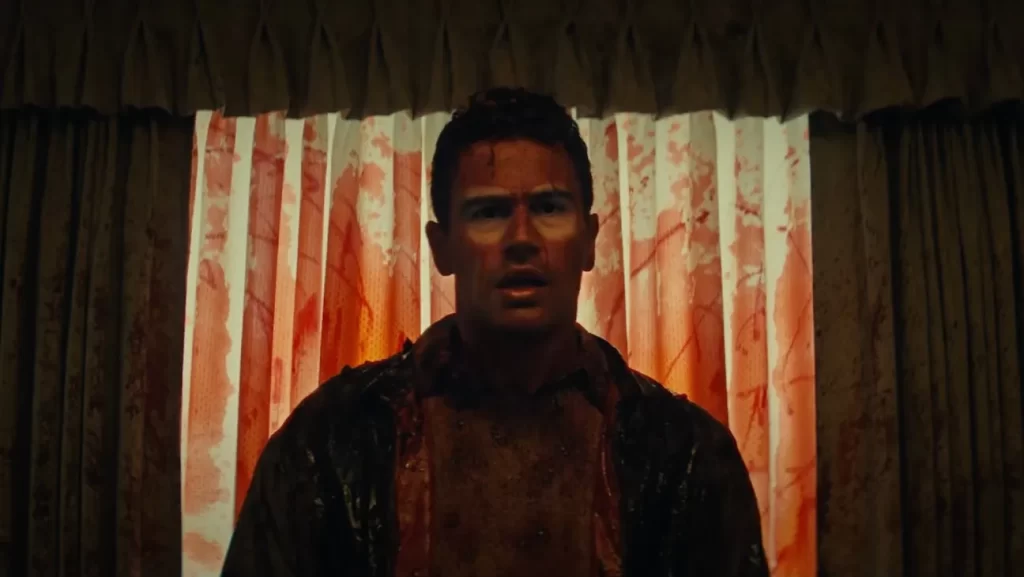
The American dream gets flipped upside-down in The Brutalist, Brady Corbet’s soaring, scathing portrait of post-war greed. Yet while it may be a troubling tale of moral decline, it opens with its hero going up, up, up, climbing toward the prospect of salvation. His name is László, and we first see him in the steerage of a ship docking at Ellis Island, his pallid skin and crooked nose long shielded from the light of day. As his mind recites a letter from his absent wife, he begins to ascend along with countless other sweaty hopefuls, the camera swooping and twisting like he’s navigating a labyrinth. When he finally bursts onto the deck, his face breaks into an ecstatic grin, the sunlight beaming down on him, the score’s trumpets booming in triumph. Never mind that our first view of Lady Liberty comes at an inverted angle, as though she’s about to plunge her torch—and its elusive promise of prosperity—into the harbor.

This knockout introduction instantly signals The Brutalist’s monumental ambition, both thematic and aesthetic. Much has been made of the film’s length (over three-and-a-half hours, including a 15-minute intermission), but its running time is just one of its many extravagances. Corbet, eschewing subtlety in favor of sheer grandeur, has delivered a truly maximalist production, a work of sweeping scope, vigorous style, and provocative rhetoric. The movie is, to borrow the tagline from Scott Pilgrim vs. the World, an epic of epic epicness. Read More

Better Man: Diary of a Chimpy Kid

A scene from Better Man

The story of an artist’s rise and fall and rise again, Better Man is in many ways a thoroughly typical picture. Like most musical biopics, it conforms to a three-act structure, dutifully following its hero’s rags-to-riches trajectory while interspersing boisterous performances of the songs that made them famous. Like most musical biopics, it juxtaposes euphoric highs (the thrill of nailing an audition, the joy of climbing the charts) with crippling lows (drug abuse, daddy issues). And like most musical biopics, it aims to provide a three-dimensional portrait of its subject while still ultimately lionizing them. In fact, Better Man is like most musical biopics in virtually every way. Except one.

I generally try to go into movies as cold as possible, but I’m wondering how a truly oblivious ticket-buyer might feel upon randomly selecting a screening of Better Man, settling in for the opening voiceover (in which its protagonist declares that he’s been called “narcissistic” and “punchable”), and then watching as the camera focuses on… a monkey. Not an actual monkey—a computer-generated chimpanzee who otherwise walks, talks, and behaves like a human, to the point where nobody remarks on his biological dissimilarity. Even the kids in Paddington acknowledge that they live with a bear. All of the characters here are either extraordinarily tolerant or exceedingly near-sighted. Read More

Babygirl: Breaking the Crass Ceiling

Harris Dickinson and Nicole Kidman in Babygirl

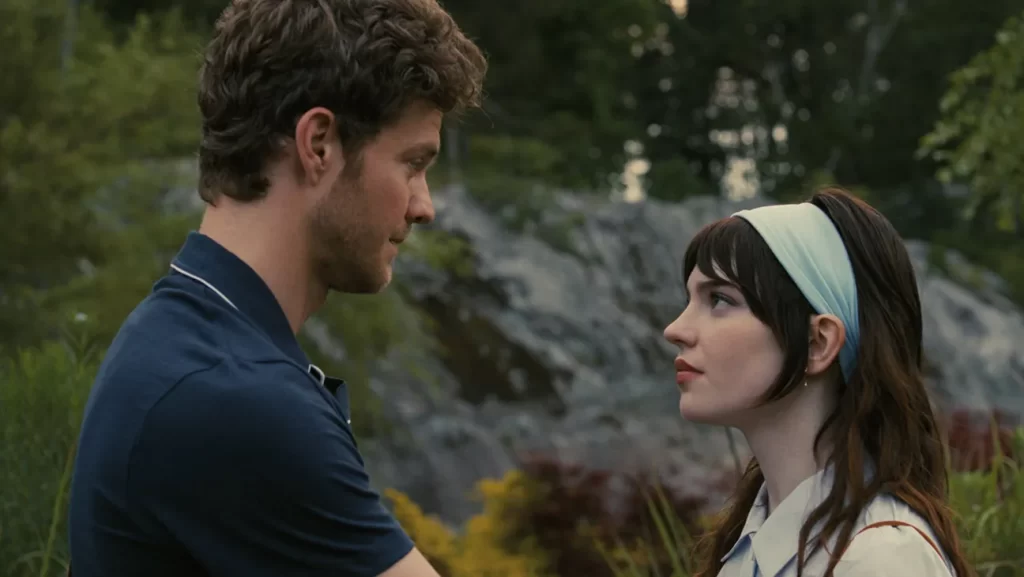
Screw delayed gratification: Babygirl opens with the sound of a woman moaning in apparent pleasure before its vanity card even appears. (I get it, I like A24 movies too.) Then its first frame shows her enthusiastically riding her husband before they collapse onto the sheets and embrace, whispering sweet nothings, having been mutually satisfied… or at least that’s what he thinks. As her partner falls asleep, the woman discreetly slinks into the adjoining room, fires up her laptop, and masturbates to pornography, muffling her own gasps to avoid waking anyone. The implication is obvious: Whatever she’s getting in bed ain’t cutting it. She needs more.

That sense of need—of pure, bottomless craving—is what animates Babygirl, Halina Reijn’s strange, messy, intriguing new psychodrama. It’s a movie about the paralyzing quality of desire—how coveting something forbidden can upend even the most carefully cultivated lives. The body may want what it wants, but the brain knows that our wants can get us into trouble. Read More

A Complete Unknown: Don’t Judge a Schnook by His Covers

Timothée Chalamet in A Complete Unknown

In the most memorable scene of Todd Haynes’ I’m Not There, a band takes the stage at a music show and turns to their guitar cases, only to retrieve a cache of machine guns and open fire on their unsuspecting audience. It’s a metaphor for the 1965 Newport Festival where Bob Dylan, beginning his pivot from homespun folk to electric oomph, infuriated the fans who’d clamored to hear the plaintive, stripped-down ballads that made him famous. A Complete Unknown, James Mangold’s new Dylan biopic, recreates that historic moment, though it does so with careful fidelity rather than brash surreality. That’s in keeping with the guiding spirit of the movie, which follows Dylan’s early rise and initial backlash while faithfully abiding by the conventions of the genre. In telling the story of the man who revolutionized an art form, it doesn’t exhibit a rebellious bone in its body.

This doesn’t make it bad. In fact, A Complete Unknown is pretty good. It has good music, good actors, good pacing, and good dialogue. (While you’re considering the source, I happen to think I’m Not There is Haynes’ worst picture, but that’s another story.) What it lacks—what it doesn’t even seem to try to achieve—is a sense of majesty or wonder that might befit its subject. It plays the greatest hits without evincing any aspirations toward true greatness. Read More