Lisa Frankenstein: Wit’s Alive!

Kathryn Newton in Lisa Frankenstein

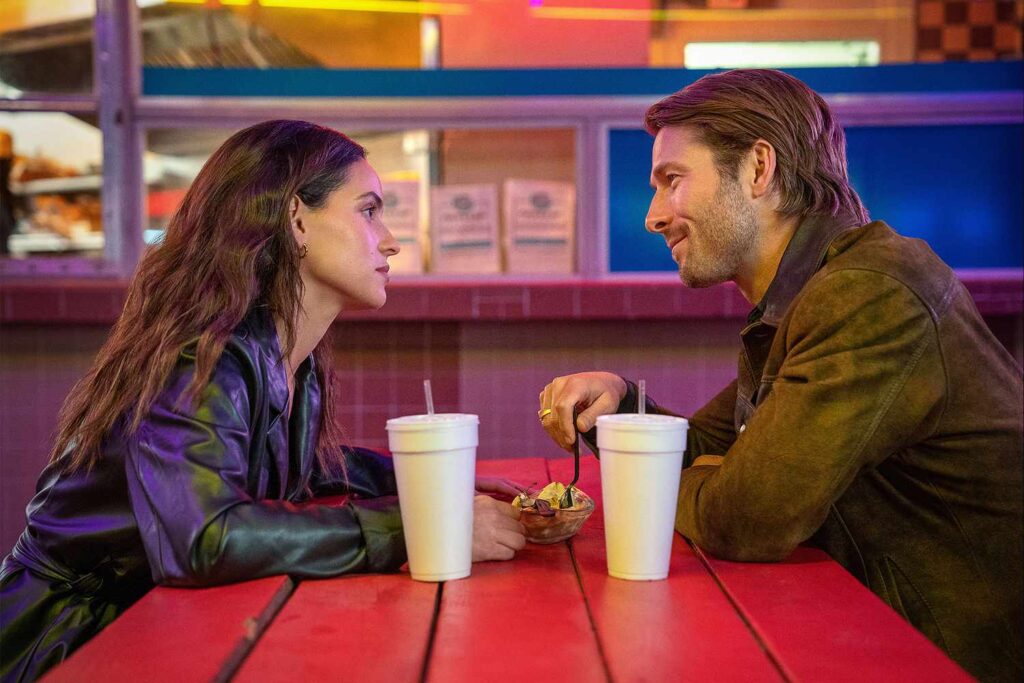
Diablo Cody and the ’80s: match made in cinematic heaven, or ungainly fit? Despite a varied and underrated screenwriting career (Tully, Ricki and the Flash), Cody remains best known for her opening one-two punch of Juno and Jennifer’s Body, which instantly established her polarizing style: pithy wordplay, obvious themes, and referential characters who seem to know they’re living in a movie. The heightened quality of her writing would appear to make her a natural match for the era that brought us John Hughes and synth pop. What’s strange about Lisa Frankenstein is that it neither sends up classic ’80s teen flicks nor pays loving tribute to them. It seems to be set in 1989 for no other reason than to justify its kickass soundtrack.

Which is fine, as far as it goes. I’m skeptical that Lisa Frankenstein will earn the same cult following that Jennifer’s Body did—certainly it won’t send adolescent boys scurrying to the internet in search of “megan fox amanda seyfried kiss scene”—but it is at least a vibrant and playful production. The feature directorial debut of Zelda Williams (working from a script by Cody), it sports bright colors, cool music, and an array of outfits so dazzling, they’d make Cher from Clueless jealous. The movie is not without significant flaws—uneven dialogue, awkward staging, a general aimlessness—yet it offers the robust built-in defense of, “Sure, but did you see her hair?” Read More

The Zone of Interest: Heart of Gas

Sandra Hüller in The Zone of Interest

The music speaks the truth. Strip away The Zone of Interest’s first few minutes—a grim overture in which Mica Levi’s doomy, dissonant score aches and seethes against a black screen—and you might suspect that you’ve stumbled into a gentle movie of bucolic bliss. The first image we see is that of a happy-looking family lounging lazily in a meadow. As a stream gurgles nearby, the children traipse along a dirt path, the sun glinting down on their golden hair. Their parents seem entirely relaxed, suggesting a life of comfort and security. Perhaps they’re on vacation, or maybe just enjoying a weekend picnic. Even after they return to their home, a cozy cottage with a carefully tended garden and a small in-ground pool, it takes some time before you pick up on the curious nature of their surroundings: the razor wire atop the large wall in the background, the smoke billowing from distant chimneys, the muffled echoes of gunfire and screams.

Adapted by Jonathan Glazer from a novel by Martin Amis, The Zone of Interest is decidedly a movie about the Holocaust. But it is also not a Holocaust picture—at least, not in the way the subgenre has traditionally been understood. There are no ghastly scenes of extermination, no heroic feats of endurance and survival, no condemnatory speeches, no comeuppance or catharsis. There is simply the pervasive aroma of death, and the people willfully oblivious to its stench. Read More

American Fiction: By Book or by Crook

Jeffrey Wright in American Fiction

Writing is a task infected with misery and failure: an endless cycle of staring at a blank screen, deleting reams of gibberish, and questioning your life choices. (Am I speaking hypothetically? Reader, I am not.) So it was with a mixture of envy and disbelief that I watched Thelonious Ellison (Jeffrey Wright), better known for obvious reasons as Monk, sit at his desk and confidently compose an entire novel in what appeared to be a single night. What’s his next trick, building Rome?

Not that Monk is an especially successful artist. The flailing hero of American Fiction, Monk is a mythological scholar whose fearsome intellect has failed to translate into financial security or critical renown. (When he appears at a book panel, he scratches a missing vowel onto the placard that misspelled his name.) His latest text, a meticulous analysis of Aeschylus’ The Persians, hasn’t attracted the slightest nibble from publishers, given that it’s miles removed from the zeitgeist. “They want a Black book,” explains his agent, Arthur (John Ortiz). Monk’s frustrated response—“I’m Black, and it’s my book”—betrays not only his stubbornness, but his woeful ignorance of consumer demand. Read More

Society of the Snow: The Hunger Shames

A scene from Society of the Snow

The movies love an impossibly true story—and if you aren’t familiar with the ultimate fate of the passengers of Uruguayan Air Force flight 571, you should probably stop reading now. If you are acquainted with this chilling saga of disaster, despair, and endurance—in which the survivors of a plane crash spent 72 days marooned in the Andes before being rescued—it might be because you’ve seen Alive, the 1993 feature directed by Frank Marshall. That decidedly American production, which was distributed by Disney, starred Ethan Hawke and Josh Hamilton as two of many white dudes cast as Uruguayan rugby players. Now, in a reclamation of sorts, comes Society of the Snow, a more culturally accurate recreation of the 1972 ordeal suffered by the Old Christians rugby team and other unfortunate travelers.

In a way, this operates as an inversion for J.A. Bayona, the Spanish filmmaker whose diverse credits include Jurassic World: Fallen Kingdom and The Orphanage (his first and best), and who previously revisited real-world tragedy and triumph with The Impossible. That movie, inspired by the plight of a Spanish woman during the 2004 Indian Ocean tsunami, made the controversial decision to tell its story primarily through the lens of three white UK actors. Here, Bayona seems to have inoculated himself against any accusations regarding representation; the men who play the ill-fated athletes all hail from Uruguay or Argentina, and none of them possesses a recognizable name that could be leveraged for marketing purposes. Their relative anonymity is in keeping with the picture overall—both for the heartfelt homage it pays to its real-life counterparts, and for the struggle it exhibits when attempting to turn torchbearers of agony into distinct characters. Read More

Middlebrow Christmas: The Color Purple and The Boys in the Boat

Fantasia Barrino in The Color Purple; Callum Turner in The Boys in the Boat

In critical circles, the term “middlebrow” is wielded as a pejorative, alongside “prestige fare” and “Oscar bait.” The idea is that these types of films—often period pieces, featuring inspirational stories that are based on either historical events or popular novels—are tasteful to the point of decorousness, flattering Academy voters for their refinement without taking real risks as works of cinema. As someone who spent his formative years greedily devouring as many Oscar winners as possible, I maintain a steadfast appreciation for the middlebrow picture; I like The Cider House Rules, I love A Beautiful Mind, and I think Kate Winslet was terrific in both Revolutionary Road and The Reader. That a movie attempts to appeal to a broad adult audience doesn’t automatically nullify its pleasures, especially when it’s well-made and well-acted (and sure, gorgeous period costumes can’t hurt).

Christmas tends to be an ideal time for the release of a middlebrow movie, given that the holiday affords extended families the opportunity to spend two-plus hours in a climate-controlled environment without offending any sensibilities. In recent years, sterling examples of this vintage include Little Women, Mary Queen of Scots, and other period pieces that didn’t star Saoirse Ronan (e.g., Fences). Quality prestige pictures, all! Still, just as I reject the notion that middlebrow flicks are inherently inferior, I also acknowledge that they aren’t intrinsically superior; they still need to work on the levels of storytelling and aesthetics. Along with the Michael Mann biopic Ferrari (which I previously reviewed here), this Christmas brought the arrival of two films that seemed like easy wins for prestige-hungry audiences. But despite their differences in tone and scope, they share a sense of failure—both to inspire and, more crucially, to entertain. Read More