It Comes at Night: Something Toxic in the Air, and a Virus, Too

Christopher Abbott and Joel Edgerton in "It Comes at Night"

There are no zombies in It Comes at Night, unless you count the vacant, dead-eyed stares that regularly materialize on each of its characters’ stricken faces. An eerie shiver of a horror-thriller, it’s scary less for its shocks than its sober observations on human nature. When a body is burned in the film’s harrowing opening sequence, the corpse never reanimates, though it does emerge in a spooky, silent nightmare, darkened eyes shooting daggers of ill will. In this movie, the dead stay dead. Maybe they’re the lucky ones.

The second feature from writer-director Trey Edward Shults, It Comes at Night takes for its premise that all-too-plausible scenario that has beckoned to many an aspiring artist: the apocalypse. Doomsday has long fascinated filmmakers, who relish the chance to turn a universal fear—it’s the end of the world!—into a personal vision; the last few years alone have given us works as varied as the demolition derby of Mad Max: Fury Road, the steampunk allegory of Snowpiercer, and the bro-sploitation comedy of This Is the End. It Comes at Night is quieter than those movies, but it is arguably more unsettling. For Shults, the collapse of civilization creates the opportunity to explore how people relate to and value one another, pitting civic values against Darwinian impulses. The picture he paints, much like the ghastly mural that adorns one of the walls of the house where the action occurs, is far from pretty. Read More

Alien: Covenant: Still Meddling, Still Dying, but with Double the Robots

Katherine Waterston and Michael Fassbender in "Alien: Covenant"

During one of the best scenes in Alien: Covenant, a robot tells an antiquated model of himself why he was ultimately decommissioned. “You were too human,” the current version bluntly informs his predecessor. “Too idiosyncratic.” The explanation makes sense—the older model’s uncannily lifelike behavior unsettled his mortal masters—but it carries with it an undeniable sting of irony. Covenant, the sixth entry in the Alien franchise and the third directed by Ridley Scott, is a vigorous and impressive piece of mass-market entertainment, a finely calibrated horror film that boasts expert effects work and pulse-pounding set pieces. Yet it is also clearly the product of corporate assembly, a sequel to a prequel that ably perpetuates the series’ mythology but does so with minimal distinction or ingenuity. It’s a bit like that newly updated cyborg who lectures his elder counterpart: sleek and efficient, but not idiosyncratic enough.

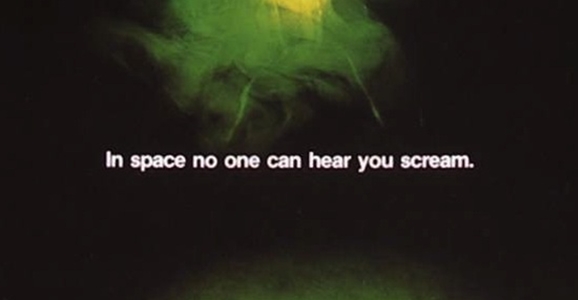
Or maybe I’ve just seen too many Alien movies. If you haven’t watched Scott’s classic original (which is slightly overrated, but that’s a different discussion), you are likely to be gobsmacked by the spectacle of violent death and physical suffering that the director has arrayed before you. Setting aside Sigourney Weaver’s spunky and sexy performance, Alien achieved cinematic immortality for two reasons: its historically great tagline, and John Hurt’s upset stomach. Seeing as Covenant cannot hope to match the former (though “The path to paradise begins in hell” isn’t half-bad), it strives to one-up the latter. Throughout this movie, nasty critters burst out from within the insides of unsuspecting human hosts, spilling blood and splintering backbone in the process. Alien enthusiasts may have seen this before, but they likely haven’t seen it this excruciating and visceral. Read More

Get Out: The Stepford Jives

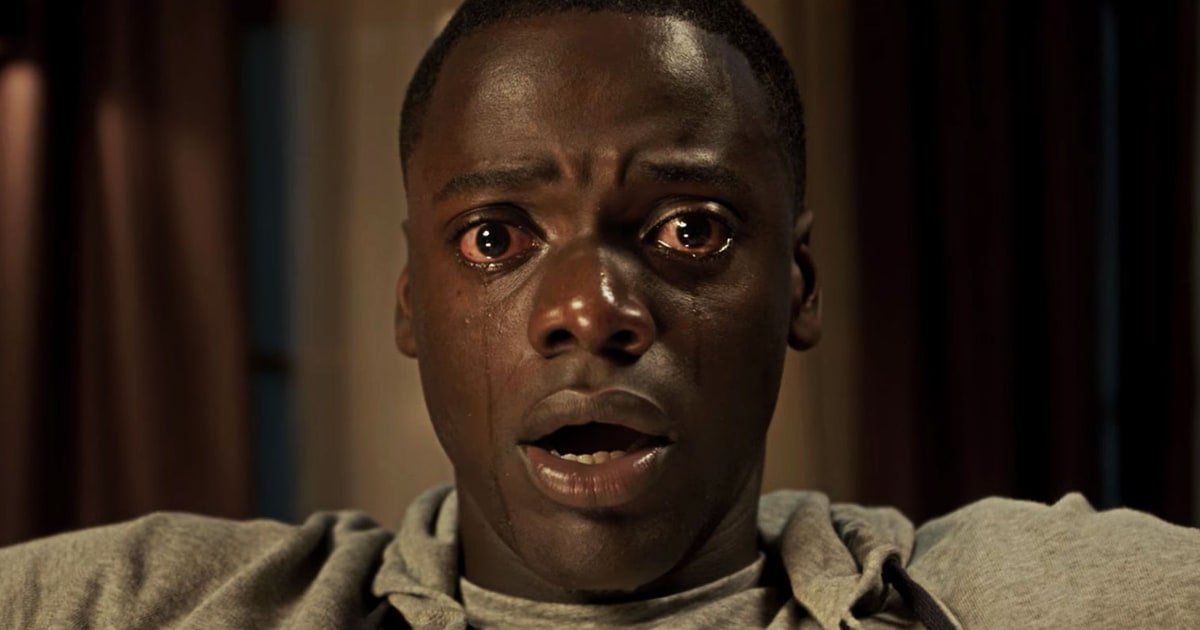
Daniel Kaluuya in Jordan Peele's horror movie "Get Out"

The hero of Get Out suffers. Over the course of the movie, he is assaulted, humiliated, choked, tied up, shot at, and regularly deprived of his physical and personal liberty. It’s a crucible of pain. But nothing is more terrifying, more indignifying, than when he’s forced to hobnob at a fancy garden party with a bunch of rich white people.

OK, I’m exaggerating. But Get Out, the first feature by comedian Jordan Peele, is more than just another fright flick. It’s a film that examines, with insight, empathy, and anger, the challenge of being a black man in white America. Peele is not exclusively interested in making you jump out of your seat (though he proves plenty good at that). He also wants to clamp you to your chair and make you grapple with the current state of race relations in this country, to wrestle with his characters’ prejudices and maybe even your own. Read More

Split: His Minds Have Something Sinister in Mind

James McAvoy as, er, a lot of people in M. Night Shyamalan's "Split"

To call Split a comeback for M. Night Shyamalan is both accurate and somewhat troubling. The cinematic Icarus of the early twenty-first century, Shyamalan’s rapid ascent and subsequent plunge was difficult to watch. But his transgressions were sins of commission rather than omission—even when he was failing, he was always trying. Yet his most recent film, the found-footage flick The Visit, heralded a director who had diluted his ambition with pinches of modesty and self-awareness. That trend continues with Split, a lean and spiky movie that feels as though it could have arrived in the ’90s, before its creator let those “the next Spielberg” claims go to his head. This raises the question: Should we really be applauding filmmakers for abandoning their fearless attempts at the new and instead returning to the cozy confines of the familiar?

If it results in movies as taut and entertaining as this one, then yes. Split may be a pure, unvarnished genre exercise, but it’s a damn good one, a superlative example of twitchy suspense and tightly controlled craft. During his period of failure—which, in this critic’s view, spans from Lady in the Water to After Earth but definitely does NOT include The Village—Shyamalan tried all sorts of new things; they didn’t work. Split does many things—it frightens, delights, stumbles, and amazes—but most simply, it works. Read More

Don’t Breathe: He’s Just a Blind Guy. How Scary Can He Be?

Dylan Minnette and Jane Levy are in over their head in the thriller "Don't Breathe"

At one point in Jurassic Park, Sam Neill attempts to evade a T-rex by hiding in plain sight. His theory—supported by years of paleontologic research—is that the dinosaur’s visual acuity is based on movement, so it won’t detect him if he stands stock still. It’s a riveting scene (most scenes in Jurassic Park are), forgoing the kineticism of the typical chase (“must go faster”) in favor of terrifying immobility. Don’t Breathe, the taut and accomplished new chiller from Fede Alvarez, essentially extends this concept to feature-length. It’s a horror movie that bottles the genre’s rushing adrenaline and redirects it inward; here, rather than running away, the only way the characters can escape the monster is by being very, very quiet.

That monster—the film’s tyrannosaur, if you will—is Stephen Lang, the grizzled television actor who briefly lit up the big screen in 2009, with colorful parts in Public Enemies, The Men Who Stare at Goats, and (most memorably) Avatar. In the latter, he played a bloodthirsty warmonger named Miles Quaritch; his heavy in Don’t Breathe makes Quaritch seem positively pacifistic. Here, he portrays an unnamed, solitary Iraq war veteran who owns a modest two-story home, a surly rottweiler, and an even surlier disposition. As soon as you see him in the cold open dragging a bloody body down a deserted street—an ill-advised flash-forward that dilutes the movie’s considerable tension—you can see the darkness in his soul. Read More