Rogue One: A Star Wars Story: Still Rebelling, Now with a Cost

Diego Luna, Felicity Jones, and Alan Tudyk in "Rogue One: A Star Wars Story"

Of the infinite memes that sprang out of the original Star Wars trilogy, one of the most random derives from a moment of startling quiet in The Return of the Jedi, when a rebel leader is delivering an expository info-dump. As she’s rambling about battle stations and deflector shields, she suddenly pauses, then drops her voice and solemnly murmurs, “Many Bothans died to bring us this information.” There are no Bothans in Rogue One: A Star Wars Story, but there is quite a bit of death, and not just involving hundreds of haphazardly slaughtered stormtroopers. This counts as a surprise. The Star Wars franchise isn’t devoid of darkness, but it has generally prioritized fun and escapism; while Rogue One largely stays on brand, it isn’t especially concerned with joy. Instead, the predominant theme of this interesting and frustrating film—which was directed by Gareth Edwards from a script by Chris Weitz and Tony Gilroy—is sacrifice. It’s a genuine war movie, one about the soldiers who wade through the mud, risking their lives so that the rest of us may glimpse a better tomorrow.

If that sounds turgid, don’t worry—this is still a Star Wars movie, with all of the excitement and mythology that such an undertaking entails. Yet Rogue One occupies a curious place within Disney’s newest and most profitable cinematic universe. Whereas the official episodic saga resumed last year, after a decade-long layoff, with The Force Awakens, Rogue One is the first of the studio’s “anthology” series, films that both take place within the canonical realm and simultaneously stand apart from it. (Continuing this pattern, 2018 will see the release of a Han Solo movie, starring Hail, Caesar‘s Alden Ehrenreich, while a rumored Boba Fett film is tentatively slated for 2020.) In theory, this concept will allow filmmakers to expand the Star Wars mythos into uncharted space, using the series’ existing, minutely detailed template to tell bold and innovative stories. But because the franchise’s fan base is so entrenched and protective of its collective property—and because directors must satisfy their corporate overlord’s commercial imperative to please those fans—veering too far off course is a dicey proposition. Read More

Deepwater Horizon: The Ship Is Sinking, and So Are Profit Margins

Mark Wahlberg in Peter Berg's "Deepwater Horizon"

At one point in Peter Berg’s geopolitical action thriller The Kingdom, Jamie Foxx tells a Saudi official, “America’s not perfect, but we are good at this.” The “this” he’s referring to is criminal investigation, but as Berg’s career has gone on, his films have played as a variation on this central theme of American competence. He makes movies about strong-willed, muscular men and women who excel at problem-solving and crisis management. It’s historical fiction with a nationalist tint; in recreating specific, disastrous events, Berg venerates the broader (and, in his view, distinctly red-white-and-blue) virtues of teamwork, loyalty, and perseverance. The guy who played Linda Fiorentino’s hapless patsy in The Last Seduction has somehow fashioned himself into American cinema’s chief patriot.

Well, maybe vice-chief. Berg’s current leading man of choice is Mark Wahlberg, our great nation’s consensus avatar of blue-collar heroism. In Lone Survivor, the fact-based story of a kill mission in Afghanistan gone awry, Berg put Wahlberg through an especially brutal ringer, chronicling how a brave solider used his strength and his smarts to avoid seemingly certain death. Now the director and his star have returned with Deepwater Horizon, a meticulous reenactment of the explosion (and resulting oil spill) that destroyed a rig off the coast of Louisiana in 2010. The names may have changed, but Berg’s template remains the same: Deliberately establish the players and the setting, then scrupulously illustrate how everything gets blown to hell. Read More

Jason Bourne: Angry Assassin Remembers, Again

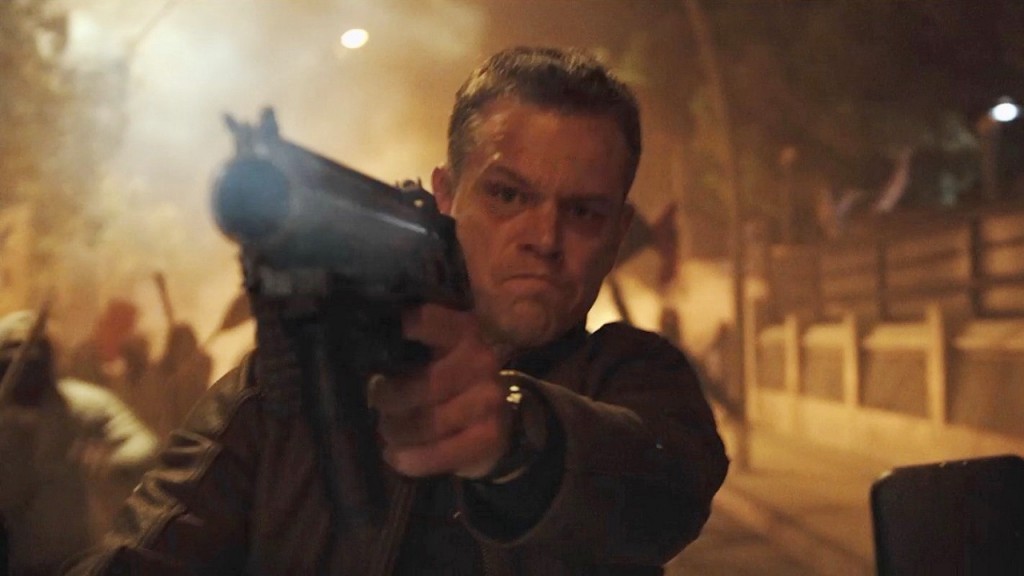
Matt Damon returns in Paul Greengrass' "Jason Bourne"

Jason Bourne is a superhero. He may not have a costume or a secret identity or alien powers, but he’s nevertheless invincible, terminating his enemies with extreme prejudice and casual efficiency. What made him interesting in the past was his struggle to reconcile his superhuman combat skills with his search for self—there’s a reason that the first novel in Robert Ludlum’s original trilogy was called The Bourne Identity. Doug Liman’s 2002 adaptation of that novel was thrilling not just for its explosive action sequences but for the way it emphasized its protagonist’s confusion and vulnerability, amplified by Matt Damon in a performance of tender brutality. But now, three movies later—four if you count The Bourne Legacy, in which Jeremy Renner stood in for Damon as a Bourne-like surrogate—Jason Bourne knows who he is. The mystery has vanished; all that’s left is the brutality.

When we first meet Jason in this new movie that bears his name, he’s lying low in Greece, numbly participating in underground bare-knuckled boxing matches. (In this, the film oddly resembles the opening of Creed.) Beyond establishing the obvious—that even at age 45, Matt Damon still looks awfully good with his shirt off—this curt opening sequence is designed to demonstrate Jason’s isolation. Yet it tells us nothing we didn’t already know. Jason starts this movie alone, and he ends it alone. There is no character progression, no soul-searching, no catharsis, no real meaning of any kind. Where Jason Bourne was once a superhero, he’s now morphed into a different sort of genre staple: the looming figure who moves implacably toward his quarry, inexorable in his silent bloodlust. He’s the killer in a horror movie. Read More

Star Trek Beyond: Deep in Space, a Crew Bands Together

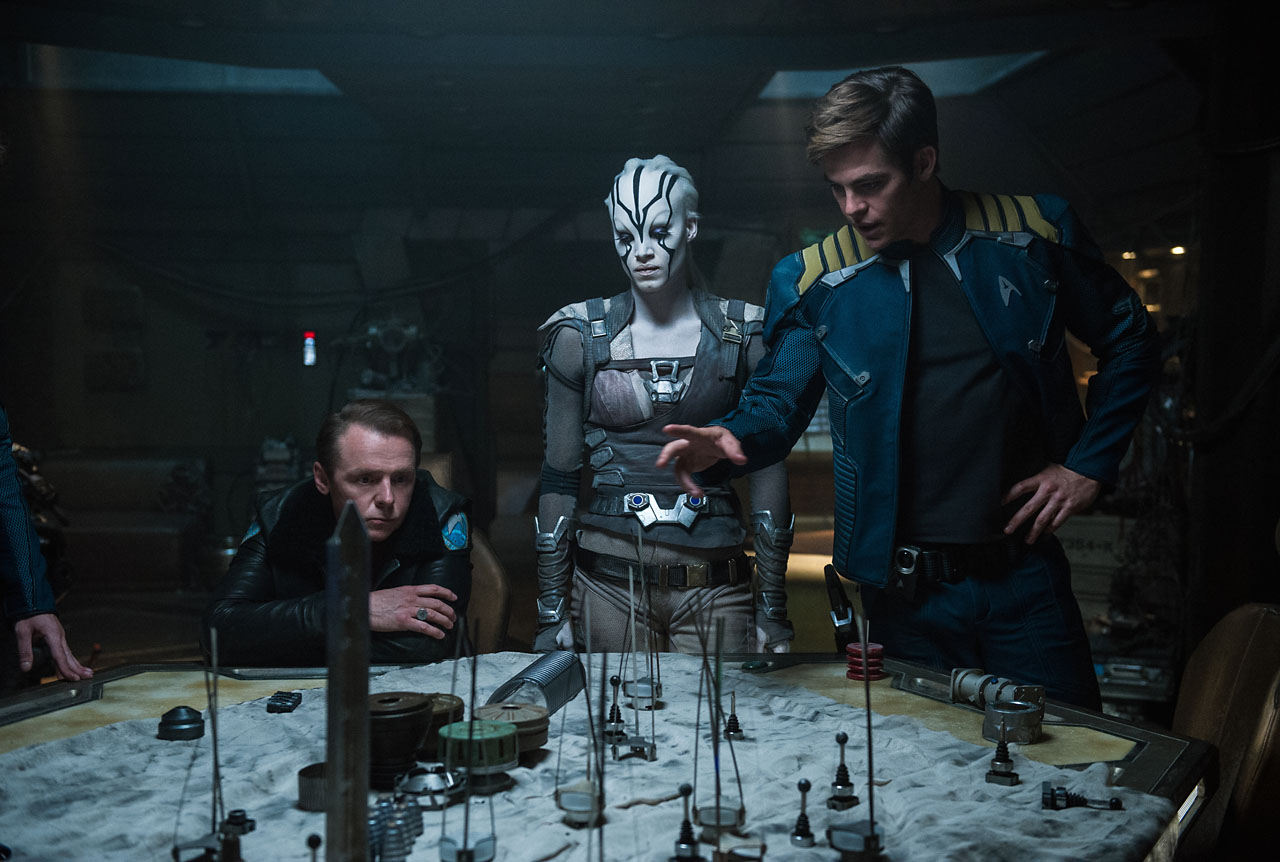
Simon Pegg, Sofia Boutella, and Chris Pine in "Star Trek Beyond"

“Things have started to feel a little episodic,” Jim Kirk confesses at the beginning of Star Trek Beyond, the fleet and fun third installment of the rebooted Star Trek franchise. He’s musing about his role overseeing the increasingly routine voyages of the Starship Enterprise, but it doesn’t require a doctorate in meta to connect his observations to the other vehicle he’s piloting, namely the Star Trek franchise itself. Kirk’s opening voiceover articulates the central challenge that every studio-sanctioned cinematic series faces: How do you continue serving your fans but prevent the proceedings from growing stale? Can you deliver something more without just providing more of the same?

Star Trek Beyond—directed by Fast & Furious veteran Justin Lin, taking the reins from J.J. Abrams (who has since migrated to a different galaxy)—doesn’t entirely solve this paradox, but it does thread the needle about as well as a big-budget three-quel can. Light and lively, with a refreshing focus on character and a blessed scarcity of mind-numbing spectacle, it’s a satisfying continuation, one that cannily plays up the franchise’s strengths (interpersonal dynamics, cheeky comedy) while minimizing its weaknesses (lack of stakes, weightless space battles). It may be just another episode in the adventures of the Enterprise crew, but it’s a damn good episode. Read More

Deadpool: A Wisecracking Superhero Takes Aim at Bad Guys, and a Genre

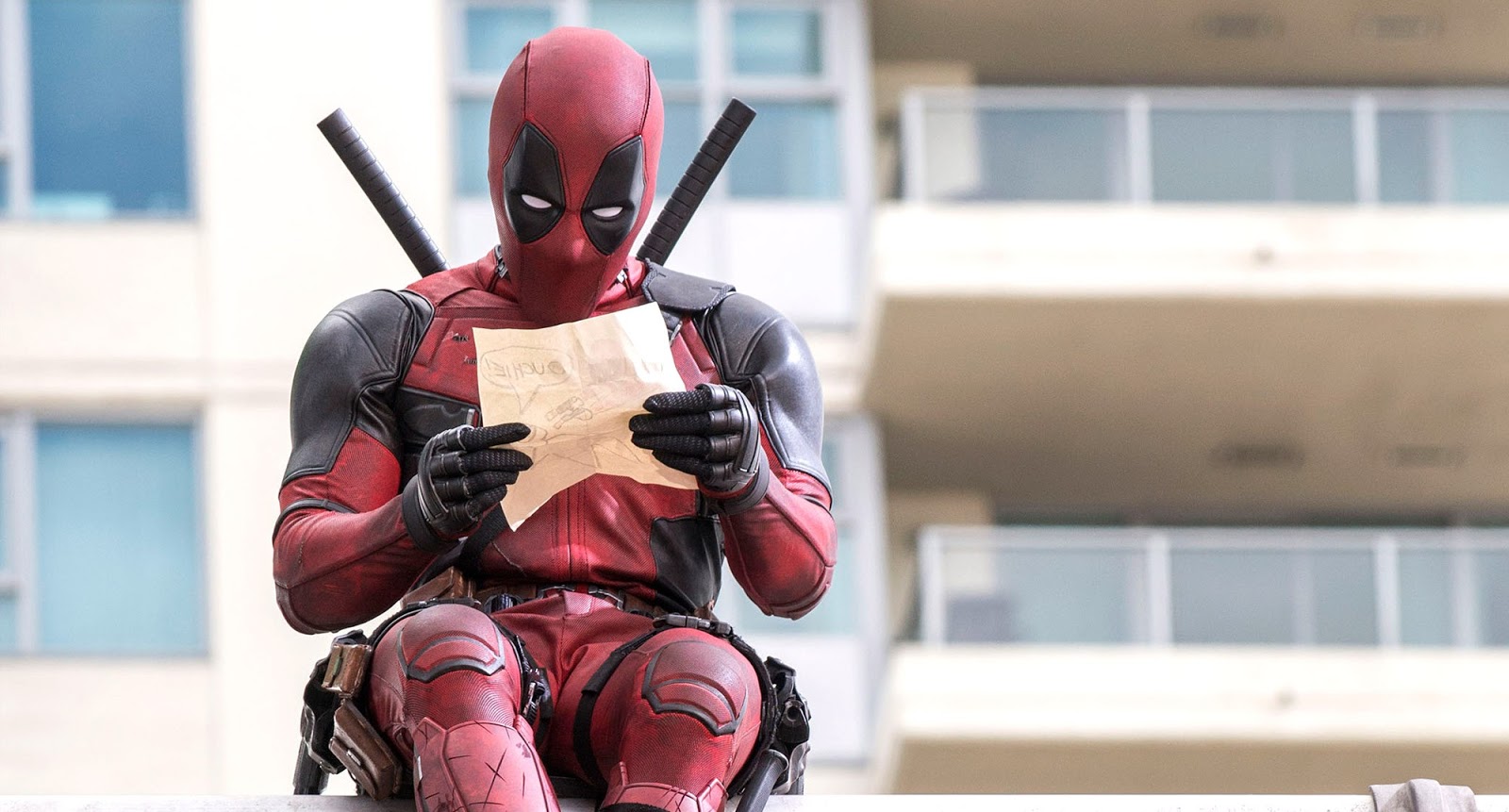
Ryan Reynolds as a smartass superhero in "Deadpool"

There’s truth in advertising, and then there are the opening credits to Deadpool. Soundtracked to Juice Newton’s ’80s ballad “Angel of the Morning”, the camera pans and pulls slowly through a frozen still of interrupted carnage, and amid the suspended bullets and geysers of spurting blood, there peeks out a People Magazine cover. In that 2010 issue, People named Ryan Reynolds the sexiest man alive, so this would seem to be an opportune time for the title sequence to announce Reynolds’s presence in this madcap meta movie. Instead, the credits read, “Starring: God’s Perfect Idiot,” followed by other trivializing labels that summarize the remaining cast members: “a hot chick,” “a British villain,” “the comic relief,” “a CGI character.” The sequence concludes by informing us that Deadpool was produced by “asshats”, written by “the real heroes here”, and directed by “an overpaid tool”.

Is this anarchically funny or pitifully defensive? Who says it can’t be both? An ultraviolent superhero origin story filtered through the self-aware parody of send-ups like 21 Jump Street, Deadpool seeks to eviscerate the formula that pervades the Marvel Cinematic Universe while simultaneously hewing to that very template. (For the record, Deadpool is a Marvel production but is not formally associated with the MCU.) This means that it comes wrapped in a shield of protective irony that makes it virtually impervious to criticism. That is, how do you judge a pointless comic-book movie that so clearly knows it’s a pointless comic-book movie? Many MCU pictures are like schoolyard bullies, browbeating their mass audiences into submission through brute force. Deadpool is more like the class clown; accuse it of being stupid, and it’s likely to retort, “I know you are, but what am I?” Read More