While We’re Young: Growing Older, But Not Growing Up
.jpg "Ben Stiller and Naomi Watts start in Noah Baumbach's \"While We're Young\"")
The obvious irony of the title While We’re Young is that it’s a movie singularly fixated on the fear of growing old. Its hero is Josh (Ben Stiller), a fortyish documentary filmmaker who lives a life of relative comfort in New York City but is nevertheless plagued with anxiety, about both the specific utility of his work and his general place in the world. In other words, Josh is a lot like Noah Baumbach, the forty-five-year-old director of this bewitching, frustrating film. Like Josh, While We’re Young is smart, and it posits a number of interesting and worthwhile ideas. And, like Josh, it cannot entirely escape the nagging feeling that it’s just running in place, waiting for something to shake it out of its complacency.
In Baumbach’s recent movies, that something has taken the form of Greta Gerwig, the fearless and funny actress whose luminous, achingly vulnerable performance elevated Frances Ha from a crisply amusing cringe comedy into a startlingly humane coming-of-age story. Before that, Gerwig poured her heart into Greenberg, playing opposite Stiller, who delivered a career-best turn as a prickly and altogether unpleasant neurotic. Sadly, Gerwig is absent this time around, while Stiller reverts to his bland, inoffensive screen presence. His lead performance here isn’t bad so much as polite; an established star, he can coast on familiarity and charm, graciously ceding the spotlight to other, hungrier actors. In While We’re Young, he makes room for the magnetic Adam Driver, who plays Jamie, a boisterous aspiring documentarian who seems to idolize Josh. Read More
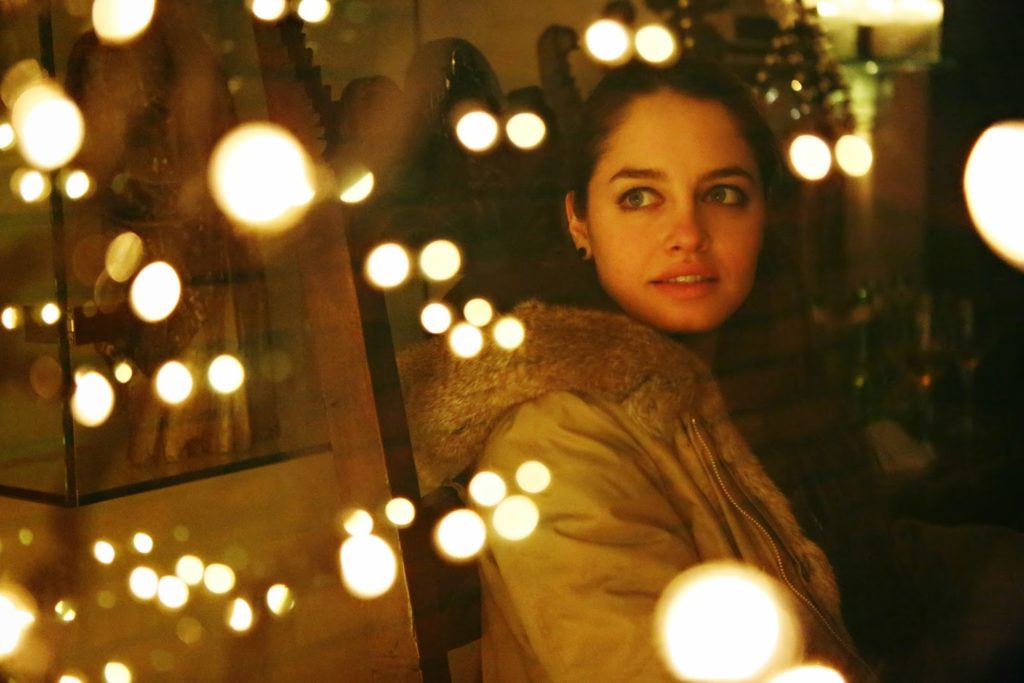
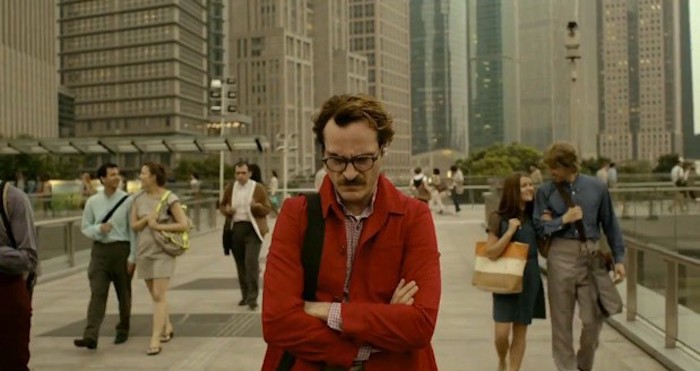 Can a computer have a soul? Can a movie? Her, Spike Jonze’s breathtaking, devastating film about a lonely man and his sentient operating system, spends a good deal of time pondering the first question and, in the process, answers the second. But let’s not bury the lede here: This is a movie about a man who falls in love with a machine. No matter the miracles science has provided in the new millennium, this is a tough sell. Yet the unique genius of Her—beyond its remarkable and vast imagination—is that it acknowledges the absurdity of its premise while simultaneously committing to it with the utmost sincerity. The result is a film that’s often uproariously funny, playfully mocking its gorgeous self-made universe with wit and good humor. But Her also, through a combination of sublime technique and heartfelt storytelling (Jonze also wrote the script), offers acute insight into the dynamics of modern relationships: what it means to be alone, to be loved, to be depressed, to be happy. It’s a movie about machines that affirms our very humanity. And it makes resoundingly clear that even if computers may not have souls, some movies surely do.
 “I’d like to think that there’s more to a person than just one thing,” Aimee Finicky says early in The Spectacular Now. I’d like to think she’s right. There is certainly more than just one thing to The Spectacular Now, James Ponsoldt’s swooning, touching third feature. Like Aimee, it refuses to be pigeonholed. This is partly because, in strict genre terms, it has no strict genre; instead, it melds elements of various tropes, making it not only a winning coming-of-age story, but also an earnest teen romance, a wistful family drama, and even a sobering study of addiction. But far more important than the multiplicity of the film’s form is the raw power of its content. The Spectacular Now is not one thing, because it is many things: spry and funny, sad and heartfelt, honest and scary, rueful and rewarding. It’s a movie that would make Aimee Finicky proud.
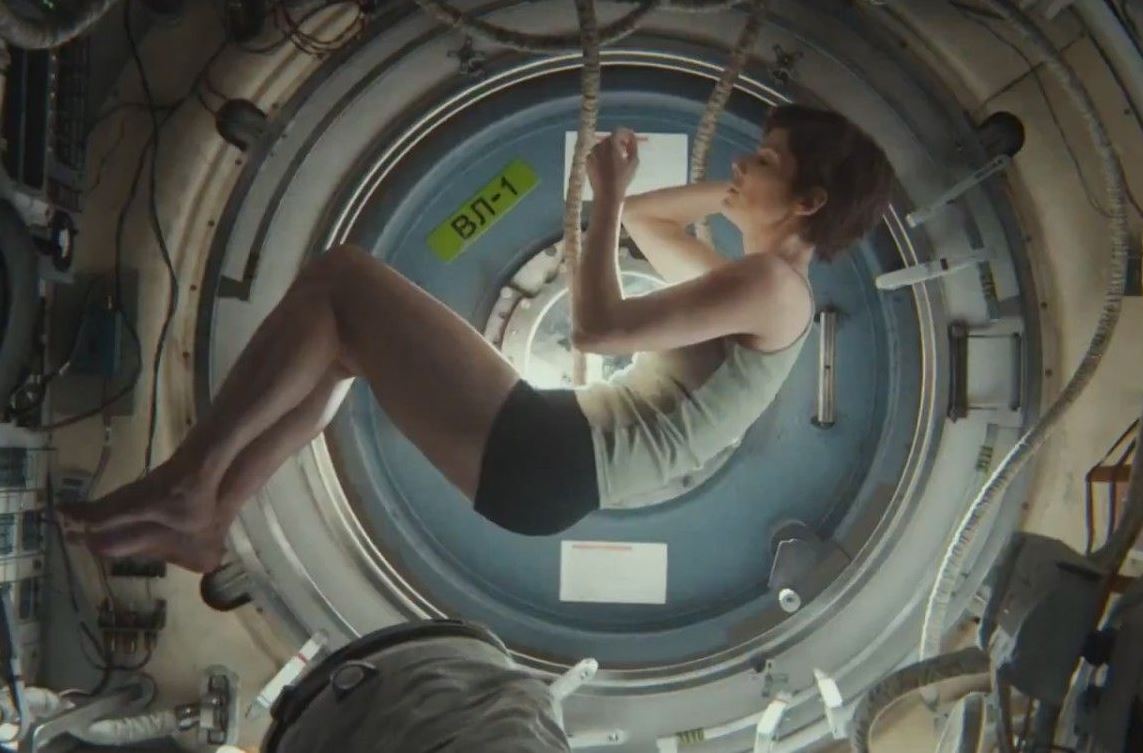 “Life in space is impossible,” the opening crawl announces in Gravity. And so it is. Beyond the confines of our atmosphere, there is—as the crawl also succinctly informs us—no oxygen, no sound, no air pressure. Astronauts who brave the pitiless environment of space must take meticulous precautions just to survive; one mistake means death. It is for this reason that space is an ideal setting for a horror movie (such as one that sports perhaps