In Alien, Ian Holm described the titular xenomorph as a creature “unclouded by conscience, remorse, or delusions of morality.” The Predator, the snarling extraterrestrial villain of Fox’s other flagship sci-fi/horror franchise, is marginally more humanoid, but it’s similarly ruthless; in the 38 years since Arnold Schwarzenegger christened it “one ugly motherfucker,” it’s never betrayed any sense of compassion. Still, beneath its primal bloodlust there has always lurked a hint of, if not humanity, then at least sincerity. Whereas the Alien is driven by evolutionary imperatives, the Predator carries itself with a certain swagger, busting heads and ripping out spinal cords with taunting superiority. It doesn’t kill because it has to; it kills because that’s what makes it happy.
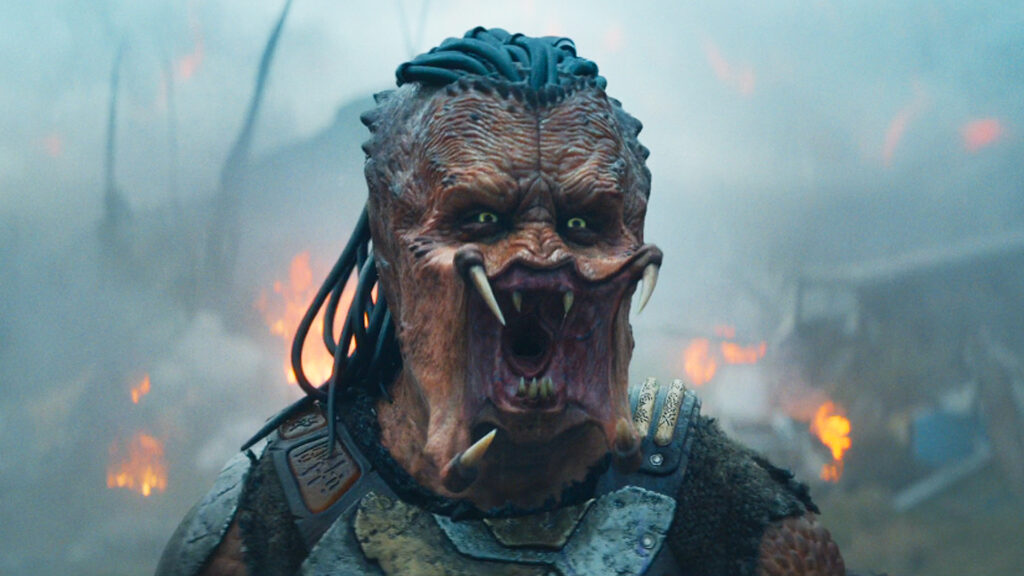
So it isn’t entirely a subversion that Predator: Badlands envisions its central beast not as a savage lone wolf but as a scorned member of a functioning society. Its main character, Dek (Dimitrius Schuster-Koloamatangi), may have the flattened snout and black dreadlocks from Predator flicks of yore, but he is initially defined by his relative weakness. Dek isn’t a murdering machine; he’s just a little brother, one who’s desperate to impress both his elder sibling and his disapproving father, the latter of whom dismisses him as a runt. Inferiority complex, daddy issues, obsessed with cool toys—Predators, they’re just like us!
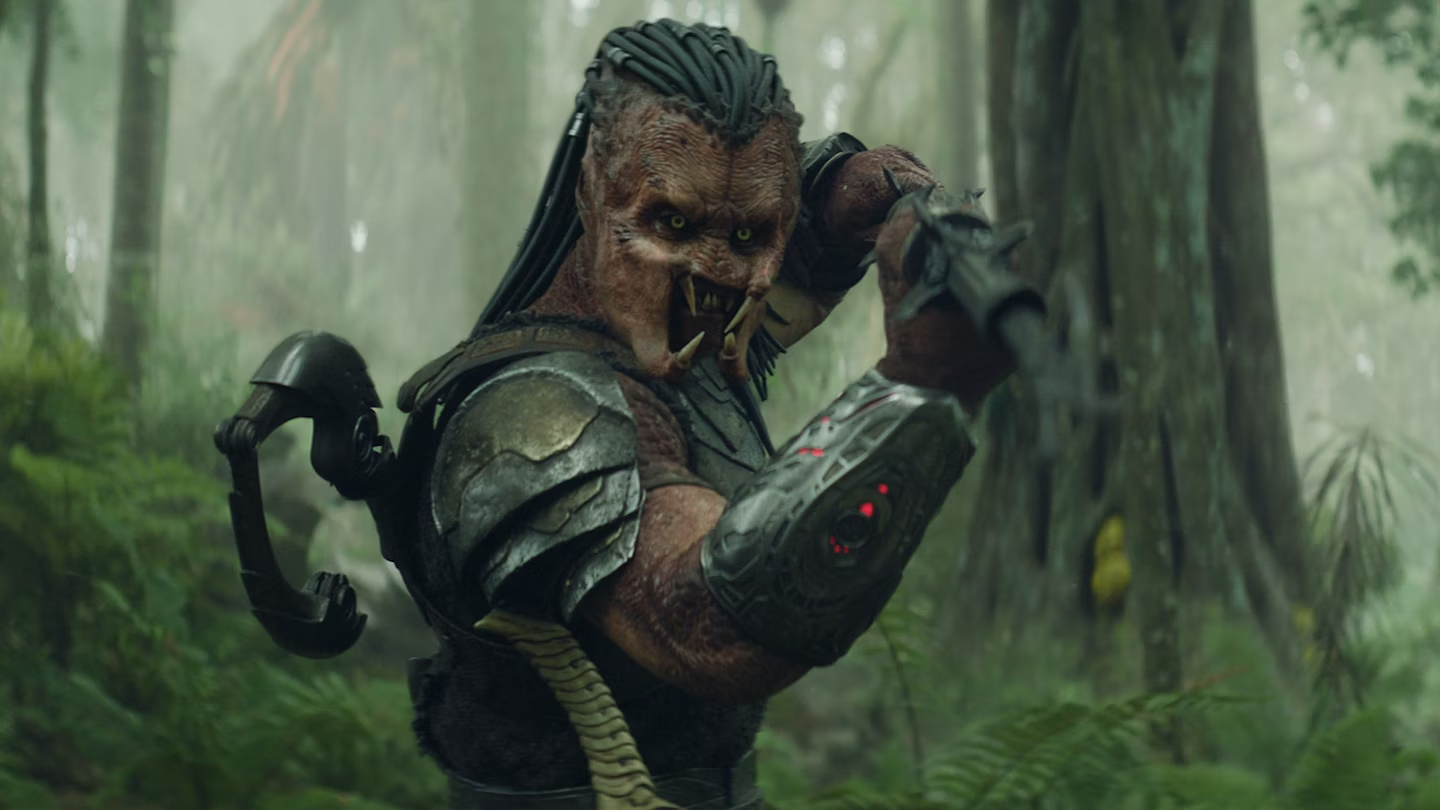
Directed by Dan Trachtenberg from a script by Patrick Aison, Badlands is less of a creature feature than a quest narrative. Dek, craving familial respect, travels to the hostile planet of Pandora Genna, where he resolves to slay a hydra-like colossus called the Kalisk. Over the course of his journey, he will make friends and enemies, learning about his own limitations while also discovering the power of collaboration. He will get hurt, lose fights, and stumble in the face of seemingly insurmountable obstacles—all of which, through a combination of pluck and ingenuity, he will ultimately surmount.
Setting aside its radical conception of a Predator who’s basically Katniss Everdeen, nothing in Badlands is especially surprising. What makes the movie work is the caliber of its craftsmanship and the inventiveness of its design. Its opening section is its weakest; Dek’s chest-puffing skirmish with his brother in a cave is darkly lit, featuring two alien combatants who are virtually indistinguishable from one another. But once the action pivots to Genna (filming took place in New Zealand), Trachtenberg begins to flex his creative muscle. An early sequence where Dek is pummeled by ferocious vines pulses with danger, while his subsequent encounters with the wilderness’ threats—purple cacti that discharge poisoned needles, blades of grass that cut like actual razors—further enhance the picture’s imaginative menace.
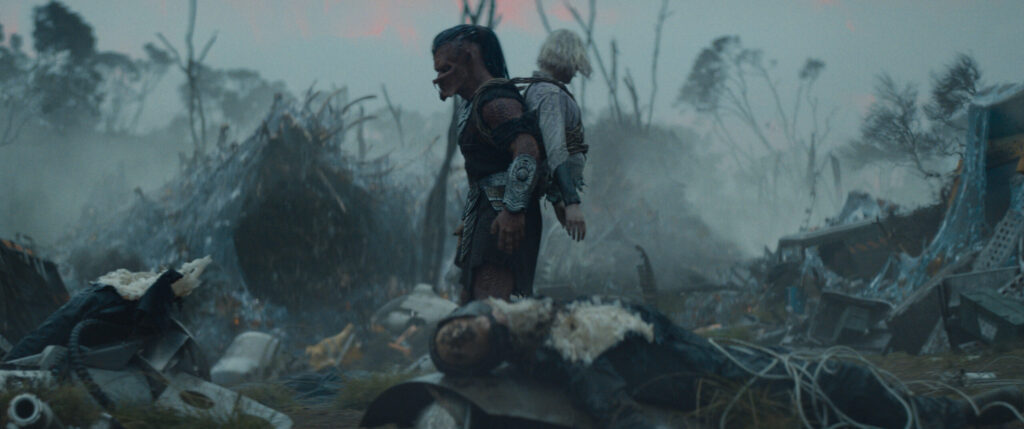
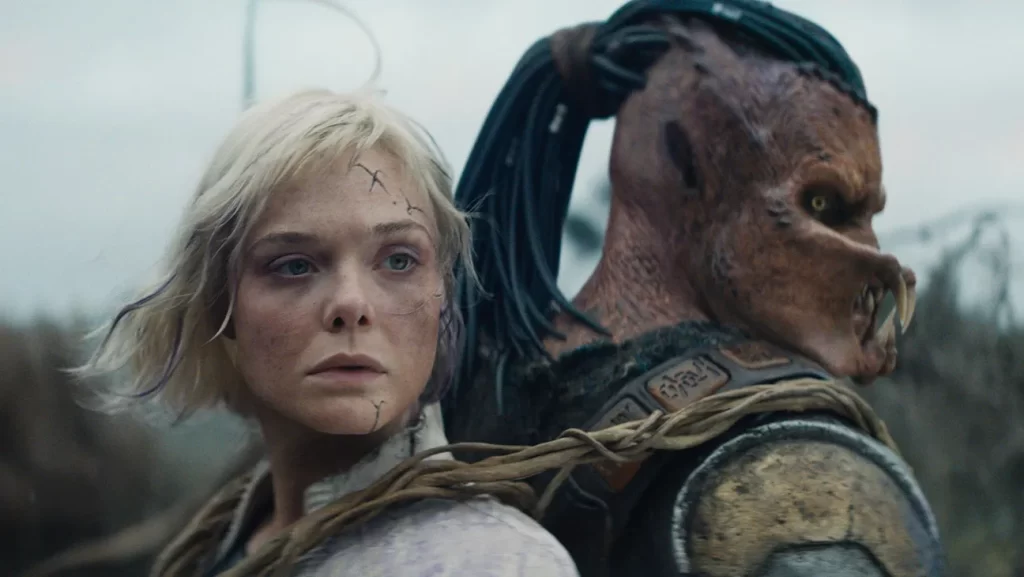
Initially, Dek faces these challenges alone, like Clint Eastwood or Gary Cooper without a town to rescue. This is in keeping with the movie’s opening epigraph, which proclaims that Dek’s species, the Yautja, are “friend to none, predator to all.” But dialogue-free blockbusters are a tough sell, and so Dek soon comes across Thia (Elle Fanning, delightful), a synthetic human whose own misadventures on Genna have resulted in the severance of her legs. (Wait, is this a companion piece to Onward?) At this point, Badlands tosses an additional genre into its stew of science-fiction yarn, mythic western, and action extravaganza: It’s also a buddy comedy.
And quite an appealing one. Whereas Dek is sullen and proud—he refuses to accept help because he insists he can do everything himself—Thia is cheerful and conciliatory, and she proposes less a partnership than a symbiotic arrangement. “Use you, like tool?” Dek muses, after which he adopts that noun as Thia’s moniker, a gruff insult that she shrugs off good-naturedly. There is a bit more going on with her—the screenplay concocts a clever reason that she’s capable of experiencing feelings, and Fanning ends up playing multiple roles with effortless charm—but regardless of the characters’ motivations, Badlands unfolds as a series of joint escapades that are brisk, exciting, and funny. Dek and Thia are not exactly pals—he must abide by that Yautja mantra, after all—but the bond that inevitably grows between them proves to be a source of both pathos and humor.
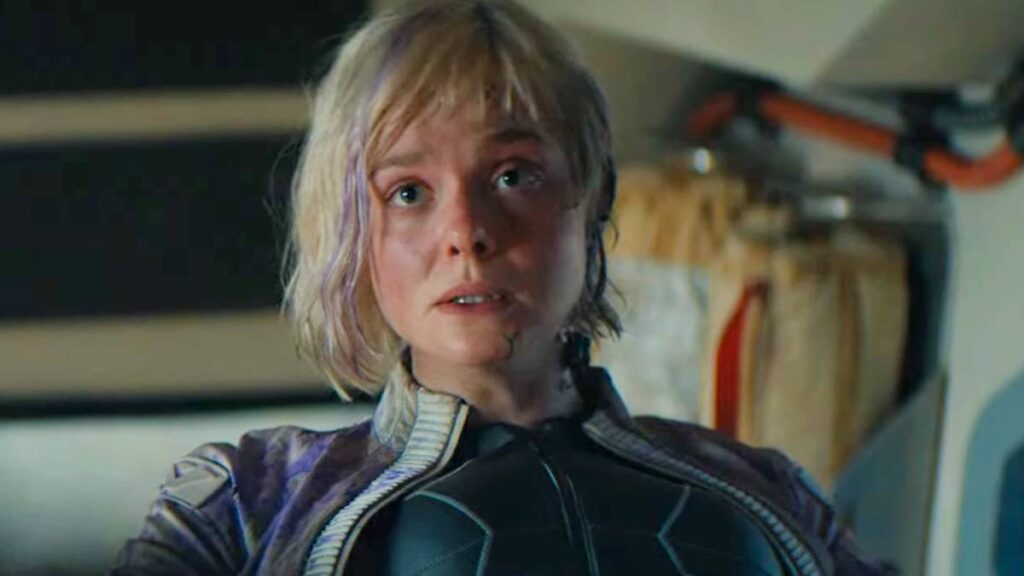
Speaking of tools, Trachtenberg marshals his cinematic resources with confidence and alacrity. As with all franchise fare, Badlands is big and loud (the Zimmer-esque score is from Sarah Schachner and Benjamin Wallfisch), but it is also quietly precise, particularly in its deployment of special effects. The erasure of Fanning’s legs is seamless, while Schuster-Koloamatangi’s facial expressions (enhanced via motion capture) reflect invisible craft rather than flashy grandstanding. The movie may not be as visually ravishing as Avatar (nothing is), but it is nonetheless a product of impressive artistry.
What it isn’t is a work of notable thematic ambition. That may seem an unfair ask of a Predator picture, but with Prey, Trachtenberg smuggled into a taut and engrossing actioner some provocative ideas about misogyny and colonization. Badlands is by no means dumb, but its messages—about the importance of friendship and the danger of stereotyping—would feel at home in children’s literature. Squint and you may discern a critique of capitalistic venality—Alien fans will note that Thia is a servant of the Weyland-Yutani corporation—but the concept is too hazy to acquire any force.
Which maybe isn’t such a bad thing. Unlike Alien: Romulus, which strained to integrate its intergalactic mayhem into the series’ preexisting lore, Predator: Badlands is largely unconcerned with franchise continuity. (A scene of Fanning wreaking havoc via cargo loader feels more like a playful easter egg than a laborious Aliens reference.) It is instead spiky and narrow, and its modest scope lends it immediacy, if not intensity. Only during the perfunctory climax, when too many anonymous hench-droids are gunned down, does its action lack spark—and even that sequence is partially redeemed by a marvelous moment when Thia’s detached legs walk and kick of their own accord.
Compared to most Yautja we’ve seen on screen over the decades, Dek isn’t especially deadly; he lacks the spiffy cloaking technology, and he’s often dwarfed by his foes rather than towering over them. He compensates with guile, flexibility, and sheer determination—the David Eckstein of Predators. And Badlands takes its cue from him, succeeding not with brute force but via fluid technique and canny imagination. It may not rip out anyone’s spine, but it still gets your heart pumping.
Grade: B

Jeremy Beck is the editor-in-chief of MovieManifesto. He watches more movies and television than he probably should.