28 Years Later: The Secret Life of Zombies

Aaron Taylor-Johnson and Alfie Williams in 28 Years Later

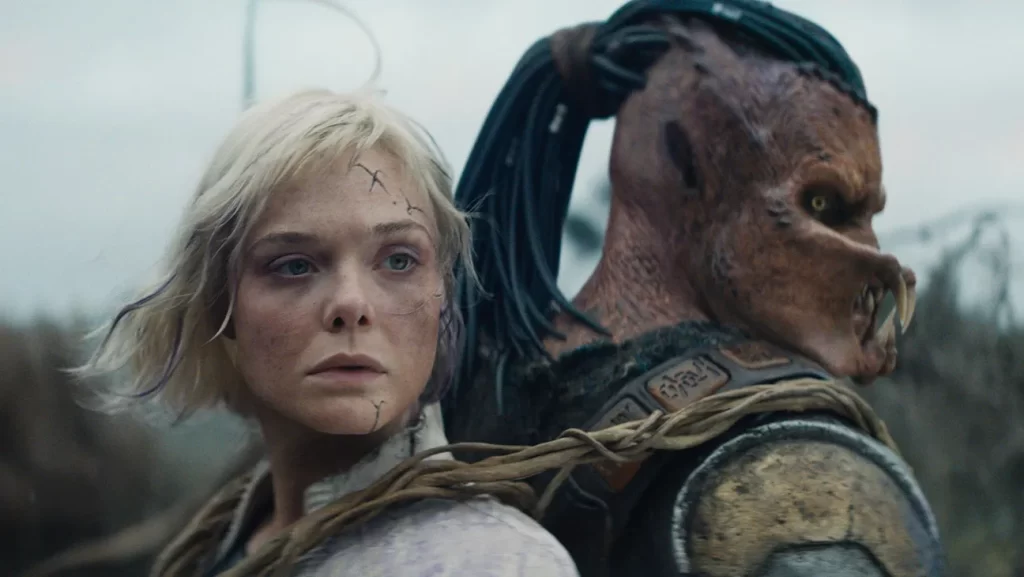
If you thought Danny Boyle’s zombies were fast, wait until you see his editing. Back in 2003, Boyle’s 28 Days Later infused the cinematic undead with new and decidedly speedier life; unlike the plodding and implacable flesh-eaters immortalized in George A. Romero’s Night of the Living Dead and its progeny, these creatures were frenzied and enraged, rushing after our human characters with haste as well as determination. Not all of the monsters in 28 Years Later, Boyle’s return to the franchise, are so athletic—a new species of beast called slow-lows lumber through the vacant countryside like sickly golems—but the pace of his filmmaking mirrors the deranged vigor of his most rapid marauders. One of the scariest things about zombies is that they never tire—they are always craving their next meal—and when it comes to pure energy, Boyle similarly exhibits no signs of slowing down.

Whether his skill matches his verve is another matter. For much of its first half, 28 Years Later adopts a style that proves less exhilarating than simply exhausting. The camera (often an iPhone) whipsaws through the scenery, attempting to mimic the characters’ rising heart rates and sowing chaos in the process. When arrows pierce the brains of rampaging zombies, Boyle invariably reshows the tearing of viscera from a different angle, like we’re watching a marksman’s overzealous highlight reel. Most curious is the hyperactive editing, which repeatedly splices the main action with bygone footage of antiquated warfare, like goose-stepping German troops or medieval British archers from Laurence Olivier’s adaptation of Henry V. It’s a historical seminar crossed with a Jason Bourne movie. Read More

Materialists, The Life of Chuck, and the Pleasure of Brute Force

Dakota Johnson and Pedro Pascal in Materialists; Annalise Basso and Tom Hiddleston in The Life of Chuck

Movie critics are supposed to crave subtlety. We like to complain about obviousness, whether it appears in the form of voiceover, backstory, or exposition. Bluntness is axiomatically amateurish; true artistry lies in the oblique, the implied, the invisible.

I’m mostly joking, even if I acknowledge that I’m not immune to this sort of rhetoric. But directness in cinema can be satisfying, provided the story is told well. Last weekend saw the release of two new movies, Materialists and The Life of Chuck, which exhibit a plainspoken quality that’s more appealing than insulting. They wear their hearts on their sleeves and get yours pumping in the process. Read More

The Phoenician Scheme: The Hand Grenade’s Tale

Mia Threapleton, Benicio Del Toro, and Michael Cera in The Phoenician Scheme

Wes Anderson’s movies are so meticulously constructed, it’s easy to overlook that they also tend to be explosive, messy, and violent. It takes all of 30 seconds into The Phoenician Scheme, his latest lavishly imagined whirligig, before someone gets literally blown in half by a missile. Not long after, the picture’s unscrupulous hero, an entrepreneur named Zsa-Zsa Korda (Benicio Del Toro), emerges from the wreckage of a plane crash, trying to stuff a protruding organ back inside his body. Over the picaresque adventure that follows, Korda will face flaming arrows, gun-toting guerillas, duplicitous spies, overcooked pigeons, and a pit of quicksand. He’s the unflappable eye of a fastidiously unstable hurricane.

That all of this mayhem unfolds in the context of Anderson’s characteristic rigor—a method of careful framing, crisp camerawork, and filigreed production design—isn’t really a product of dissonance. Rather, The Phoenician Scheme harmonizes control and commotion. Anderson’s style is often pejoratively deemed fussy, but his exacting craft doesn’t drain the life from his filmmaking. Quite the opposite: The rich colors, the sharp wordplay, and the impeccable ornamentation all coalesce to imbue the proceedings with urgency and vivacity. In this heightened alternate reality, precision generates momentum. Read More

Bring Her Back: Foster, It’s Australian for Fear

Sally Hawkins and Jonah Wren Phillips in Bring Her Back

For two guys who cut their teeth making YouTube videos, Danny and Michael Philippou are curiously retro when it comes to horror iconography. Their first feature, the indie hit Talk to Me, fashioned its inciting instrument as a large ceramic hand, one that facilitated spiritual possession through the nigh-quaint process of physical connection. Their follow-up, Bring Her Back, opens with grainy VHS footage depicting an enigmatic ritual whose significance won’t be established until some time later. The movie features a fair number of scares, but the biggest jolt for this Xennial was remembering just how frustrating it was to futz with the tracking setting on a VCR.

This doesn’t mean the Philippous are classicists. But they aren’t exactly modernists either; their skills and shortcomings could easily belong in any era of horror filmmaking. Bring Her Back confirms their talents as purveyors of mood, taking place in an unsettling surreality where the vibes are always off and your danger sensor is constantly on. As a piece of evocative atmosphere, it’s quite creepy. As a work of dramatic storytelling, it’s stillborn. Read More

Mission: Impossible—The Final Reckoning: This Wreckage Will Self-Construct

Tom Cruise and Hayley Atwell in Mission Impossible, the Final Reckoning

It’s been a long journey for Ethan Hunt. Over 29 years and eight increasingly elaborate movies, he’s gained friends and lost wives, donned masks and exposed traitors, defied superiors while obeying his own code of justice. He’s infiltrated impenetrable buildings and sprinted down the façades of skyscrapers and clung to the wings of aircraft mid-flight. But while his maximal effort has remained constant, the pictures around him have quietly executed a rare and curious mid-series pivot.

For its first decade and a half, the Mission: Impossible franchise comprised essentially four standalone films, unified only by Tom Cruise’s ageless star power. Sure, they shared certain features—globe-trotting hijinks, duplicitous bosses, incredible stunt work, self-destructing messages—but their stories had virtually nothing to do with one another; their styles were also distinct, in part because they were all directed by different people. But with Rogue Nation, Christopher McQuarrie took and then kept the reins, retaining the operatic flair but constructing a more sprawling and interlaced cinematic universe. As its title suggests, The Final Reckoning—the eighth and (presumably) last Cruise-led episode of world-saving and death-defying—is designed to function as a capstone, taking the series to new heights of derring-do while also bringing retroactive meaning and connectivity to its once-independent predecessors. Read More