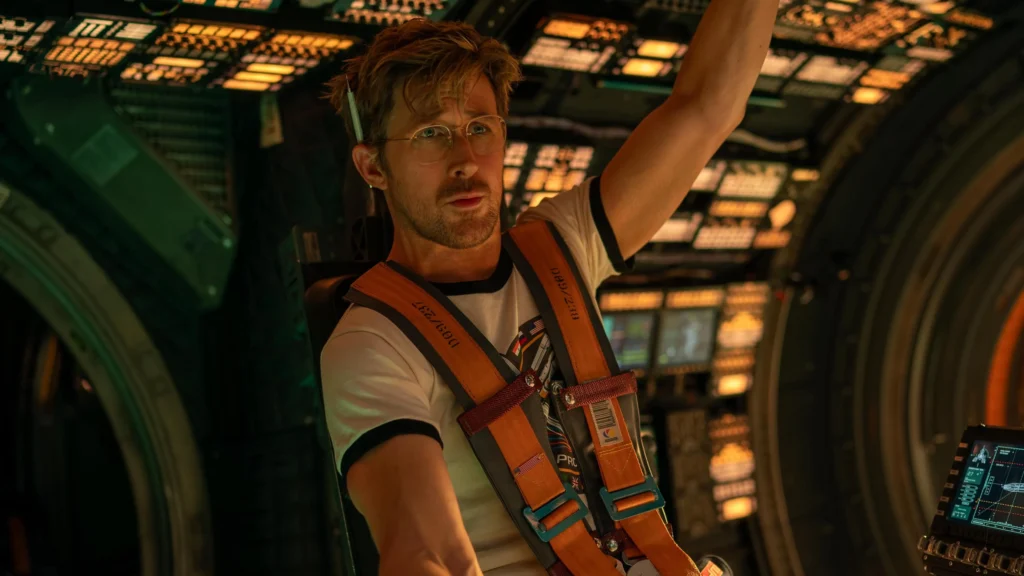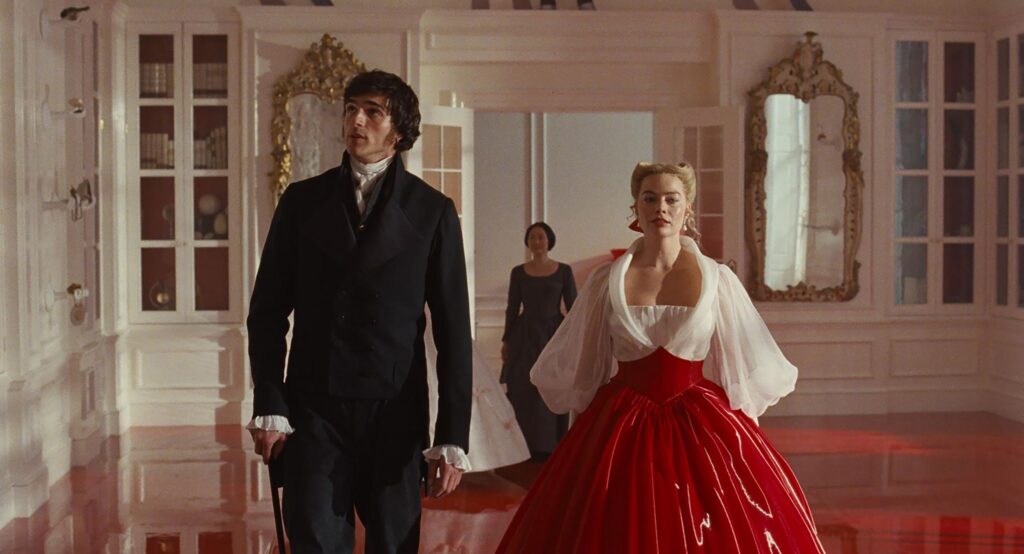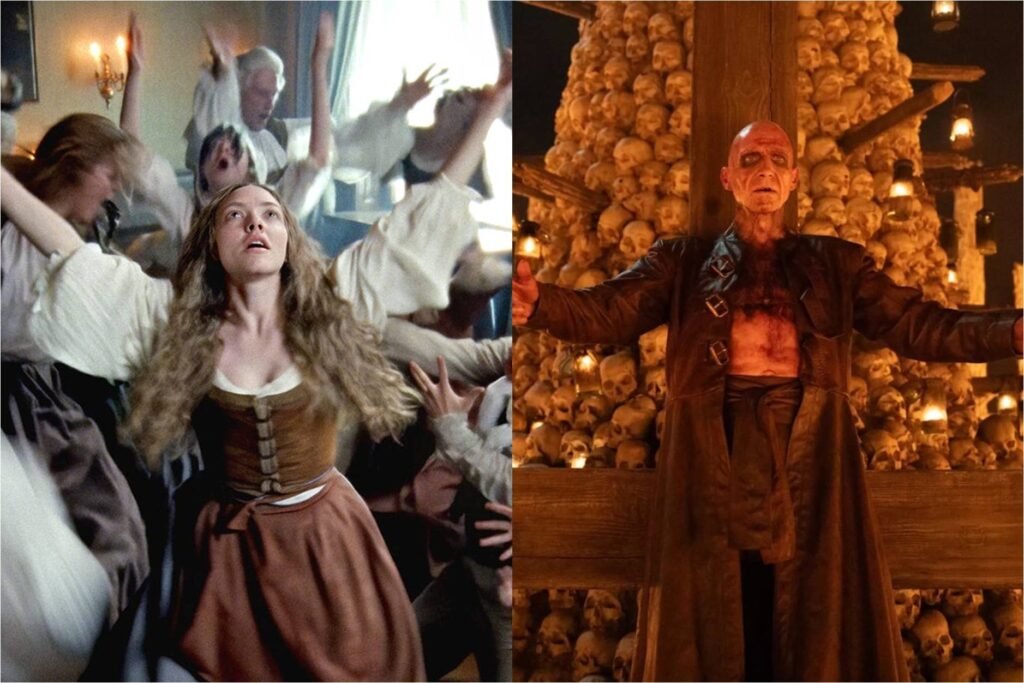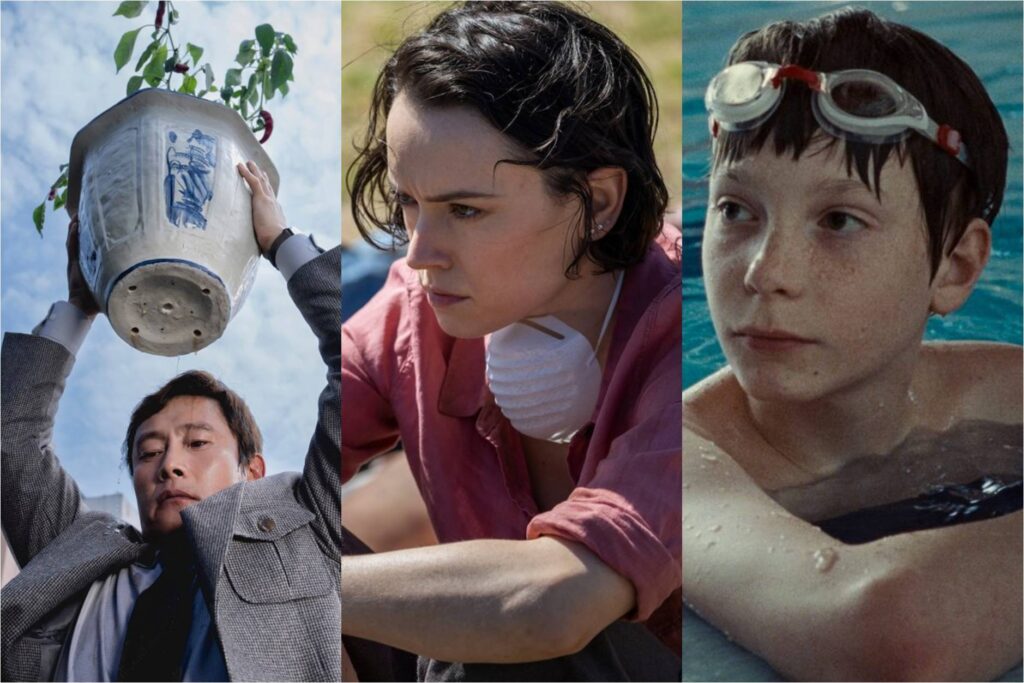
Original Screenplay Weekend, Again: Honey Don’t, Eden, and Relay

Ana de Armas in Eden, Margaret Qualley in Honey Don't, Riz Ahmed in Relay

The top grosser at the box office last weekend was a sing-along version of KPop Demon Hunters, Netflix’s animated phenomenon about a girl-pop trio who use their musical talents to battle demons disguised as a boy band. I’m not lamenting this; it’s a mostly charming movie, and it’s nice to see any Netflix product in theaters, even if that company remains philosophically committed to eradicating the very existence of cinema. KPop Demon Hunters is also an original work, meaning its success derives from thoughtful artistry and word-of-mouth rather than by leveraging intellectual property.

Not every new release last weekend was so triumphant. Look considerably lower down the box-office chart, and you’ll find the debut of three movies with original screenplays that combined to gross less than one-third of Demon Hunters’ $19M. (I’m ignoring Splitsville, which played in just five theaters across the country.) When I last performed this exercise in 2021, I expressed gratitude that original pictures had returned to theaters as the industry rebounded from the COVID-19 pandemic. Four years later, I’m less optimistic about our cinematic future. But let’s celebrate (and evaluate) what we’ve got, while we’ve still got it. Read More

Materialists, The Life of Chuck, and the Pleasure of Brute Force

Dakota Johnson and Pedro Pascal in Materialists; Annalise Basso and Tom Hiddleston in The Life of Chuck

Movie critics are supposed to crave subtlety. We like to complain about obviousness, whether it appears in the form of voiceover, backstory, or exposition. Bluntness is axiomatically amateurish; true artistry lies in the oblique, the implied, the invisible.

I’m mostly joking, even if I acknowledge that I’m not immune to this sort of rhetoric. But directness in cinema can be satisfying, provided the story is told well. Last weekend saw the release of two new movies, Materialists and The Life of Chuck, which exhibit a plainspoken quality that’s more appealing than insulting. They wear their hearts on their sleeves and get yours pumping in the process. Read More

The Brutalist: Nadirs of the Lost Architect

Adrien Brody in The Brutalist

The American dream gets flipped upside-down in The Brutalist, Brady Corbet’s soaring, scathing portrait of post-war greed. Yet while it may be a troubling tale of moral decline, it opens with its hero going up, up, up, climbing toward the prospect of salvation. His name is László, and we first see him in the steerage of a ship docking at Ellis Island, his pallid skin and crooked nose long shielded from the light of day. As his mind recites a letter from his absent wife, he begins to ascend along with countless other sweaty hopefuls, the camera swooping and twisting like he’s navigating a labyrinth. When he finally bursts onto the deck, his face breaks into an ecstatic grin, the sunlight beaming down on him, the score’s trumpets booming in triumph. Never mind that our first view of Lady Liberty comes at an inverted angle, as though she’s about to plunge her torch—and its elusive promise of prosperity—into the harbor.

This knockout introduction instantly signals The Brutalist’s monumental ambition, both thematic and aesthetic. Much has been made of the film’s length (over three-and-a-half hours, including a 15-minute intermission), but its running time is just one of its many extravagances. Corbet, eschewing subtlety in favor of sheer grandeur, has delivered a truly maximalist production, a work of sweeping scope, vigorous style, and provocative rhetoric. The movie is, to borrow the tagline from Scott Pilgrim vs. the World, an epic of epic epicness. Read More

Babygirl: Breaking the Crass Ceiling

Harris Dickinson and Nicole Kidman in Babygirl

Screw delayed gratification: Babygirl opens with the sound of a woman moaning in apparent pleasure before its vanity card even appears. (I get it, I like A24 movies too.) Then its first frame shows her enthusiastically riding her husband before they collapse onto the sheets and embrace, whispering sweet nothings, having been mutually satisfied… or at least that’s what he thinks. As her partner falls asleep, the woman discreetly slinks into the adjoining room, fires up her laptop, and masturbates to pornography, muffling her own gasps to avoid waking anyone. The implication is obvious: Whatever she’s getting in bed ain’t cutting it. She needs more.

That sense of need—of pure, bottomless craving—is what animates Babygirl, Halina Reijn’s strange, messy, intriguing new psychodrama. It’s a movie about the paralyzing quality of desire—how coveting something forbidden can upend even the most carefully cultivated lives. The body may want what it wants, but the brain knows that our wants can get us into trouble. Read More

A Complete Unknown: Don’t Judge a Schnook by His Covers

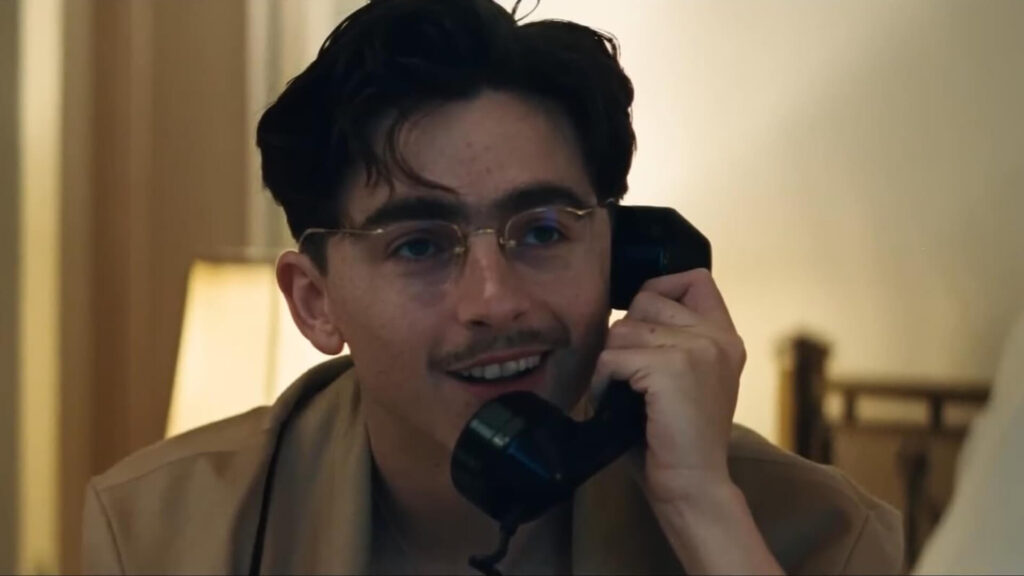
Timothée Chalamet in A Complete Unknown

In the most memorable scene of Todd Haynes’ I’m Not There, a band takes the stage at a music show and turns to their guitar cases, only to retrieve a cache of machine guns and open fire on their unsuspecting audience. It’s a metaphor for the 1965 Newport Festival where Bob Dylan, beginning his pivot from homespun folk to electric oomph, infuriated the fans who’d clamored to hear the plaintive, stripped-down ballads that made him famous. A Complete Unknown, James Mangold’s new Dylan biopic, recreates that historic moment, though it does so with careful fidelity rather than brash surreality. That’s in keeping with the guiding spirit of the movie, which follows Dylan’s early rise and initial backlash while faithfully abiding by the conventions of the genre. In telling the story of the man who revolutionized an art form, it doesn’t exhibit a rebellious bone in its body.

This doesn’t make it bad. In fact, A Complete Unknown is pretty good. It has good music, good actors, good pacing, and good dialogue. (While you’re considering the source, I happen to think I’m Not There is Haynes’ worst picture, but that’s another story.) What it lacks—what it doesn’t even seem to try to achieve—is a sense of majesty or wonder that might befit its subject. It plays the greatest hits without evincing any aspirations toward true greatness. Read More